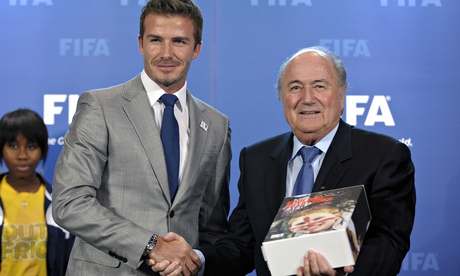
The Fifa president Sepp Blatter has challenged the Football Association to waive its right to legal action against the world game’s ruling body and it will publish Michael Garcia’s conclusions on England’s 2018 World Cup bid in full.
In a tit-for-tat response to a letter from the FA chairman Greg Dyke calling for the whole of Garcia’s report on the World Cup bidding process to be published in full, Blatter put the ball back in the FA’s court.
Within hours of the judge Hans-Joachim Eckert publishing his summary of Garcia’s 430-page report, which effectively cleared Russia 2018 and Qatar 2022 of serious wrongdoing and praised Blatter and the process, the US attorney had disowned it.
Dyke subsequently wrote to all 26 members of Fifa’s executive committee calling for the report to be published in full, amid similar calls from others including the Uefa president Michel Platini and Concacaf’s president Jeffrey Webb.
But Blatter insisted that Swiss law and Fifa’s own ethics code prevented full publication, claiming the body is not a “public authority” but a “private entity under Swiss law”. However, Blatter said, if the FA agrees to waive the threat of legal action from anyone involved in England’s 2018 bid, then Fifa would publish the chapters relating to it.
Blatter’s Machiavellian response came after Fifa made great show of passing the full report to the Swiss attorney general’s office on Eckert’s advice. The Fifa president, due to stand for a fifth term in April, argued the Swiss prosecutor’s involvement now meant “occurrences that are relevant in the context of the report will now be assessed and investigated by an external public authority”.
Blatter begins his reply to Dyke: “I note your opinion that Fifa’s reputation in England is rather low”, before explaining why he will not consent to Garcia’s report being published in full. Among his arguments is that Swiss law includes protection of “personality rights” of the 70-plus witnesses who spoke with Garcia. But earlier this week two whistleblowers who provided information submitted formal complaints believing that Eckert’s summary had led to them being identified and “traduced”.One of them, the former head of international media for the Qatar 2022 bid, Phaedra Almajid, said on Wednesday that she had been offered protection by the FBI after receiving threats.
The Fifa president again insisted he had not seen Garcia’s full report, pointing to the supposed independence of the ethics committee. It is divided into two chambers, with Garcia heading the investigatory arm and Eckert the adjudicatory one. The pair will meet on Thursday in a bid to iron out their differences, but Eckert has insisted his summary was no whitewash and was a fair distillation of Garcia’s report. Garcia guaranteed confidentiality to his witnesses but has argued the full report could be published with some redactions.
By throwing the attention back on to England’s bid Blatter will hope to force Dyke, a vocal critic who believes the Fifa president should not stand for another term, to put up or shut up. England’s bid was criticised in Eckert’s summary for cosying up to the disgraced former Concacaf president Jack Warner in an effort to win his support, paying £35,000 to host a dinner in Caribbean and arranging part-time work for an associate.
Despite a long list of questions marks over Qatar’s bid, Eckert said there was not enough evidence to link it to payments made by Mohamed bin Hammam, the Qatari former Asian Football Confederation head banned for life for paying bribes in trying to unseat Blatter.
Russia, the 2018 host, was also cleared after it said that it could not make its email traffic available to Garcia because rented computers used by the bid committee could not be recovered.