
Fifa is set to amend its World Cup bidding rules in an attempt to stop countries touting for votes by investing in football development projects around the world. It is also understood that it will introduce a requirement forcing bidding nations to comply with United Nations standards on labour laws and human rights.
The chaotic dual race for the 2018 and 2022 tournaments, won by Russia and Qatar respectively, was accompanied by claims of collusion and bribes. A clause requiring bidding nations, which included England for 2018 and the US for 2022, to invest in football programmes overseas has been removed after belated recognition that this was virtually an invitation to corruption.
England and Australia were among the bidders criticised for pouring money into football programmes in the Caribbean, and elsewhere, as they tried to woo Jack Warner, the controversial then Concacaf president who is among 14 executives charged by the US Department of Justice with offences including money laundering and tax evasion.
The 2026 process, paused in the wake of the crisis that gripped Fifa after the arrest of seven senior executives in Zurich in May, will also include a clause that forces bidders to comply with UN standards on labour law and human rights. Potential bidders include the US, Mexico and Canada. In the wake of Qatar’s victory, investigations by the Guardian and reports from human rights groups revealed the often dire working conditions under which the country’s army of 1.4 million migrant workers were toiling to build World Cup infrastructure.
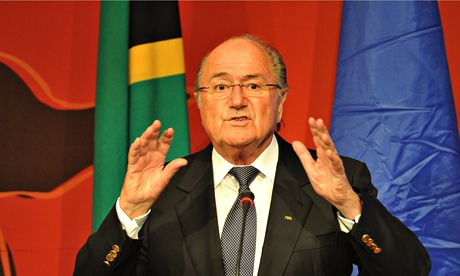
Although the Fifa president, Sepp Blatter, who has promised to step down between December and March, has flip-flopped on the extent to which world football’s governing body can exert influence on the issue, the introduction of a clause related to human rights appears to be an attempt to address it.
The Guardian revealed last summer Fifa was considering making a bidding country’s human rights record a factor when awarding a World Cup.
However, it remains to be seen how the new rule will work in practice. The International Olympic Committee also recently introduced new rules surrounding labour laws and the environment as part of its Agenda 2020 process.
In 2013 Fifa amended the bidding rules to ensure the next World Cup host, for the 2026 tournament, would be chosen by all 209 members in an open vote at Fifa congress from a shortlist selected by the executive committee. Fifa ruled last year there was not enough evidence to justify stripping Russia or Qatar of the World Cup in the wake of the publication of a disputed summary of Michael Garcia’s report, which led to the resignation of the head of the investigatory arm of the ethics committee.
But the 2018 and 2022 vote remains under investigation by the FBI in the US and by Swiss authorities. This week the latter confirmed the number of suspect bank transactions it is examining had risen to 81.
On Monday Blatter will oversee the first executive committee meeting since he promised he would not stand again for the presidency at an extraordinary congress that will take place between December and March.
The meeting is expected to be dominated by his promised reforms, amid calls from external watchdogs including Transparency International for a clean break with the past and the introduction of a temporary committee to undertake wholesale reform.












