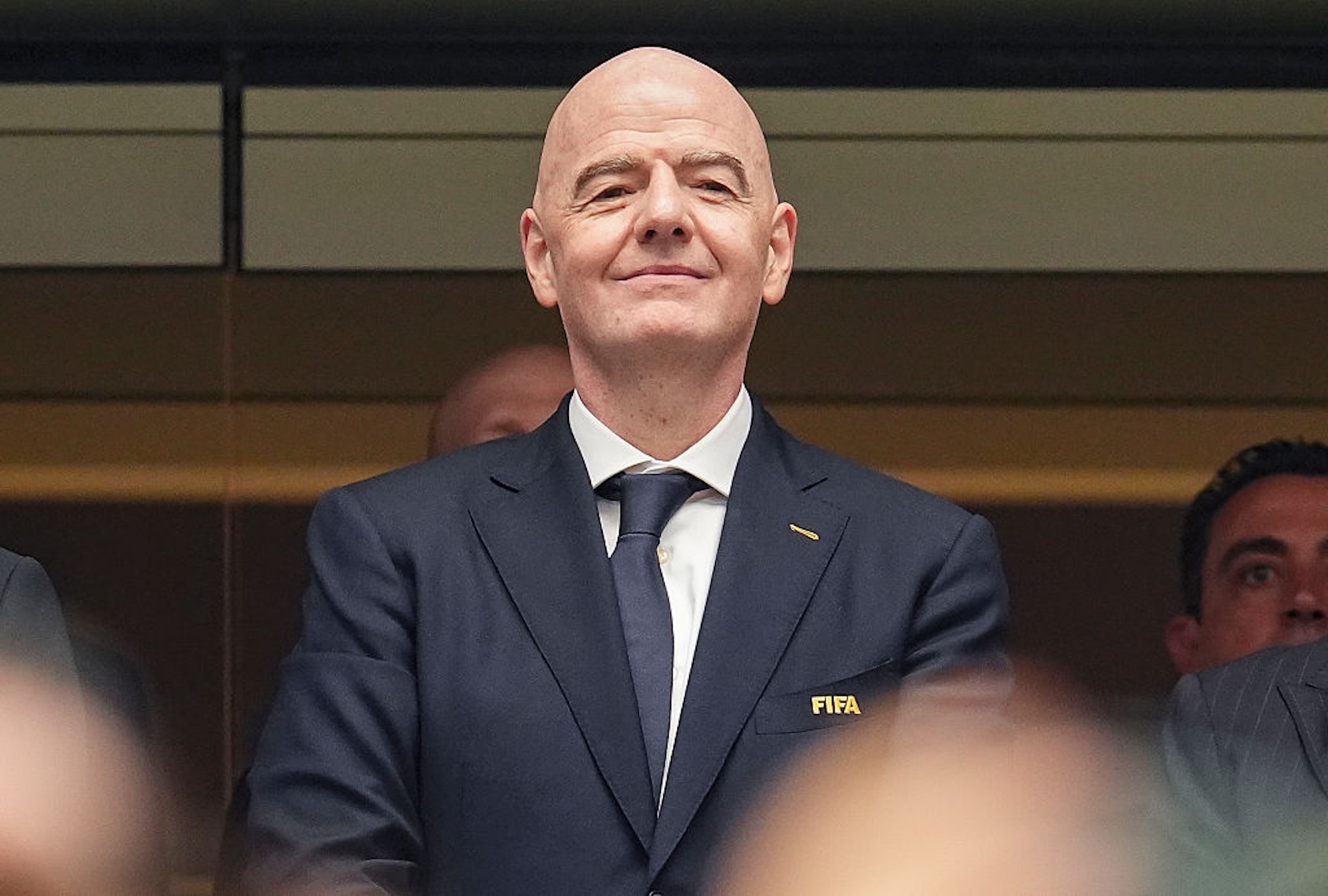
By any measure, the 2026 World Cup has been exceptional. The new format, expanding team participation from 32 to 48, has brought to center stage smaller, underdog countries that have outperformed expectations, produced unexpected heroes and warmed our collective hearts. FIFA’s president, Gianni Infantino, has repeatedly positioned the sport as a force for inclusion and social cohesion; soccer diplomacy is being elevated as the panacea for our current global disharmony.
But all is not golden at the World Cup. This tournament has had no shortage of controversies, as fights over referee favoritism and interference by President Donald Trump attest. There is much to pick apart about this year’s World Cup, but one issue has been mostly invisible in the public discussion and debates: gender-based violence.
Several players currently competing in the World Cup are facing allegations, investigations or charges for sexual assault, rape or intimate partner violence. While the facts and legal outcomes of these cases vary and due process must always be followed, the larger question remains: Why does FIFA maintain strict rules that police everything from drug use and match-fixing to financial fair play, yet it has no universal standard on gender-based violence?
This silence reveals a deeper contradiction at the heart of the world’s most popular sport.
Soccer is built on collective responsibility. Success depends on discipline, teamwork, emotional control, respect for others and adherence to the rules of the game. Yet the game’s governing institutions have shown little commitment to these values when it comes to allegations of violence against women.
Infantino has many opinions on violence in soccer, but seemingly none on gender-based violence. This stands in stark contrast with other sports associations like the NFL, which in recent years has committed itself to addressing domestic and other violence through its Personal Conduct Policy. So does Major League Baseball. Its policy combines investigation, discipline and mandatory education. FIFA’s lack of comparable universal standards is not just a governance failure. It’s also a missed opportunity for prevention.
Gender-based violence is often framed as a private matter between individuals or a problem for the criminal justice system to solve. But decades of research and community-based prevention efforts tell us otherwise. Violence is shaped by social norms, power dynamics and the behaviors that institutions reward, tolerate or condemn. Prevention happens not only through laws and prosecutions, but also through the values communities choose to uphold.
Few institutions have greater influence over those values than soccer. The World Cup is more than a sporting event — it is one of the most powerful cultural platforms in the world. When soccer institutions fail to address violence against women with the same seriousness they bring to drug-use, corruption or fan misconduct, they undermine those very lessons. They communicate the respect that matters on the pitch but may be optional off it.
While much of the blame for this omission can be squarely placed on Infantino as the longtime leader of the association, the soccer clubs themselves must also be held accountable. FIFA is the governing body that controls international competition, but the onus also falls on “global football” as a whole. The elite European teams, which are all owned either by billionaires, investment groups or actual nation-states, especially petrostates — all of whom derive great financial rewards from the commercial value generated by their star players — should face particular scrutiny.
Too often, soccer institutions seem willing to tolerate serious allegations when the player in question remains valuable on the field. A case in point is Achraf Hakimi, who is currently playing for the Morocco national team and has been ordered to stand trial in France over a rape allegation. Hakimi’s full-time job is with Paris Saint-Germain, which is owned by Qatar; he continues to play for both teams with impunity.
Several players in previous World Cups, including Dani Alves, have been convicted of rape or sexual assault. But convictions are rare. They are often overturned or reduced on appeal, as was Alves’ case, which prosecutors cited they would appeal to Spain’s Supreme Court. Convictions are uncommon not because allegations are rare but because the legal system is slow and flawed. Studies show that in the US, for every 1,000 sexual assaults, 50 reports lead to arrests, 28 cases lead to felony convictions, and only 25 are sentenced to incarceration, according to RAINN.
The problem for this World Cup is players are competing under active charges or investigations. FIFA’s selective moral leadership — claiming the high ground on fair play, inclusion and human rights — cannot be credible without meaningful action on gender-based violence.
To that end, FIFA must develop and enforce a broad policy that includes independent reporting mechanisms, transparent investigation procedures, survivor-centered protections, mandatory education and prevention programs, as well as clear standards to end impunity. If, as it claims, FIFA truly wants to be the face of global diplomacy and human rights, then the credibility of the “beautiful game” depends not only on how it protects the integrity of competition, but on whether it is willing to use its powerful influence to help create safer communities for women and girls.