Fifa has effectively admitted handing a lucrative World Cup television rights contract to Rupert Murdoch’s Fox network in order to head off the threat of legal action over the decision to move the Qatar 2022 tournament to winter.
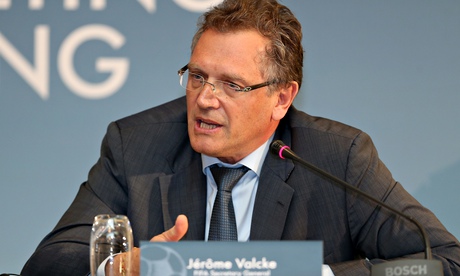
Jérôme Valcke, the Fifa secretary general, said no rules had been broken in awarding the rights to the 2026 tournament to Fox and NBC-owned Telemundo in the US without a tender.
Fox had been among the most vocal critics of the decision to switch the 2022 tournament to November in order to avoid the country’s summer heat, because the new dates would clash with the NFL season and college sport. “We have done what we had to do in order to protect Fifa and the organisation of the World Cup,” Valcke said.
Fox paid $425m for the rights to the 2018 World Cup in Russia and the 2022 tournament in Qatar three years ago when Fifa was still insisting it would take place in the summer.
After this week’s decision by a Fifa task force to move the tournament to late November, Valcke also ruled out paying any further compensation to European clubs for the disruption to their season above the formula already in place.
“Why should we apologise to the clubs? We have had an agreement with the clubs that they are part of the beneficiaries. It was $40m in 2010 and $70m in 2014,” said Valcke, referring to compensation paid to clubs for the release of their players.
“We are bringing all our people to enjoy the sporting and financial results of the World Cup. I definitely don’t feel I have to apologise for the decision made yesterday to confirm that the World Cup will not be played in the summer.”
The European Club Association has already called for additional compensation and the Premier League chief executive, Richard Scudamore, said he was “very disappointed” with the decision, which could see the World Cup final taking place on 23 December, 2022.
It was also confirmed that Uefa and other confederations had suggested the 23 December date, putting the European confederation on a potential collision course with the English and Scottish FAs over their traditional Christmas programmes.
Both have said they will lobby for the final to take place earlier when the decision goes to the Fifa executive committee for ratification on 19 March.
At a press conference in Doha, Valcke also said the Confederation of African Football had agreed to postpone the 2023 Africa Cup of Nations, originally due to take place in January in Guinea, until June 2023. That could cause further climatic problems, as the monsoon season begins around then in west Africa.
Following the first official board meeting of the Qatar 2022 local organising committee, the chief executive Hassan al-Thawadi said it was an important milestone. “It is evidence that we are working every single day to deliver a unique tournament that will bring people in the Middle East together and build bridges between east and west,” he said.
Valcke praised the conditions of worker accommodation provided at the stadium construction sites he had toured and claimed changes taking place were down to the “power of the World Cup”. But he accepted there were “still problems and things to be solved” surrounding Qatar’s treatment of 1.4m migrant workers, many of whom are building the infrastructure for the World Cup and Qatar’s 2030 Vision.
While Qatar has taken modest steps to increase inspectors and introduce electronic payment systems, it has yet to make any meaningful change to the kafala system that ties workers to their employers. It has been accused of dragging its feet over meaningful change by human rights groups and has still to implement many of the proposals made in a DLA Piper report commissioned by the Qatari government.