Cassini spacecraft ends 13-year odyssey with fiery plunge into Saturn
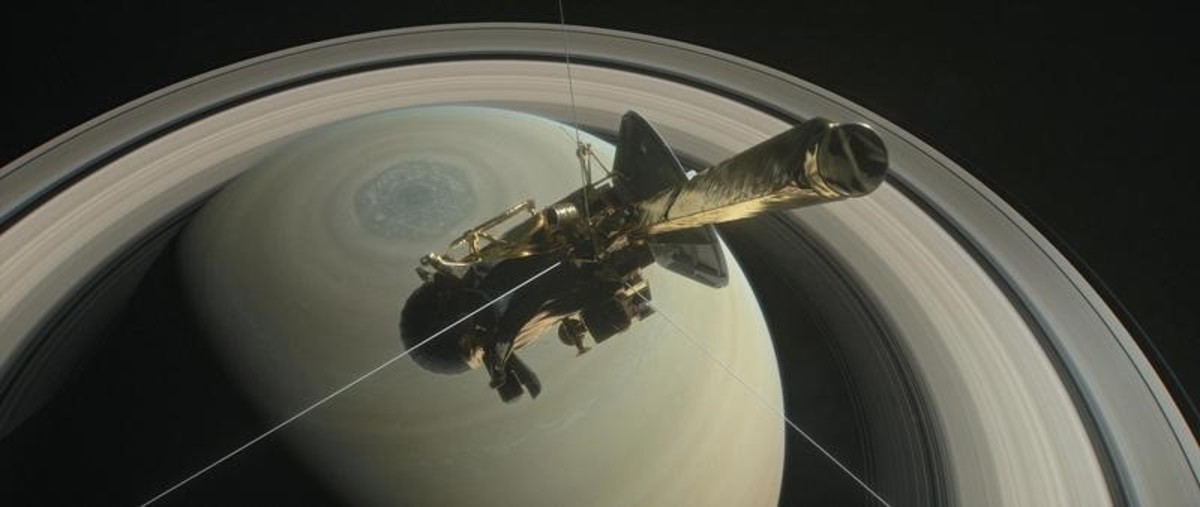
FILE PHOTO: The spacecraft Cassini is pictured above Saturn's northern hemisphere prior to making one of its Grand Finale dives in this NASA handout illustration obtained by Reuters August 29, 2017. NASA/Handout via REUTERS
(Reuters) - The U.S. space agency NASA received a final signal from its Cassini spacecraft on Friday as it ended a groundbreaking, 13-year Saturn mission with a meteor-like plunge into the ringed planet's atmosphere.
Cassini, the first spacecraft to orbit Saturn, entered the gaseous giant's crushing atmosphere at 7:55 a.m. EDT (1155 GMT) at about 70,000 miles per hour (113,000 km per hour), the National Aeronautics and Space Administration said.
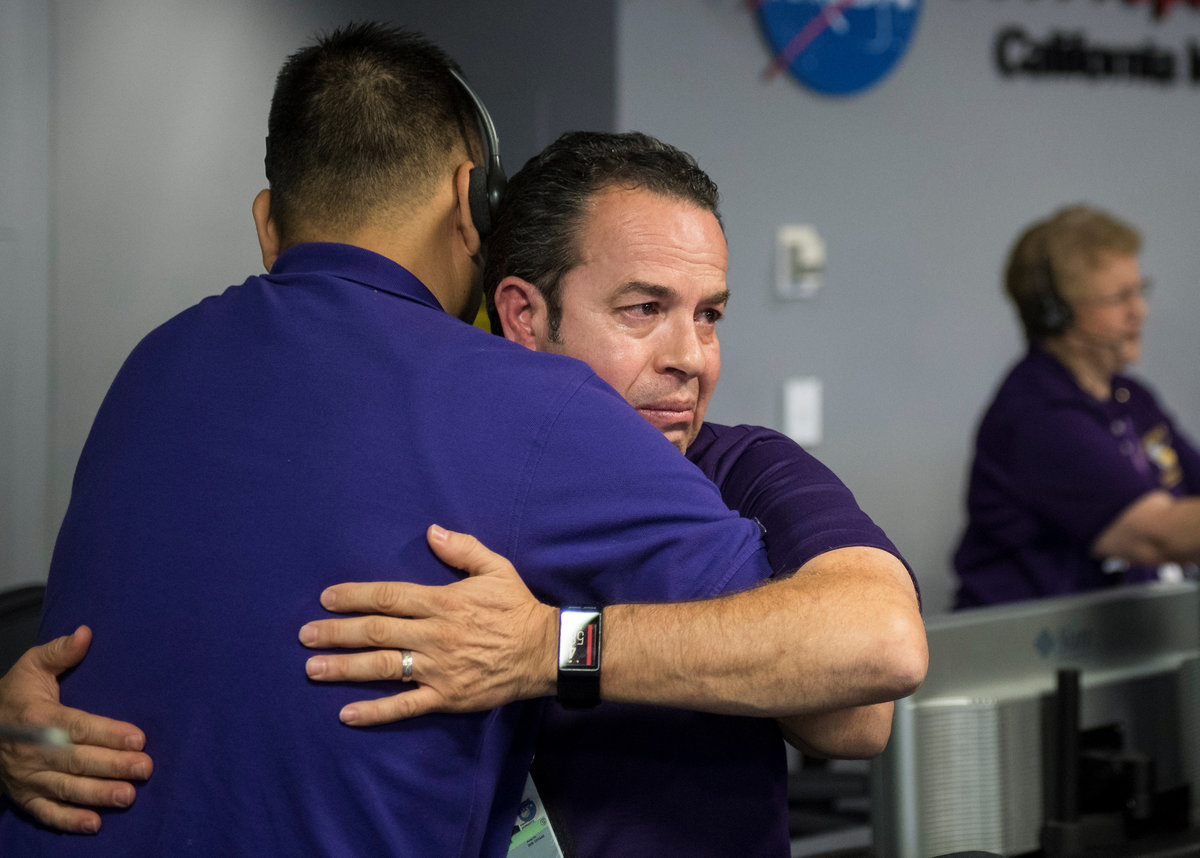
Cassini team members embrace after the spacecraft was deliberately plunged into Saturn, at NASA's Jet Propulsion Laboratory in Pasadena, California, U.S., September 15, 2017. NASA/Joel Kowsky/Handout via REUTERS
"This morning a lone explorer - a machine made by human-kind - finished its mission 900 million miles away," Cassini project manager Earl Maize said at a news conference on Friday at NASA's Jet Propulsion Laboratory in Pasadena, California. "We believe we got every last second of data."
The end of Cassini's voyage, which began with its launch in 1997 and a seven-year journey to Saturn, was met with applause, hugs and tears from NASA officials after its final transmission was received, according to video footage on the space agency's website.
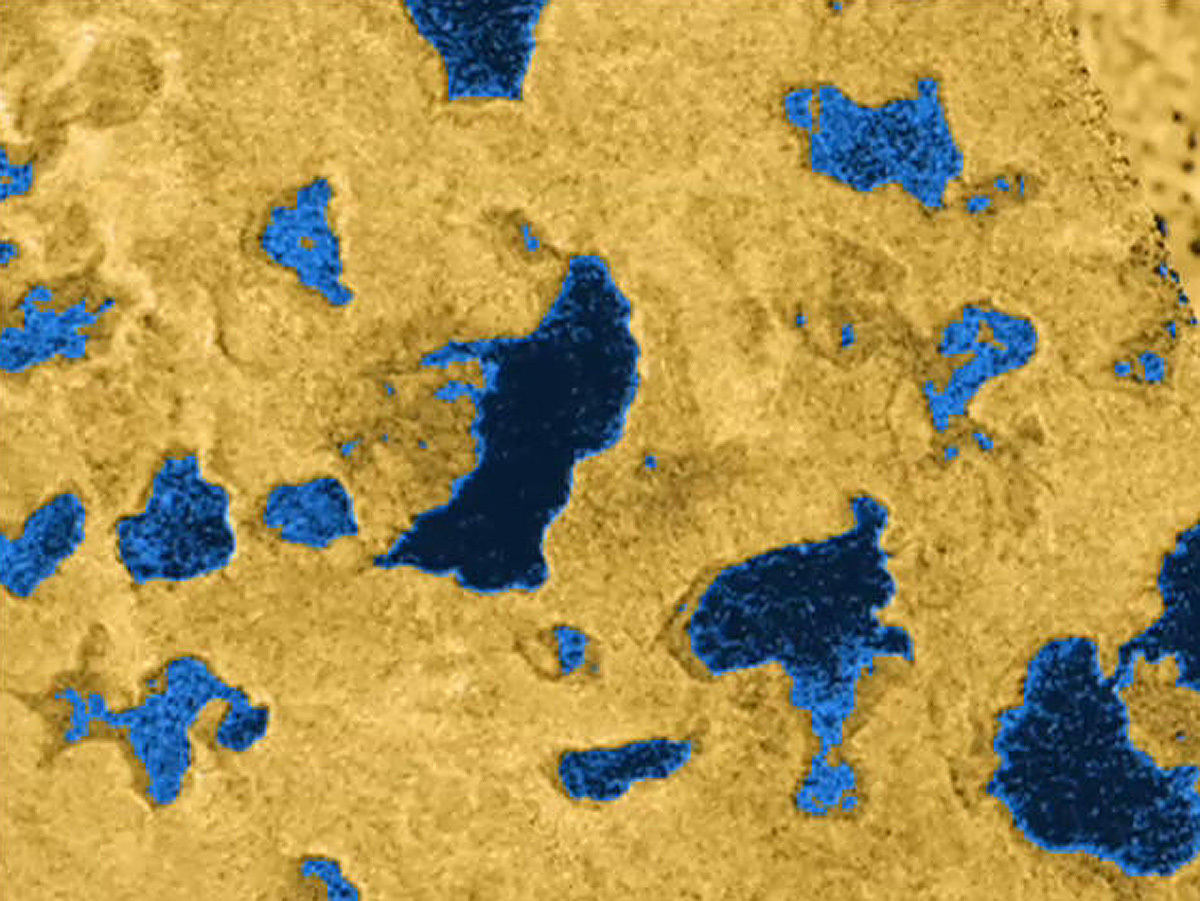
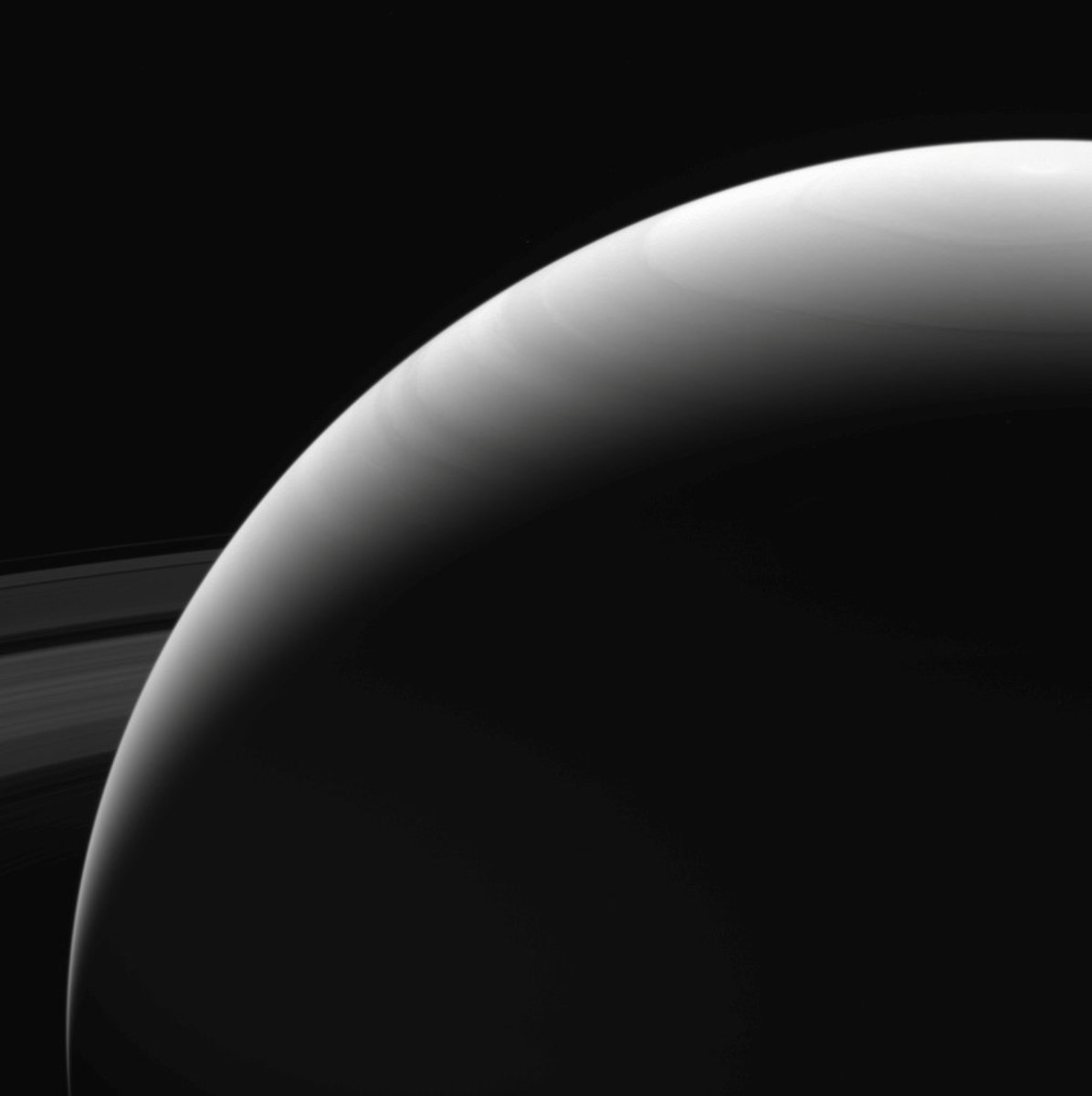
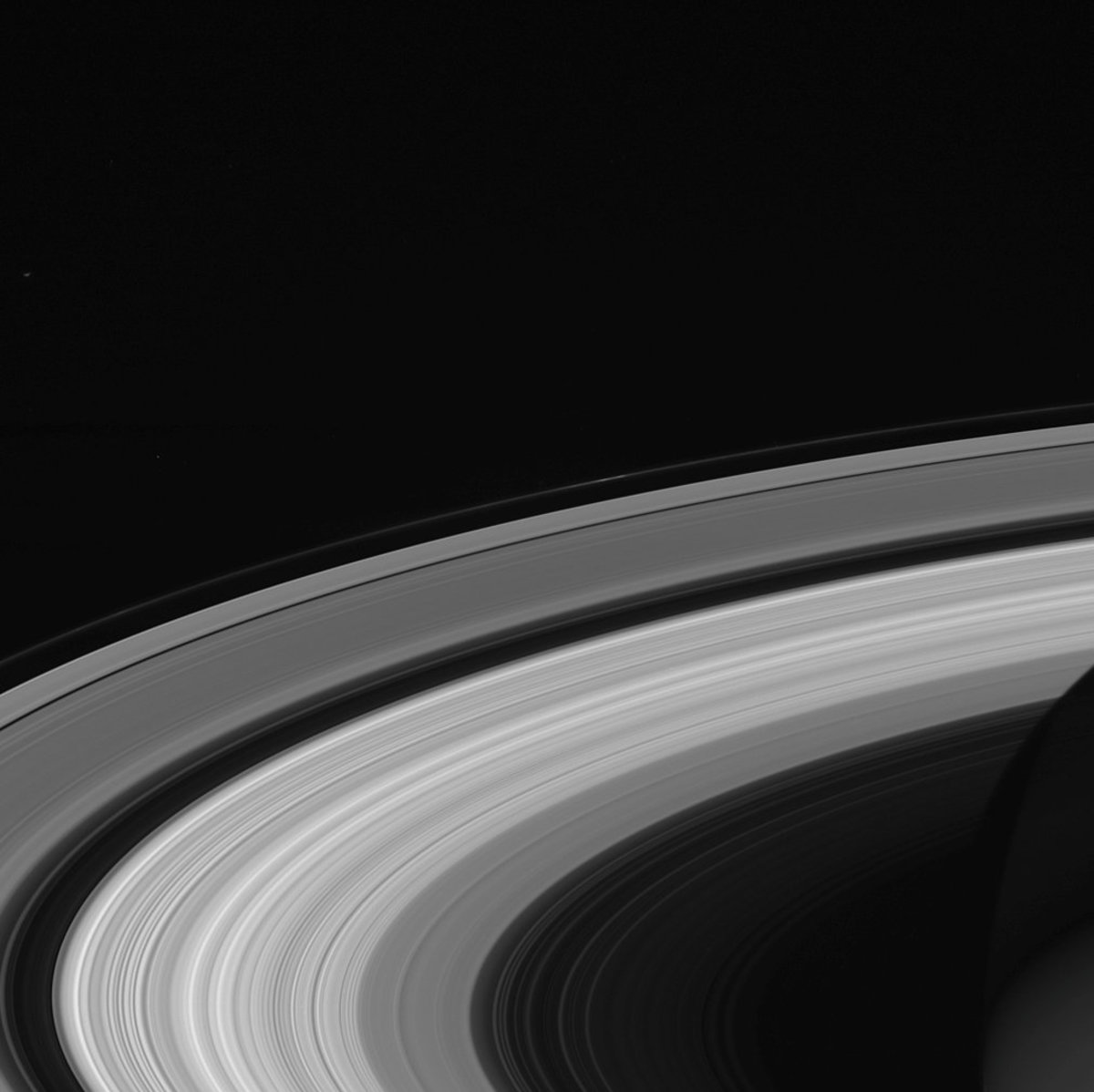
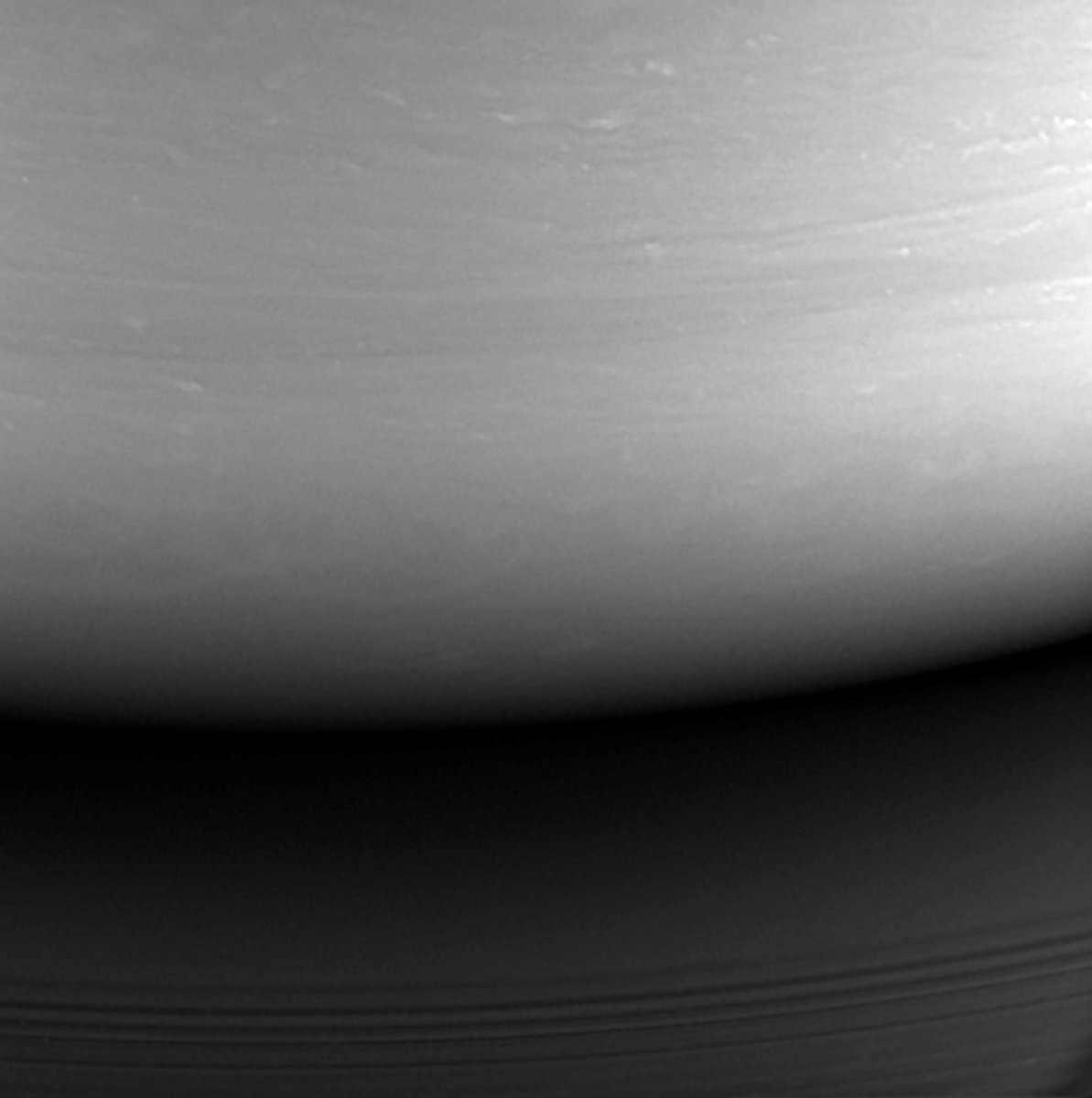
Officials at the news conference displayed the last set of images Cassini captured of Saturn as it crashed into the planet. The planet's lakes and seas near its north pole were visible, along with detailed views of gaps in its massive rings.
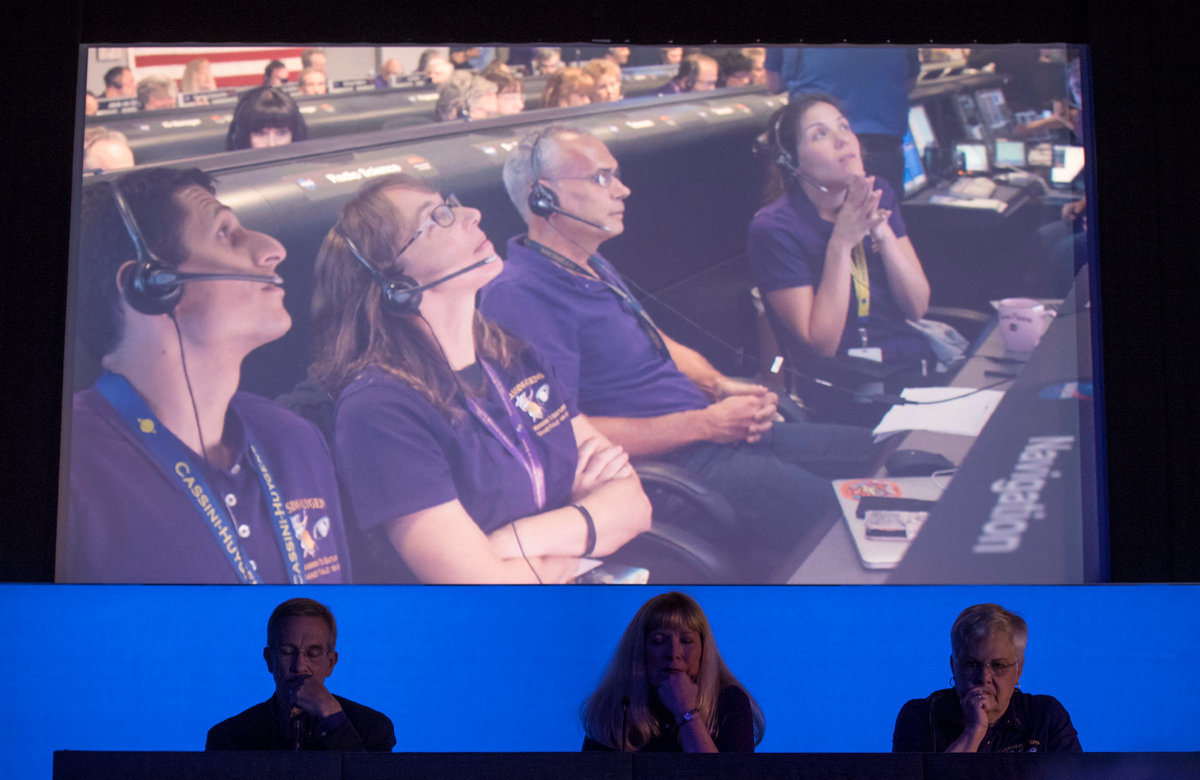
Cassini program manager at JPL, Earl Maize, left, Cassini project scientist at JPL, Linda Spilker, center, and spacecraft operations team manager for the Cassini mission at Saturn, Julie Webster, right, are seen as they watch a replay of the final moments of the Cassini spacecraft during a press conference held after the end of the Cassini mission at NASA's Jet Propulsion Laboratory in Pasadena, California, U.S., September 15, 2017. NASA/Joel Kowsky/Handout via REUTERS
Maize said Cassini's data, sent until the final fiery moment, was already being studied by NASA analysts in Arizona.
The transmissions are expected to include unprecedented data from the atmosphere's upper fringe, about 1,190 miles (1,915 km) above Saturn's cloudtops. The data took 84 minutes to reach NASA antennas in Canberra, Australia, Maize said.
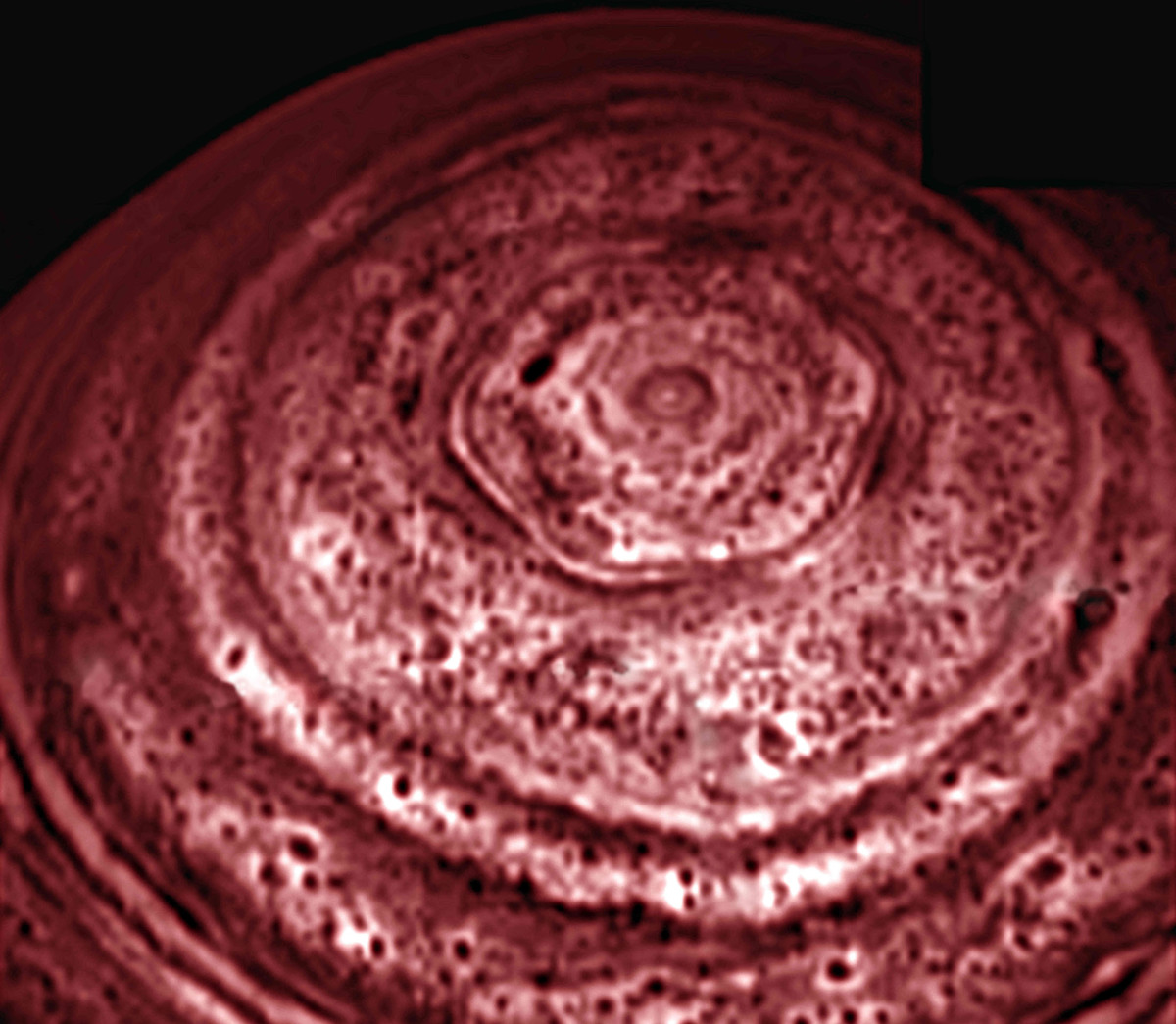
The final dive ended a mission that gave scientists a ringside seat to the sixth planet from the sun. The spacecraft's discoveries included seasonal changes on Saturn, a hexagon-shaped pattern on its north pole and the moon Titan's resemblance to a primordial Earth.
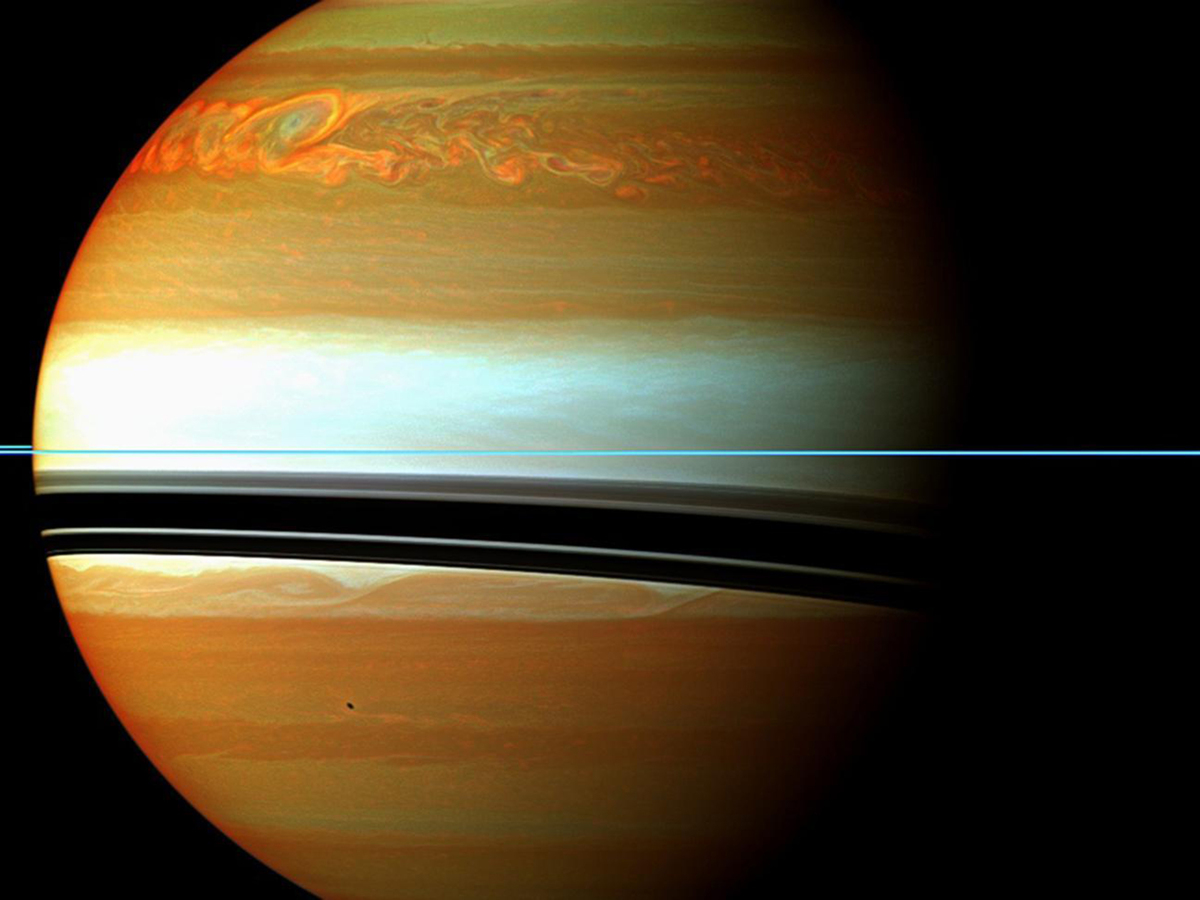
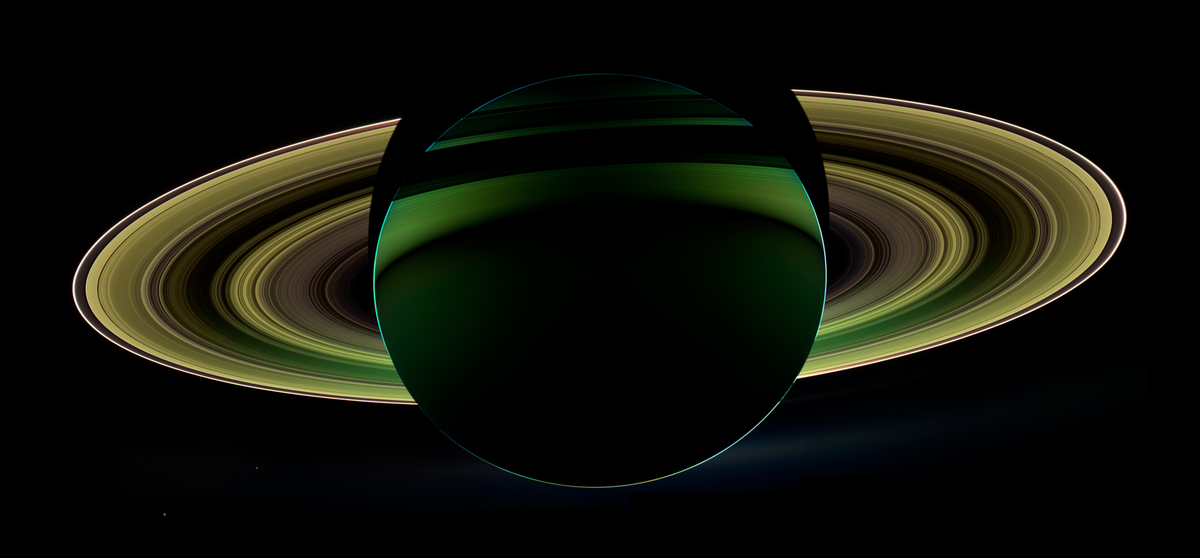
NASA handout image shows Saturn's atmosphere and its rings in a false color composite made from 12 images, captured on January 12, 2011. NASA/JPL-Caltech/Space Science Institute/Handout via REUTERS
Cassini also found a global ocean on the moon Enceladus, with ice plumes spouting from its surface. Enceladus has become a promising lead in the search for places outside Earth that could support life.
The spacecraft has produced 450,000 images and 635 gigabytes of data since it began probing Saturn and its 62 known moons in July 2004.
Cassini, a cooperative project between NASA, the European Space Agency and the Italian Space Agency, was launched into space in October 1997 from Cape Canaveral in Florida.
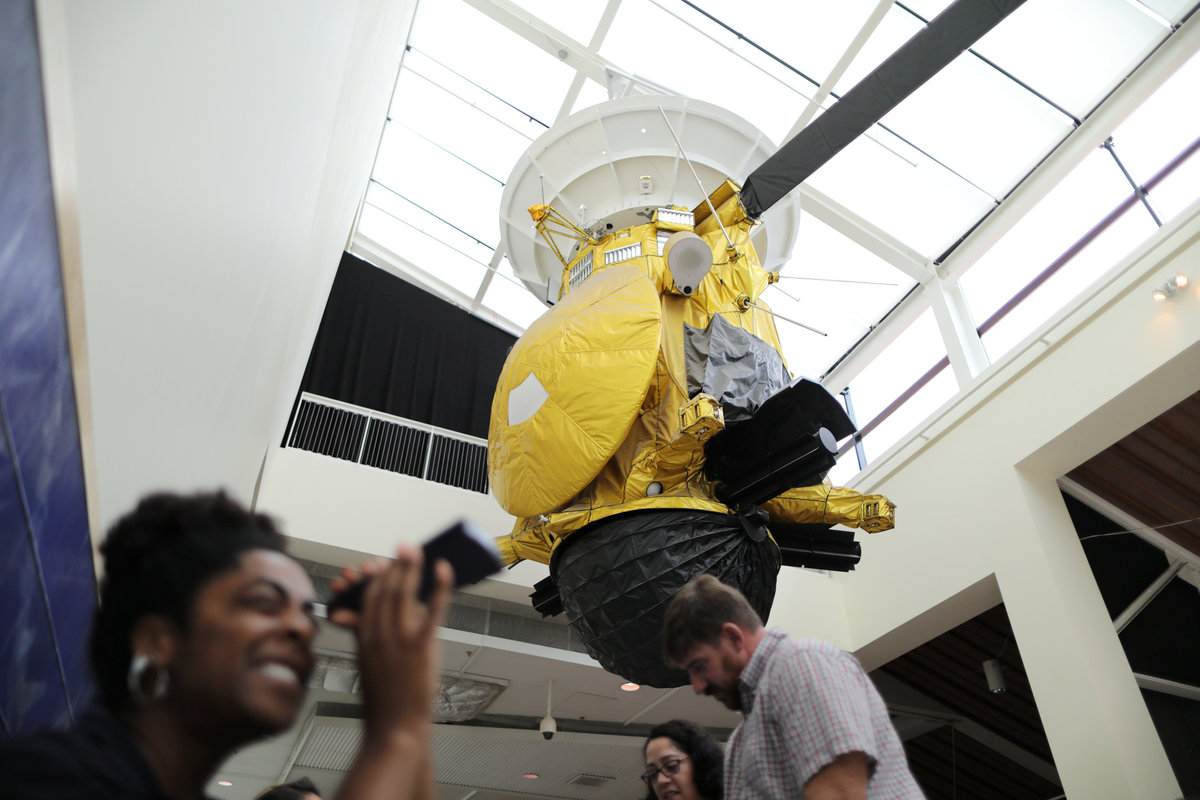
A woman looks through a spectroscope underneath a full-size engineering model of NASA's Cassini spacecraft that plunged into Saturn's atmosphere, at the California Science Center in Los Angeles, California, U.S., September 15, 2017. REUTERS/Lucy Nicholson
With the spacecraft running low on fuel, NASA crashed it into Saturn to avoid any chance of it someday colliding with and contaminating Titan, Enceladus or another moon that has the potential for indigenous microbial life.
Cassini started a series of 22 orbital dives in April, using Titan's gravity to slingshot itself into the unexplored area between the planet and its rings. The spacecraft studied Saturn's atmosphere and took measurements to determine the size of the planet's rocky core.
Scientists took to Twitter to share their goodbyes.
Goodbye notes to NASA's Cassini spacecraft that plunged into Saturn's atmosphere left by visitors are seen at the California Science Center in Los Angeles, California, U.S., September 15, 2017. REUTERS/Lucy Nicholson
"Farewell Cassini, how far you've come," astrophysicist Neil deGrasse Tyson said on Twitter. "On this eve, in fiery death, Saturn & you are one. VIP (Vaporize In Peace): 2004-2017."
(Reporting by Ian Simpson in Washington and Gina Cherelus in New York; editing by Colleen Jenkins and G Crosse)
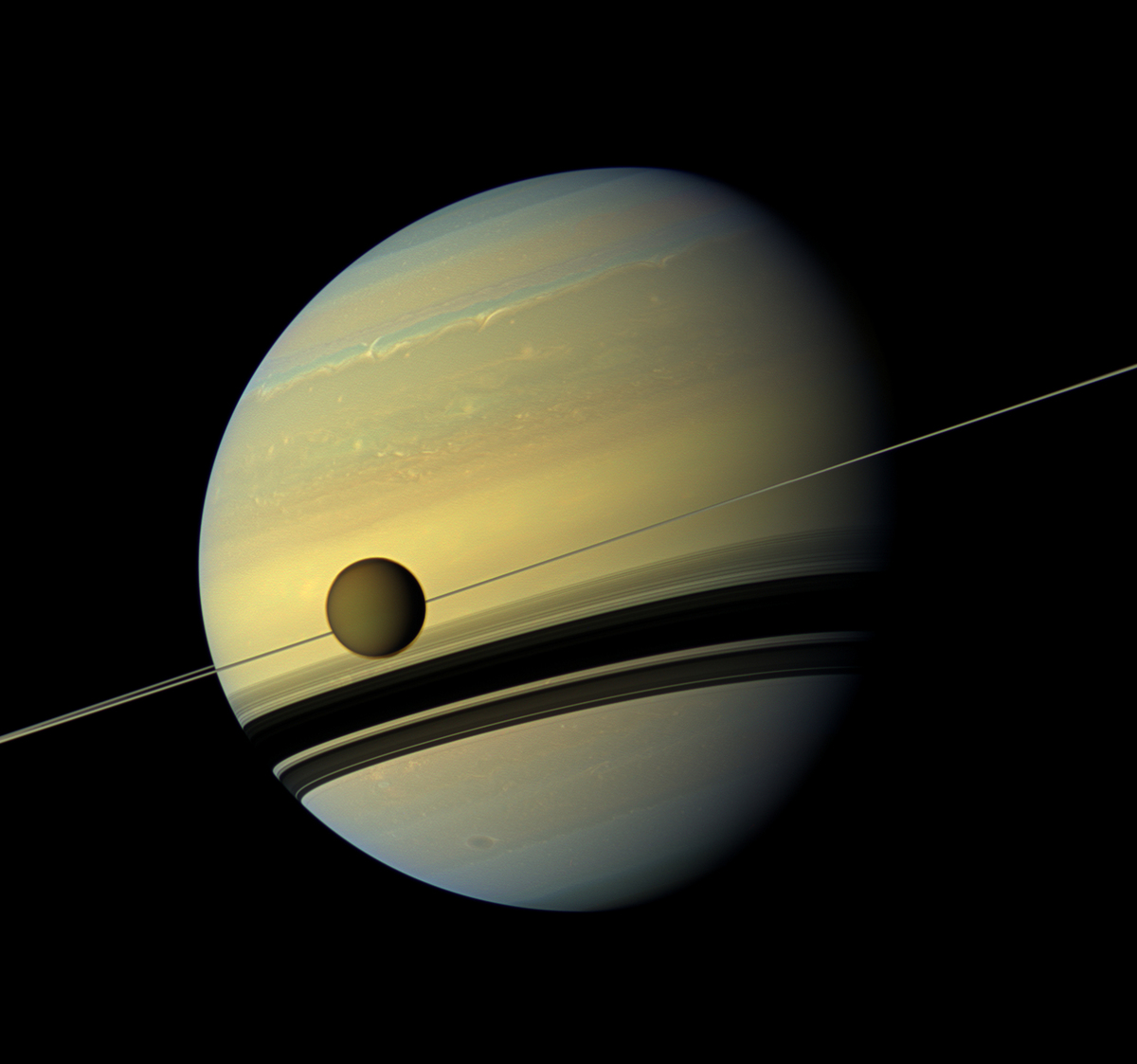
A bizarre six-sided feature encircling the north pole of Saturn is pictured by the visual and infrared mapping spectrometer on NASA's Cassini spacecraft, in this image released by NASA March 27, 2007. NASA/JPL/University of Arizona/Handout via REUTERSThe Cassini spacecraft took this mosaic of the planet Saturn and its rings backlit against the Sun on October 17, 2012 using infrared, red and violet spectral filters that were combined to create an enhanced-color view, in this handout image courtesy of NASA. NASA/JPL-Caltech/Space Science Institute/Handout via REUTERSTitan, Saturn's largest moon appears before the planet as it undergoes seasonal changes in this natural color view from NASA's Cassini spacecraft in this handout released by NASA August 29, 2012. The moon measures 3,200 miles across and is larger than the planet Mercury. NASA/JPL-Caltech/Space Science Institute/Handout via REUTERSThis composite image from NASA's Cassini spacecraft released by NASA March 13, 2007, shows evidence of seas, likely filled with liquid methane or ethane, in the high northern latitudes of Saturn's moon Titan. One such feature is larger than any of the Great Lakes of North America and is about the same size as several seas on Earth. NASA/JPL/Handout via REUTERSThis image of Saturn's northern hemisphere was taken by NASA's Cassini spacecraft on Sept. 13, 2017.NASA/JPL-Caltech/Space Science Institute/Handout via REUTERS This view of Saturn's A ring features a lone "propeller", one of many such features created by small moonlets embedded in the rings as they attempt, unsuccessfully, to open gaps in the ring material. NASA/JPL-Caltech/Space Science Institute/Handout via REUTERS This image of Saturn's rings taken by NASA's Cassini spacecraft on Sept. 13, 2017. It is among the last images Cassini sent back to Earth. NASA/JPL-Caltech/Space Science Institute/Handout via REUTERS This monochrome view is the last image taken by the imaging cameras on NASA's Cassini spacecraft. It looks toward the planet's night side, lit by reflected light from the rings, and shows the location at which the spacecraft would enter the planet's atmosphere hours later pictured in this handout photo obtained by Reuters September 15, 2017. NASA/JPL-Caltech/Space Science Institute/Handout via REUTERS
Sign up to read this article
Read news from 100’s of titles, curated specifically for you.