SANTIAGO DE CUBA_Fidel Castro returned Saturday to the city where he and a band of rebels launched an assault on the Moncada Barracks, starting the Cuban Revolution.
Castro, leader of the revolution, died Nov. 25, at 90 after a lingering illness that resulted in his ceding power to his brother Raul in 2006.
A caravan carrying Castro's ashes arrived Saturday afternoon in Santiago _ the cradle of the revolution _ on the final leg of a journey across Cuba that began Wednesday in Havana. The journey retracked, in reverse, the triumphant march into the capital that the rebels made after the ouster of dictator Fulgencio Batista.
Castro's ashes are to be interred at Santa Ifigenia Cemetery Sunday, next to the mausoleum of 19th century Cuban patriot Jose Marti, who fought for Cuban independence from Spain.
Castro addressed all Cubans on Jan. 1, 1959, the day Batista was defeated.
"This time the revolution is for real," Castro said. "The revolution will not be an easy task; the revolution will be a tough enterprise and full of dangers. "
As she sat on a balcony of her home where she could get a clear view of the passing caravan that carried Castro's ashes in a small flag-draped chest, Norma Arias, who runs a bed and breakfast overlooking Parque Cespedes, became overcome with emotion.
"Really, his death has affected me a lot. Fidel was everything, everything," Arias said. "We feel like orphans, like something is missing."
For many Cubans, the only government they have known has been run by a Castro.
"Fidel is part of every one of us _ an entire generation, more than 50 years," said Manuel Rondon Medina, Arias' husband.
But Cuba is also very much a nation divided with many of its former residents in exile in Miami and around the world decrying its revolution as one of betrayal.
Those in exile point to human rights abuses, firing squads after the revolution and imprisonment of Castro opponents, and the losses they suffered after the nationalization of their homes and businesses.
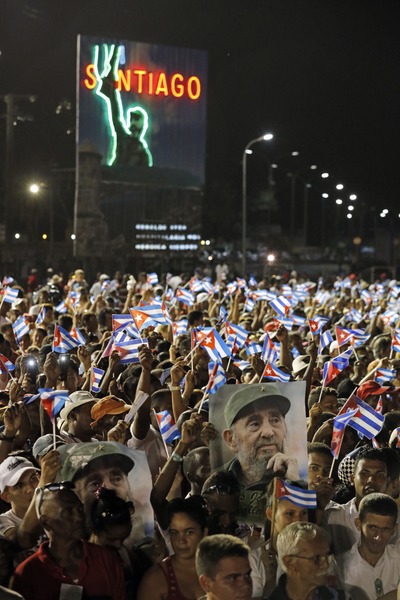
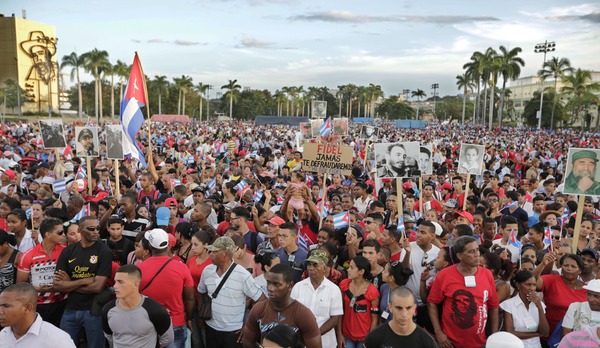
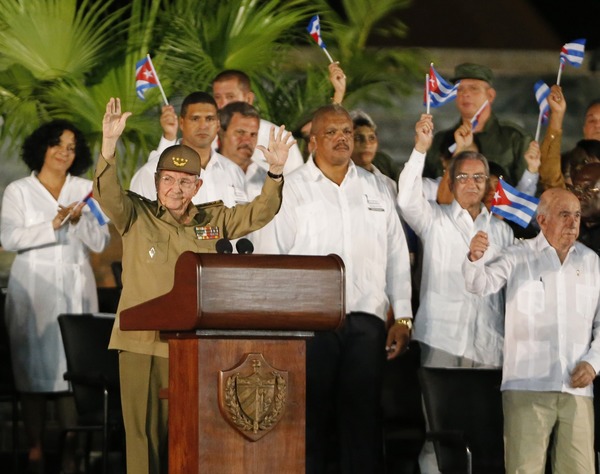
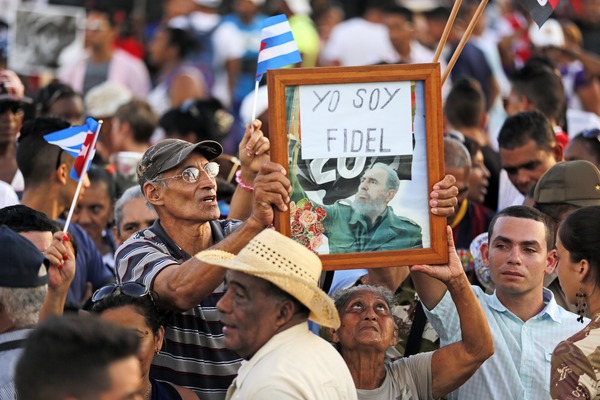
Cubans who turned out to see the remains of Castro pass in the "Caravan of Liberty" chose to focus on advances in education, free medical care and other social benefits of the revolution.
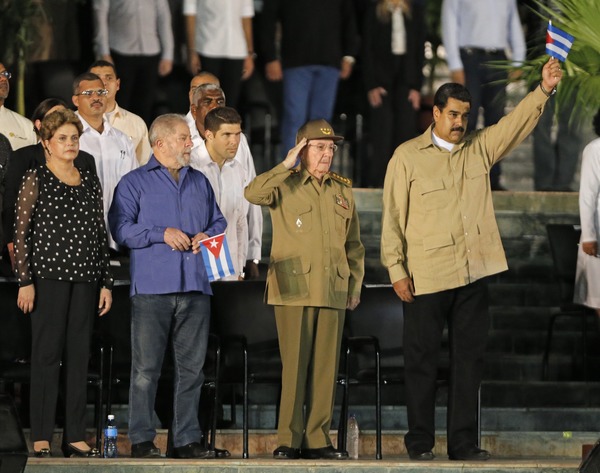
Thirty foreign delegations were expected to attend the events in Santiago, including a Haitian delegation led by Interim President Jocelerme Privet. But the United States isn't among them. U.S. officials attended a homage at the Plaza of the Revolution in Havana earlier in the week but said they wouldn't be in Santiago.
There was excitement in Santiago and in the small towns along the Central Highway from Bayamo, where Castro's ashes spent the night. Friday, people were busy arranging white rocks on hillsides along the route that spelled out "Fidel vive" (Fidel lives), "Fidel will always be among us" and other revolutionary slogans.
Buildings and curbsides were being painted and townspeople were sweeping the streets, hacking away brush and sprucing up their yards in anticipation of the passage of the caravan as it headed to Santiago. En route, it passed El Cobre where the Basilica of Our Lady of Charity of El Cobre, Cuba's patron saint, is located.
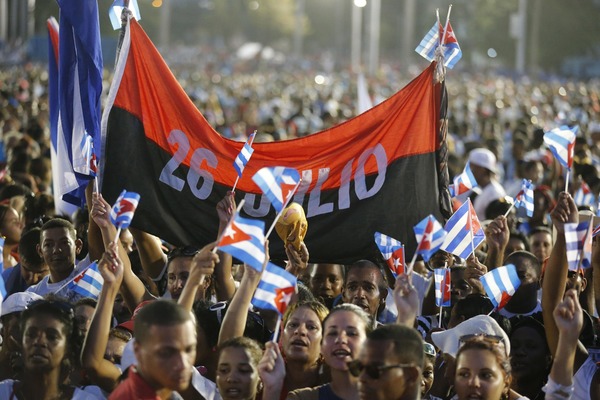
Santiago is full of landmarks weighted with revolutionary significance. But the Moncada Barracks where the Castro brothers and a group of rebels attacked at dawn on July 26, 1953 tops the list.
The plan was to capture the barracks, distribute arms to the population and begin a nationwide insurrection.
The attack failed miserably but it is the event that set the revolution in motion.
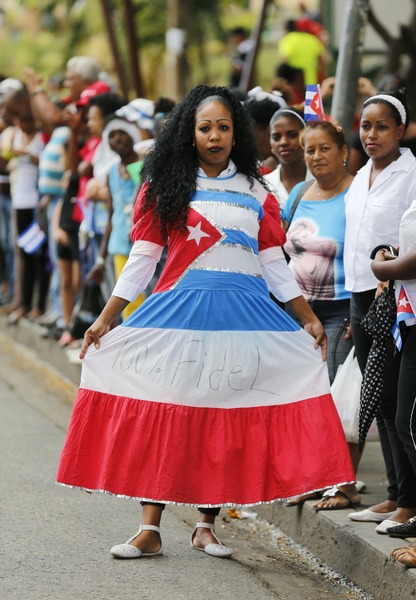
In memory of Castro, some Santiago residents have been wearing homemade versions of the red and blacks arm bands of the 26th of July Movement.
The barracks was converted into a museum and a scholastic center, housing several primary and secondary schools.
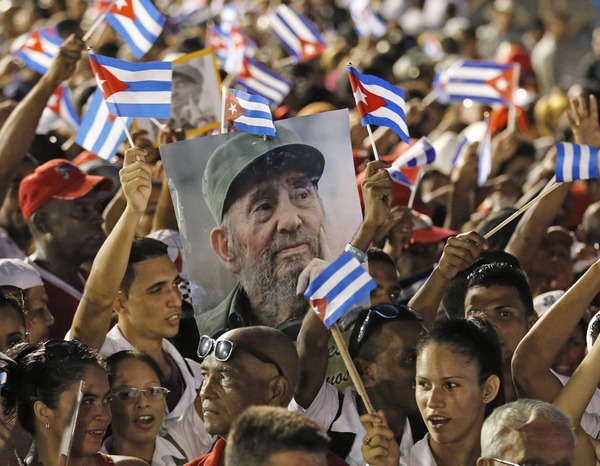
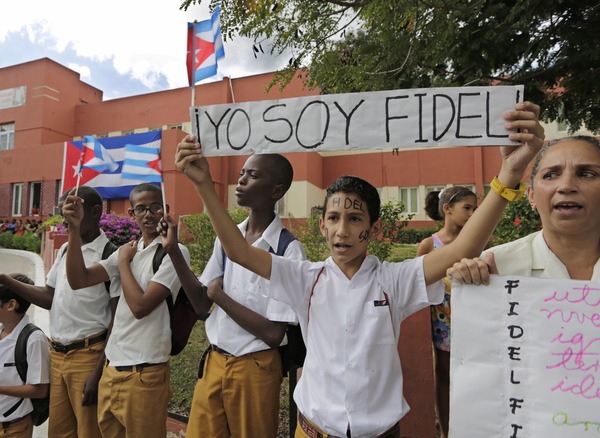
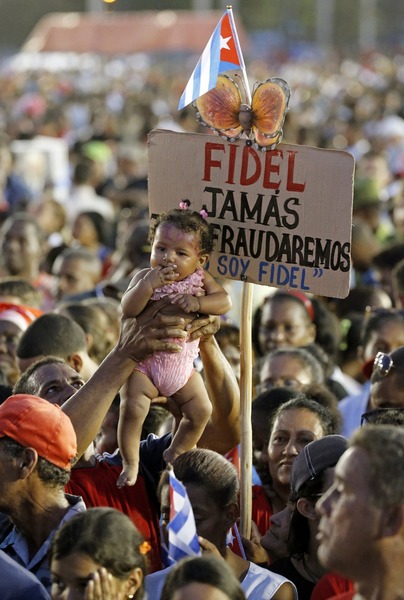
Schoolchildren and their teachers lined the blocks around the barracks to watch the passage of the caravan. Some had written "I am Fidel" and "Fidel Lives" on their foreheads and cheeks with markers.
Yoaleni Martinez, a teacher at another elementary school, carried a sign reading: "Who says Fidel has died? He lives, grows and multiplies himself. He lives in the heart of every Cuban."
"Here at this barracks we have the blood of many Cuban revolutionaries and today it is a school. Imagine that," Martinez said. "And this girl standing next to me, how much would the medicine that saved her life have cost elsewhere? She had a serious bacterial infection and the medicine was free. Now she's 12 years old."
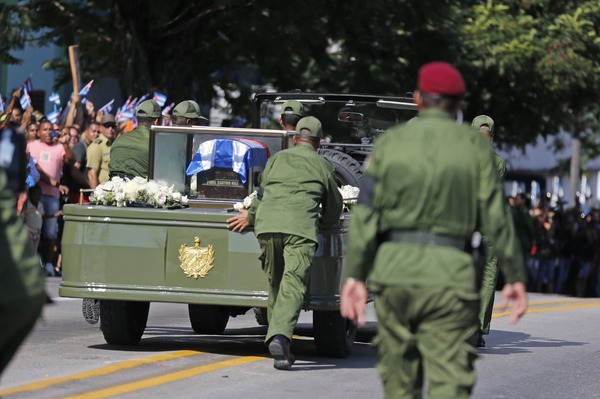
Just after the caravan passed the barracks, the military vehicle pulling the trailer containing Castro's ashes stalled, and members of his honor guard jumped off to give it a push. The caravan continued through the streets of Santiago.