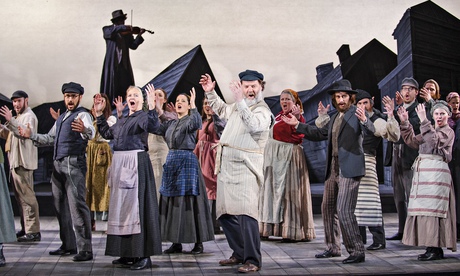
Chutzpah is the only word. In its most audacious coup yet, Grange Park Opera has lured the towering, world-class bass baritone Bryn Terfel on to its small but perfectly formed Hampshire stage to sing Tevye in an all-singing, all-dancing (and what dancing) Fiddler on the Roof. The Welsh farmer’s son with three sons took on the role of the impoverished Russian Jewish milkman with five daughters as if born to it. Chaim Topol, the man who immortalised Tevye on stage and screen from 1967 until 2009, was there to watch, which only added to the pizzazz.
Forget Mozart, Verdi, Wagner or the many other operatic composers that have made Terfel famous. He has always understood musical theatre. He can act. He has a vital understanding of text and sings with heart. As he showed recently in Sweeney Todd, he can rein in his voice and in so doing enhance the efforts of others. With only a hint of bathos, he rolled his magnificent voice round If I Were a Rich Man as if every syllable (Yubby dibby dibby dibby dibby dibby dibby dum) counted, and won our hearts.
One of the biggest hits on Broadway ever, the 1964 musical – not to be confused with Yidl Mitn Fidl, the record-breaking yiddling, fiddling 1936 Yiddish musical film – is about the end of a way of life. No wonder it appeals to all, whether steeped in Jewish culture or not (“I know every single word,” whispered an audience member who probably wasn’t alone). A superb young chorus and a cast mostly drawn from theatre brought Jerry Bock’s music and Sheldon Harnick’s lyrics to life. Jordan Pollard as Perchik and Charlotte Harwood, Katie Hall and Molly Lynch as three of Tevye’s daughters stood out.
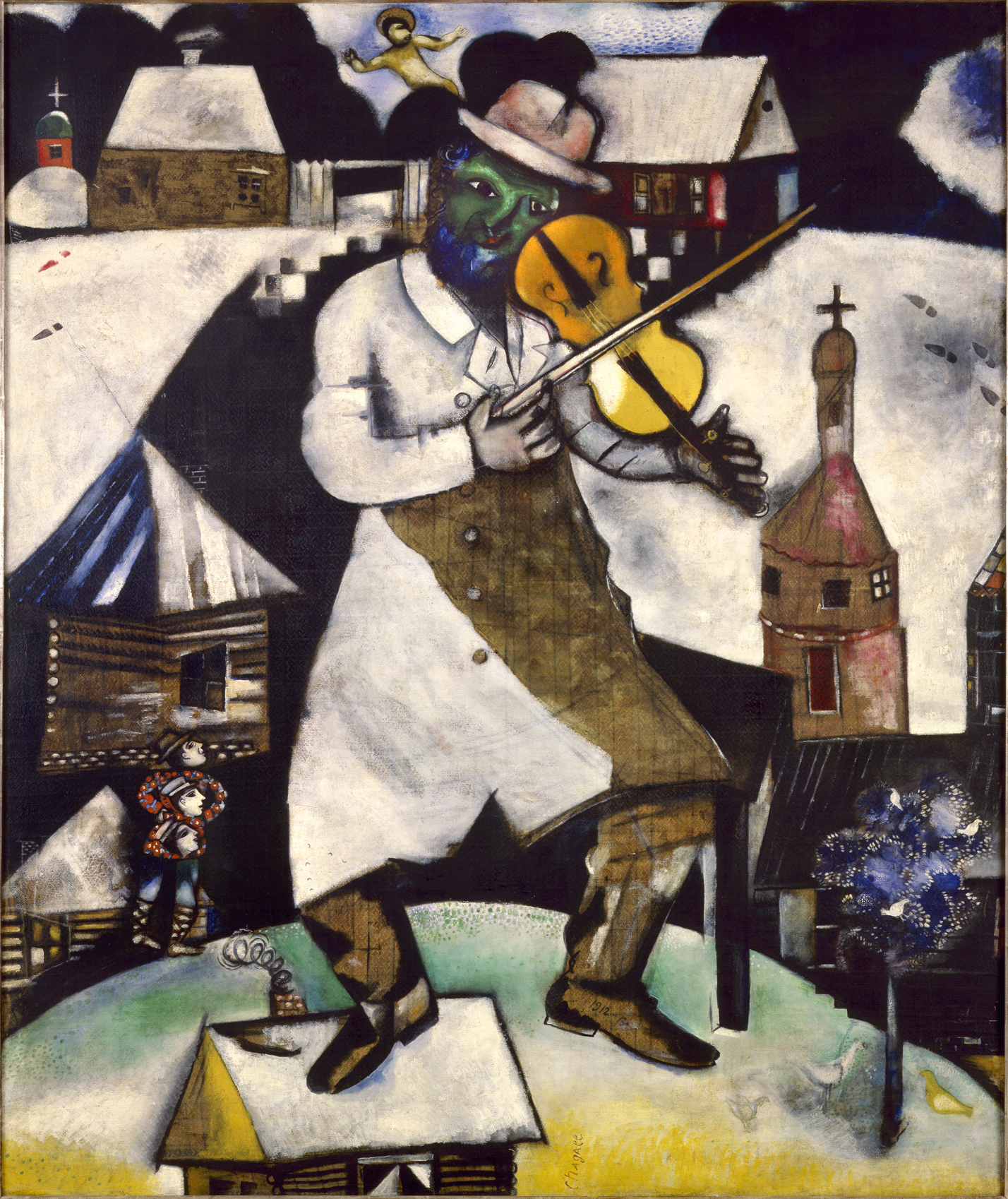
The ensemble number Tradition launched the show. Other hit songs include Matchmaker, Matchmaker, Sunrise Sunset and Do You Love Me? The music sags under scrutiny, but the BBC Concert Orchestra, conducted by David Charles Abell, kept it going with pace and flair. Philip Roth called it “shtetl kitsch”. It’s easy to diss. But this is Broadway come to the Grange, and in exuberant, irresistible style. The director/designer Antony McDonald stuck to familiar shtetl imagery of simple wooden houses, women in headscarves and long skirts, men in subfusc. The violinist Houcheng Kian fiddled onstage throughout – lyrically and from memory, silhouetted on the rooftop in Chagall mode. I checked out the response of a friendly rabbi in the all-star (well, Nancy Dell’Olio was there) audience. Was it OK? A bit more drill on Jewish practices was needed, she said, but that’s her job. The semi-staging at the Proms should bring the house down.
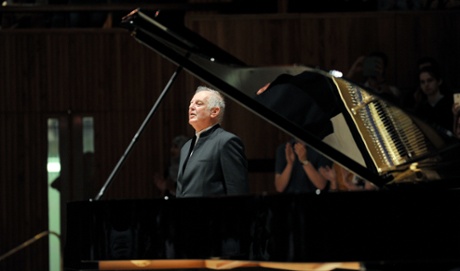
Daniel Barenboim’s four recitals of Schubert Sonatas has ended: one of those grand projects at which he excels. Interest in his new piano gave the opening concert – reviewed last week – an intriguing if unsettled feel. The sound is light but the action visibly heavier, giving no place to hide. As the cycle progressed, so Barenboim dug ever deeper into this radical and perturbing music.
His approach is exploratory, fearless, primeval. He doesn’t adopt the celestial reverence of some interpreters. Instead he builds from first note to last, as if writing the music himself or, better, revealing its structure as he goes. His hands move as if in dialogue with each another, surprised at their own discoveries. Silences between sections last unnervingly long. Pianissimos are hushed as the quietest whisper. He shuns easy fluency. It has you on the edge of your seat.
Unforgettable moments stand out. In the anguished A minor D784, a ferocious darkness – big chords and rumbling trills – yields to a melody of such serenity you can scarcely comprehend the transformation. Barenboim played as if floating. In the finale of the C minor D958, a cluster of major chords ascend as if pushing wind out of an accordion before bursting into a demonic, hand-crossing bop. It’s not an obvious aspect, yet Schubert’s music is full of dance: tarantellas, landlers, tiny waltzes, rustic drones. Barenboim tackles them with brazen flexibility, always keeping the pulse steadfast. Dance is in his blood. As a toddler in Argentina, before the piano took hold, he heard his parents sing and play tango. To him all music is one.
Schubert, still seeking lessons in counterpoint, signed off his final sonata, B flat D960, three weeks before his death. Barenboim’s performance was a summation of the composer’s, not to mention his own, epic endeavour, all from memory. The slow movement was as haunted, lonely and without signpost or landmark as a lost soul trekking across a desert. For me, and for an entranced audience, it was all over too soon.
Star ratings (out of 5)
Fiddler on the Roof ****
Daniel Barenboim’s Schubert cycle ****
- Fiddler on the Roof is in rep at Grange Park, Hampshire until 3 July. Box office: 01962 737373. At the Proms, 25 July