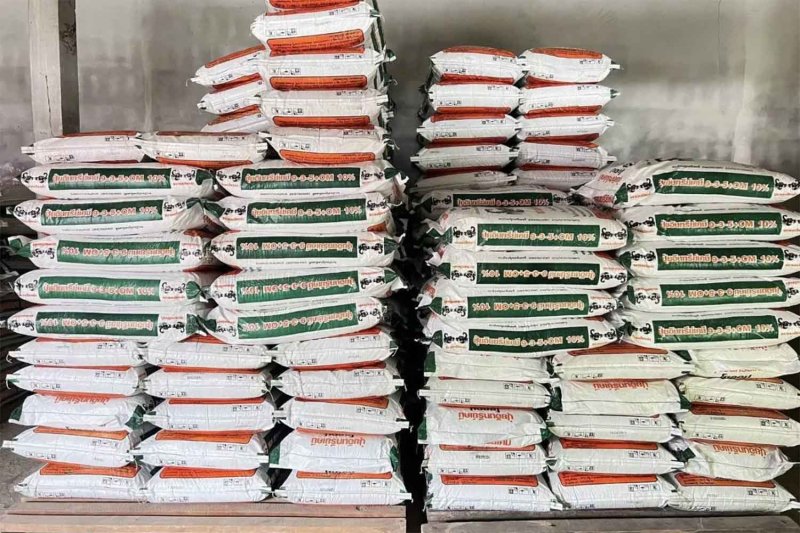
The price of fertilisers is trending downwards, with shipments from the Middle East currently en route to Thailand, says the Commerce Minister.
Following discussions with the Thai Fertilizer and Agricultural Supplies Association (TFAS), the Thai Fertilizer Producer Trade Association and the Thai Agro Business Association, Deputy Prime Minister and Commerce Minister Suphajee Suthumpun said fertiliser supplies are likely to remain sufficient, and prices are expected to decrease.
She has been informed that several fertiliser vessels bound for Thailand have already passed through the Strait of Hormuz.
Given the ongoing uncertainty, she said authorities are working to ensure an adequate supply of fertiliser at appropriate prices.
The Commerce Ministry will regulate the retail price of fertilisers to ensure they accurately reflect actual costs and are not overpriced.
China and Russia will be considered as alternative suppliers should issues persist in the strait. There have been discussions with China and Russia on that matter, Mrs Suphajee added.
Thepvit Teosuratkul, advisor to TFAS's association committee, explained that Thai importers were unable to import urea fertiliser from the Middle East for over three months, from March to May.
But this month some fertiliser shipments from the Middle East have been able to pass through the Strait of Hormuz.
At the same time, exporters in the Middle East, especially Saudi Arabia, have shifted to land transport, moving supplies to ports on the Red Sea for onward shipment by sea.
These measures have facilitated the flow of supplies from the Middle East into Thailand.
In addition, global fertiliser prices, particularly for urea, are on a downward trend. Prices for nitrogen and phosphate compound fertiliser and nitrogen-phosphate-potassium fertilisers have stabilised, signalling a likely decrease in the near future, according to Mr Thepvit.
However, as the situation remains uncertain, he noted that prices are likely to decline gradually.
"Unless the Strait of Hormuz fully reopens to pre-conflict levels, prices will decrease significantly," he said.
According to the Department of Internal Trade (DIT), urea fertiliser prices have increased by around 60% on average, although the current trend is downward.
Meanwhile, phosphate and potassium fertiliser prices have risen by around 20% and 0.2%, respectively, and both remain stable, according to the DIT.