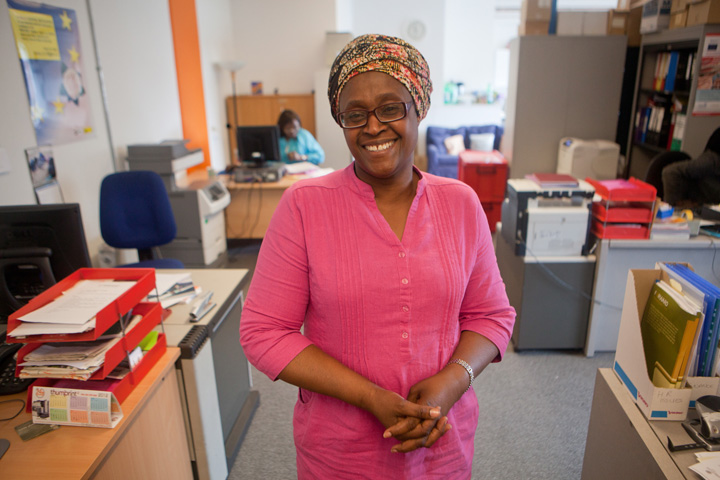
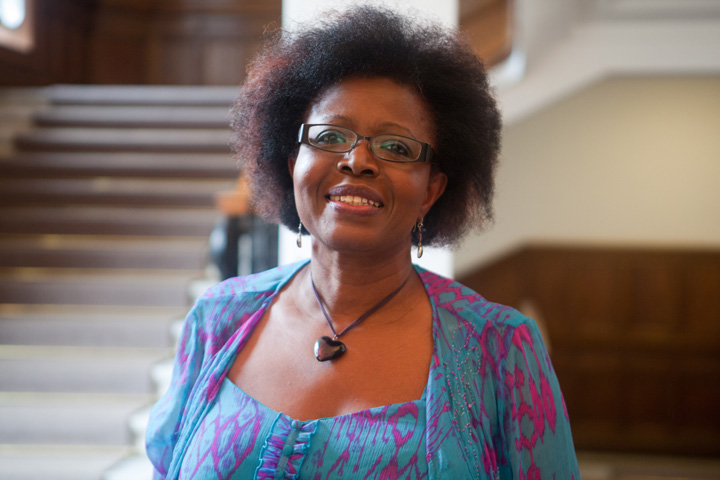
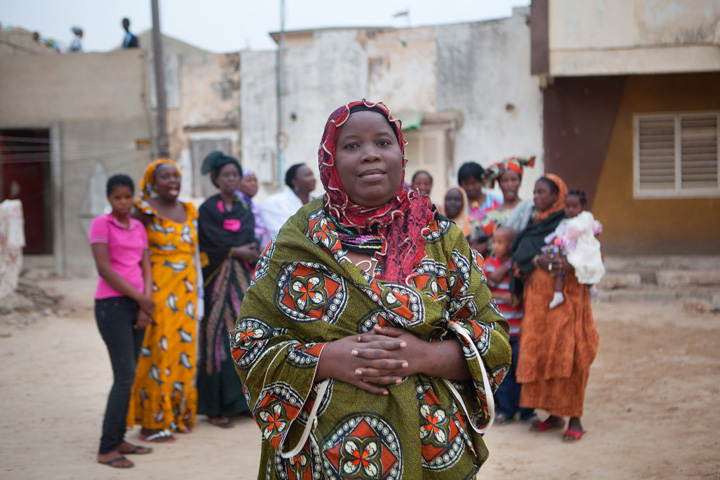
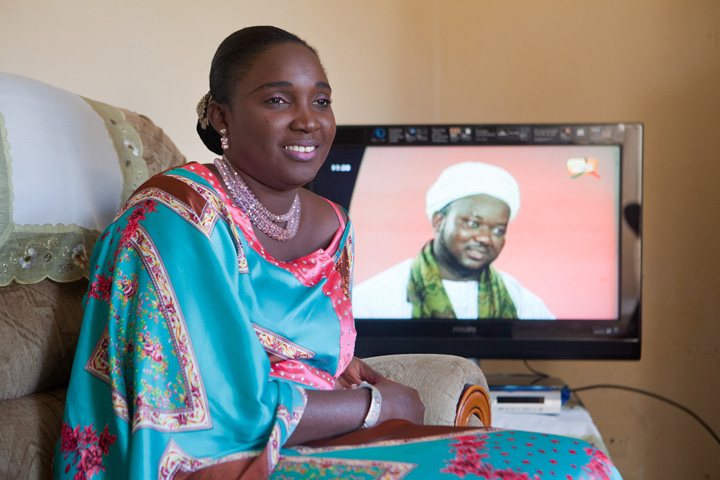
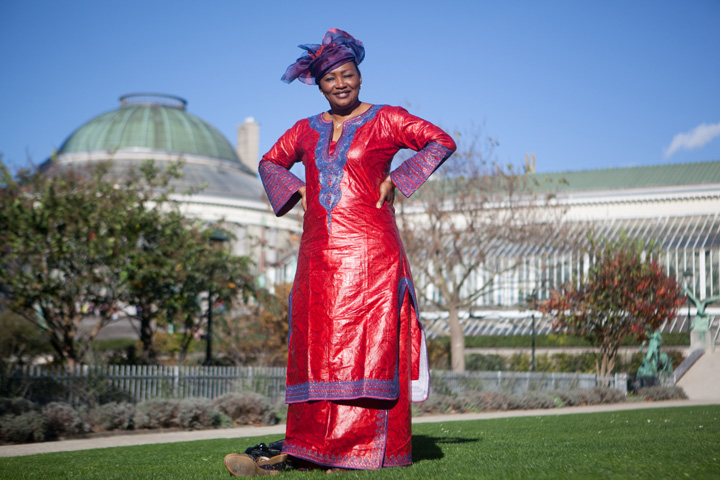
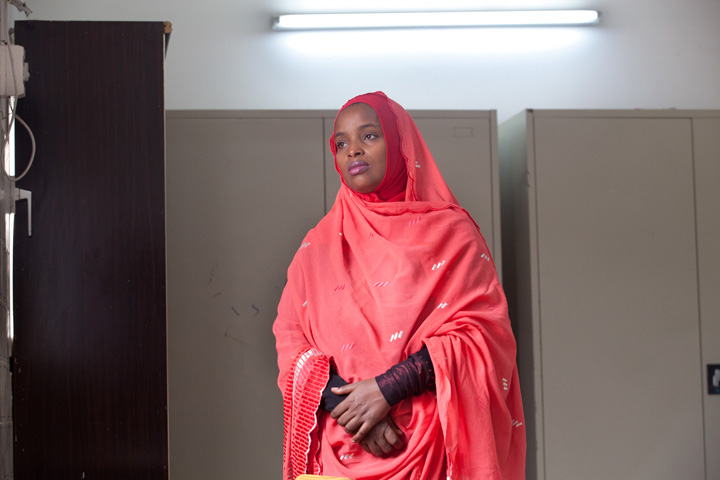
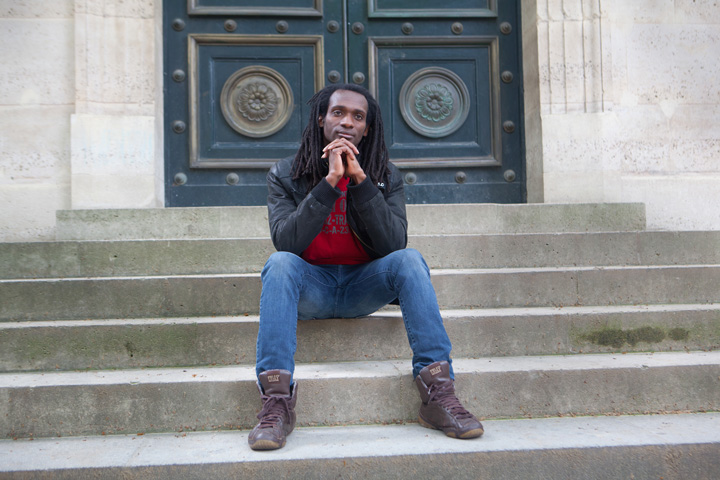
Naana Otoo-Oyortey is head of Forward, an NGO founded in 1983 that campaigns against female genital mutilation in Britain, where more than 20,000 girls are at risk of undergoing the practice. 'European citizens have a crucial part to play,' Otoo-Oyortey says. 'They must put pressure on governments so that laws are reviewed, victims get better support and healthcare professionals become more aware of the situation.' Photograph: Christophe Smets/La Boite a Images/GAMS-BELGIUMEfua Dorkenoo, one of the pioneers in the fight against female genital mutilation, is head of the FGM programme at Equality Now. The organisation is campaigning for tougher legislation worldwide against the practice. In the UK, Dorkenoo advocates a strategic action plan involving healthcare workers, teachers, social workers and police forces. She says: 'British people find it upsetting to intervene on female genital mutilation, because they are afraid of sounding racist. But this has nothing to do with culture or the colour of the skin. It is first and foremost a violation of girls’ rights and a problem of child protection.'Photograph: Christophe Smets/La Boite a Images/GAMS-BELGIUMAissatou Drame is the head of AMSR-Africa (Association pour la Maternité Sans Risque) in Senegal, a vast network of volunteers campaigning for safe pregnancies. These women, often community leaders, do not work from an office, opting instead to visit girls at home and travel wherever they are needed. Many organise local discussion groups on FGM. 'We need to talk to couples, to mothers, to grandmothers, and explain to them why they mustn’t keep cutting young girls. Men, too, are implicated," Drame says. 'We encourage them to talk about how they feel when their wife is cut.'Photograph: Christophe Smets/La Boite a Images/GAMS-BELGIUM
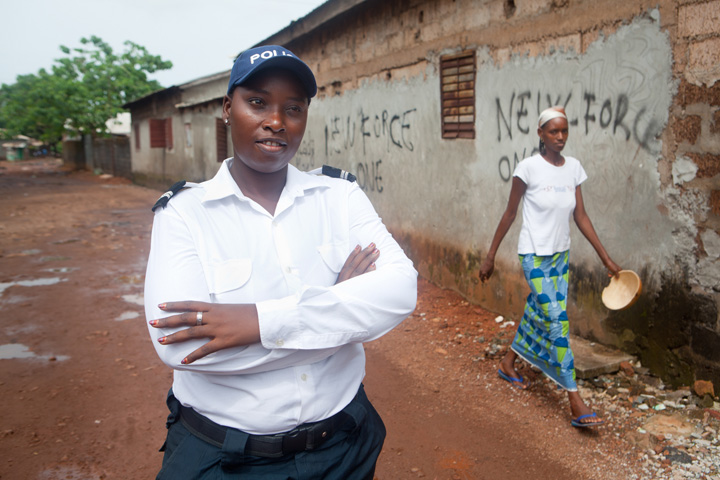
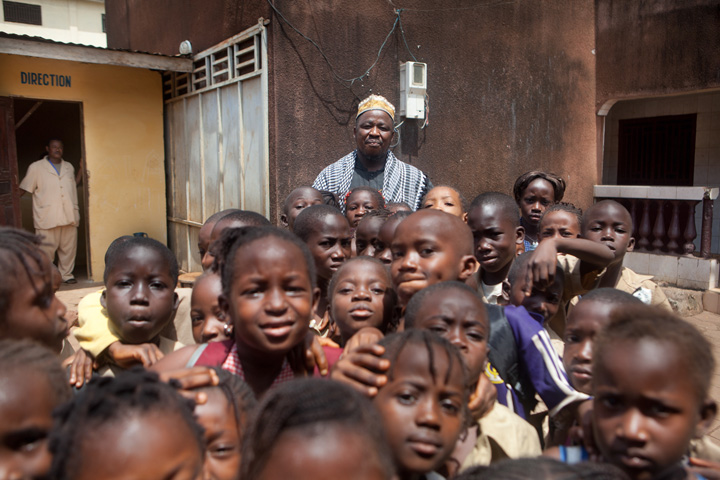
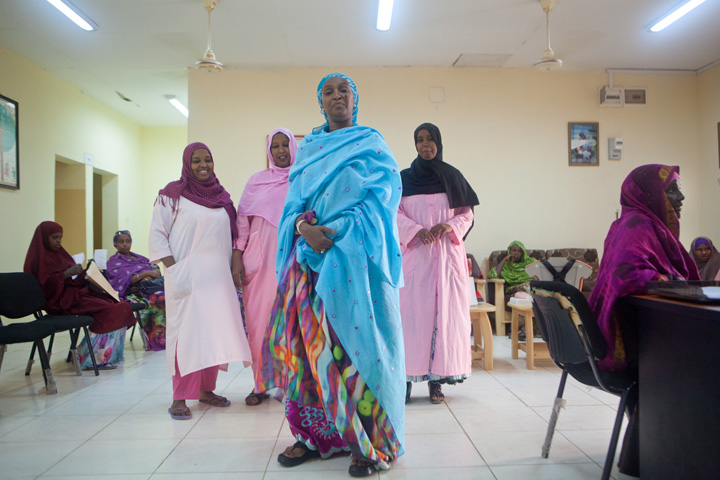
Laouratou Balde Mballo, a teacher in Senegal, believes the best way to tackle FGM is to talk openly about it. She says: 'I’ve been cut. I was six. I was sent to my grandmother’s house for the day. That day, the other girls were there too. There was a plastic sheet in the toilets and two people grabbed my legs. The circumciser was a friend of my family – I felt betrayed. I lost so much blood that I was taken to the hospital. I lost a lot of weight. I still feel the trauma today. I've talked about this with my husband and if we ever have a daughter, we won’t inflict this practice on her.'Photograph: Christophe Smets/La Boite a Images/GAMS-BELGIUMMarie-Jeanne Marcel Lamah, a police officer in Guinea, says: 'A Guinean proverb warns: "Instead of cleaning your neighbour’s, start with cleaning your own place". This is what we’ve done: made our own families aware first.' Lamah founded of Guinée Réalité, an anti-FGM association. When she was a child, her mother’s family tried to have her and her twin sister cut but her father objected. She says: 'We were scared. The women said that if we couldn’t endure the cut, we could never endure childbirth. My father explained to us it wasn’t true and that the practice was bad.'Photograph: Christophe Smets/La Boite a Images/GAMS-BELGIUMIn Guinea, Mohamed Alakama Doumbouya is considered a progressive imam. He has lived in Tripoli and Tokyo, speaks English and is head of a mixed school. He says he is against FGM: 'I haven’t read in the holy Qur'an that it was recommended.' Doumbouya warns couples that FGM can destroy marriages. 'Men whose wives have been cut have problems in bed. I know it – my wife has been excised too. They cut the part necessary to make love.' He allowed his eldest daughter to be cut, but says: 'The Japanese told me, "What? You remove their clitoris? Why don’t you cut their noses or ears off [too]?" I was ashamed.'Photograph: Christophe Smets/La Boite a Images/GAMS-BELGIUMFour years ago, Aïssatou Diallo left Guinea for Belgium to save her daughters from FGM 'because I still remember the pain of my own cutting, like it happened yesterday, because I saw a young girl die in front of me, and others whose lives have been cut short because of this,' she says. 'I couldn’t let this happen to my daughters. But over there, my sisters-in-law … were determined to preserve the family’s honour. My daughters were constantly threatened, I was beaten. After years of fear and rejection, when all hope and strength had almost left me, I left. Today, my daughters are safe, I feel alive again. But I want to fight for the 3 million little girls who are threatened each year.' She says her dream is to be able to say in 10 years that she was one of the last women to be cut.Photograph: Christophe Smets/La Boite a Images/GAMS-BELGIUMCéline Verbrouck uses the law to protect girls against FGM. She founded Intact, an NGO that aims to protect young girls and ensure international agreements are respected. 'FGM flouts fundamental human rights,' she says. 'Nothing can justify that. Law, be it civil, criminal or the right of asylum, offers us essential solidarity tools to try and save children, our children, whether they were born here or abroad, whether they live here or abroad. In this fight, it is necessary to offer these women and their family protection. We are all concerned by this issue and have to address these responsibilities.'Photograph: Christophe Smets/La Boite a Images/GAMS-BELGIUMMounira, from Djibouti, says: 'I became aware of the problem of FGM when I became a midwife. That’s when the struggle began.' She has been campaigning against the practice since the 1980s, when the issue was taboo. 'We were booed at the market; old women called out to us: "You can’t talk about genitals". Today we always bring religious people with us. They remind people that the prophet [Muhammad] didn’t mutilate his daughters. People pay more attention to them.' Public information on FGM must not be limited to health hazards, she says. 'For some people, health is less important than being rejected by the community or not getting married.'Photograph: Christophe Smets/La Boite a Images/GAMS-BELGIUMRoukia Youssouf, from Djibouti, is 37, has six children, works as a midwife and holds training sessions for teenagers. 'Who can tell me why girls are being tortured in this country?' she says. For men’s sexual pleasure, for aesthetic reasons, so that the girls don’t sleep around are the answers she gets. Youssou had her eldest daughter cut in the maternity hospital 'because it was the done thing'. She works with a religious leader to campaign against the practice. 'When you meet an illiterate Bedouin woman, you can talk as much as you want, she will only listen to the religious man,' she says.Photograph: Christophe Smets/La Boite a Images/GAMS-BELGIUMBamako-born singer Bafing Kul was threatened in Mali when he released Exciser, C’est Pas Bon (Excision Is Not Good). He moved to France to use his music to continue his campaign against FGM. 'Women play such an important part in life that I don’t understand why they don’t have more rights; worse still, how they can be put in danger. Women are life, love, courage. Why must they stand the test of a knife to prove their courage? People often point at religion or tradition. But no one is made to damage mankind. The consequences of female genital mutilation on a girl’s physical and mental health are terrible. My daughter is three years old. Never will she be hurt like this. She will take her own decisions; she will be free and untouched.'Photograph: Christophe Smets/La Boite a Images/GAMS-BELGIUM
Sign up to read this article
Read news from 100’s of titles, curated specifically for you.