
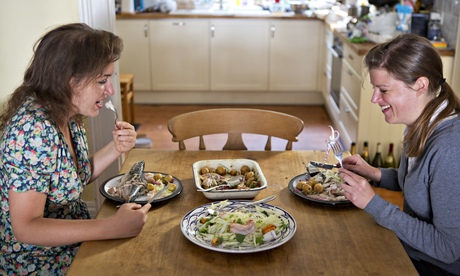
Relax. It’s from underwater, not outer space. Fish is actually much easier to cook than meat.
1 Use your fishmonger if you have one – even the fish counter of a supermarket is better than nothing when it comes to advice, but you can’t beat real expertise. Don’t be afraid to ask the professionals to do the hard work; it’s great to know how to fillet a fish, but they’ll do it in a third of the time for no extra cost.
2 Bright eyes, pink or red gills and a shiny skin are a good indicator of freshness for whole fish, while fillets should have clean, moist flesh. Neither should smell overtly fishy.
3 Be adventurous: good, sustainably sourced fish and seafood is expensive, but you can save money with less popular species which are often far more interesting than the usual suspects. Scott Anderson of Moxon’s recommends hake as a firm white fish abundant in British waters, and arctic char as an alternative to trout or salmon.
4 Keep it simple – most fish and seafood has a subtle flavour, so don’t spoil it by getting too fancy.
5 Fish largely divides into white (cod, haddock, coley, pollock, hake etc) and oily (salmon, mackerel, sardines). White fish is usually more delicate, and works well simply poached or steamed, while oily varieties will stand up to more intense heat (the griddle, for example) and flavours like spices and garlic.
6 It’s very hard to undercook a fish and easy to overcook one, so always err on the side of caution – it will keep on cooking for a couple of minutes after it’s left the heat anyway. In most cases the flesh should be hot all the way through, firm and just opaque, but not yet flaky.
7 Cooking fish in a foil parcel with a little oil, some seasoning and maybe some herbs, tomatoes or whatever flavourings take your fancy is a very versatile and forgiving method – fillets should take about 15 minutes at 220C, leaving you to get on with the accompaniments.
8 As long as you trust your fishmonger, fish doesn’t get much easier than ceviche, tartare or sashimi – all recipes that look impressive, yet require no cookery whatsoever.
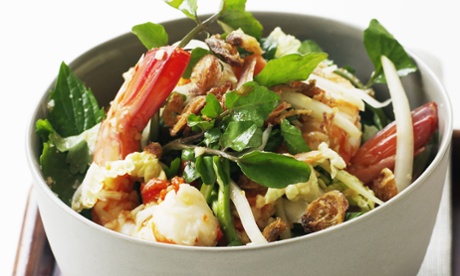
Vietnamese seafood salad
If you can’t find green papaya, an unripe mango (of the sort found in most British supermarkets) makes a good substitute.
Serves 4 as a starter, 2 as a substantial lunch
250g squid, cleaned
8 large shell-on prawns
500g mussels
1 green papaya
Small handful of mint, leaves only
Small handful of Thai basil, leaves only
Small handful of coriander, leaves only
1tbsp roasted peanuts, crushed
½ small red chilli, deseeded, finely sliced
For the dressing
3tbsp fish sauce
3tbsp rice vinegar
2tbsp demerara sugar
2 garlic cloves, crushed
Juice of 1 lime
1 bird’s eye chilli, deseeded, finely chopped
Prepare a sink of iced water. Separate the squid bodies from the tentacles and cut the bodies into large triangles. Score these lightly on one side. Bring a pan of water to the boil, salt well and then add the squid. Cook for 30 seconds until it curls up, then scoop out with a slotted spoon and drop into the iced water.
Shell the prawns, and de-vein. Bring the water back to the boil and drop the prawns in. Cook until they just turn pink, then scoop out with a slotted spoon and drop into iced water.
Scrub the mussels, discarding any open ones that don’t show signs of life when sharply tapped, and put in a large pan with a mugful of the seafood cooking water over a medium-high heat. Cover and steam for about five minutes, or until they have all opened. Tip out, and when cool enough to handle, shell, retaining a couple in their shells for garnish if you like (discard any that remain closed).
Peel the papaya, and cut into thin strips. Put these into iced water for four minutes, then drain. Whisk together all the dressing ingredients and taste.
Toss together the papaya, seafood, herbs and dressing. Put on a platter and garnish with peanuts and sliced chilli.
Baked mackerel and potatoes
(Serves 2)
2 mackerel
400g small waxy potatoes
1 head of garlic, cut in half horizontally
1 lemon, cut in half
2tbsp oil
1 red onion, thinly sliced
2 anchovies, finely chopped
Small handful of caper berries
Parsley, chopped, to serve
Quarter the potatoes (halve if very small, or leave whole if tiny) and put in a large roasting tin with the garlic. Squeeze out the lemon halves on top then season, toss with olive oil, add the lemon shells and bake at 180C for about half an hour, adding the onion, anchovy and caperberries after 15 minutes.
Slash the mackerel three times on each side, rub lightly with oil then season and put on top of the potatoes. Bake for about 15 minutes more, turning after 10, until cooked through. Sprinkle the potatoes with chopped parsley before serving.
.jpg?w=600)











