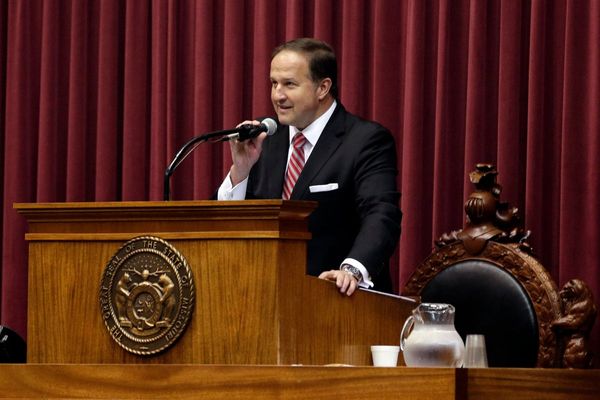
Without making any acknowledgment of the deep discontent with his government shown by protesters chanting “down with the dictatorship” across the island on Sunday, Cuban leader Miguel Díaz-Canel said Monday the massive uprisings were the “cumulative” result of U.S. policies.
He said the majority of people participating in the massive protests across the island on Sunday, which he referred to as “events” rather than protests, had some dissatisfaction with the electricity blackouts proliferating during the hot Cuban summer and the lack of food and other necessities, all because of the U.S embargo.
He said U.S. financial sanctions had made almost impossible to pay for goods abroad, just when the COVID-19 pandemic has stretched resources to the limit.
“All this discontent, these feelings of dissatisfaction, what is the ultimate cause of all that? It’s the blockade,” Díaz-Canel said during a press conference live-streamed on YouTube on Monday. “This is part of the U.S. playbook to destabilize us, to generate chaos, to break our will and spirit.” He said social media has allowed the U.S. to amplify its “genocidal” campaign against Cuba.
The Cuban leader said the U.S. and what he called members of the “Cuban mafia in Miami” were deploying the same tools of “non-conventional war” that they used against the Nicolas Maduro’s regime in Venezuela, especially the “manipulation of feelings” through social media.
Díaz-Canel called the press conference after thousands of people marched in several cities across the island on Sunday to demand the end of Cuba’s authoritarian regime and denounce the lack of food and medicine. The unprecedented demonstrations spontaneously grew as the day progressed and were met with a large presence of Cuba’s special forces in certain areas. Several videos of arrests were posted on social media.
The Cuban leader said that Cubans have the right to protest and voice their opinions as long as they do it in a peaceful way. He said the few instances of confrontation with the police on Sunday were due to a few “delinquents” who stole appliances and electronics from stores that sell goods in dollars, and a group who overturned a police car.
Díaz-Canel said the “economic asphyxiation” created by the tightening of the embargo under former President Donald Trump led to energy shortfalls as power plants were forced to go offline due to difficulties in purchasing parts that needed to be replaced. He said the situation was exacerbated by higher demand in the summer, when power use is traditionally heavier.
He also said the worsening of the COVID-19 pandemic led to more demand on the electrical grid, as Cuba has had to open hundreds of health centers and convert schools into hospitals to treat sick patients as the health system was stretched to the limit.
____