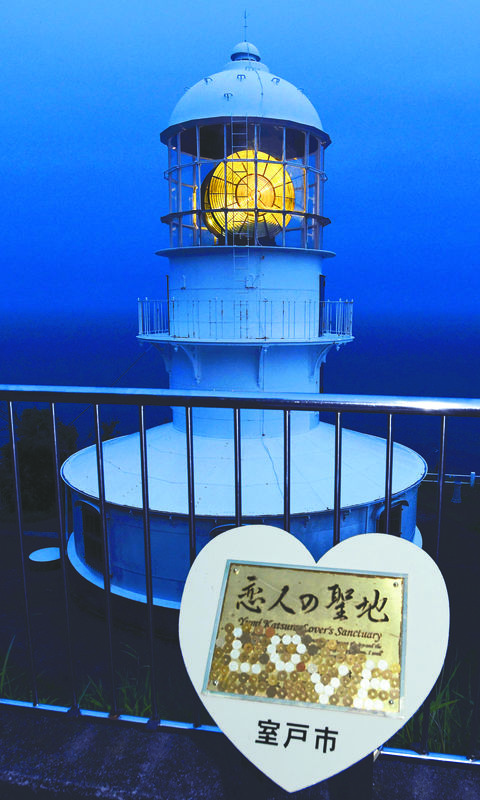
KOCHI -- Pointing down at an observatory in Muroto, Kochi Prefecture, Richi Chikami told me, "This is the tip."
Until she said so, I didn't realize we were at the tip of Muroto. Standing on the actual site, the cape didn't look as pointy as it did on a map.
"Kii Channel is on the left, and Tosa Bay is on the right. On a clear day, you can see where the currents meet," said Chikami, who grew up in the city.
Located in the lower right of the Shikoku region, the Muroto Peninsula is a triangle that protrudes into the Pacific.
Muroto is said to be the "front line of the birth of new land," through the subduction of the oceanic plate and uplift from great earthquakes. In 2011, the site was designated as a UNESCO Global Geopark. Together with Chikami, a guide at the park, I explored the drama of Mother Earth.
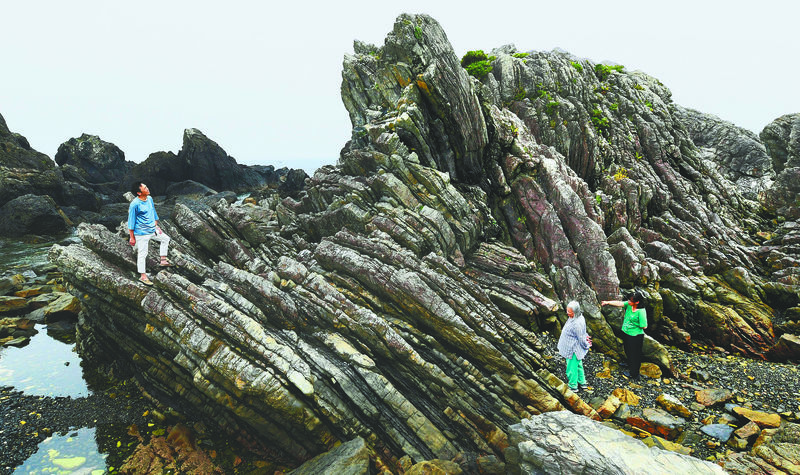
We went down to the coast and walked along a promenade covered with subtropical plants. I got goose bumps at the sight of huge, stratified black and white rocks that twisted and rose in front of us.
"The white part is made of sand, and the black part is made of mud," Chikami said.
The layers are called turbidites, which were formed at the bottom of the sea in ancient times and gradually rose above the sea through collisions between the oceanic plate and the land, she said. Looking closely, I could see marks that looked like welts.
"They're a sign of life crawling through sand and mud," Chikami said.
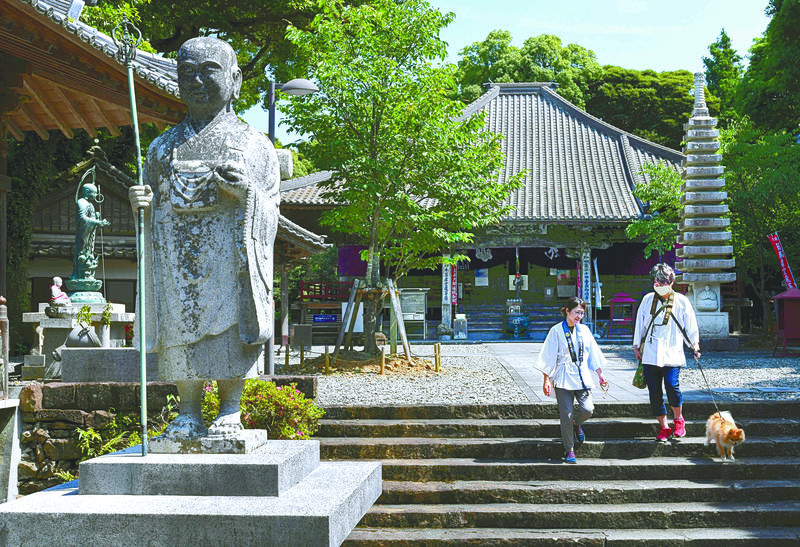
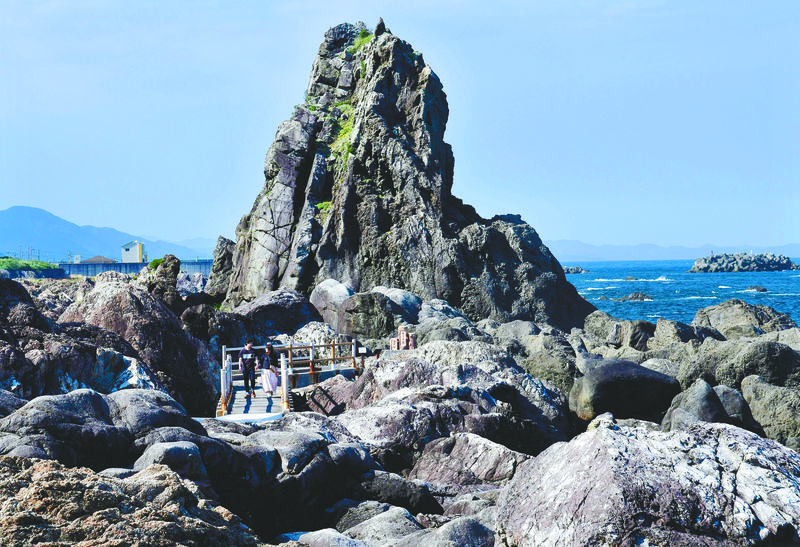
Walking around the area, I encountered several iconic spots, including Bishago Rock, formed from magma that cooled in strata and ascended through upthrusts and erosion. I also saw the Mikurado Caves, which were formed by waves eroding a great hole into the cliffs and are best known as the place where the Buddhist monk Kukai is said to have achieved enlightenment.
It was like being a witness to global upheaval. The Earth continues to rise even now.
"Geo is a new word. But people in this area have been familiar with the geography, rain and wind here for a long time, and made good use of nature in their lives," Chikami said.
In the waters east of the peninsula with fault cliffs stretching far down, deep water rich in nutrition creates good fishing grounds. The western plateau is an oceanic terrace formed by the rising seabed, which drains water well and produces delicious sweet potatoes.
Chikami said she decided to become a guide to share things that sound "mundane but are actually spectacular."
Four years ago, Chikami and her husband took over the management of the old Western-style Misaki Kanko Hotel near the park. She continues working on this "front line" of the old and new.
Muroto prospered from whaling in the old days and is blessed with rich seafood such as mackerel and yellowtail. Recently, however, alfonsino has become popular.
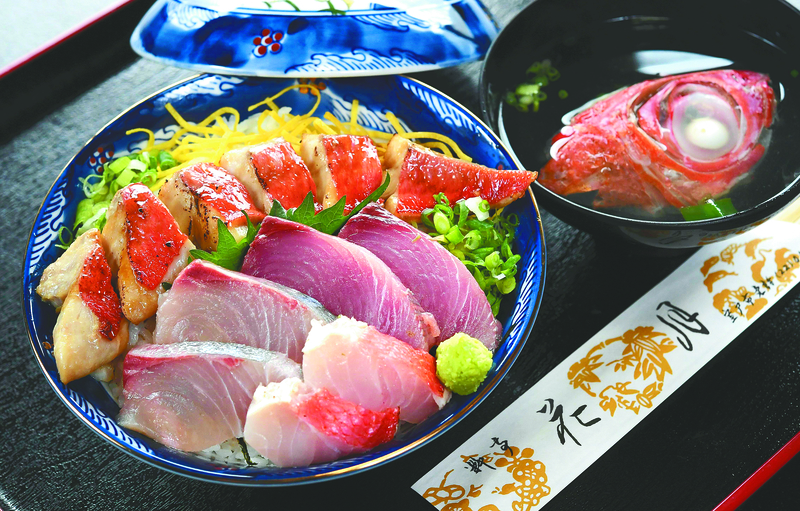
Muroto has the largest alfonsino catch in western Japan, and local restaurants are promoting "Muroto alfonsino rice bowl" as a local specialty.
This dish was invented by Kunio Yamamura, 54, the third-generation owner of the long-established Japanese restaurant Kagetsu located near Murotsu Port. The port once bustled with deep-sea fishing.
Yamamura said the Muroto alfonsino bowl must be topped with "teriyaki alfonsino slices and sashimi raw fish hauled in this region, with alphonsino soup stock." Vegetables that come with the bowl are also harvested in the region.
The day I visited Kagetsu, the alfonsino bowl (1,700 yen with fish soup) was topped with striped bonito sashimi, greater amberjack and thick slices of teriyaki and raw alfonsino. The alfonsino coated with teriyaki salty-sweet sauce was moderately fatty and not too greasy. I poured in dashi in ochazuke (rice in broth) style to finish up the whole bowl.
Read more from The Japan News at https://japannews.yomiuri.co.jp/