
South Korea has long led the way in pushing skincare boundaries, introducing ingredients and technologies that often take years to reach the UK. The latest to cross over? Spicule skincare.
Often referred to as ‘liquid microneedling’, spicules are tiny, needle-like structures suspended in skincare that help drive active ingredients deeper into the dermis. Already gaining traction among beauty insiders, veteran journalist Nadine Baggott is a huge fan.
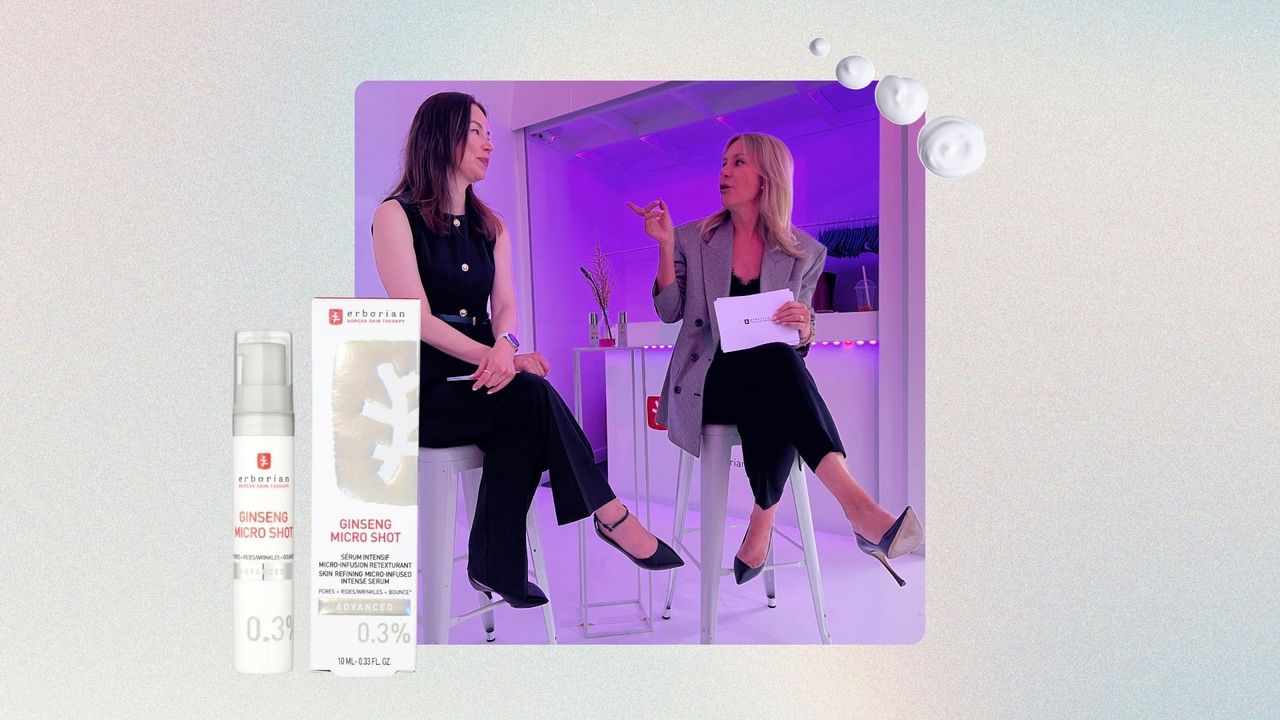
Sharing her enthusiasm alongside aesthetic doctor and K-beauty expert Dr Christine Hall, the two discussed the science of spicules at a recent Erborian event celebrating the brand’s latest launch: Ginseng Micro Shot (which, you guessed it, contains spicules). “Micro spicules have been around for 10 years in Korea,” Hall tells us. “So, although they’re very new to us, it’s reassuring to know that this technology has been around for a long time.”
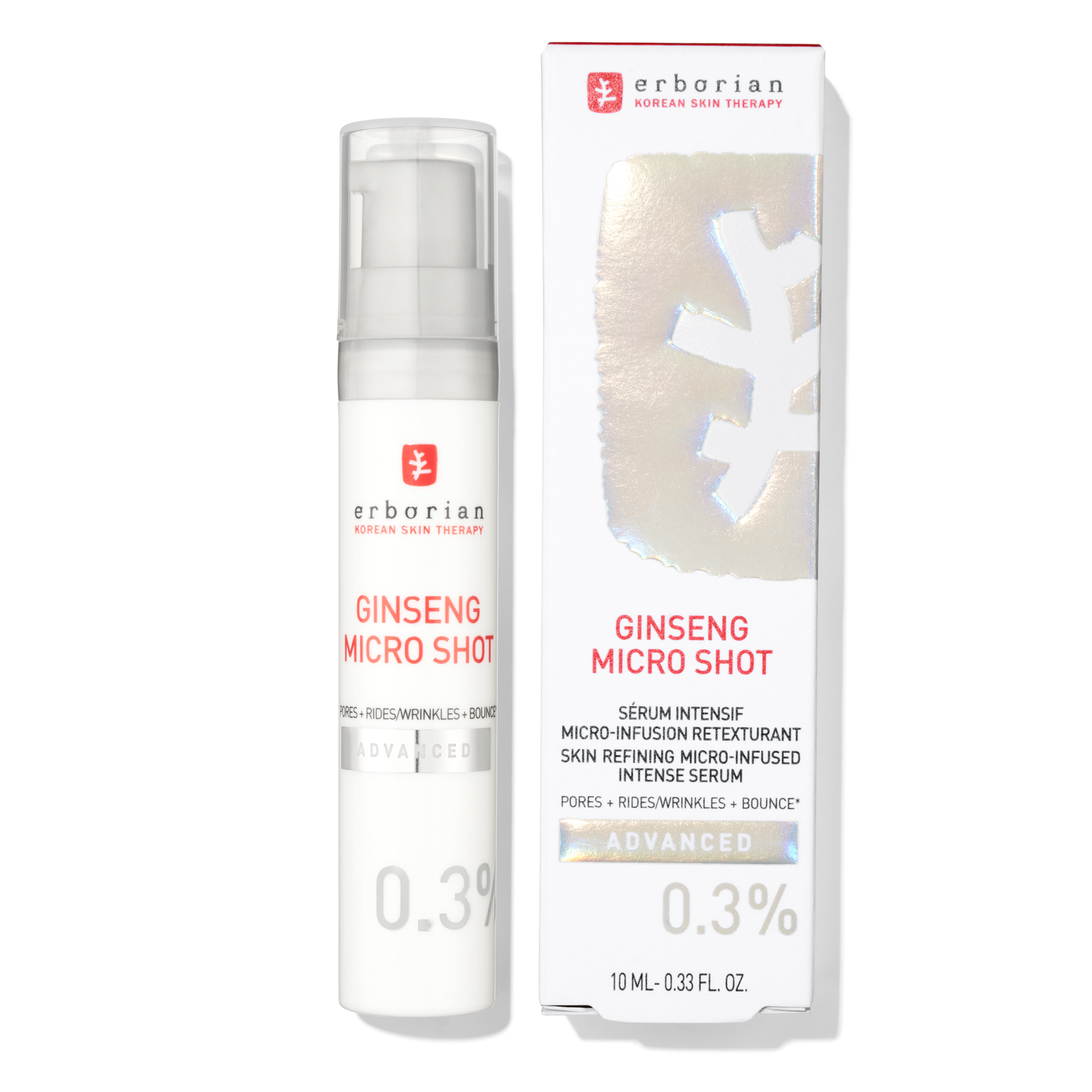
Powered by micro-spicules and a blend of hyaluronic acid, panthenol and ginseng, this overnight serum (in 0.1% and 0.3% strengths) delivers instant radiance while working to smooth and refine skin over time.
What is spicule skincare and how does it work?
Spicules, like traditional microneedling tools, can penetrate the surface very superficially – just enough to help active ingredients absorb more effectively, while gently stimulating the skin’s natural renewal response.
“Spicules are microscopic, needle-like structures typically derived from sea sponges, made up of highly purified silica,” explains Hall. While invisible to the naked eye, under a microscope they resemble tiny shards designed to sit within the skin’s surface layer.
“Spicules sit in the stratum corneum, so very superficially,” continues Hall. “They gently exfoliate and create micro-channels in the skin.” These micro-channels allow the active ingredients within the formula to penetrate more effectively, while also triggering a mild ‘micro-trauma’ response – something that can support collagen production over time.
“Within 24 hours, the spicules have naturally shed,” says Hall. “They’ve done their job and there’s nothing left in the skin.” You may feel a slight tingling sensation immediately after application, particularly when pressing the product in, but this should subside after a few minutes.
Who should use spicule skincare?
Spicule skincare can suit a wide range of skin types, especially those looking to improve texture, clarity and overall radiance. It can also be used on breakout-prone skin, with some Korean studies suggesting benefits for compromised skin. However, it’s not for everyone.
“If you have very reactive or highly sensitive skin, it’s best to start cautiously,” advises Hall. “And I wouldn’t recommend using it on broken skin or conditions like eczema or rosacea.” As with any active-led skincare, a patch test is essential (especially as the spicules remain in the skin for up to 24 hours after application). It’s also advised to avoid use during pregnancy or breastfeeding.
Can spicules be combined with retinoids or exfoliating acids?
Because spicules enhance ingredient absorption, layering them with already potent actives like retinoids or exfoliating acids can increase the risk of irritation. According to Hall, this is a big no-no. “I wouldn’t follow with retinoids or exfoliating acids. They don’t need help penetrating the skin barrier, and doing so can increase side effects.”
Instead, she recommends pairing spicules with calming, hydrating ingredients like centella asiatica or barrier-supporting serums, to maximise results without overwhelming the skin. Baggott takes a similar approach: “I use a retinol most nights, so I treat this like I would a lactic acid and use it on the nights I’m not using retinol.”
How to incorporate spicule skincare into your routine
After cleansing, apply your spicule serum in the evening, gently pressing it into the skin. Beginners should start with a lower concentration once or twice a week, building up gradually. Stronger formulas (meaning a higher concentration of spicules) can be used more regularly once your skin has adjusted – and are often the level at which brands begin making claims around fine lines and texture.
“You can feel the spicules when you press them into the skin,” says Hall. “It’s more of a tingle than anything painful.” Baggott seconds this: “I went straight to the stronger Eborian 0.3% serum – and had zero downtime.” Over time, consistent use can help improve skin clarity and smoothness, while delivering that sought-after glass skin glow – all without the downtime associated with in-clinic microneedling.