Afternoon summary
-
Lord Nash, a Conservative education minister, has told peers that the Feeding Britain report shows how poor people need to learn to prioritise their spending more effectively. Speaking in the Lords he said:
The take up of food banks is a relatively new phenomenon. It did go up 10 times under the previous government.
The OECD tell us that the use of food banks in this country is in fact well below the national averages.
The key way to reduce dependence on food banks is through education so people are less likely to be [out of] work and they are able to prioritise their funding better and making work pay through our reforms to the benefits system.
-
Iain Duncan Smith, the work and pensions secretary, has announced modest measures to reduce the chances of benefit claimants not having enough money to eat. Speaking in the Commons, he said that he was launching a publicity campaign to make claimants more aware of the availability of short-term benefit advances, and that he was issuing guidance to job centre staff telling them to ensure that claimants at risk of hardship know about the availability of emergency payments. He said he was taking the Feeding Britain report “very seriously”. Frank Field, who co-chaired the inquiry that produced the report, welcomed the move. He said:
The secretary of state has made some enormously welcome first moves this afternoon. Even the most efficient benefits system will have some delays, and it is vital both that emergency payments are made available and that they are actively publicised to prevent the need for using a food bank. Might the government now take further action to limit the amount of time it takes to process a claim?
-
George Osborne, the chancellor, has signalled that public sector workers face real-terms pay cuts for another four years under his plans. In an interview with the BBC, he was asked if he was talking about pay cuts in real terms “for every public sector worker for at least another four years”. He replied:
This country has to live within its means. We have to have a government we can afford as a country.
He also defended the Conservatives’ right to attack their Lib Dem coalition partners over the economy. He said:
There’s a perfectly legitimate difference between the Conservative Party which says we have a sensible, realistic and competent plan to reduce the deficit and maintain the economic stability we’ve won in this country, by a mix of public expenditure, savings, welfare and tax, and all the alternatives. And it’s not just Liberal Democrats, it’s Labour, UKIP, you can put them all into the same mix. What they’re offering is a chaotic alternative of higher taxes, higher borrowing, a return to economic chaos. Britain doesn’t want to go back to square one. Britain wants to move forward.
- Margaret Curran, the shadow Scottish secretary, has announced that she is endorsing Jim Murphy in the Scottish Labour leadership contest. She had intended to remain neutral in public, and her decision to endorse Murphy, the favourite, may reflect fears that Neil Findlay, Murphy’s main rival, is doing better than expected.
-
Nigel Mills, the Conservative MP, has used Twitter to apologise for playing Candy Crush Saga during a meeting of the Commons work and pensions committee.
I apologise unreservedly for my behaviour at the committee meeting and realise it fell short of what is expected of a Member of Parliament.
— Nigel Mills MP (@NigelMillsMP) December 8, 2014
I guarantee it will not happen again. It is a fantastic privilege to represent Amber Valley, and I hope constituents will continue to ...
— Nigel Mills MP (@NigelMillsMP) December 8, 2014
... support my campaigns such as lower taxes for hard-working people.
— Nigel Mills MP (@NigelMillsMP) December 8, 2014
Labour lead by a single point in the final Ashcroft National Poll of 2014, conducted over the past weekend. The party is down one point since last week on 31%, with the Conservatives unchanged on 30%. The Liberal Democrats are up one at 8%, UKIP up three at 19% and the Greens and the SNP each down one at 5% and 4% respectively.
- Martin McGuinness, Northern Ireland’s deputy first minister, has said all issues on the agenda of cross-party talks in Northern Ireland must be resolved if a political deal is to be struck. As the Press Association reports, he issued what was essentially an “all or nothing” warning as it became clear the vexed negotiations are set to culminate, one way or the other, at the end of this week. With David Cameron and Irish Taoiseach Edna Kenny planning to join the talks on Thursday, both McGuinness and first minister Peter Robinson have set an effective weekend deadline for an agreement to be reached. The talks, which began nine weeks ago, are wrestling with a range of thorny disputes creating instability at the heart of powersharing.
- Labour has launched an attempt to tighten the rules on fracking to prevent shale gas exploration in protected areas such as national parks and improve environmental safeguards. As the Press Association reports, shadow energy minister Tom Greatrex has tabled 11 amendments to the infrastructure bill to close what Labour describes as “key loopholes” in the environmental regulations governing extraction of the unconventional gas resource. The amendments include introducing a presumption against development in protected areas such as national parks and areas of outstanding natural beauty (AONBs) and putting an obligation on operators to monitor and report “fugitive” emissions from sites.
-
Liberty has been given permission to bring a judicial review against the government’s emergency data retention legislation passed in the summer.
Success! We've been granted permission with David Davis & @tom_watson to bring judicial review of Govt 'emergency' data retention act #DRIP
— Liberty (@libertyhq) December 8, 2014
That’s all from me for today.
Thanks for the comments.
The incident Dennis Skinner was talking about was reported, among other places, here, in the Daily Mirror and here, in the Socialist Worker.
Updated
Work and pensions questions is over.
During the session two Labour MPs asked questions that containing vivid anecdotes about modern Britain.
This was from Dennis Skinner.
In Bosolver and in the village of Shirebrook Mike Ashley has a different rule. Most of his employees at Sports Direct are on zero-hours contracts. It’s time they were abolished. And that’s what we will do if we get into power in May. Is [Iain Duncan Smith] aware that those employment agencies that bring over people to work in Sports Direct result in one of them having a baby in the Sports Direct toilet on New Year’s Day, which proves that all the talk about these wonderful employment figures are totally wrong because she should have been on maternity benefit, she probably should not have been working on New Year’s Day, and that’s what’s inflating these bogus employment figures.
And this was from Jenny Chapman.
Single parents on the work programme in Darlington have been to see me because they are being told to leave their nine and 10-year-old children at home, unsupervised, during the school holidays to be able to attend the work programme. Will [Esther McVey] urgently look into this and make sure this foolish, dangerous, reckless advice is never given to parents.
Duncan Smith told Skinner that the reality was different and that, whatever happened in that one case, only 2% of workers were on zero-hours contracts, and that almost 70% of workers like them because of the flexibility they offer. McVey told Chapman that single parents should be offered work that fits around their childcare commitments.
Iain Duncan Smith told MPs at DWP questions that he had never refused to meet the food banks charity, the Trussell Trust. At the Feeding Britain launch this morning, Stephen Timms, the shadow employment minister, said he had.
The Labour MP Chris Bryant told Iain Duncan Smith during DWP questions that a former Conservative club in his Rhondda constituency has been turned into a food bank.
The former Conservative Club in Tylerstown in the Rhonda is now a Food Bank - @ChrisBryantMP
— norman smith (@BBCNormanS) December 8, 2014
Iain Duncan Smith, the work and pensions secretary, told MPs that he would be looking “very carefully’ at the Feeding Britain report.
But he did have a couple of minor announcements to make in relation to it, he said.
A publicity campaign will be launched to ensure claimants are more aware of the availability of short-term benefits advances, he said.
And new guidance will be issued to benefits advisers telling them to ensure that claimants who are at risk know about the availability of interim payments, he said.
In the Commons Iain Duncan Smith is taking work and pensions question. He has just told MPs that the bedroom tax has saved £830m from the housing benefit bill.
And here’s an interesting food banks graph, from the FT’s Giles Wilkes.
OK, here are your charts of the day. US vs UK trends in searches for "food bank". US, seasonal. UK, accelerating. pic.twitter.com/ijpIfOqc2p
— Giles Wilkes (@Gilesyb) December 8, 2014
Here are two blogs related to the food banks issue which worth reading.
For too long in the debate about food banks, understanding and empathy have been scarce qualities. The all-party report offers wise ways to escape the political impasse. Politicians and the media should look at them closely. They should also reflect on the simultaneously moralistic and dehumanising way poverty is discussed. The need to be seen as “tough” on welfare has meant that politicians have been too slow to make some simple changes that would relieve suffering. Using a food bank is not sign of moral failure – but shaming someone for doing so certainly is.
In The Road to Wigan Pier, Orwell draws the reader’s attention to a letter published in the New Statesman extolling the virtues of eating “oranges and wholemeal bread”. Orwell responds viscerally, saying no “ordinary human being is ever going to do such a thing,” going on to say, “the less money you have, the less inclined you feel to spend it on wholesome food”. Orwell used food as a lens to look at how different people from different backgrounds and different incomes lived their lives ...
In the same book, Orwell presciently outlines another behavioural approach towards food that resounds today. While the “millionaire may enjoy breakfasting off orange juice and Ryvita biscuits”, Orwell wrote, “when you are unemployed, which is to say when you are underfed, harassed, bored, and miserable, you don’t want to eat dull wholesome food”. Instead, Orwell adroitly explained, “you want to eat something a little tasty”.
Here’s an excerpt.
The report rightly supports Prof Elizabeth Dowler’s long-held advocacy of the need for the poor, like anyone else, “to have enough money, and to be able to reach the kind of shops which stock the foods needed for health at affordable prices”. It makes a series of constructive income and social security recommendations based on analysis that food poverty is primarily caused by rising prices, a devalued national minimum wage, income poverty and a flawed benefits system rife with complex policies, programmes and eligibility criteria. It recommends a living wage, but astonishingly does not directly discuss the adequacy of state benefits.
Feeding Britain then muddies the waters by arguing food poverty is a food supply issue and, worryingly, recommends a vanguard role for the charitable food industry and food waste in the battle against structurally caused food poverty. This can only lead to the long-term institutionalisation of food banking and diminish political appetite for progressive reform.
Labour Chris Byrant wants to know if the Sun is going to give Lady Jenkin the Emily Thornberry treatment?
Will the Sun be descending on the Tory who sneers that the poor use foodbanks because they can't cook?
— Chris Bryant (@ChrisBryantMP) December 8, 2014
I think we all know the answer ....
Updated
Since food poverty is the subject of the day, here’s a chance to see the Guardian and Royal Court’s recent microplay on the subject. It only lasts seven minutes.
Lunchtime summary
- Downing Street has ruled out relaxing the benefits sanctions rules as recommended by a cross-party report into hunger and food poverty. (See 12.03pm.) But David Cameron has said there are “elements” in the report that the government will “want to take forward”. The report blames the squeeze on incomes, benefit delays and excessive utility bills for the increasing use of food banks, and recommends various solutions, including quicker benefit payments, the extension of free school meals and a living wage to reduce hunger.
-
Lady Jenkin, a Conservative peer and a member of the cross-party group that produced the report, has apologised for saying that poor people do not know how to cook. Speaking at the launch she said:
The other point is that we have lost a lot of our cooking skills. And poor people don’t know how to cook. I had a large bowl of porridge today; it cost 4p. A large bowl of sugary cereals will cost you 25p.
Later, speaking on the World at One, she explained:
I made a mistake, obviously. I was stupidly speaking unscripted. What I meant was as a society we have lost our ability to cook, or that seems not to be handed down in the way that it was previously by previous generations. Life is considerably cheaper if you are able to cook ...
I’m well aware that I made a mistake in saying it and I apologise to anybody who has been offended by it.
She also said that she was repeating a point made by witnesses to the inquiry. For example, one submission, from Financial Action and Advice Derbyshire, said:
Paying people enough to live on is key, but also there is a need to improve some core skills. We need to avoid teaching people how to be poor, but at the same time there are lost skills in shopping and cooking on a budget, particularly amongst young people.
-
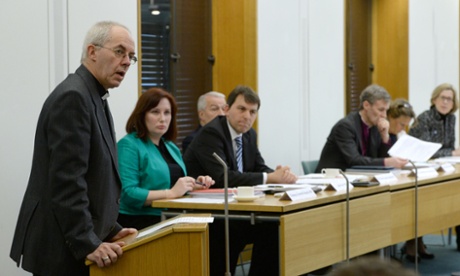
Labour has said that it would reduce the pressure on job centre staff to impose sanctions. Speaking at the launch, Stephen Timms, the shadow employment minister, said:
If we are elected, as well as working closely with Feeding Britain [the new network being set up following the inquiry], we will want to, as the report argues, raise the level of the minimum wage, promote the take-up of the living wage, we will want to scrap the implicit but ubiquitous pressure on job centre advisers to give out more sanctions that we’ve seen over the last few years.
Timms said there has been a tenfold increase in the amount of money saved from benefits being withheld through sanctions between 2010 and October 2012. In October 2012 the sanctions regime became even tougher, and the Department for Work and Pensions stopped publishing these figures, he said. He also said he was “very critical” of the way the DWP had responded to the report. There was “no doubt” that its policies were “a major cause” of food poverty, he said.
-
Boris Johnson, the mayor of London, has ridiculed Nigel Farage for blaming immigration for the traffic delays on the M4 that led to him missing a Ukip event. Johnson told LBC:
Of all the excuses I’ve heard for being late that is one of the poorest - I mean, for a politician to turn up late for an event and blame the immigrants.
-
The Commons authorities have launched an inquiry into how the Conservative MP Nigel Mills was photographed playing Candy Crush Saga while he was attending a meeting of the work and pensions committee. A Commons spokesman said the picture which appeared in the Sun broke parliamentary rules. Taking such unauthorised images can lead to individuals being barred from the estate. The spokesman said:
This was a breach of the filming rules for House of Commons Committee Rooms, and will be investigated by the Serjeant at Arms.
This reaction was condemned by the TaxPayers’ Alliance. Its spokesman John O’Connell said:
This is nonsense on stilts. If the parliamentary authorities have the time and money to waste on this pointless inquiry, then clearly we need to have another look at the size of their budget. The issue isn’t how the photos got out, but why the MP was messing around on video games during the committee and why parliament insists on these outdated filming regulations for what is, lest we forget, a public meeting.
-
A police chief has warned his force could be “unsustainable” within three years if funding cuts continue at current levels. As the Press Association reports, Neil Rhodes, chief constable of Lincolnshire Police, outlined his concerns in a letter to the home secretary, Theresa May, seen by The Daily Telegraph. In the letter he said his force could be the first “to fall over” as cuts to officer numbers in response to a reported 10.4 million budget shortfall would mean it would be unable to police effectively. He said:
If we were a business, then it would be being funded at below the cost of being in business. The cupboard is bare and it is likely that we will be the first force in the country to fall over.
In 2016-17, Lincolnshire Police will be, on the basis of current financial projections, on the edge of viability. In the following year it will be unsustainable.
To cut officer numbers by the amount needed would mean service degradation to a level that would be unacceptable to our communities and compromise both public safety and officer safety.
Updated
Here is some more reaction to the Feeding Britain report.
From Sophie Neuburg, a Friends of the Earth campaigner
It’s a scandal that the number of people forced to seek emergency help from food banks has increased nearly ten-fold in the past year.
A contributor to the problem is Britain’s heat-leaking housing stock, which leaves millions of people having to choose between heating and eating. But, diverting supermarket food waste is not the answer in the long term, as it is using one problem to try and solve another one.
Instead, the government should prioritise peoples’ health, homes and quality of life by dealing with the cost of living crisis so that people can afford to eat properly – they should start with a commitment to a major energy efficiency programme to insulate all low-income households by 2025.
From Salman Shaheen from Left Unity, the leftwing party
Sanctions mean that tiny mistakes can see people’s benefits stopped. Often people are given unclear instructions. Sometimes the rules suddenly change or appointments are moved. One slip-up and they join the ranks of the hungry.
Every crackdown on benefits pushes more people into the food bank queues. Abolishing sanctions is the simple answer: no one should ever be left with no income to live on.
The Metropolitan police has said it will not be taking action against Sadiq Khan, the shadow justice secretary, in relation to allegations that he used his phone to check messages when he was driving. The allegations were first raised by the political blogger, Guido Fawkes. But today Scotland Yard said there was “insufficient evidence” to take this forward. A spokesman said:
All the available material has been assessed and a decision has been taken that there is insufficient evidence to proceed. Unless any additional evidence comes to light, there will be no further police action.
Khan said when the allegation was first made that he would “cooperate fully” with the police.
David Cameron has given a quote to broadcasters about the Feeding Britain report. From what Chris Ship is saying on Twitter, his comments don’t sound very interesting.
PM on foodbanks. Interview went something like this: I will study report, economy growing, more jobs, best route out of poverty ...blah blah
— Chris Ship (@chrisshipitv) December 8, 2014
And here’s a Green party comment on the Feeding Britain report. It’s from Keith Taylor MEP.
Comments from business minister Matthew Hancock that food bank use has increased because there are more food banks and more people know about them are ignorant and reprehensible.
The government must stop blaming people who need to use food banks and start looking into the fact that it’s their benefit sanctions which are causing such poverty.
Updated
Here’s Labour’s statement on the Feeding Britain report. It’s from Maria Eagle, the shadow environment secretary.
This report lays bare the extent of the cost of living crisis in David Cameron’s Britain. Low pay and rising prices have pushed hundreds and thousands into relying on food banks, and the bedroom tax and poor practice at the Department of Work and Pensions have made things worse.
The squeeze on living standards exposed in this report is the most important issue facing politics today. That’s why Labour is committed to freezing energy prices, taking action on water bills and raising the minimum wage, as well as abolishing the unfair bedroom tax.
The TUC has accused the government of introducing a “food banks first” policy for welfare claimants. It says that while newly unemployed people generally have to wait two weeks for their first benefit payment under the current system, under universal credit they will have to wait five weeks. That is because they will not get any money for their first week, and they will then have to wait a month for payment.
In a statement Frances O’Grady, the TUC general secretary, said:
The government is introducing what amounts to a ‘food banks first’ policy for anyone who loses their job or becomes too sick or disabled to work. It’s unrealistic and unfair to make new claimants wait five weeks or more before they receive any cash.
While it is right to deal with people who abuse the system, ministers are now undermining the social security safety net that any of us might need. The government’s welfare reforms are attacking people who have done nothing wrong at a time when they most need help.
I’ve already covered what Number 10 said about the Feeding Britain report at the lobby briefing. (See 12.03pm.) Here are the other main points.
- David Cameron will visit Turkey tomorrow for talks with the Turkish president, Recep Tayyip Erdogan. Their talks will mainly focus on combating Islamic State. Britain is still in favour of Turkey joining the European Union, but this will not be a key issue on the agenda.
- Nick Clegg will be taking PMQs on Wednesday because Cameron will be away.
- Downing Street defended the 12-year jail sentences imposed last week on two men who went to Syria to fight against the Assad regime. These were very serious offences, the prime minister’s spokesman said.
-
Number 10 rejected claims that the sight of Conservative and Lib Dem members of the coalition attacking each other over the economy was unedifying. Everyone was aware of the differences between the parties, the spokesman said.
No 10 rejects Feeding Britain report's call for benefits sanctions to be relaxed
This is what Number 10 was saying about the Feeding Britain report.
-
Downing Street ruled out relaxing the benefits sanctions rules, as the report recommends. The report proposes various measures to make sanctions less punitive, including the adopting of a “yellow card” system that would replace santions being imposed for a first offence. Asked if the government would consider changes to the rules, the prime minister’s spokesman said:
The prime minister’s view is, just as it is right that we have welfare provision, it is also right that there are responsibilities on those who receive benefits. We do expect people to attend appointments at job centres, complete CVs and accept employment offers that are made to them ... The prime minister’s view is that we have the right approach to this with regard to sanctions.
But the spokesman did accept that more needed to be done to ensure that benefits are paid on time. There had been a 7% improvement since 2010, he said, but the government still wanted to go further.
-
Number 10 refused to comment on Lady Jenkin’s comment about poor people not knowing how to cook. (See 11am.) “I have not seen those comments,” the prime minister’s spokesman said. Given that I did not post the quote earlier, here’s what Jenkin actually said:
We have lost our cooking skills. Poor people don’t know how to cook. I had a large bowl of porridge today, which cost 4p. A large bowl of sugary cereals will cost you 25p.
- The prime minister’s spokesman said that one reason for the increasing use of food banks was the fact that they are now promoted in job centres.
-
The spokesman said that generally the government would consider the ideas in the report “very carefully”.
I will post more from the Number 10 briefing, on other subjects, shortly.
Feeding Britain report launch - Summary
Here is a summary of the main points from the Feeding Britain launch.
-
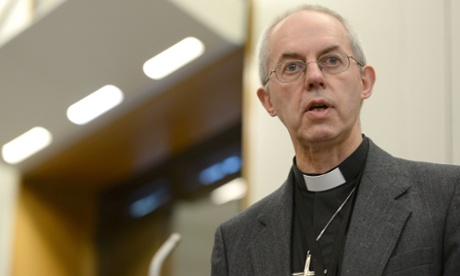
Justin Welby, the archbishop of Canterbury, has called for a cross-party effort to tackle food poverty. He backed the findings of the Feeding Britain report and will be be president of a new Feeding Britain network, that will take forward its recommendation. He told a news conference.
Party-political approaches will not work for an issue like this, which has complex roots, and which affects our most basic needs as human beings. Everyone needs to eat. And therefore I also want to pay tribute to the dedication of the whole inquiry panel, particularly the Members of Parliament, who, fairly obviously, take a political risk in doing something that’s all-party. . . but have done it with immense dedication and they really do deserve huge thanks.
But that’s not the only reason why this cannot be a party political issue. I have spoken to numerous politicians on this, and I know well that, whereas it’s easy to be cynical, the reality is that there are huge numbers of people, both from government and opposition, all across the spectrum of opposition parties, who are absolutely committed to ensuring the wellbeing of their constituents and all the people in their country.
They are guided by a strong moral compass and we need to recognise that and not always be too cynical about what we see our politicians doing. The issue is how you turn that moral compass into practical action ...
But that’s not the only reason why this cannot be a party political issue. I have spoken to numerous politicians on this, and I know well that, whereas it’s easy to be cynical, the reality is that there are huge numbers of people, both from government and opposition, all across the spectrum of opposition parties, who are absolutely committed to ensuring the wellbeing of their constituents and all the people in their country.
They are guided by a strong moral compass and we need to recognise that and not always be too cynical about what we see our politicians doing. The issue is how you turn that moral compass into practical action.
-
Lady Jenkin, a member of the cross-party group that produced the report, said that one problem was that some poor people did not know how to cook.
Baroness Jenkin says lack of cooking skills part of problem; 'Poor people don't know how to cook' she tells presser #FeedingBritain
— Libby Wiener (@LibbyWienerITV) December 8, 2014
Asked about this comment, she said lack of cooking skills was one of the problems that emerged from the evidence the group took.
- Rob Wilson, the minister for civil society, said the government would consider the group’s proposals seriously. But he did not comment on what the report had to say about benefits sanctions.
-
Stephen Timms, the shadow employment minister, criticised the Department for Work and Pensions for not sending a minister to the launch, and for not engaging with the concerns raised about the increased use of benefits sanctions. Labour would end the pressure on benefits staff to use sanctions increasingly, he said.
I’m off to the Number 10 lobby briefing now. I’ll post again after 11.30am
Now at food bank report launch with @JustinWelby. Frank Field speaking now pic.twitter.com/uMZZaxcplF
— Isabel Hardman (@IsabelHardman) December 8, 2014
The Spectator’s Isabel Hardman has written a good blog about the Feeding Britain report for Coffee House. She says it is admirably unpartisan.
This is clearly not a report seeking to score political points. The Archbishop is not a partisan man. He is someone who understands business and the real world as much as he understands theology and therefore his endorsement of the report is far more potent. The Tories look up to him – indeed, they are often agitated when he makes interventions without their knowledge. His involvement makes them more likely to pay attention to the report, not less. Similarly, Labour thinks that Welby’s emphasis on social justice makes him one of theirs, though he has always insisted he is a swing voter.
Field is clearly very keen to move things on from the current toxic stand-off: when I asked him whose fault food banks and the toxic row about them was, he made quite clear that he thought there was little point in going back over this and that this report was an attempt to get things done.
It is a thoughtful report, and very difficult for the sort of people who like lazy point-scoring on either side of the political spectrum to use as a weapon.
The BBC’s Nick Robinson makes a similar point.
Interesting to see Church & Govt working hard avoid a row on food-banks. Ministers welcoming report as not spun as consequence of austerity
— Nick Robinson (@bbcnickrobinson) December 8, 2014
Here’s today’s poll from Populus.
Latest Populus VI: Lab 36 (+1), Con 33 (=), LD 8 (-1), UKIP 15 (+1), Oth 8 (-1). Tables here: http://t.co/0g1Obe6dyb
— Populus (@PopulusPolls) December 8, 2014
Tim Thornton is wrapping up the news conference by reading out the measures that organisations have already agreed to take in response to the committee’s report.
These were set out in Frank Field’s press release. I posted them earlier, at 9.32am, 9.35am and 9.38am.
Justin Welby, the archbishop of Canterbury, has agreed to be president of the new organisation being set up, Feeding Britain, he says.
And that’s it. The news conference is over.
Someone from FoodCycle is now addressing the news conference. FoodCycle collects surplus food from supermarkets, she says.
She says there are some cakes here made from food surplus.
Q: [From Chris Mould, chairman of the Trussell Trust] How are we going to see ,through Feeding Britain, more pressure on organisations to coordinate with each other?
Tim Thornton, the Bishop of Truro, says he thinks “the glue has gone from our society”. The connections between us have disappeared.
The danger is to point a finger and ask who is to blame.
But the answer is in all our hands.
Food banks do not just give out food. They ask people about their problems. They are listening to what they say.
That means giving people a real say. It turns how power works upside down, he says.
Q: [To Tim Thornton, the Bishop of Truro] How worried are you about the cuts proposed by George Osborne over the next five years?
Tim Thornton says he is very concerned. We all need to think about what it means to be part of a society, he says.
Frank Field says, if this report is implemented fully, hunger will not be an issue at the 2020 election.
Q: [To Lady Jenkin] You said one problems is that poor people do not know how to cook. Are you blaming people?
No, says Lady Jenkin. She says she was just referring to evidence in the report; some people do not have cooking skills.
Frank Field says the group welcomes the suggestion from the government that more cooking skills should be taught in schools.
But government rules allow landlords to provide accommodation with just a microwave. Even those with good cooking skills can’t do much with that, he says.
The presentations are now over. The panel are now taking questions.
Q: Who will be on your Feeding Britain group beyond the panel?
Frank Field says it is consulting. He wants this to be a bottom up initiative.
Updated
Stephen Timms, the shadow employment minister, is now responding to the report on behalf of Labour.
He says that, after this report, no one will be able to say that hunger is not a problem in this country.
He says the role the churches have played have been striking. it is not surprising that the care; but it is perhaps surprising that they had the capacity to respond.
He says he welcomes the tone of Rob Wilson’s comments.
But it is disappointing that the Department for Work and Pensions did not sent a minister to this launch. The DWP continues to attack the Trussell Trust for having a political agenda on food banks, he says.
He says there is “no doubt that the policies of the DWP have been a major cause” of the increasing demand for food banks.
The bedroom tax should be repealed, he says.
And the use of sanctions has increased dramatically, he says. From the election until 2012 there was a ten-fold increase in the amount of money saved from the use of benefit sanctions. Since then the government has refused to publish figures.
Labour would increase the minimum wage, he says.
And it would remove the “ubiquitous” pressure on benefit office staff to increase the use of sanctions.
Wilson is still speaking.
He says the report recognises that the causes of food poverty are complex.
It makes a number of recommendations. These will be considered carefully, he says.
He says the government will continue to work with the cross-party group on this.
Frank Field says all the members of the commission have now spoken.
He now introduces Rob Wilson, the minister for civil society, who is responding on behalf of the government.
Wilson pays tribute to the people who run food banks. There is a long tradition in this country of such selfless acts, he says.
He says he visited a food bank recently, and saw first-hand the generosity of people contributing.
He says food banks provide an incredibly valuable service. It is right that the report recognises this, he says.
There will always be some surplus in the food chain, he says. The government welcomes measures to ensure that this is redistributed to the hungry. In March new research was published showing the industry how it could redistribute more food. This has led to a 15% reduction in household food waste. And the amount of food waste being dumped as gone down, he says.
But he says the government wants to go further. It is developing a new plan, Courtauld 2025.
He says the government believes work is the best route out of poverty. It’s long-term economic plan is working, he says.
At the news conference the members of the cross-party inquiry into hunger in the UK have all been making short speeches backing its recommendations.
They are: Frank Field, the Labour former welfare minister; Tim Thornton, the bishop of Truro; John Glen, a Conservative MP; Lady Jenkin, a Conservative peer; Emma Lewell-Buck, a Labour MP; and Sarah Newton, a Conservative MP.
Newton, MP and Truro and Falmouth, is speaking now. She says Cornwall is the poorest region of the county.
Feeding Britain - Next steps by the cross-party group
And this is what Frank Field’s news release says about the next steps being taken by the cross-party group of MPs and peers examining hunger.
The cross-party group of MPs and peers:
- With the support of the Archbishop of Canterbury, will set up a pilot programme in each region of the United Kingdom that will form the basis of Feeding Britain.
- Will call a meeting of all interested parties to accelerate the process of redistributing edible surplus food to organisations providing a ‘hand up’ to those in need.
- Will work with FareShare, FoodCycle, the Trussell Trust and others who have put themselves forward as potential participants in Feeding Britain, to build on the outstanding work they have already been doing.F
- Is inviting each of the dozens of organisations present at today’s report launch to put themselves forward as participants.
Feeding Britain - Retailers respond
And these are the measures being taken by the food industry to tackle food poverty in response to the report. Again, I have taken the quotes from Frank Field’s news release.
Asda has stepped forward as Britain’s first retailer to waive their suppliers’ delivery fees for surplus food given to FareShare.
The Co-operative has committed itself to working with Feeding Britain
Sainsbury’s is setting up a new summit with its suppliers to offer more fresh surplus fruit and vegetables to FareShare
Morrison’s is setting out plans to expand its partnership with FoodCycle during 2015 to cover even more local areas in which its stores are located.
Asda and Waitrose have set themselves targets to send none of their edible surplus food to Anaerobic Digestion.
Waitrose is now encouraging all of its branches to donate surplus food to charities in the local community.
Tesco is continuing with its pioneering National Food Collection.
The British Retail Consortium is pledging to look within its own operations to maximise across its supply chain the amount of surplus food redistributed to people who need it.
The Waste and Resources Action Programme (WRAP) has confirmed that the redistribution of surplus edible food to those in need will be part of negotiating the new Courtauld 2025 Commitment on reducing waste.
Feeding Britain - Measures underway to tackle 'rip-off Britain'
Justin Welby, the archbishop of Canterbury, has now finished.
Frank Field MP has just put out a new release saying some organisations have already agreed to act in response to the reports recommendations.
These are the measures the group says it has secured to tackle “rip-off Britain”. I’ve taken the quotes from the news release.
Ofcom will provide a consumers’ guide to the Department for Work and Pensions (DWP) with advice on the best value phone deals, and tips on how to keep costs down, so this can be shared with benefit claimants. It is currently working on a debt advice guide which it will also share with DWP.
The Financial Conduct Authority will consider what further action might be necessary to change the price cap on High Cost money lenders, to ensure poor and vulnerable households are not left exposed to what the Inquiry witnessed of the worst excesses of high-cost short-term lenders.
The Financial Conduct Authority is proposing measures to abolish the use of higher-rate telephone numbers by money lenders, credit card companies and banks.
Ofwat will encourage water suppliers to offer social tariffs to poorer customers who find they can no longer afford their bills after being put on a water mater.
Ofwat will encourage all water companies not to use higher-rate telephone numbers.
Welby says he hopes that the government will look seriously at funding the pilot schemes proposed in the report.
He says he hopes the report can make a transformative difference.
Welby is still speaking.
People are food banks usually arrive with “an unjustified sense of shame”, he says.
If we are to eliminate this, then many organisations will have to play a part.
Welby says the reports yesterday suggested the report was saying government should take over food banks. But it is not saying that, he says.
It is far more creative, he says.
Justin Welby, the archbishop of Canterbury, is speaking at the Feeding Britain launch now. We are in a committee room in Portcullis House at the Commons. It has taken me a while to get an internet connection: sorry for the delay.
Welby says he set out some of his thinking in a newspaper article yesterday. He said seeing people going without food in the UK was even more shocking than seeing it in Africa, because it was so unexpected.
This should not be a party political issue, he says.
There are a huge number of politicians, from all parties, who are committed to the well being of their constituents, he says.
It’s a mixed and busy day at Westminster.
On a light note, the Conservative MP Nigel Mills has admitted to the Sun playing Candy Crush Saga during meeting of the Commons work and pensions committee. This is what he told the paper.
It was a long meeting on pension reforms, which is an important issue that I take very seriously. There was a bit of the meeting that I wasn’t focusing on and I probably had a game or two. I shouldn’t do it but if you check the meeting I would say I was fully engaged in asking questions that I thought were particularly important in how we get the pensions issue right. I shall try not to do it in the future.
Obviously, he should have been concentrating, etc etc, but, as someone who has sat through many of this committee’s two-hour hearing, it’s hard not to have a smidgeon of sympathy.
On the coalition front, relations between the Conservative and the Lib Dems are getting more shaky. As the Guardian reports, David Cameron has written to his MPs saying the Lib Dems are “all over the place” on the economy. But Danny Alexander, the Lib Dem chief secretary to the Treasury, has used an article in the Daily Telegraph to say that it’s the Tory economic stance that is incredible.
Who would have thought that of the two parties that formed the Coalition, it would be the Tories who would be blown off course? A mix of unfunded tax promises, harsh spending plans, and pandering to Ukip may be born of pre-election panic, but it is not economically credible.
Alexander has been elaborating in an interview on the Today programme. I will post highlights later.
But the main event this morning is the publication of the Feeding Britain food banks report. Here’s the Guardian’s story about it. And here’s how it starts.
The Conservative party is seeking to avert one of its biggest rifts with the Church of England for decades as an all-party report on food banks warns that Britain is stalked by hunger caused by low pay, growing inequality, a harsh benefits sanctions regime and social breakdown.
The church-funded report says voluntary groups have been courageously fighting “a social Dunkirk” without the assistance of the government, and calls for urgent action to ensure ministers do more to combat hunger, including joining a new coordinating body and asking supermarkets to do more with surplus unsold products.
The initial Conservative reaction to leaks of the report – which is formally published today – was hostile, with one minister claiming the increased use of food banks was due to greater publicity about their existence.
The formal launch will take place shortly. I will be covering it live.
Here’s the agenda for the day.
9.15am: Justin Welby, the archbishop of Canterbury, and Frank Field, the Labour MP, publish the Feeding Britain report on food banks from an all-party parliamentary group.
9.30am: The Resolution Foundation publishes a new report in housing affordability.
11am: Number 10 lobby briefing.
2.30pm: Iain Duncan Smith, the work and pensions secretary, takes questions in the Commons.
3.15pm: The Commons public accounts committee takes evidence from accountancy firms on tax avoidance.
As usual, I will be also covering all the breaking political news from Westminster, as well as bringing you the most interesting political comment and analysis from the web and from Twitter. I will post a summary at lunchtime and another in the afternoon.
If you want to follow me on Twitter, I’m on @AndrewSparrow.