SACRAMENTO, Calif. _The Sacramento district attorney said no. The state attorney general said the same. Neither would charge the two police officers who shot and killed Stephon Clark.
Now, a year after Clark's death, a third review, by civil rights investigators at the U.S. attorney's office and FBI, will consider the case.
Legal experts say it's just as tough, if not tougher, to prosecute an officer for a civil rights violation under federal statutes as it is under state homicide laws. Federal investigators also sometimes use civil rights law to go after a policing agency itself, if they believe that the department's policies lead to consistent constitutional violations.
U.S. Attorney McGregor Scott and Special Agent in Charge Sean Ragan of the FBI's Sacramento field office have said little about what they are looking at, other than a statement saying they and the U.S. Justice Department civil rights division "will examine whether the shooting involved violations of Mr. Clark's federal civil rights. That examination will involve a review of the substance and results of the state and local investigations, and any additional investigative steps, if warranted."
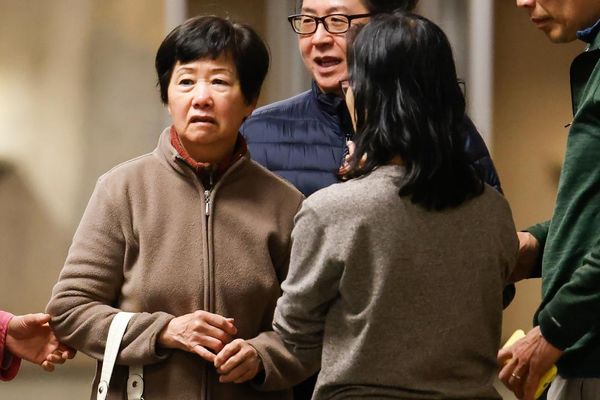
Jamilia Lamb, a spokeswoman for the Clark family, said she hopes federal officials will give the family justice they believe was lacking in the first two reviews.
"It's definitely helpful to know that it is not over," Lamb said. "I'm hopeful that something does come about. Because the FBI and DOJ are looking at his civil rights, we may see something different."
But John Cary Sims, a professor of constitutional law at the University of the Pacific McGeorge School of Law in Sacramento, said he is less certain that the federal investigation will amount to much.
Under federal civil rights law, prosecutors would have to prove that the officers conspired to deprive Clark of his constitutional right to life, and convince 12 jurors of that beyond a reasonable doubt, he said. The likely applicable law is Title 18, section 242 of the U.S. Code, which says that a law enforcement officer cannot deprive a person of rights, privileges or immunities protected by the Constitution.
"My impression was that this was a gesture to the community to say we are aware of what's happened," Sims said. "This does not seem to be the type of case the federal government will ultimately do anything about."
Jack Glaser, a professor at the University of California, Berkeley School of Public Policy who studies subtle bias in law enforcement, also said he does not expect a result different from those of the two previous investigations. "It is a very high bar (for prosecution) and almost never reached," he said. "They are almost certain not to pursue a case."
Those legal experts say the Clark family probably has a better change of victory in the $20 million civil lawsuit recently filed against the city. That case has a lower bar: The family needs only to convince jurors that it was more likely than not that the officers violated Clark's right to life and liberty when they shot him.
Sacramento attorney Todd Pickles, who until recently was the hate crime and civil rights coordinator in the local U.S. attorney's office, cautioned that observers should not prejudge a federal review.
He said federal officials in the Sacramento office are career professionals �� free from Washington politics �� who take their responsibility seriously to determine whether a police-shooting victim was deprived of civil rights. In his four years in the central and northern California office, however, Pickles said officials never prosecuted an officer.
While it is rare for federal officials to prosecute police, it does happen.
After the Los Angeles police officers involved in the 1991 Rodney King beating were tried and acquitted in state courts, the U.S. attorney stepped in and obtained federal civil rights violation convictions against two of the officers.
A South Carolina police officer plead guilty in 2017 to federal civil rights violations after he shot Walter Scott, an unarmed black man, from behind as Scott attempted to flee after a traffic stop and a struggle between the two.
The U.S. attorney, FBI and Department of Justice in Sacramento could also choose to pursue a civil case against the Sacramento Police Department, if they believe the department is repeatedly depriving people of their civil rights.
McGeorge law professor emeritus Brian Landsberg, a former attorney in the Civil Rights Division of the U.S. Department of Justice, and other experts said that civil action would have to show that the department's policies and practices caused systemic civil rights violations, not just periodic violations.
That was the case in Ferguson, Mo. There, after a police officer shot and killed Michael Brown, an unarmed teenager, in 2014, the Justice Department in the Obama administration conducted a civil review that determined that police and courts practiced racial stereotyping and violated constitutional rights in pursuit of revenues from fines.
The finding led to resignations, including the police chief, and a mutual consent decree that required the city to implement reforms.
The Trump administration, under previous Attorney General Jeff Sessions, put policies in place last year that limit the ability of local justice officials to push for police reform using consent decrees.
Federal civil rights reviews vary in length. The Ferguson review took six months.