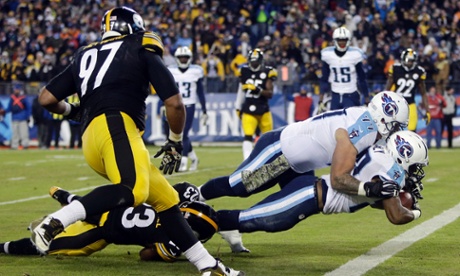
A federal judge heard arguments Wednesday on behalf of former NFL players who object to a preliminary settlement between the league and athletes over concussions and other injuries sustained on the field.
The settlement was expected to cost the league hundreds of millions of dollars in compensation to the estates of players diagnosed with chronic traumatic encephalopathy (CTE) and other neurological disorders between 2006 and this July.
Critics of the deal, including some of the players whose objections were heard Wednesday, said it neglected some athletes.
US judge Anita Brody issued preliminary approval of the settlement in July, after the NFL lifted a $675m cap for payouts to up to 20,000 players who could be affected. In January, Brody said she was skeptical that the fund would be able to cover the future neurological conditions of men who retired from the league, especially with payouts reaching into the millions for some individual diagnoses.
“Even if only 10 percent of retired NFL football players eventually receive a qualifying diagnosis, it is difficult to see how the monetary award fund would have the funds available over its lifespan to pay all claimants at these significant award levels,” the judge wrote.
The awards are based on a three-tier system. Those diagnosed with amyotrophic lateral sclerosis, also called Lou Gehrig’s disease, would receive $5m payments under the current formula. Those whose death involved brain trauma, including CTE, would receive up to $4m, and certain dementia cases could receive $3m.
Many analysts have described the deal as a modest payout for the league. The NFL is estimated to earn more than $9bn per year.
In October, at least 11 objections were filed on behalf of multiple players, which was still considered a small number for the large suit. If players opt out of the class action suit they can pursue individual lawsuits.