A federal judge told a San Francisco courtroom on 24 March 2026 that the Pentagon's blacklisting of Anthropic 'looks like an attempt to cripple' the AI company, and questioned openly whether the government was punishing it for speech.
US District Judge Rita F. Lin, presiding over Case 3:26-cv-01996-RFL in the Northern District of California, made the remarks at a hearing on Anthropic's motion for a preliminary injunction, the company's attempt to freeze the Pentagon's 'supply-chain risk' designation while its full lawsuit is litigated.
The designation, imposed by Defence Secretary Pete Hegseth on 3 March 2026, has no precedent: Anthropic is the first and only American company in history to receive the label, a tool previously reserved for foreign adversaries like Huawei. Lin said she expected to rule within days. Her words offered the starkest judicial signal yet that the Trump administration's campaign against the company may not survive constitutional scrutiny.
The Two Red Lines That Triggered A Government Blacklist
Anthropic's confrontation with the Pentagon grew from a contract dispute over two explicit usage limits that CEO Dario Amodei had made central to the company's mission. In negotiations over deploying Claude on the Department of Defence's GenAI.mil platform, after Anthropic had already become the first AI company to run its models on classified government networks under a £157 million ($200 million) contract signed in July 2025, the company refused to strip two guardrails from its terms.
Lawyers representing the Department of Defense and Anthropic appeared in court Tuesday afternoon for the first major hearing in the artificial intelligence company's legal challenge to its recent designation as a "supply chain risk" by the Pentagon. https://t.co/OtkyecOGmT
— ABC News (@ABC) March 25, 2026
The first prohibited Claude from being used to power fully autonomous weapons capable of selecting and striking targets without human authorisation. The second barred the platform from conducting mass surveillance of American citizens.
The Pentagon, according to multiple court filings reviewed by Lawfare, insisted it required access to Claude for 'all lawful purposes' without a private company retaining any conditional veto over military use. It has maintained that autonomous lethal warfare and domestic surveillance are already banned under existing military policy and federal law, making Anthropic's red lines, in its view, redundant and presumptuous.
Defence Undersecretary Emil Michael, the Pentagon's chief technology officer and a former Uber executive, submitted a 2 March memorandum and two sworn declarations to the court outlining the government's rationale, arguing that Anthropic posed a risk because it could theoretically 'install a kill switch or functionality that changes how it functions' during live combat operations.
Talks collapsed in late February. On 27 February 2026, Hegseth posted on X that he was directing the DoD to designate Anthropic a 'Supply-Chain Risk to National Security,' adding that 'no contractor, supplier, or partner that does business with the United States military may conduct any commercial activity with Anthropic.'
This week, Anthropic delivered a master class in arrogance and betrayal as well as a textbook case of how not to do business with the United States Government or the Pentagon.
— Secretary of War Pete Hegseth (@SecWar) February 27, 2026
Our position has never wavered and will never waver: the Department of War must have full, unrestricted…
Hours later, Trump posted on Truth Social in capital letters that Anthropic was a 'RADICAL LEFT, WOKE COMPANY' and ordered all federal agencies to 'immediately cease' using its technology. The formal secretarial letter notifying Anthropic of the designation arrived on 3 March, six days after Hegseth's post, a gap that would become significant in court.
The Hearing: A Judge Who Was Not Persuaded
Judge Lin opened Tuesday's hearing by naming the government's conduct directly. 'It looks like an attempt to cripple Anthropic,' she said, according to NPR and CBS News, adding that her specific concern was 'whether Anthropic is being punished for criticising the government's contracting position in the press.'
She described the three actions taken by the administration, Trump's government-wide ban, Hegseth's requirement that all Pentagon contractors sever commercial ties with Anthropic, and the supply-chain risk designation itself, as 'troubling' because they 'don't really seem to be tailored to the stated national security concern.' The Pentagon, she observed, could have simply stopped using Claude.
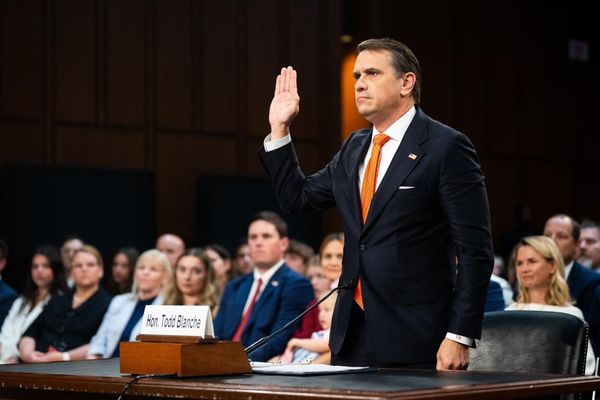
The Justice Department attorney Eric Hamilton conceded during questioning that the supply-chain risk designation did not in law prevent defence contractors from using Anthropic's products in work unrelated to military contracts, a significant retreat from the sweeping commercial ban that Hegseth had announced on social media.

When Lin pressed Hamilton about Hegseth's X post and its millions of views, Hamilton described it as not legally binding. Axios reported that Lin found that argument 'pretty surprising,' telling the court that 'obviously the statement is front and centre in this lawsuit.'
Anthropic's lawyer Michael Mongan pushed back against the government's sabotage theory directly. 'A saboteur is not going to get into a public spat,' he argued. 'They're just going to accept the contractual term proposed by the government and then go and do nefarious things.'
The Legal Architecture And What Comes Next
The statutory basis for Hegseth's action is 10 U.S.C. § 3252, which allows the Secretary of Defence to exclude a source from procurements involving national security systems for the purpose of reducing supply-chain risk. The statute requires a written determination that an exclusion is 'necessary to protect national security' and that 'less intrusive measures are not reasonably available.'
Anthropic filed two separate legal actions on 9 March 2026. The Northern California case, the one Lin is handling, carries five counts: violations of the Administrative Procedure Act (APA), First Amendment retaliation, ultra vires executive action, Fifth Amendment due process violations, and additional APA sanction violations.
The D.C. Circuit petition challenges the Federal Acquisition Supply Chain Security Act aspect of the designation separately, because that statute requires judicial review specifically in that court. The complaint itself, filed as Case 3:26-cv-01996-RFL and reviewed in full, states: 'The Constitution does not allow the government to wield its enormous power to punish a company for its protected speech. No federal statute authorises the actions taken here.'
A senior defence official told Defense One that shifting away from Anthropic's deeply integrated systems would not be straightforward. The company says 'hundreds of millions of dollars' in near-term revenues are at risk. In a detail that the judge's questions highlighted as an inconsistency, Claude remained actively deployed in classified military platforms, including those supporting the ongoing Iran conflict, even as the administration argued the company was too dangerous to keep in the supply chain.
A judge who says a government action 'looks like an attempt to cripple' a company for its speech, and an administration that hasn't yet explained why it kept that company's AI running in a live war, has a credibility problem that no court filing is likely to paper over.