So that’s it. I’ll end with this.
Tonight you could see Bill Shorten growing into the role. We are seeing a more feisty, confident leader who is prepared to take people on. Perhaps it is all those town hall meetings he has done over the past five years. He is showing a greater propensity to challenge people’s views and not pander to views he disagrees with. An example was him pushing back – albeit gently – against Les with his franking credits, arguing Australia had to choose its priorities.
His point on his lesson from Kevin Rudd’s capitulation on the greatest moral challenge of our time – known as climate change – was very telling.
Stand for something or fall for everything.
With the election just two weeks away, Shorten has the bit between his teeth and knows this is it. If he fails on 18 May, his own chance is over.
The campaign just got sharper and this will be a fascinating campaign to the end.
Thanks for your company and goodnight.
Updated
Shorten: when we get equal opportunities, we'll be the best country in the world
Shorten winds up, talking about his mother, her smarts and her lack of opportunities in a working class family. He often references her when discussing his values frame.
If you really want to know who Bill Shorten is: I can’t make it right for my mum but I can make it right for everyone else. I don’t care who you vote for – I’d like you to vote for us – I don’t care how long you’ve been here, your accent, family, what job they do, who you worship, but if this country can let people be as talented and as capable by giving them all the same opportunity, we won’t all be the same at the end of the day, but we’re not going to hold this country back. When we are equal and get equal opportunity, we’ll be the best country in the world with no arrogance. That’s my leadership style.
Updated
Bill Shorten on leadership: I’m not going to be a Messiah, I will listen
A really good question on leadership and government: our royal commissions find there is a failure in leadership culture in human decency and human kindness. Especially in caring for the vulnerable. Community organisations, aged care and disabled service providers are all in the spotlight. Has government effectively outsourced selectively your own responsibility to take care of people in our society? What will your leadership culture be? How will your government guide all of us as a community in relation to our culture in being a decent and caring country to live in?
Shorten says his leadership style is as a team player, not a Lone Ranger.
My style of leadership is not that of I know best and everyone else must do as I say. I’m not a Lone Ranger. I’m not going to be a Messiah. Don’t believe in the authoritarian strongman that I’ll do this and everyone will follow. That doesn’t work. We’re a country of 25 million people. We have lots of differences and lots of different experiences. I would rather say my leadership style is one of the coach.
I want to get the best out of the team. I understand that if you can get the smart people in the room, even if they don’t all agree with each other, you’re more likely to get a better outcome than if you don’t talk to people. I understand that if you want to go and find out what’s happening, they don’t all come to you.
So if I’m elected PM, we’re going to do the public meetings and go out and listen to people. So my style of leadership is to listen. My style of leadership is to get the best out of people. This isn’t just an idle statement.
Love us or hate us, the Labor party for the last five-and-a-half years has been stable. Not for nothing did Bob Hawke say if you can’t run your own party you can’t run the country. I don’t believe in majorities picking on minorities. This is not political correctness. But in my experience good ideas come in all packages.
They can come from the left. They can come from the right. They can come from people who worship Jesus or people who worship Allah or people who don’t worship anyone at all. Good advice and good ideas doesn’t come from what school you went to, not how many generations your family has been in this country, not how rich you are. Good advice is everywhere.
Updated
A question on the gig economy: “100,000 people are now working on gig economy platforms in the personalised transport sector. They are underpaid, they work between 60 and 80 hours a week for an average of under $10 an hour. They don’t receive any WorkCover or any superannuation and don’t get any expenses for their vehicles. What will you and the Labor Party be doing to outlaw these shared employment practices which are largely carried out by an overseasc orporation using an offshore tax haven to collect and distribute incomes? Good paying jobs and sustainable tax paying small businesses are being destroyed in what has become a free for all race to the bottom?”
Shorten says while people have a right to have a say on how their property (Airbnb) or their car (Uber) is used, companies have to pay taxes. He will work with business and unions to ensure the system is fair.
Q: Both Labor and Liberal governments have promised to put money into suicide prevention. However, past records show that throwing money at something can be pointless. Tracey Westerman, the 2018 West Australian of the Year, is a respected clinical psychologist and a Njamal woman. How will your government ensure that families like those in the Kimberley can keep their children safe from harm?
Shorten says it’s a massive issue and that mental health issues intersect with inequality experienced by Indigenous Australians. He says respected Indigenous senator and longstanding community leader Pat Dodson will be the Indigenous affairs minister.
He makes the point that while suicide is the “cutting edge” of the question, the wider issues effecting quality of life cannot be ignored.
It’s all connected. If you don’t feel you have stable housing, if you don’t feel you have access to a job, if you’re split up from your family, if you lose connection to country, it all works on each other. So we’ve got the suicide projects but I’d also want to put to you that reconciliation in Australia and Closing the Gap is everything. It’s putting our First Australians and recognising them in the nation’s birth certificate.
He references the Uluru Statement from the Heart:
I think we can create a national body and I think we can put it into the Constitution to consult. It will not be a third chamber of parliament.
Updated
Q: Will your Labor government actually repeal the changes to the Medicare bulk billing system that have seen many Australians simply not see a doctor because they can’t afford the gap fees?
Shorten says he will repeal the Medicare rebate freeze, which will increase the rebate to patients.
He says Labor will index the rebate on a regular basis and put new money into the system on top of indexing.
Shorten goes through his promise to provide cancer services.
If I can do one thing as PM, but help make sure when you get cancer it may make you sick but it shouldn’t make you poor. If I can honour my commitment that anyone who gets diagnosed with cancer has a lot more access to bulk billing, they don’t have to feel they’ve got to fill in their superannuation form to spend all the money so if they pass away their family, they don’t die in debt. This to me is why you want to be PM.
Updated
Jones: Are you worried if you say anything definitive about Adani the CFMEU could give Scott Morrison the kind of photo opportunity they handed John Howard back in 2014, which effectively undid Mark Latham?
Shorten:
I’m not worried about that, no.
Why not?
Shorten says:
Because I’m not. Because there’s other issues. I’ve got plenty to put to the people of Australia.
Updated
Shorten is asked, if you are serious about climate change, rule out Adani no matter what it does to the Labor vote in Queensland.
Shorten says he accepts things are changing but he will adhere to the science.
No. What I’m going to do is adhere to the science. Adhere to the law. I’m going to make sure we don’t have sovereign risk. There is no doubt in my mind that we’re moving to more renewables. There’s no doubt in my mind that coal-fired power is getting more expensive and renewables are getting cheaper. But at the end of the day we have to have a framework of laws. We have to have a framework for investment.
Updated
Shorten on Rudd climate retreat: stand for something or fall for everything
Jones asked what Shorten learned on Kevin Rudd’s retreat on the greatest moral challenge of our time.
Shorten:
What I learned out of 2009, you can stand for something or fall for everything and we’re going to stand and fight on climate change. We’re not retreating.
Updated
Q: Recent studies show irreversible climate change effects by 2030. How would a Shorten government expand domestic policy as well as work internationally to ensure our future is not threatened by the prospect of the world becoming uninhabitable?
Shorten:
That is such a dumb question to say what does it cost without looking at the cost of inaction. You can’t have a debate about climate change without talking about the cost of inaction.
And then to the Coalition’s record:
Climate change is costing and if anything shows you how broken the last six years, maybe 10 years of Australian politics is, is that whenever someone wants to have a crack at doing something on climate change, the knuckle draggers and the cave dwellers drag them down. If this government was serious on climate change, Malcolm Bligh Turnbull would still be PM of Australia.
Updated
Shorten repeats that he did not agree with Paul Keating on his view of security agencies, that they had not discussed those particular views.
He’s an elder statesman of Australian politics. He’s a grown up. And in my party you’re allowed to have an opinion. Not a hope that I’ll disown Paul Keating. But on that particular view I don’t agree with him.
Updated
Shorten is asked whether he values the US or China more.
Shorten says he is loyal to the US relationship but thinks Australia should be independent.
I do not look at our relationship with China through one prism of strategic risk. Of course we want to maintain our national security and our cybersecurity, our national interests.
But I tell you what – whatever this government has accomplished in the last six years in terms of economic growth has been written on the back of exports to north Asia and China. I think it’s a great thing we have so many Chinese Australians, so many people of Chinese ethnicity have joined their story to the Australian story.
What you won’t get from me is the crude oversimplification that somehow there’s, it’s a bipolar world and you’re for one and not the other.
Updated
Next question about Donald Trump.
The questioner reminds Shorten that he was critical of Trump prior to his election.
Shorten says he would work with Trump professionally and politely.
But what I’ll also do is never compromise our national interests. My foreign policy will be independently minded and it will speak with an Australian accent. It will prioritise working in the Pacific with New Zealand, with Indonesia, with our near neighbours. I understand the importance of north Asia economically and the rise of India and understand and respect the shared history of the Anzus alliance. And foreign policy will not be a second-order issue under my leadership.
Updated
Liv says her mum works in aged care and hears every day how short they are in funding. How does the Labor party aim to support and fund the recommendations found by the aged care royal commission?
Shorten asks Liv to thank her mum and reminds the audience that “the government accused me of elder abuse for raising a royal commission”.
One is that we’ve got to provide better training. Two is we’ve got to find more money. Three, we have to find more staff.
Jones asked why Labor says it will support childcare workers (with a pay top up) and not aged care workers.
I don’t think it’s quite fair to play that Hunger Games approach. In terms of early childhood educators, which is a separate issue, they have been neglected too ... did you know that they are the 92nd lowest paid profession in Australia out of 96?
Updated
Les says he will lose 20% of his income as a result of Labor’s franking credit policy.
Q: Bill Shorten has said he wants to increase the basic wage for low income earners, yet he seems happy for a retired couple to live on less income than the basic wage. How does this equate to Labor’s slogan for making Australia a fairer country?
Shorten says a tax refund for those who don’t pay tax is a gift.
Did you know half a million Australians pay on average $11,000 tax a year. Every dollar these half a million people pay in taxes goes to the gift. To people who happen to be lucky enough to own shares in retirement, get a dividend and then we top it up. I know it’s a complicated explanation and affects 4% of people. What we’ll also do for Les, when he’s sick we’ll make sure Medicare is better funded.
Shorten says the system was never designed to ensure people spent none of their own savings to pay for their retirement.
What you’re saying is when you’re a retiree you never have to use any of your shares. The whole principle of superannuation was to give you enough to be comfortable in retirement. It was never meant to be that the government would top you up, you could keep all your shares and you’d never have to spend a cent in retirement.
Updated
Shorten on his lower popularity: I outlasted Abbott and the Sun King
John asks can Bill Shorten explain why he has remained so unpopular. Shorten is quite feisty.
They said when I was the opposition leader against Abbott that he was unbeatable. I remember the headlines. Tony Abbott was going to be there for three terms. I outlasted him. And Malcolm Turnbull, the Sun King. Some journalists, the end of the two-party state. Anyway, he’s probably watching this from New York, isn’t he?
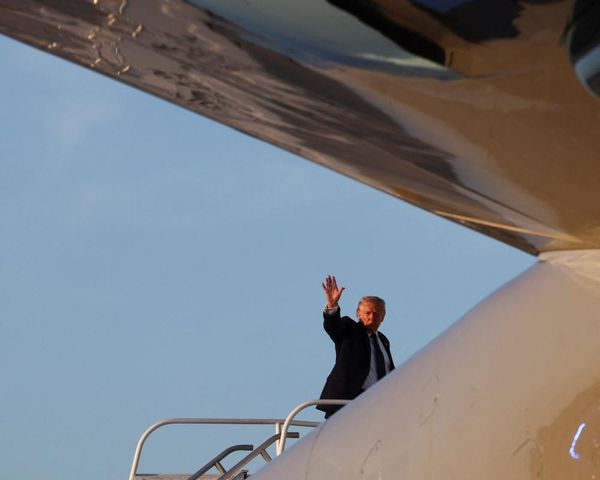
*waves*
Then we got to Scott Morrison. He’s the latest Liberal. This is the point. I know Australians are over instability. And the point of the last 2,032 days is this, my team’s united.
Updated
Lillian is 61 and finds herself unemployed after the closure of her small business. She is having no luck finding a job.
Shorten:
She describes a whole lot of forgotten people in Australia. Did you know that in Australia if you’re over 55 your average period of unemployment is twice as long? There is age discrimination in Australian workplaces.
He describes the people he sees when he does the shopping on Sunday.
The times I’ve seen well-dressed people, immaculately presented, they have their CV in a plastic sleeve and you can see the sting of rejection in their eyes. They say, “Why doesn’t anyone want to give us a go?” We have put a specific measure on the table which will reward companies for investing in older people. And we will review the Newstart when we come in.
Updated
George is still not happy so Shorten gives the opportunity cost argument. If we spend money on negative gearing, we miss out on other areas.
Shorten:
The only point of difference is not about any of your current finances, but is it right that we spend billions of dollars to give people the ability to claim a subsidy when they invest in a property in the future or should we properly fund our hospitals and schools? It’s not a zero sum game.
George is worried about Labor’s negative gearing policy and says it won’t be profitable.
George: “If you’re elected I’ll be selling and enjoying the surplus funds over the next 10 years. I doubt I’m alone. Have you considered the cost that you’ll pass on and I’ll be eligible for full age pension in the future?”
Shorten says the policy is grandfathered so current investors won’t be affected.
What we’re saying is on January 1 in 2020, new purchases of existing housing won’t be able to claim a government subsidy. You use the word tax. If I’m not giving you a subsidy for you making a loss on an investment property, that ain’t a new tax. It just means you’re not getting a subsidy.
Updated
Shorten is asked about Labor’s negative gearing policy and its effect on the property market and the economy as a whole in terms of consumption and growth.
Shorten:
They won’t. Property prices have fallen under this government. They don’t seem to take any responsibility for that.
Updated
A young questioner, Alex, asks about the generational wealth differences between his parents’ generation and his own, in regard to housing costs and university debts.
Shorten:
Young people get a bad rap in the political debate. The reality is not only do you have housing a lot more expensive than it used to be, not only do you have to pay for university in a way your previous generation didn’t, but even things like Medicare which you should pay, you’re less of a challenge on the health system than the older people. So I want to see some measures which put young people at the front. I’ll tell you another way we’ll help young people going forward, we’re going to take proper action on climate change.
Shorten says Labor’s policies are not a “generational square up” but then:
In Australia, if you have a lot of capital, you’re taxed far more lightly than if you make your money from income.
Updated
Jones asks about the state of the economy and the possibility the Reserve Bank will lower interest rates.
Asked if Labor’s policies could push Australia into recession, Shorten says no.
I actually think this economy is more likely to grow sustainably where millions of Australian households are getting regular wage rises, getting support of cost of living, have properly funded healthcare system.
Updated
Q: Can Australia afford a Labor government with their promises of free dental care for pensioners and reduced childcare costs for young families?
Shorten says not addressing issues does not make the costs of them go away.
There’s an assumption that if we don’t help pensioners with the cost of their dental care, that if we do nothing that somehow that isn’t in itself a cost.
There’s 145,000 older Australians on waiting lists for dental care. Not helping them afford dental care doesn’t make the problem go away. Not helping pay for people’s dental care doesn’t cure your teeth decay or your problem.
Updated
Shorten rejects the government formulation that Labor’s measures on negative gearing and franking credits are higher taxes. He says removing subsidies are not tax increases.
Shorten goes through the policies more individually. Jones asks the questioner if he is happy with the answer (given Shorten had not given a specific answer on whether overall the tax burden would be higher).
Thomas says he is happy.
Shorten is chuffed and smirks at Tony Jones.
Bill Shorten answers audience questions on Q&A
Q1: How is the Labor party going to pay for all of their proposals and under the Shorten government would there be higher taxation for the average Australian?
Shorten delivers a general pitch for Labor.
For the last five-and-a-half years Labor’s been working on its policies. And we’re able to pay for them. The basis of our policies is that we think that it’s time for real change in Australia.
He says Labor will reveal costings later this week.
Updated
Tony Jones says Scott Morrison was also invited to appear on Q&A but is not available.
From earlier tonight, Katharine Murphy:
Bill Shorten is coming up shortly on Q&A.
Morrison claims he has had to offer nothing to Palmer in government in exchange for the preference deal.
Finally, Sales asks who will have the upper hand in a newly elected Coalition government on climate change policy, the “mainstream” or the right of the party.
Morrison said “I will”.
Sales suggests at least Labor and the Greens’ policies are based in science and evidence.
Morrison:
Richard Di Natale thinks it’s OK for people to invade farms. I don’t think that’s terribly sensible. Richard Di Natale supports death taxes. Richard Di Natale wants 100% renewable target, which will basically crash our economy. I don’t think that’s sensible at all.
Updated
Scott Morrison will not enter into the National party’s preference deal with One Nation because they are a separate party.
(Even though they are the LNP in Queensland.)
Then Morrison is asked about his preference deal with Clive Palmer.
Do I think the United Australia party is a bigger risk to Australia’s jobs and economy than the Labor party and the Greens? No. I think Bill Shorten and the Greens are a much greater risk to people’s jobs and the economic and national security of this country than the alternative.
Updated
Sales asks when your tax plan is fully operational, how much will somebody earning $200,000 a year save on their tax bill compared to today?
Morrison:
They’ll be paying the 45% tax rate and that’s around about $11,000.
Q: How is it fair that you’re delivering to somebody on that income $11,000 a year but somebody on a median income will only get around $1,400?
Morrison:
The big change we’re making is to drop the 32.5 cent rate down to 30 cents. That impacts on 9.2 million Australians – 9.2 million.
Updated
Morrison admits emissions have been increasing under the government but the Coalition would meet the targets set internationally.
I accept there’s a difference between the emissions reduction target we’re putting forward at this election, which doesn’t choose between the economy and environment – it chooses both – and what the Labor party is proposing.
Updated
Scott Morrison says the Liberal launch won’t be about “hoopla”.
It’s not about who’s coming. It’s about who will be listening.
(In other words, don’t expect the last few Liberal prime ministers.)
Scott Morrison talks up the government’s track record to which Sales counters, why did you dump Malcolm Turnbull then?
The previous PM, Mr Turnbull, lost the confidence of the Liberal party room and they changed PMs. What I did when I became PM after that was to make sure that can’t happen again.
Morrison references the leadership rules changes in both the Liberal and Labor parties.
Updated
Scott Morrison is trying to walk the line between an optimistic view of the economy with sounding the warning bells on letting Labor back into government.
Sales notes the Reserve Bank is considering cutting interest rates. If the Reserve Bank does do that tomorrow, it will be a sign that the economy is not going that well, won’t it?
You’re right to point out that there are various real risks in the global economy over the next five years. And particularly the tensions between the US and China ... now is not the time for record spending growth. Labor are promising to spend 30 times more than the government in this campaign alone.
Updated
After Morrison talked about “Labor’s debt”, Sales says the Coalition has doubled the size of net debt since it’s been in office, ie, it’s not Labor’s debt.
It is because that’s what set us on the course to that debt, says Morrison.
Updated
Scott Morrison acknowledges on 7.30 the budget is currently not 'back in black'
Leigh Sales asks Scott Morrison: “What would be the point of a Morrison government for the next three years?”
You’re right. It is a choice between two different ways forward.
He talks about job creation and “we brought the budget back into surplus”. Sales pulls him up to say the surplus is a projection. That is, it is a projected surplus for next year.
Updated
The SMH reports the controversial former NSW Crown prosecutor Margaret Cunneen has lent her voice to Abbott’s campaign for re-election in Warringah. She has described Abbott as “a full-time, committed member of Parliament, member for Warringah...But because he is so physically and mentally disciplined, 24 hours of his day is really given to others.”
Good evening blogsters, welcome to the evening shift.
Scott Morrison is coming up shortly on the ABC’s 7.30.
In the meantime, here is Katharine Murphy’s campaign catchup.
Updated
With the campaigns at rest, we will tuck the blog up – but only for a nap.
With so much going on tonight, Gabrielle Chan will be back with you just before 7.30pm to blog Scott Morrison on 7.30 and following another short break Bill Shorten on Q&A.
So go take a break. Get something to eat. Go for a walk. Stare at a wall. We’ve got a long 12 days to get through and this week is going to be a doozy.
I’ll leave you in Gabi’s glorious hands. I’ll be back early tomorrow morning.
As always – take care of you.
Updated
Both campaigns have gone dark for the moment, as they prepare their respective leaders for their respective ABC media appearances tonight.
And both campaigns should be in Canberra by late tomorrow, for the last leaders’ debate on Wednesday.
Updated
So Tony Abbott and Peter Dutton may be very, very busy defending their electorates on Sunday and miss the launch.
The interview wraps up with some questions on the Liberal’s campaign launch, which will be this Sunday in Melbourne – including, who will be there. Or more accurately, who won’t be there.
Why is it on Mother’s Day?
Well, we chose to do it on the last weekend before election day. There will be plenty of mothers who are there. Indeed, mothers on stage, as members of the government and mothers in the audience as members of the Liberal party and, of course, as husbands, we’re also there as well. This launch is important, it’s happening in Melbourne, and as a proud Victorian, I can say in Australia’s greatest city, I’m looking forward to being with the prime minister at this important event.
Will Malcolm Turnbull and Tony Abbott be there? You know, the two most recent former Liberal PMs?
Josh Frydenberg: Well, obviously I don’t know.
PK: You’re the treasurer.
JF: He’s overseas at the moment, Tony Abbott is probably busy in Warringah.
PK: So will Tony Abbott be there? You’re saying he will be busy in Warringah, you don’t think he will be there?
JF: Who will be there will be the prime minister, myself, the other colleagues in Victoria contesting their seats. We have local members across the country who will be busy in their electorates, given there will be one week to go.
On the ballot paper, in the seat of Cook, will be Scott Morrison, and the alternative to being prime minister of this country is Bill Shorten. That’s who the contest is between and no doubt Scott Morrison and I will be there to put our best foot for ward as a party and team.
PK: I know you will be there. Let’s check on a few other names. Peter Dutton – it was the opposition leader that made some jokes about Peter Dutton today, saying that he said people weren’t safe to go out on the streets of Melbourne to go to dinner. Will he be coming?
JF: You will have to wait and see on the day. What I can tell you is that the prime minister and myself and our other Victorian colleagues will also be there and we will all be there with the same message, that the Coalition will strengthen the economy, Bill Shorten will spend more, he will tax more, he will weaken the economy.
Updated
That continues:
PK: Not the proportionality. That’s not the question. So $77 billion is the figure the Australia Institute keeps quoting. What is your alternative figure, so we can settle this. You’ve been avoiding it for a day at least, which is why I have to go to it. I find it torturous to ask. If you answer, we can end this.
JF: Patricia, it’s a Labor Party stunt.
PK: No, it’s a reasonable question.
JF: It’s not. I’m going back to what is the principle and the policy and the approach and process we are following that the Labor Party followed when they were in government.
PK: You won’t answer it. Let’s leave it there.
JF: I want to point out to you that someone who earns $200,000 under our tax plan will pay ten times as much tax.
PK: That wasn’t the question.
JF: That’s as someone who earns $45,000.
PK:The Prime Minister says we haven’t changed anything for those earning in the top tax rate, but you are planning to. You’re reducing the top marginal tax rate - you said that budget papers show they will get an 11,000 tax cut. Why did the PM say that when it’s not the case.
JF: To correct you, we’re not changing the rate.
PK: The rate is 47 cents in the dollar, when you include the Medicare levy, it’s the Labor Party who is proposing with a so-called deficit levy, though they talk about surplus to increase it from 47 cents to 49, which Paul Keating himself called too punitive and attacked the Labor Party for that approach.
We’re not proposing to change the rate. The Prime Minister is accurate there and making the point. What happens when you change the thresholds at the lower end or you change the rate, for example, 32.5 to 30, there is flow-through, to people on the upper end of the scale as well.
Josh Frydenberg avoids high income tax cut question
Question: $70bn is the figure for your tax cuts for higher income earners – people earning $180,000.
Frydenberg: Well, not that...
PK: You do, so what is the figure?
JF: The figure was one in the budget, in budget paper number one, table number four, sets out clearly the breakdown of our $158bn tax cuts – $95bn of which is to reduce the rate from 32.5 to 30 cents in the dollar for those earning between $45,000 and $200,000, designed to stop bracket creep.
PK: The figure is $95bn?
JF: $95bn.
PK: So the $77bn figure that Bill Shorten held up?
JF: Well, I think you will find that what Labor are talking about and what I’m talking about are different.
PK: I’m – my question – you’re answering a different question?
JF: I’m answering a question about higher income earners over $180,000.
PK: And $77bn is what the Australia Institute says. I understand you’re contesting it. Tell me the figure.
JF:I can say clearly to you that we as a government are not proposing to change the rate of tax for those earning above $200,000.
PK: That’s not what I asked you, treasurer. I asked you what the figure was.
JF: I’m telling you there is a figure in the budget, which is $95bn.
PK: You’re telling me it’s an answer to a different question. I’m asking you the question and you’re not answering it.
JF: Patricia, in terms of budgets and the same principle applied when the Labor party was in office – when you change the tax brackets or the thresholds, you provide the cost to the bottom line of that particular change, which we have done very clearly.
What your question is going to, is what is the on our progressive tax system? What I can say to you and your viewers and listeners is that under our tax plan, when fully rolled out, what you will see is the top 5% of taxpayers who broadly equate to those on the top tax bracket, will pay a greater proportion of the overall tax burden.
Updated
Yes, says an exasperated Patricia Karvelas, but what are you actually going to do:
Answer: ALL OF THE BUZZ WORDS
Frydenberg:
There’s a lot of things that we want to do that have been set out in the budget. There’s also broader issues that are really important, that we are ensuring a safer, more secure Australia, that we’re investing record amounts in our defence, again, which was opposed by the Labor party.
PK: The point of my question is that none of that is contentious and it won’t take your entire term – so it’s really a question about your vision for the three years. You have provided the electorate very little information about what you will do beyond this big tax Packing Room age, which of course we’ve talked about, so what is it?
JF: Again, I disagree with the premise of your question. I think the vision was set out in the budget, and it’s based on our values, and our values are encouraging personal responsibility, reward for effort, a safety net for those who need it and encouraging the individual and their enterprise. They are our values. They underpin what we do. Not only what we do economically, but what we do in the national security space which is really successful.
We’ve been successful, whether it’s in border protection, national security legislation, part of the economic agenda and the evidence of what that achieved is there for all to see.
Australia’s economy is growing second only to the United States among G7 countries – we created more than 1.3 million new jobs and are spending record amounts on hospitals, schools as well as congestion-busting infrastructure. That’s a record we’re proud of.
Updated
We go for a third time and this time we get an answer about the budget and Labor’s agenda:
Question: Like what? You have not articulated it. None of the areas you’re describing are contested in terms of legislation. With respect, you have a very long period of time where we don’t know what you will be doing.
Josh Frydenberg: I think that is a very inaccurate premise to your question, because what we have done is laid down a clear economic plan for the next decade, which is in the budget, and all those things are not approved of by the Labor party. Indeed if they were, they would have done it themselves.
I want to bring you back to tax because the Labor party is saying they will unwind some of the legislative measures that we did in last year’s budget, particularly abolishing the 37 cents in the dollar tax bracket, but also they oppose what we’re doing this time around, which is reducing the threshold from – the rate for the tax bracket between $45,000 and we’re reducing it to 30%. That is some of the things that the Labor party is proposing that we will fight in the parliament about.
Updated
Patricia Karvelas, chatting to Josh Frydenberg about what is the Coalition’s legislative agenda – and he replies with the budget promises:
We have a series of things. That’s in relation to the royal commission. The government’s economic plan is set out very clearly in the budget. It’s in three different parts.
The first is how do we repair the budget by paying back Labor’s debt and we’re delivering the first surplus in more than a decade in 2019-20 and paying back all government debt by the end of the decade.
The second part of the budget is in relation to tax cuts, as you point out – $158bn worth of tax cuts, as well as $100bn worth of infrastructure spending, as well as what we’re doing to create 80,000 new apprentices and finally the social dividend, which is the record spending on hospitals and schools and childcare and aged care and disability support, which is really important, and of course more drugs on the PBS which we have done to the tune of $10.5bn with 2,000 new drugs listed.
We’ve done all of that without increasing taxes, the same can’t be said of the Labor party. That’s the clear choice at this election.
She tries again and he responds with Labor’s agenda:
Well, I don’t accept what you say. It’s not the work of government – not the work of government that is uncontested. The Labor party oppose significant parts of our agenda, including, for example, free trade agreements, which we’ve successfully done and dealt with with Korea and China and Japan, the Trans-Pacific Partnership, which Bill Shorten called dead in the water, and the Indonesian free trade agreement.
Of course the Labor party would like to unwind what we’ve done in industrial relations, particularly the Australian Building and Construction Commission.
Updated
Jessica Whelan, the dumped Liberal candidate for Lyons who intends on continuing to run as an independent (all the other candidates could technically also be elected as independents, but Whelan is the only one to explicitly state she will campaign to remain in the race), has denied she lied to Scott Morrison about her social media posts.
Dumped Tasmanian Liberal candidate Jessica Whelan has denied she lied to Scott Morrison about anti-Muslim Facebook posts and said she warned the party about her “strong opinions” on social media before she was pre-selected.
...Morrison backed Whelan when the allegedly fake post became public, saying it was not hard to believe an image could be doctored, but the party withdrew its support on Friday after more comments came to light. Frontbencher and party spokesman Simon Birmingham said the party was “not going to tolerate racist comments”. Asked if he felt he had been lied to, the prime minister said “yes”.
Whelan told Guardian Australia she had not lied to anyone. “As soon as I heard [Morrison’s comment] I thought, ‘What?’ I haven’t had a conversation with him. He refused to pick up the phone and talk to me,” she said. “I spoke to the Liberal party but what information they relayed I don’t know.”
Updated
Well that looks like it answers that question:
Don’t expect people like Peter Dutton and Tony Abbott at the Liberal campaign launch - they are busy defending their seats says @JoshFrydenberg who is on tv with me very soon #auspol19
— PatriciaKarvelas (@PatsKarvelas) May 6, 2019
Updated
It’s amazing the differences an election campaign can make to people’s positions.
From ABC Adelaide, where Georgina Downer is again trying to take the seat of Mayo off Rebekha Sharkie:
Mayo Liberal candidate Georgina Downer says the minimum wage is “about right” after previously pushing for it to be abolished along with penalty rates.
In an interview with ABC Radio Adelaide this morning, Ms Downer backtracked on comments she made while working at the Institute of Public Affairs about the role of the Fair Work Commission.
In 2017, she said the minimum wage and penalty rates should be abolished.
Last year, she said the commission set “artificially high wages”.
Today, she changed her tune.
“I think they basically do get it about right, but it’s an independent process, which I think is important,” she said.
“We shouldn’t have people’s wages treated like political footballs.”
Updated
I guess that’s one way for an independent candidate to get their message out:
The only political spin you’ll get from me is a pirouette.#Vote1 Alex Dyson for #Wannon #auspol #AUSVote2019 pic.twitter.com/less6ZqwSf
— Alex Dyson (@AlexDyson) May 6, 2019
I once forgot to prepare a drama oral, so did an interpretative dance to Metallica’s Enter Sandman as a comment on how Australian society interacts with its democracy.
I expect Alex Dyson’s (admirable) efforts will go about as well as mine did when the results are handed down.
It’s Labour Day in Queensland, so that’s where Brendan O’Connor was today.
Labor’s industrial relations spokesman marched in Brisbane, but he stopped to say this to the cameras a little earlier:
I’ve got a joke for you – why did Scott Morrison cross the road? Because he wanted to avoid Q&A.
I mean the fact is Scott Morrison is scared of going on an ABC program because he doesn’t want to give the detail of the $77bn [high income tax cuts] to the public. And he really needs to do that. He needs to do that to be upfront with the Australian people.
Updated
Just reading through Scott Morrison’s transcript from his press conference earlier today about how he said it was the people of Gilmore who will decide who wins the election:
It’s important because here in the seat of Gilmore, they will not only decide who their next member of Gilmore will be – and obviously we want to see Warren as the Liberal candidate elected, as the local Liberal member here for Gilmore, who will do an outstanding job.
But it’s also one of those key seats around the country where the people of Gilmore, the people on the south coast, will get to decide who the next prime minister should be.
Whether I should continue in that job as prime minister, or whether Bill Shorten should become prime minister. So it will be a key choice for the people of the south coast about who they want to lead this country for the next three years.”
Someone might need to tell Tony Abbott that, because he has repeatedly said it is the people of Warringah who will make that decision.
I mean, I know I am no expert, but given the Coalition holds 73 seats, and the Labor party holds 69 seats and you need 77 to lead, if you have a Speaker from your own side of parliament, then it is more than one electorate who will decide the outcome of the election. It is literally all 151 of them.
Updated
700 different, comprehensive different measures in the budget mention – DRINK.
Updated
What’s the government’s plan for the first 100 days?
“It’s not about the first 100 days,” Birmingham says, it is about the first three years.
Should we have a referendum to change section 44?
Simon Birmingham says there will be a review of the campaign, after the campaign, and any of those issues will be dealt with then.
Updated
Simon Birmingham wants to know what Labor means when it says “a living wage”, saying it’s a “glib statement” with “nothing behind it”.
Labor says it will consult with business before making any changes.
Updated
Also describes me after the five coffees I have had today.
(Or a quiet Saturday night)
Scott Morrison is like the Energizer Bunny on steroids. pic.twitter.com/de8J7XUTWI
— Senator James McGrath (@JamesMcGrathLNP) May 6, 2019
Simon Birmingham is in Canberra, to do the afternoon ‘here is how Labor was terrible today’ wrap up for the Coalition.
Scott Morrison may make another campaign stop, but Bill Shorten and Labor have gone a bit quiet, while they prepare for tonight’s bad show appearance.
Morrison will be bunking down very soon to prepare for his interview with Leigh Sales tonight.
Phonetics has failed us all, at one point or another.
Oops. Clive Palmer's party has spelt the electorate wrong on their own campaign advertising. It's meant to be Solomon. 🤭😬 Printed in the @TheNTNews today. pic.twitter.com/1uw16ZRI39
— The Feed SBS (@TheFeedSBS) May 6, 2019
Updated
Acoss has responded to the treasurers’ debate:
Australia already has a low tax base – 8th lowest in the OECD. The Government is now proposing the largest tax cut package seen, mostly benefitting those on high incomes, without corresponding action to close tax shelters or strengthen the income tax base. The Opposition’s tax package is smaller, and their policies include a range of measures to tackle tax shelters.
“As ACOSS argued on Federal Budget Night, now is not the time for more tax cuts.
“The analysis of the Federal Budget expenditure reveals that the next government is unlikely to be able to provide essential services and social security payments, while also providing large tax cuts. We will need to choose between these two competing priorities.”
The 2019 Budget is built on the dubious assumption that, without major new spending cuts, public spending over the next four years will be held at the lowest levels of growth in 50 years:
- Overall real growth in Commonwealth spending is estimated to fall to an average of just 1.3% per year for the next 4 years, half the growth rate from 2013 to 2018;
- Real spending growth per person (adjusted for inflation and population growth) is projected to be zero over the next 4 years;
- Real growth in health funding is projected to average 0.7% a year (without adjusting for population growth), compared with 3.0% over the last 4 years.
- Real growth in social security and welfare funding (including the NDIS) is projected to average 1.8% a year (compared with 2.0% over the last 4 years)
- Average spending levels after inflation are expected to fall over the next 3 years in dental health (-0.7%), employment services (-2.5%), family payments (-0.7%), housing (-2.7%), and tertiary education (-0.6%).
The above projections lock in the effects of previous funding cuts, including a six year freeze in Medicare benefits for doctor’s visits and cuts to dental care and residential aged care; together with a slow rollout of the NDIS.
Updated
Question: Paul Keating said there would be a dramatic shift in relations with China under Labor. Do you share that view and what about someone who has been detained since January without seeing a lawyer.
Shorten: Not everything is an argument between us and the government, especially on national security. It is very concerning about the detention of this person. We support the efforts of the government.
We’ve had some briefings on it. But I would just say for this matter I wouldn’t conflate it into the election cycle because we’re about looking after this fella.
Updated
Question: Are you not happy with the format on Wednesday?
Shorten: We want Wednesday’s debate. Hang on a sec. We wrote to the other people, the Liberals, six days ago. They’ve just sort of, there’s been some movement in the bush and they’ve materialised and said, “OK. If we have to we’ll do it.” I won’t pull out of a debate.
Question: There will be a debate on Wednesday night?
Shorten: I hope. I’m going on Q&A tonight. We don’t need to go to Liberal party invitation-only events to answer questions. Anyway, we’ll go on Q&A. Happy to do Leigh Sales a couple of times. We’ll do our chats.
Question: Will you get Mr Albanese to debate Peter Dutton. He seems keen to?
Albanese: I want to debate my counterpart.
Shorten: Peter Dutton had a debate with Ali France and it didn’t go well. I will go back to where we started here. Mr Dutton may be feeling the pressure in his seat. That’s not my problem. I’ll tell you what is my problem and we’ll finish up the press conference on this point.
My problem is this government is pretending they can’t do more for Nepean hospital and can’t do more to help cancer treatments.
This government is pretending it can’t afford to help three million pensioners with the cost of their dental care. When they tell Australians they’ve can’t afford to do more on healthcare, they’re telling Australians they don’t deserve it.
There’s 13 days till the election, it’s about a very clear choice. For us it’s about prioritising Australian hospitals, Australian patients, Australian healthcare over providing thousands of dollars in tax cuts to the top end of town or looking after property investors or going soft on multinationals.
Updated
Question: Mr Dutton said he wants a debate with your next home affairs minister. Will you stump somebody up for that?
Shorten: I’m glad you went to that. Anthony has been struggling to find someone to debate him. I think Michael McCormack is your opposite number. As for debates, I might let Anthony talk about the difficulty of finding Coalition ministers.
Anthony Albanese: Look, we in Bill’s team have been quite happy to have debates and I’ve written to Michael McCormack, I’ve sent text messages, I’ve sent smoke signals to try and find him. He can’t be found.
He’s the Deputy PM of Australia, he’s in charge of infrastructure, but I can’t find him to have a debate. We proposed at one stage the National Press Club this Friday and apparently there’s now problems with that. I anticipate the problems will dissolve on about May 19 and be prepared to have a discussion.
But it goes down to what the government’s attitude is towards debates in general. You’ve been travelling in these travelling parties for a few weeks and for a couple of weeks they were saying that this bloke didn’t want to debate their bloke.
Bill didn’t want to debate Scott. That wasn’t true. We were negotiating all of that through. What we know now is that Scott Morrison basically got creamed by Bill Shorten in the two debates that have been held.
Creamed absolutely. 1-0. Then 2-0. There were going to be three rounds.
When you’re 2-0 behind, you maybe concede. But he should have further debates. There’s been some agreement about the National Press Club. But the question is why is Scott Morrison chicken to go on Q&A? Why won’t he go on a program that goes for an hour, where you have questions from a host, questions from the audience in a, it’s a tough gig doing Q&A for an hour. He’s not prepared to do it. He should do it. He should stop running scared. If he went on Q&A and broke out of the egg and went on, what he might get asked is where is the $77bn coming from?
Question: He was asked for the same format on Sky News?
Albanese: Not everyone has Sky News, with due respect. Q&A and the ratings that Q&A get on a Monday night, compared with – I’ve got to tell you, Sky News on a Friday night, I’m sure is very good. I don’t know because the footy’s on. That’s what I’m watching. I’m watching the footy on Friday night. I’m sure they are good.
He should do Q&A and he should do it, he should commit to do it because they advertise tonight what’s on next week. He should just do it.
Updated
Question: Given your faith in the Labor government’s ability to work well with national security agencies, would there be any change to Australia’s foreign approach to China?
Shorten: I gave my Lowy address. But what I said there is that when it comes – we are going to work with our national security agencies and I’ve had more briefings in opposition than when the Liberals were in opposition for the national security agency because we take it seriously.
With China, we have to mind our national security interests. There is a debate that says we shouldn’t look at the rise of China solely through the prism of strategic risk.
China buys a lot of our materials. What we will be is put Australia’s interests first. We’ll mind the security, we’ll also make sure that we try and gain the best deal I can for Australian jobs, Australian exports, dealing with China and other Asian economies.
Question: Who is going to be your home affairs minister if you’re elected? Don’t Australians have to know and have confidence of the person that’s in charge?
Shorten: I think it would be premature of me to declare victory in this election, so I won’t.
We will have a home affairs department. We have announced some of our positions and we’ll finalise it when people get elected or don’t. Peter Dutton came out of witness protection briefly and it sort of reminds me about the Liberal launch.
Mr Morrison will have it in Melbourne. I wonder who will be there. I have my whole team at my launch. Will we see the minister for the environment? Will she, she’s more on the endangered species list than the ones we’re trying to protect. As for Peter Dutton, he’s the one who famously said you can’t go and have dinner in Melbourne. He might be too scared to have dinner in Melbourne. Will he be too scared to turn up to the launch?
Updated
Question: Can you explain why you’ve scaled a policy back to the 2016 election and install business sector is concerned about red tape and compliance in hiring these people. What sort of assurances can you offer it won’t be particularly burdensome and worth their while to do this?
Shorten: My word it’s worth their while. I was pleased to see the Council of Small Business Association, but there was something else he said. He thought this was a good idea.
They don’t want to get tied up in red tape. Fair enough. There’s a real problem in Australia. You can see it every Saturday when you go to the shopping centres.
I run into well presented, very hard working older Australians. But they’ve been on the rough end of economic change.
They’ve lost their job.
We have a problem in Australia, don’t we?
Once you’re 55 and 60, the old economic job market is pretty harsh.
For no other reason than you’re older. I run into people all the time who have got their CVs, 30 or 40 years of work experience. They don’t get an even go. This is a real problem. Not a confected issue.
People in this age group spend twice as long on the unemployment queue. I want to use a little bit of incentive to help small business, perhaps give an older person a go. Let’s call it for what it is. We’re a bit quick in this modern age to write-off the experience of older people.
I think it’s a good initiative. We’re mindful of the issue of red tape. We won’t get bogged down in that. Do you know what happens right now to older people? They get sent to job interviews which are not appropriate, just so the job provider can tick a box and get a grant of money.
We’re fair dinkum. In terms of compared to 2016 which is the other party I’ll question, don’t ignore the Australian investment guarantee. A $3.3 billion baby which is great for business.
Did you know that if you invest, if we get elected that is, if you spend more than $20,000 investing in new technology which is productive and on a depreciation schedule, we’re going to give you 20% up-front extra.
If you buy a $100,000 unit for your factory or for your business, extra 20% can be written off day one. That means you get money back for your investment. It’s estimated that this will enhance wages and it will enhance employment.
So if you look, rather than just cherry picking one program which we announced, which is as good one all on its own, and you put together what we’re doing, we are doing more for small business than the Government.
Question: There have been concerns raised about Labor’s transgender policy, that your sexual orient commissioner could influence GPs on how they provide advice – do you respect that opinion?
Shorten: I think that’s rubbish. That’s not our approach. It’s a rubbish story and no doubt the government will help fuel it. We’ve heard this government run all sorts of desperate smokescreens and what have you. I tell you what I’m interested in, I’m interested in the fact Sandy and Kim have had to pay $100,000 out of their own pocket to get cancer care. It might not concern the government. It concerns me. There’s a real choice at this election. For me it’s not about those sort of rubbish stuff which emerges from the fringes.
What concerns me is that Australians in the fight of their life have to face the chance of going poor when they fight cancer. It’s pretty straightforward. Cancer makes you sick but it shouldn’t make you poor. Cancer makes you sick but it shouldn’t make you poor.
Updated
Question: Do you feel disheartened, does it shatter your confidence that your personal approval rating is going down with Australian voters and what more can you do to turn that around?
Shorten: No, I don’t. I don’t share the view. Listen, for 2,030 days I’ve lead a united team in the good days and the bad days. I’ve learnt very early on in this job not to comment on the polls. We’re all going to find out in 13 days who wins the election. What I know Australians want is not for us to talk about ourselves, they want us to talk about the people. There’s a real choice at this election. Very simply, vote for real change, end the chaos in Canberra, vote Labor.
Updated
Shorten stands by security agencies after Keating comments
Question: How do you ensure the states spend the $500m, reducing hospital wait times? Will there be a benchmark or target set?
Shorten: Absolutely. We’ll put more money on the table to the states. Just to explain to people who are patients or waiting for elective surgery. What happens is currently Canberra, the national government to whom the lion’s share of taxes are paid, they’re only paying 45% of the key hospital costs. Whereas we think that Canberra, because of its significant, they’re wealthier than the states, should help provide additional and should pay 50%. We’ll sit down and do partnership arrangements with the states. A lot of our announcements are guided by the best advice of state experts right now.
Question: Was what former PM Paul Keating wrong then? This is a man who you have said you take great advice from. He’s a man you said you listen to. Is he wrong when he says the security agencies are filled with nutters?
Shorten: Yeah. I don’t share that view. I do not share that view. Having said that, I thought some of his other characterisations perhaps were more pertinent. But not on national security.
Updated
Question: Paul Keating described the nation’s spy chiefs as nutters and said they’re setting the foreign policy for Australia and damaging our relationship with China. Do you share any of those concerns? What would an incoming Labor government do in terms of those leading our security agencies?
Shorten: Well, I don’t share those concerns. Paul Keating’s an elder statesman of Australian politics. He’s never been shy of saying what he thinks. But for myself and for my opposition team, we’ve worked very well with the national security agencies. They know that and we know that. And we of course will continue to take the professional advice from the people who help keep Australians safe.
Updated
Labor press conference
The telecast was delayed for the debate, so here we go:
Question: $1.25 million in six years’ time which is half the capital costs of building this centre and it’s a good thing for the area, but isn’t there a critical need now in cancer units like this for additional funding? They’re overrun, their demand is high, their ability to deal with the patient load is insufficient – don’t they need a funding injection within six years, like straight away?
Bill Shorten: I think you’ve gone to the heart of this election in one question. That’s why Labor’s going to put back $14m into the hospital here. That’s immediate. What we’re going to do with that $14m is help make sure there are more nurses and more doctors.
Because of Susan Templeman lobbying, we’re going to make sure that the emergency department at the Hawkesbury hospital can take more people which will lead to less pressure on Nepean hospital.
That all happens straight away. It doesn’t just stop there. Elections are about choices.
The government chooses to give billions of dollars right now to the top end of town, to welfare for the well off. I choose to spend some of that money instead on providing scans and support for our bulk billing, for visits to the oncologist, right now.
Let’s not forget on budget reply night I outlined the most ambitious policy to start funding assistance for cancer treatment right now. These are a very clear choice.
Your question goes to the nub of it. There is a crisis now. Only Labor is prioritising putting money on the table to help with the out-of-pocket.
When the voters strip away all the ads and the negativity, there’s simple choices. One and two Australians will get a diagnosis of cancer in their life.
Out-of-pocket costs are expensive. I was surprised, to be honest, that within 10 minutes the current PM sneered at our cancer proposal and said it’s all free if you go through the public system.
No, it’s not. We’re talking to the survivors. It’s not. And they said we couldn’t afford it. Always remember that politics is about choices. When Mr Morrison says he can’t afford to help people in the fight of their now, or he can’t afford to put back the money into Nepean hospital, he made a choice. He chose instead to defend, unsustainable and indefensible subsidies for the top end.
Updated
From the executive producer of Q&A:
We’ve just received word from the PM’s office that @ScottMorrisonMP will not appear on #QandA during this election campaign #auspol
— Peter McEvoy (@petermcevoy) May 6, 2019
Scott Morrison also turned down invitations to appear on Insiders this campaign.
He will be on 7.30 tonight.
Updated
We wrap up with these final messages:
Frydenberg:
The Coalition has an economic plan to grow the economy and to create 1.25m new jobs over the next five years. And we’re doing that by cutting taxes for over 13 million Australians.
By creating more than 80,000 new apprentices. And by spending $100bn on infrastructure in order to get you to work earlier and to get you home sooner and safer. We’re doing all of that while guaranteeing record funding on essential services of schools and hospitals without increasing your taxes.
The Labor party are only promising one thing – $387bn of higher taxes. Remember, the more they spend, the more they tax, the more Labor weakens the economy, leading to fewer jobs and lower wages.
Bowen:
Under a Shorten Labor government the tax system will be fairer. Hospitals and schools will be better funded. Surpluses will be bigger. Emissions will be lower. Josh and I could agree there is a real choice at this election. There’s only one side in this election which is promising a significant increase in health funding, which is promising to boost Medicare, the biggest investment in its history – that’s Labor.
There’s only one side promising to lift the human capital of the nation. To lift the horizons of the Australian people through education. Through a $14bn investment.
That’s Labor. There’s only one side in this election with a proper plan to increase wages. Not just say we want to increase wages but to deliver increased wages. That’s Labor.
There’s only one side of this election proposing $77bn worth of tax cuts for high-income earners, that’s Liberals.
There’s only one side that may return to the $80bn worth of tax cuts they said were essential for our future – that’s our opponents. Our team is united and stable and talented.
We are to be the government Australia deserves we are ready to be the government Australia deserves. We are ready.
Updated
That leads to this exchange:
Bowen: I do have to pick the treasurer up on the mistruth at the end on tax to GDP and then I’ll turn to John’s question. It’s just not true and you’re just making it up.
Frydenberg: What is it at the end of the decade?
Bowen: The released Treasury modelling which the Treasury made clear was not their modelling. The tax-to-GDP ratio was written in your office. In your office, not by the Treasury.
Frydenberg: What is the tax-to-GDP ratio by the end of the decade?
Bowen: Same or lower than John Howard during the forward estimates.
Frydenberg: End of the decade?
Bowen: If you want to accuse John Howard of being a socialist, go ahead. I don’t mind saying Paul Keating is a friend of mine. But if you want to take John Howard to the podium. Tax-to-GDP will be the same or lower than John Howard. With respect to GDP, the government is not proposing no increase. They’re proposing reductions in spending to GDP. The Grattan Institute has modelled. I invite Josh to provide the alternative. $40bn of year worth of cuts to pay for his high income tax cuts. $77bn going to high-income earners. That’s in Josh’s own budget.
Updated
Question: My question is to both on government spending. Treasurer, your budget assumes there is no increase in new government spending announcements between the next four to 10 years which seems unrealistic. Mr Bowen, you have announced some rather large spending announcements in this campaign that is modest inside four years but blows out to billions of dollars over the decade.
Your last time in government Labor built unsustainable spending into the budget in the medium to long term.
Frydenberg:
We inherited spending growth that is around half of what it is now. It’s the lowest of any government in 50 years but we’ve been able to do that by targeting our spending in a more effective way. Record funding, more than 60% boost to hospitals and to school funding and aged care, disability support.
Spending as a proportion of GDP is around 24.6% today. Now it will fall to about 23.6% by the end of the decade. I put that in perspective for you. The Howard government was about 23.1%.
Spending is one half of the equation. The other half of the equation is revenue. Now, when you look at tax to GDP, we have been pretty successful in ensuring that stays below a tax to GDP cap. Today it’s 23.3% for 2019-20.
Under Labor it goes to 25.9%. They will be the highest taxing government in Australia’s history. By the end of the decade 25.9% is the tax to GDP ratio under Labor. Now it’s no surprise with $387bn of higher taxes. At the end of the day it’s going to suppress economic activity across the board.
Take money from retirees, take money from superannuation, take money from homeowners, put up rents, take money from income earners and family businesses, you will suppress economic activity. So the Labor party will increase our tax to GDP ratio to a record amount.
Remember, whenever Labor spends more, they tax more. When they tax more, they weaken the Australian economy.
Updated
Question: Why is neither party proposing to do anything about the high transaction cost of the delivery of Government services which is estimated to cost the budget around $43 billion per year?
Frydenberg: We’re always seeking to get value for money for the delivery of Government services. At the end of the day we hope the private sector can also deliver services as well effectively.
What we won’t do is spend money on ill-designed policies like we saw from our political opponents. We remember the pink batts and the school halls policies and the cash for clunkers, they were policies that were part of the Labor Party’s time in Government. We have been more focused in how we get money out the door. We will partner with the private sector, where it’s appropriate to do so, but we’re always looking to streamline and create the most efficient services as possible.
Bowen: I would refer you to some of the statements and announcements that have been made by Jim Chalmers and Ed Husic about how we would tackle some of these issues. Issues about digital delivery are very valid but botched issues.
We have seen spectacular examples of that. If you look at people like Jim and Ed, they are completely focused on better service delivery at the most efficient way possible. I accept the premise of your question, more needs to be done. We have been considering announcing initiatives in that space.
Question: Treasurer, you started today’s debate by saying budgets are about more than numbers, they’re about people. Australia’s foreign aid has fallen to an all-time low as a proportion of gross national finance. That means Australia is now one of the least generous countries in the OECD.
Given the 27 years of uninterrupted economic growth we hear about and your much hyped and projected surplus next financial year is this domestic retreat a wise financial investment. Shadow treasurer, if you could outline Labor’s policy in terms of foreign aid?
Frydenberg: We continue to provide more than $4bn in foreign aid and it is a key part of what we need to do to support our neighbours. What we have done is redirected a lot of our foreign aid to our near neighbours.
The money goes to really important causes. Female empowerment, particularly ensuring they can get the money to start a small business, better education and health services.
Infrastructure is critical, particularly transport infrastructure so that you can move goods from the farm into the market place. We are doing a lot of things on a number of fronts through our aid program. We’re ensuring that that money is better spent than it has been in the past.
Bowen: The Liberal cuts to foreign aid have been extraordinary. Every single budget there has been cuts to foreign aid. I think that is because they don’t need parliamentary approval to do so.
Every time their other cuts have been blocked they have said development can cop it in the neck because we don’t need to get that through parliament. That can’t go on anymore.
As good corporate or international citizens, it is bad for our geopolitical interests.
We have become bad citizens in relation to foreign aid. We have made a commitment to increase foreign aid each and every year we are in office. We don’t pretend we can repair the damage overnight, it will take time to return to 0.5%.
We will lay that out in full detail. Foreign aid, overseas development assistance will be better under a Labor government than a Liberal government every single time.
Updated
That leads to this back and forth:
Frydenberg: You’re making a false an analogy between income earners and people who are retirees with shares. What you’re failing to explain is that one is about taxing income and the other is about taxing capital.
What is really concerning about Labor’s policy is that it’s going to dampen aspiration and it will make capital formation in this country more difficult. Think about what the Labor party’s proposing. A 50% increase in capital gains tax. Anyone who buys a share will pay an extra 50% in tax as a result of the Labor party. If you’re an investor and there are 58,000 teachers doing that, you go out and buy a property with Labor’s changes to negative gearing, this he will make your life more difficult. Talk about grandfathering. The fact is there will be less investors in the market so even people who are grandfathered will sell into a market with fewer buyers.
Bowen: Again, the treasurer seems to think property price reductions under him are fantastic and under us will be terrible. It is telling that the Liberal party likes to talk about tax and they have gone so low as to make up a Labor tax, run an outrageous dishonest scare campaign about a death tax.
I’m happy to debate our policies and I will debate them on multiple occasions and Bill Shorten will debate them on Wednesday night if Scott Morrison turns up. Tell the truth, stop making things up and scaring people about an inheritance and death tax because you know it is fundamentally untrue.
Frydenberg: As someone sitting in this audience, Andrew Leigh, who wrote an article “Bring back the inheritance tax”. He said it is an efficient form of tax openly. Julia Gillard said there would be no carbon tax and a government she led and then we saw the carbon tax. The public don’t know what your next step is on tax.
You have broken 20 years of bipartisanship on the retirees tax. Negative gearing has been a fundamental part of our tax system for decade and you are breaking that. When you were treasurer you said you weren’t going to increase taxes on super. Within 48 hours, you increased them by $9bn and now it is $34bn. This election is about the Labor party increasing peoples’ taxes and the Coalition who are lowering peoples’ taxes.
Bowen: We have offered tax relief which is bigger for Australians earning less than $48,000. If you want to talk about election promises, I don’t recall you promising to throw 100,000 people off the aged pension or reduce the aged pension for 300,000 people.
I don’t recalls you promising to cut funding to the ABC or SBS or promising to increase taxes by $4bn on working Australians by the Medicare levy which only didn’t happen because of the Labor party. Let’s talk about election promises because you’ve broken more than anybody on this podium.
Updated
Bowen on that same question:
I went through before the things that Josh is defending. Being the only country in the world that does this, providing tax refunds to people who haven’t paid income tax cuts. Inequities compared to people working and receiving a similar income to a retired shareholder. I make this point to the retired shareholders.
I respect they have worked and saved hard. I also respect that we need to make decisions to ensure the budget is sustainable and fair going forward. To show them the respect of telling them about our plans before an election.
This is the other thing Josh is defending, dividend imputation was introduced by Paul Keating to avoid double taxation. You weren’t taxed on the dividend as well as the company paying tax. By making it refundable, that is not double taxation, that is avoiding any tax.
Josh might want to bring back the $80bn worth of tax cuts for big business. Corporate tax rate should not be zero. When you’re refunding every dollar of tax paid to shareholders, the corporate tax rate is zero, whether it is BHP, Telstra, whatever company, society gets a tax take of exactly nothing.
Updated
Question: This is my question to the treasurer but I’m sure Chris will have a go as well. I was taken by Liberal, by an ad – not in a good way – it was about the elderly couple who were fearing about their franking credits, refunds being taken away.
The guy says, “I may have to go on the pension.” I thought should you be embarrassed about that? I know you didn’t create the advert but is that what the Liberal party thinks? It is an embarrassment to go on the pension? To use your own argument about keeping franking credits, these people work all their lives and pay taxes, surely if you need the pension, you need the pension, full stop?
Frydenberg: I totally understand why some people need to go on the pension. I also understand that a lot of people are self-funded retirees.
These people are the ones the Labor party is targeting. When it comes to the retirees, tax ask the question why has the Labor party conveniently excluded unions and union-backed industry funds from being affected by the retirees’ tax? But they are coming after more than 1 million retirees, including many self-funded retirees.
There is a natural inconsistency in the Labor party’s position. The fact is a lot of people rely on these cash refunds in order to maintain their way of life. Some people will be pushed on to the pension.
When people go on to the pension, the government needs to fund that. That will be an additional cost to the public purse. The Labor party have also not been absolutely upfront with the Australian people how their retirees tax will affect pensioners.
People who were on a self-managed super fund before a certain date in March last year and then became a pensioner after that date will be affected. People who were a pensioner before that date in March last year and get a self-managed super fund after that date will be affected.
50,000 pensioners will be affected and Bill Shorten was pulled up on this during the most recent leaders’ debate. It will affect pensioners, people who will be pushed on to the pension.
It ultimately goes against 20 years of bipartisanship on this particular policy and Chris Bowen, in coming after retirees and making them feel like tax cheats, is engaging in a level of class warfare which is not good for society and certainly not good for the economy.
Updated
They’re both asked to add to those answers:
Bowen: I will and then Josh can. It is a time for bigger buffers, for the government to have more levers at its disposal. This election I say it is unusual in that the Labor party when we announce our costings, will show bigger budget surpluses than the Liberals. I accept that is unusual historically but we do so deliberately because we think that with interest rates lower and wages growth anaemic and household debt at international record levels, we need bigger buffers, a bigger insurance policy against uncertain international economic times through bigger budget surpluses.
Frydenberg: Don’t look at what Labor says, look at what Labor does. The last time they delivered a budget surplus was 1989 and the Berlin Wall was still standing. Wayne Swan promised four budget surpluses that never eventuated. They were based on heroic assumptions, including $175 iron ore price.
Only the Coalition can deliver budget surpluses as we have set out in this year’s budget. The Labor party, bizarrely, is talking about imposing a deficit levy on the one hand and on the other hand talking about budget surpluses. Go figure.
Updated
Bowen on that same question: Neither a responsible treasurer or shadow treasurer would pre-empt the Reserve Bank movement. That is true. The fact we’re contemplating that interest rates, which are at are still regarded as low levels and almost emergency levels, could be reduced further, it shows the real concern about the economy under this government’s watch. Growth slowing. The forecast downgraded in the budget. Wages growth anaemic and consumption growth at its lowest rate in six years.
The fact that the Reserve Bank would contemplate this with inflation at zero, showing there are problems in the economy means the government’s claim to be the better economic managers lie in tatters.
Any relief for borrowers is welcome but it is what the Reserve Bank is thinking about the economy which is the telltale sign that Josh claims the fundamentals are sound. Not only is the economy not working for working people, it is not growing as strongly as it should. It is well below potential and trend historically.
We can do better with an investment guarantee and new jobs tax cuts, important investments in infrastructure, health and education which would be good for the economy as well as the bigger tax cuts for those who learn less than $48,000.
Updated
Question: The Reserve Bank, according to financial markets is at shorter odds than Winx to win than to cut rates.What is that saying about the state of the Australian economy? Mr Frydenberg you mentioned the economy may be slowing, we have drought and trade wars going on. Is it the right time to start running substantial surplusses when the Reserve Bank is considering a loosening of monetary policy?
Frydenberg: When the most recent inflation numbers came out they showed that child care expenses had fallen by 9%. They showed the electricity prices had come back.
When you talk about interest rates, Chris Bowen said, when he was up against Joe Hockey, lower interest rates were good for the economy.These are decisions that are ones for the independent Reserve Bank.
We know the cash rate has stayed where it has been since mid-2016, so it has been there for some time.
Monetary policy, these decisions are matters for the Reserve Bank of Australia. I wouldn’t seek to pre-empt those decisions that may or may not be taken, other than to say the fundamentals of the Australian economy are sound. Growing at 2.3% in relation to the most recent national accounts.
Faster than any G7 nation, except the United States. We are facing head winds, domestically and international.
That is why this is not a time to risk the Labor Party, who can’t manage money, who are proposing $387 billion of high taxes, higher taxes on retirees, higher taxes on home owners, higher taxes on renters and on people who want to put additional money, including women after raising a child, into their superannuation as a catch-up contribution.
Higher taxes on family business. The Labor Party, doesn’t matter what the question is, the answer is higher taxes.
Question to Bowen from that answer: On the point of the review. The issue of false hope being raised with people on Newstart ...
Bowen: We are being honest with people. The Liberals say nothing to see here, we think Newstart is fine. We think there are genuine issues. On this issue – I think John Howard has said Newstart is worthy of consideration. We’re not going to make a commitment. It is a complicated issue in relation to how Newstart relates to government payments.
I accept the point Josh makes there, how it relates to the minimum wage. These are issues we will work through sensibly as a government.
Updated
Chris Bowen on that same issue:
I wouldn’t be raising dodging questions and refusing to confirm $77bn of high-income tax cuts. On the question of Newstart, there is a choice between the two sides. One side says no issue, no problem, nothing to look at. Won’t change!
Our view is there are legitimate issues that do deserve thorough review. I understand people argue we should make a firm commitment to increase the Newstart. We are not doing that. We recognise there are issues which need the resources of a proper government review to examine which is our commitment. In relation to costings, we will release them this week – the earliest any opposition has released its costings in 30 years. The Liberals released their costings on the Thursday before polling day in 2013.
Two days before the election. We are releasing them this week, which will be the earliest of any opposition in 30 years. That is because we have a good story to tell and we have done the hard work in relation to policy.
The Liberals, while they released their costings in late 2013, they released their budget in 2014 late and they promised no increase in tax at the last election. Our costings will reflect our commitments on research and development and foreign aid.
Updated
Question: Amidst all the spending promises from both sides, there is no firm commitment due anything about Newstart. I’m wondering why you haven’t been able to make a firm commitment on that, nor government? Why don’t they deserve more at this election?
Frydenberg: A couple of points. 99% of people on Newstart are actually on another type of benefit. It might be a parental allowance or another form of support. That’s important. The other thing about Newstart is two-thirds of the people come off within 12 months and go into a job.
We have been successful in helping to create the conditions where 1.3 million people have found more jobs, including a majority of women and over the last year, nine out of 10 new jobs that have been created have been full-time.
That is significant. Because you raise the issue of Newstart, it is important that Chris answers the question because Bill Shorten has said, during this campaign, Newstart needs to rise.
The Labor party are putting out their costings this week. Bill Shorten said in the most recent debate his costings will be “the full box and dice”.
Will they include the extra spend on changing Newstart, which Bill Shorten says has to happen, or will your costings dodge that real question? Also you have had Penny Wong say during this campaign you have to lift spending on aid. Will your costings include the additional spending on aid?
You have also had Kim Carr saying you want to increase spending on research and development.
If Kim Carr is saying that as a shadow minister, will your costings include extra spending on research and development to get to his goal? These are the questions that you have to answer to the Australian people because over half a million people have already voted.
They don’t know the true cost of your climate policy and the impact on the economy. You have dodged that question and your leader has dodged that question 68 times.
Don’t dodge the question about Newstart, research and development and aid.
Updated
Chris Bowen then asks: How much for high-income earners?
Josh Frydenberg: If you’re talking about what we announced in the budget, it is very clear. $95bn to reduce from 32.5 to 30 cents in the dollar for the tax bracket from $45,00 to $200,000. That will stop bracket creep. What is key about what we have done is what we have focused on is the middle-income earners. There is only one person at this podium who is promising to change the top rate of tax and that’s you, promising to increase it to 49%, what Paul Keating calls too punitive.
Bowen: $77bn for high-income earners, right or wrong?
Frydenberg: It is a Labor-aligned initiative – the number is $95bn for 32.5 down to 30 cents in the dollar. This is a distraction. The focus in our budget is on ensuring people who are low- and middle-income earners are getting the full benefit of our tax cuts.
Under our plan it is very clear the progressive nature of our tax system is not only maintained, it is strengthened. When it is fully rolled out, our tax cuts, you will see the top 5% of taxpayers, which equates to the top rate of marginal tax you’re referring to, end up paying more of the overall tax burden about a third. You can go on about 77bn or 95bn but you know very well when you put down budgets or Labor put down budgets when they were last in office what the Treasury does when it comes to tax is it puts the cost to the budget and we have said it is $95bn.
Bowen: Three things. Josh cannot confirm the $77bn figure and he can’t deny it because it is true. He hasn’t ruled out returning to the $80bn worth of company tax cuts if they get a majority in the Senate through their Coalition of chaos. Direct question about cuts.
His own budget, which he referred to and PEFO confirmed to pay for the tax cuts, spending to GDP will come down, that’s equivalent to $40bn a year. The Liberals have form when it comes to cutting health and education and they are backing in high-income tax cuts. They will have to be paid for by cuts to health and education if the Liberals win.
Updated
Josh Frydenberg takes that same question:
We have based our tax cuts on the budget forecasts which have been independently reaffirmed just days – a week after the budget in PEFO … We have seen unemployment come down to 5%.
When Chris was in government, unemployment was at 5.7%, our biggest state, New South Wales, unemployment has fallen to 4.3%. We have seen investment levels up, particularly in the non-mining sector.
The fundamentals of the Australian economy are sound. It will continue to grow strongly.
Let’s not forget, when it comes to our tax cuts, not only is Chris Bowen opposing what we announced in this year’s budget, he’s promising to reverse legislated tax cuts from last year’s budget.
Updated
Question: Mr Bowen, you have announced $157bn in tax reform measures to fund your spending priorities. What will you do if, for example, your dividend imputation changes of around $60bn are not passed through the Senate, are you prepared to curb your spending measures? Likewise to the treasurer, if the budget assumptions are to be overly optimistic, will you scale back your tax cuts?
Chris Bowen: We will go, if we win the election, we will go to the Senate, pointing out that we were upfront with our plans, unlike the Liberals who brought down the 2014 budget with all the cuts that it involved without a mandate in clear breach of election promises.
We have been announcing these things for six years. We will have a mandate. I don’t argue that that means the Senate must automatically agree. We will treat the Senate with respect but we will point out that is the essential starting point for the passage of our budget through the Senate.
Secondly, the Liberals went to the last election with $13bn worth of measures which not only weren’t going to be approved by the Senate had explicitly been rejected by the Senate, the zombie measures which Scott Morrison and I debated on this podium three years ago.
They said “we will get them through” and they didn’t. Political parties go to elections without policies, in our case we go and seek a mandate to do these things.
The Senate was within its rights to reject the Liberal budgets to cut the pension, aged care payments and cut SBS and ABC and the rest when they had no mandate to do so in 2013.
They didn’t seek a mandate to increase the Medicare levy in 2016. They didn’t promise that at the last election. Scott Morrison tried that as treasurer. We have seen the failings of the other side who didn’t have the moral authority of their program. If we win the election, we will have the moral authority of having sought a mandate to do so.
Updated
Supplementary question: What about the two key points that Josh Frydenberg raised, you’ve underestimated the number of workers in the field, 193,000 and what happens after eight years, you withdraw the subsidy?
Chris Bowen:
This has been carefully designed, costed with the Parliamentary Budget Office and what’s Josh’s solution, we’re going to keep paying our early childhood educators less than we pay receptionists and checkout operators?
With all due respect to them who work very hard, we can’t continue to pay so poorly those with whom we entrust our youngest and those for whom we ask them to nurture their brains for their development.
As a country, we have lifted their level of qualifications, demanded and required they lift their level of qualification and we have paid them no extra to do so. It is a big call for the government … but it is the right call.
Josh Frydenberg gets a follow-up:
The last time the Labor party did it on a $300m scale during the Rudd/Gillard years, there was an independent PWC report that said the policy was all about boosting union membership.
That is the real story here. Taxpayers across the country having to fork out $10bn to boost union membership while aged care workers and disability support workers miss out. Every time Labor spends a dollar, it so the back of higher taxes, on the back of retirees and on the back of your higher rents and the back of income tax earners, on the back of family businesses. That is what Labor’s proposing, higher tax.
Updated
Question to Frydenberg: We are in an era of new economic norms, low inflation and low-wage growth where economic growth seems to turn up in higher corporate profits and more jobs but not necessarily higher wages. With this in mind, could you both pledge to ask Treasury why it seems to have routinely overinflated wage growth in all of its forecasts, rather than adapt to numbers that might be a bit more reflective of this new norm?
Frydenberg:
We can only go on the best advice of Treasury and you’re right, since 2010, including for Labor budgets, they have had to change their forecast on wages. Chris has got a three-point plan for lifting wages. $387 bn of high taxes won’t do it.
Strong arming the Fair Work Commission won’t do it. Ensuring that the tax payer subsidises childcare workers in the private sector, that is Labor’s answer to increasing peoples’ wages.
I can tell you that Labor is promising childcare workers a 20% increase over the next eight years.
Their numbers of $10bn of taxpayers’ money is modelled on 100,000 childcare workers. I have news for Chris Bowen, there are 193,000 childcare workers. Which childcare workers will miss out from your taxpayers’ subsidy?
What will happen in eight years time? Will you remove the government subsidies, the taxpayers’ subsidy for childcare workers, what will happen there? Under Labor the government will be on the hook for decades to come.
This will erode our budget, the economic performance of this country. That is the reality of this step with a government under Labor would use taxpayers’ money to fund private sector wages.
When Bill Shorten raised this idea he said: “We’re going to start with childcare.” The next day when there was a lot of criticism of this policy he said “That’s it, it is a one-off.”
What about people in the aged care space, what about people in disability support services? When will you tell them that you’re not going to do anything for your wages, Chris? $387bn of higher taxes will lead to lower wages, fewer jobs and it will lead to a weaker Australian economy.
Updated
Bowen responds: It is true that the Liberals have downgraded wages growth forecast in every budget in the economic statement.
Let’s go to the issues Josh raises. The Liberals say they want higher wages. Every time they see an idea to deliver it, they’re against that. They say they want higher wages.
They don’t have an idea how to deliver it. Firstly, the living wage, there is a choice for Australia. We face a choice. Do we want a working poor?
People who go to work every day and work their guts out, often in two or three jobs working in shifts to remain in poverty?
The answer, from our point of view, is no. We will give the Fair Work Commission the ability to determine how to avoid a working poor and give them a right to set the living wage and set it in line with employers’ capacity to pay.
That restores the Fair Work Commission to the powers they had pre-John Howard.
It is saying as a country we won’t have a working poor. Secondly, in relation to penalty rates.
This is the first direct wages cut for people since the Great Depression. No tradeoff or increase in the base rate, no enterprise bargaining to get to a more productive outcome, a straight wages cut.
After 27 years of uninterrupted economic growth, we as a country have to cut peoples’ wages like that in an arbitrary fashion with no impact on employment, no increase in employment? It is wrong.
Early childhood educators, our country and our society relies on these people. We delegate our youngest and most vulnerable and ask them to nurture their brains and growth.
We pay them $25 an hour. With all due respect, they deserve more than that. Josh, he will wipe his hands and say it is too hard.
We could ask childcare centres to pay. Fees will go up. We will tackle this issue and pay our early childhood educators what they deserve.
Updated
Supplementary question on that last point: “You have just said they need to work closely, what would you like to see, national security within Treasury?”
Bowen:
No, of course not. The agencies will remain separate. The point I make is of course there are geopolitical challenges in our region and great economic opportunities. We need to bring them together in a discussion about our national strategy to deal with these issues in a sensible, calm methodical way as part of good government.
Frydenberg responds:
I thought Paul Keating’s comments were an insult to the hard-working men and women of our intelligence and security agencies that have done so much to prevent 15 terrorist attacks in Australia since 2014.
If you raise Paul Keating, who is Chris Bowen’s mentor, I have to point out that Paul Keating has been very critical of Labor’s proposal to increase the marginal rate of tax for the top income earners to 49%.
He said that is too punitive and has gone on to say Labor has lost the ability to speak aspirationally to people and fashion policies to meet those aspirations. That is Paul Keating, Chris Bowen’s mentor.
Updated
Question to Chris Bowen:
“You’ve made it clear you look to Paul Keating for advice. He has called the heads of our security agencies nutters and suggested they should be cleared out to improve relations with China. Who will you be taking advice from, Paul Keating or our security agencies and does this reflect the views of the New South Wales right? In general?”
Bowen:
It was quite the outing for Mr Keating with Andrew Probyn yesterday. We could all agree it is great to welcome him to the election campaign. I am sure we will hear more from him.
...We hope we do. I am not sure Josh does.
In relation to the specifics, we will work closely with the security agencies and we will take advice from a range of agencies, including Department of Foreign Affairs, Department of Attorney General and the security agencies themselves.
We will weigh up that advice in the normal, traditional and respectful way and we will work closely with the agencies as you would expect us to do, as Bill Shorten would as prime minister.
I think more broadly, we as a country need to tackle this issue head on. The national security establishment and the economic establishment, by which I mean business and people interested in economic growth, need to come together and talk about how we deal with the issues in our region.
There is too much shouting at each other in relation to those issues. We will work closely with the intelligence agencies, we will take their advice and weigh it up in line with advice from other government agencies to the National Security Committee as you would expect good the government to do.
Updated
Chris Bowen responds to Frydenberg’s answer:
Scott Morrison argued for $80bn of tax cuts at the last election. The only reason they didn’t become the law of the land is because the Labor party in the Senate wouldn’t agree.
If the Liberal party is re-elected and they have a majority through a Coalition of chaos with Clive Palmer and Pauline Hanson in the Senate, they will be back there.
No plans is a pretty weak defence for the Treasurer to make. He would not rule out returning to the $80 billion worth of corporate tax cuts.
The only reason they’re not the law is they were blocked by the Senate. They will bring them back if they get the opportunity.
Our policy is tax relief, conditional on investment, requiring investment, the Australian Investment Guarantee which will reduce the tax on investment down to 26%. We go to the table with that. Josh can’t match that.
The new jobs tax cut saying we will work with you if you employ young or older people and people returning to the work force, we will give you a hand. We will work with business to provide tax relief.
They want to give away $80bn conditional of absolutely nothing.
Updated
Sabra Lane points out that is not an answer (on the 10-year point).
Frydenberg:
We have no plans to change the company tax rates. We tried that and you know what the story is.
Updated
Question: This time last year your Government’s agenda was cutting the corporate tax rate for all companies. We know what happened and whether compromise was reached.
Since then you and the Prime Minister have flatly ruled out revisiting that issue post election in the next term. You have also announced an income tax cut strategy over the next seven years which means you stay under your tax to GDP cap until the end of next decade. Do you have no intention as a Coalition of revisiting corporate tax for at least a decade, given your tax to GDP ratio has been achieved by income tax cuts?
Frydenberg: We’re not planning changes on the large companies. As you know we’ve reduced company tax for smaller companies with a turnover of up to $50 million which I note the Labor Party voted against 26 times and only the last minute back flip by Bill Shorten did he actually accept.
We know that the best thing we can do for businesses across the economy is to ensure that they have work places where employers and employees are not pitched against each other. The same cannot be said about the Labor Party.
They’re proposing and raising the prospect of enterprise bargaining - sorry patterned bargaining and the impact that would have across the economy.
Alan Joyce, the CEO of Qantas has said if that policy would come in, it wouldn’t have allowed the start-up of a company like Jetstar which saw 10,000 employees getting jobs.
He also said policies like that would hurt his 38,000 smaller businesses that Qantas supports.
The Labor Party is bad for business, big and small, with its industrial relations policies, with also its opposition to free trade agreements which we’ve entered into with some of the major countries in our region, including China, Korea, Japan and the 11 Asian trans Pacific partnership and Indonesia.
The overall tax cuts we’re introducing is good for economic activity. The worst thing possible for business is Labor’s $387 billion of high taxes.
It will stifle economic activity, it will mean retirees will have less discretionary money to spend, it will send prices of homes down, and discourage superannuation and it will discourage reward for effort and incentive to work harder.
Bowen in rebuttal:
Josh defended his personal income tax plan which requires the Liberal Party to be re-elected twice.
He didn’t reveal how much goes to high income earners. He was asked six times this morning and didn’t reveal and Scott Morrison was asked four times on Saturday and wouldn’t reveal.
The answer is $77 billion. If the Prime Minister will accept Bill Shorten’s request for a debate here on Wednesday night he should come with an answer. If they won’t answer the question, the Australian people are entitled to ask why.
In relation to negative gearing reform, the IMF, OECD and the Government’s financial systems inquiry, the Grattan Institute, ACOSS and the institute of company directors, Saul Eslake and Jeff Kennett and Joe Hockey have recognised the need for negative gearing reform.
Josh may how the housing affordability puzzle has been solved. House prices have fallen under his watch. The Government didn’t model the APRA change to regulation.
They can’t have it both ways. Josh is being entirely hypocritical to argue any house price falls under him are great but under the Labor Party would be terrible.
Question: You [Frydenberg] say you have an economic plan for a decade, after the tax cuts that deal with bracket creep, there is not much on the plan so I am wondering if there is other tax ideas you’re throwing around? Everyone says we have to do something about land tax and broadening or raising the GST, corporate tax cuts for large businesses, is that something you’d like to revisit if you get into government again?
Frydenberg:
You raised the state tax which is land tax. In terms of federal tax, what we have focused on is the most significant reform since the Howard government.
It is not insignificant to abolish a whole tax bracket, something that Chris and the Labor party oppose.
By creating one tax bracket between 45,000 and 200,000, you will have 9 million taxpayers on it, 70% of all taxpayers.
By doing that we will tackle bracket creep. The Labor party is against it, which means that an average income earner could be up to $1,000 worse off under Labor than they are under our tax plan.
We are all for lower taxes because ultimately it is the people’s money. There is one tax that Chris would find it very hard to defend and I think that is the housing tax.
When Chris came up with the housing tax, the housing prices were actually – the housing market was very different than it was today. Houses were going up. Now housing prices have come down.
We have seen from the international credit rating agencies the concern that they have and the warnings they have issued about a sharp downturn in the housing market and the impact that will have on household consumption.
Household consumption is about 60% of GDP. You have seen SQM research saying the Labor party’s policies could put up rents by as much as 22% and see housing prices fall by 16%.
It has come at the wrong time for the housing market. It will potentially have massive impacts on the real economy and it is just another desperate cash grab from the Labor party.
Updated
Chris Bowen responds:
Let’s deal head-on in relation to dividend imputation refundability.
The government is defending the current situation, being the only country in the world that provides tax refunds to people who haven’t paid income tax. Spending $6bn a year now, growing to $8bn in the foreseeable future which is more than we spend on public schools at a commonwealth level, three times what we spend on the Australian federal police.
Josh is defending that and also an inherent unfairness.
If you take the examples, example of somebody in the workforce earning around $67,000 and paying around $13,000 a year in tax. For a retiree through a self-managed super fund, earning $67,000 in detective depends and paying no tax but receiving a tax cheque for $27,000.
I don’t think that is fair. I don’t think that is OK. We are seeking a mandate to change that. Josh didn’t seek a mandate, the Liberal party didn’t seek a mandate when they threw 100,000 people off the aged pension off reduced that. We have an approach, the courage to seek a mandate.
Updated
And the questions begin. First one is to Josh Frydenberg:
Question: Labor has been the first opposition since John Hewson’s in 1993 to explicitly outline a large package of reform to taxation. You’ve talked about the dangers of Labor. If Labor wins, will the Liberal party acknowledge that the party has a mandate to carry out those policies?
Frydenberg: The first thing is we’re going to win the election, Sabra. I’m not entertaining anything other than that. We believe that fundamentally these taxes will weaken the Australian economy and that’s at heart of this election debate.
Take the retirees tax. The retirees tax is based on two decades of bipartisanship. The Labor Party took that proposal for cash refunds to the 1998 election, saying it would help lower income earners and retirees.
Over 80% of people who are relying on their cash refunds have a taxable income under $37,000.
And pensioners will be hit by Labor’s retirees tax. Labor, in a desperate cash grab and in a game of class warfare, has made these people, over a million of them who are retire across the economy, and the society, feel like tax cheats. By changing those rules, they are going to hurt the economy, particularly capital formation in our economy and the ability to attract investment in Australian stocks.
Updated
Chris Bowen:
The Ngunnawal and Ngambri people care for this land for thousands of years and acknowledging their elders past and present any economic debate should recognise right upfront that we have a long way to go in eradicating Indigenous disadvantage in our country.
Good economic policy should be put to work to eradicate that disadvantage.
I also want to acknowledge the treasurer, Josh and I obviously have some enormous differences of opinion and policy but I do recognise what a tough job being treasurer of Australia is, not only for Josh but for his family.
I put that on record and thank you for your service to our country.
Josh is the third Liberal party treasury spokesperson I’ve faced in three elections.
I have stood here and debated Joe Hockey, Scott Morrison and now Josh. Josh will talk of a steady hand on the economy. The fact of the matter is there has been no steady hand.
The fact is that if the conservatives are elected, there is no guarantee that they won’t learn the lessons and change their habits and that Josh will still be here in three years time to debate again.
That is their track record.
At the last election, the Liberals at least promised stable government. This time they’re not even bothering. By their very actions, by the preference pact with Clive Palmer and Pauline Hanson, they are guaranteeing if they are re-elected, instability and chaos with all the wackiness that that involves.
All the instability and the chaos is not the action of a party serious about economic stability and leadership.
The cost of the chaos of the last six years has been very real. Josh likes to trumpet how well the economy is going. He did it just then.
Every time he does, he underlines how out of touch this government is. The economy isn’t working for working people. Wages growth at record lows, penalty rates being cut. 1.1 million Australians underemployed.
Nearly 1.8 million Australians wanting more work. Households stretching their budgets with rates falling and household debt at record levels.
Sluggish economic growth with the IMF predicting economic growth will fall to just 2.1% this year. Josh makes much of the budget surplus.
... This is a government that spent six years fighting amongst themselves, arguing about who should do the prime minister’s job, not to create more and better jobs. I’m happy to be debating Josh here today.
I make this prediction, we will spend the next hour, both of us, talking more about Labor policies than Liberal policies because we come to the table with a lot. Josh comes to the table with not very many at all.
No policies because they have no vision. No big-picture view of what this country should look like for the generations to come.
No framework with which to tackle the challenges and opportunities for our country.
Today’s Liberal party knows what it is against, it has very little idea of what it is for.
Updated
Treasurer's debate begins
Josh Frydenberg and Chris Bowen are facing off at the National Press Club.
Frydenberg is going first:
Those plans to cut taxes, to boost infrastructure spending and to create new apprenticeships is all about growing the economy.
We’re also ensuring that there is a social dividend and that’s the third part of our budget, record spending on schools and hospitals and aged care and childcare and disability support, ensuring the NDIS is fully funded in this budget, which it is. As well as respite for our carers.
A budget is not a trophy for the shelf, it is about what it does for people. Ladies and gentlemen, we have done all of that, started to repair the budget, with a budget surplus, growing the economy and ensuring essential services are guaranteed all without increasing taxes.
Bill Shorten and Chris Bowen can’t make the same claim because they are proposing $387bn of high taxes on the Australian people.
When you get up in the morning and go to work they will tax you, when you put money into super they will hit you with extra tax, when you buy an investment property or buy a share they will increase the taxes on you and if you’re a family business, they will increase the taxes there.
You see, the Labor party just wants to redistribute the pie. We want to grow the pie. We want all Australians to earn more and to keep more of what they earn. That’s the clear choice at this election.
A Coalition which is delivering a strong economy, preparing for the international and domestic economic headwinds, guaranteeing the essential services with record funding for schools and hospitals and aged care and disability support, all without increasing taxes.
The thing you need to know about Bill Shorten and the Labor party is every time he promises more spending, it’s coming at the expense of higher taxes.
He’ll promise more spending, he’ll tax you more and, as a result, he will weaken the Australian economy, creating fewer jobs and lower wages.
That’s the choice for the Australian people at the forthcoming election.
Updated
The questions continued:
Question: Why won’t you release the work that the government’s done?
McCormack: Well, fact is, we’ve got an economic plan for this country, and the fact is, we’ve been very transparent about what we’re doing, and how we’re doing it. We’re meeting our international climate arrangements.
We’re making sure that we reduce emissions in a responsible way, meeting our Kyoto targets, meeting the targets that we set, and the world’s set. We’ve signed up to them, we’re agreeing to them. What we also want to do is make sure that when pensioners need to be able, and families and businesses flick the switch on, that power comes on. What we want to make sure is that’s done in an affordable way, and what we want to do is make sure that if you’re an aluminium smelter, or a cement maker, in Gladstone, Bundaberg, or anywhere else.
The fact that you can have more affordable power, that’s the Coalition way. That’s the Liberal National’s way. That’s the Keith Pitt way. We want to make sure that there’s affordable power, and we also want to make sure that agriculture and that industry is its best self, and that’s why investments such as the $750,000 for the pre-feasibility study in the Port of Bundaberg, that’s why those sorts of infrastructure and business case and announcements and arrangements, are so important.
Question: Why are we holding another set of modelling by Cadence economics? Do you not like the findings?
McCormack: Well, the fact is we’ve been very transparent, and the fact remains that the only person who isn’t being transparent about their policies and their costings, are Shifty Bill Shorten. Now, I know he’s going to have his campaign launched in Brisbane today. Fact is, he’s actually, probably on his feet as I speak.
Now, how many times in that campaign launch, that Bill Shorten’s doing today, will he use the F word? A four letter F word. Farm. How many times will he talk about regional Australia? How many times will he come and make a sentence, say a sentence about how much his economic policies are going to cost, and how much his climate change announcements are going to cost the economy, and the average person in the street?
He won’t do that. He won’t do that, because he knows he can’t do that, because if he does, fact is, nobody will vote Labor. They’ll understand that the future looks very bleak under a Bill Shorten-led government.
Michael McCormack has Michael McCormacked his way through a ‘show us your modelling’ exchange with reporters in Bundaberg while campaigning with Keith Pitt:
Question: Brian Fisher says the Coalition has not acted transparently over secret modelling commissioned on the cost of climate action. And that even he hasn’t seen the findings. Why won’t you release the work?
McCormack:
Well, why won’t Bill Shorten, Shifty Bill Shorten release his cost to the economy of 45% emissions reduction? Why won’t Shifty Bill Shorten release the findings and his economic plan of what’s it’s going to cost for 50% renewables? It is going to de-industrialise Australia. It is going to force farmers to de-stock. That’s the Shifty Bill Shorten way. We want to make sure that farmers can realise their potential. We want to make sure that the $60 billion dollar agriculture sector grows to a hundred billion dollars.
Bill Shorten, wants to tell farmers what they can farm, where they can farm, how they can farm, why they can farm, and the future for farmers, which is going to be bleak under a Bill Shorten-led government. The fact is, Bill Shorten also wants to make sure there’s a Just Transition Authority in Queensland to tell the people in the primary industry sector, particularly in the mining sector, that they can’t have a job, that they need to turn into baristas. Well, we know that coal mining for instance, employs 55,000 people. We know that coal mining helps to produce 66% or two-thirds of our energy needs, and we know that coal mining produces $66 billion dollars of exports. So $66 billion dollars that state governments are able to spend on state health and state public schools.
We know that we’re behind the resources sector. Bill Shorten isn’t. He wants to transition. Transition all those mining workers into coffee makers. Well, we can’t all be coffee makers. We can’t all be people who are just layabouts, or don’t have a job.
Scott Morrison ends the press conference by again explaining just what an election is, just in case voters are confused as to what is happening on May 18 and why they are being bombarded with election advertising:
I believe the choice at this election will be made by all of the Australian people.
That is who will make this choice.
The choice is very straight forward, it is a choice between whether you want me as prime minister or you want Bill Shorten.
Whether you want to have a government that knows how to manage money so they won’t come after yours which is what will happen under Labor.
Whether you want a government that will lower taxes for families and small businesses and a Labor party that is going to increase the tax burden at the worst possible time for our economy which puts jobs at risk by $387bn?
Whether you want a government that is investing in the hospitals and schools and roads, whether it is here on the south coast or elsewhere around the country, increasing that investment responsibly by managing the budget well?
Finally, a government that knows how to keep Australians safe, whether it is from online bullying , or backing our security agencies like say Asio and others who have prevented 15 terrorist attacks here in Australia.
We’re happy to claim them and they’re the heroes of keeping Australians safe.
There is a clear choice. We have a plan to ensure that Australians can continue to go forward by building our economy and securing our future, whether here on the south coast with Warren or right across the country.
Updated
Question: The leaders debate in Canberra.We learned it will be in Canberra on Wednesday night. Are you finally going to take off the gloves?
Morrison: I look forward to the next debate.It will be the third. With he were happy to do it. I’m glad the Leader of the Opposition finally agreed to do just that.
Mundine: As a Mundine, I will give you a training on the boxing.
Morrison: It will be another opportunity forBill Shorten to explain who is paying the price of his policies.
Question: You need to win this one, don’t you?
Morrison: It is another debate. I’m happy to have any debate. The Australian people will make that judgement.
Question: Prime minister, will the Coalition be matching the Labor party’s commitment to upgrading the hospital, the $34m for mental health for mental health outpatient clinic?
Morrison: Well, later today, we are making announcement about the Shellharbour hospital and we’re pleased to be making those announcements and investing in our local health. We have made announcements about increasing funding for local roads and the big one was when I was last down here on the Princess Highway. I have driven the roads and I know how dangerous they were and you were asking questions the last time we were here and I know how important a priority that is.
We have increased funding for public hospitals across the country by more than 60% and our arrangement with the NSW government will see that further increase over the next five-and-a-half years.
Mundine: We are working closely with our state coalition partners. Like what we did with the road and your newspaper, the South Coast Register, has been at the forefront of that project for the road. We sat down with the Treasury and we went through step by step, section by section what it was going to cost and how much money that the federal government needed to pay.
This is what we will be doing with our hospital services here. We’re sitting down with the state government here.
Updated
'We haven't changed anything for high income earners,' says Morrison
Question: How will it affect people earning more than $100,000?
Morrison:
I can tell you. We haven’t changed anything for those earning on the top tax rate. On the top tax rate will be returning 36% of the income tax revenue. They will be paying 36% of total income tax revenue.
What they pay today is 31%. You see the thing we were deferring to do that under our tax plan, which is a 7 year plan which is giving tax relief to those who need it urgently now and extending the rev to middle income earners and ensuring that 94% of Australians will not pay a tax rate marginally higher than 30 cents in the dollar. The idea of bracket creep and the experience of bracket creep will be eliminated.
That’s what our plan does. We wanted to make sure when we did that, it wouldn’t harm our income tax system. We looked at carefully what share of the total income tax take would be paid by those on the highest marginal tax rate and the answer to that question is it increases from 31% to 36%. So, I think that’s a pretty detailed understanding of what’s going on.
Except that is not true. The budget papers show that they will get an $11,000 tax cut from 2024.
It’s from the tranche that Labor and the Greens won’t support
Question: Can you tell us what is the problem with releasing a detailed costing of that policy? (high income tax cuts)
Morrison: No, no, we did. There are three components to the income tax policy we released into the budget. There is the increase in the threshold from41,000 to 45,000 under the tax plan and that’s about $46 billion and there is the cost of reducing the 32cent rate for people earning between$45,000 and $200,000 and that’s $95million.
Question: Will will you not publicly release the findings into an the inquiry into bullying allegations into Ken Wyatt?
Morrison: There are privacy issues relating to the individuals and that’s the normal practise.
(That answer did not cut it for the government when Emma Husar was under investigation)
He continues:
Now, on the other matter you asked me about, the difference between our emissions reduction policy and Labor’s emissions reduction policy is Labor’s will require by their own admission companies like those on the South Coast to have to go and write cheques out to foreign carbon traders for foreign carbon credits.
Now, our emissions reduction has been achieved on the fund that we have been running at about 11 to $12.
Those foreign carbon credits is around 42. So our policy is achieving lowest cost abatement, that’s how the policy is intended to work. When you have a target that requires 1.3 billion tonnes to be reduced then they have to engaged in the other measures.
Bill Shorten said last Friday that it wouldn’t cost the economy anything. He is not telling you the truth. You have got to tell them the price Bill and tell them who you are going to make pay for it.
It is going to be mums and dads and retirees and small business owners and people trying to buy houses. That’s who is getting hit with all of these taxes.
Question: What’s your reaction to the US threat to put more tariffs on China overnight and also can I also ask you about back to your comments about international carbon credits? Brian Fisher recommended that the ALP and the Coalition use these credits. What’s your reaction?
Morrison:The trade tensions between the United States and China present a great risk to the regional economy and of course, to the Australian economy.
That’s always been the case. That’s why I think the Labor Party’s plans of engaging in an enormous economic experiment of reckless spending, I mean spending out of control, supporting by the highest taxes we have seen, equals big risk. Big spending, big taxes, equals big risk and our economy is facing some challenging times in the years ahead and so now is not the time, certainly not the time, to be engaging in those big policy experiments.
I said yesterday when I saw the former Labor Prime Ministers at their launch yesterday, what it reminded me of was Labor’s inability to implement the big spending programs. You see, it is not just what Labor says they will cost.
It’s what they will cost after they’ve stuffed them up because they always stuff these things up.
These projects are so big. The spending is so large and they end up costing so much more and guess who they will be going back to get that money from? You.
It won just be retirees either and retirees here, 8. 8,500 of them. I heard Bill Shorten was on radio this morning denying he could be costing retirees. I mean, what does he think?
That he can spend all this money and it is for free and no one will have to pay the price.
I think the Australian people are working him out. This is a guy running around and saying everything is free and no one has to pay for it.
What you do in government, you have sensible, responsible spending that increases funding for hospitals and schools like we have by more than 60% over the last five-and-a-half years that invests more in age care and that is going to take our National Disability Insurance Scheme from 30,000 up to 280,000 clients and it will go to well over 450,000 and you do that by responsible spending, careful budget management, not engaging in all these risky experiments.
Question: But with respect, with respect, you did comment, you did make comments with regards to the Bahrainian soccer player. How is this matter different?
Morrison: All diplomatic matters require bespoke approaches. That’s how you manage those very sensitive issues and that’s what I will do.
Question: Prime Minister, you say you will try anything to get more young people into work. The Labor opposition proposed tax incentives for companies that employ young and older workers. What about that plan and what do you make of it?
Morrison: It is a watered down version of the plan they took to the last election. Labor are cutting back on the suggested assistance they were going to provide, but compared to what they’re going to take those same businesses, I mean it complete overwhelms the measure. I don’t think Labor can get their lines straight.
On one hand, they want to tax the businesses out of business and so, a business that’s been put out of business by Labor’s tax policies can’t help anyone.
Question: Prime Minister two questions. Paul Keating called the heads of security agency, nutters. Can I take you to someone who has been held in China without access to lawyers.
Can you tell us if that’s acceptable and give us detail what you’re doing about that?
Morrison: On the first matter, our security agencies have prevented 15 terrorist attacks in Australia.
So, for what the Labor Party calls a Labor legend to go out there and attack the credibility of our security agencies that have been saving lives in this country, I think is disappointing.
I think that should be disowned and I think the leader of the Labor Party, Bill Shorten, should behaving something to say about that in denouncing what Paul Keating had to say.
The other thing is that when he is providing that denunciation, he should tell us who is going to be the home affairs minister if he is elected that will actually have responsibility for the security agencies?
Because it is less than 2 weeks to go until the election and we still don’t know who a Labor home affairs minister would be.
Now, given that national security is the first responsibility of any national government, I think it is only fair that not only does Australians know that what the prices they will have to pay for a Shorten government, but they should know who is actually going to be in charge as a minister for national security in a Shorten government and they haven’t answered that.
On the other matter you have raised, we continue to work with the Chinese government on all these related matters in terms of any individuals.
It a complex matter and the advice is the best assistance and the best support we can provide is to not engage in a public commentary on this matter and work carefully through the diplomatic channels that we have.?
Question: Warren Mundine accused you of being a dodgy politician and he said he hated John Howard. Is he really the best man to represent the Liberal party in this seat?
Scott Morrison: The reason I was enthusiastic for Warren to be our candidate and we have known each other for sometime because Warren represents so much of what the honest, decent aspirations of what Australians is all about.
Someone who has come from, you know, a background that has enabled him to work hard, get ahead. His kids are involved in running their own businesses. This is what we’re on about.
So, with someone like Warren you can see what we’re on about as the Liberal Party. He worked out that the Liberal party were full of hot air when it came to supporting workers.
They were full of hot air when it came to growing the economy and he saw through all of that. The reason he joined us is because of the policies that help businesses and regions.
When Warren and I started talking about this, he didn’t say, “Look, I would like to run for somewhere which is a safe seat.” No, Warren wanted to run in a regional seat and he wanted to be fully engaged in this election because he believes what we believe. I think his family is a great example of that.
The story that I recall in what Warren and I have had in our many conversations is when his grandfather got a job, their family changed and that’s...
Warren Mundine: Not a [fancy] job too. It was a cattle station.
Morrison: Getting a job and understanding that getting a job is what turns things around intergenerationly.
Last year, under our government, more than 100,000 jobs were created for young people.
That’s the highest rate of job growth that Australia has ever seen. Of all the things I’m pleased about that we have been able to accomplish over the last five-and-a-half years and points to what we will accomplish in the future, has been getting young people into work.
If you get a young person into work, it changes their life. It changes their community. It changes their family.
I could not be more passionate about getting young people into work and I will try everything and we have and it has been That’s why I can say that of the 1. 25m jobs, one in five of those jobs will be created for young people. 250,000 more businesses out there creating those jobs. That’s what our economic plan is going to deliver over the next five years and that’s what I think is a great plan for the south coast of NSW.
Updated
Morrison continues. The Coalition’s message has narrowed down to this, for the last two weeks:
We have seen a lot of change happen in the Australian economy and there is more change that will come to the Australian economy in the years ahead.
Not only what happens with the globalisation of the economy, but the risks that are there in terms of the trade tensions between China and the United States. There is a lot of change that will occur over the next few years and that’s why we believe as a government, it is very important that we maintain that stable economic management.
That we don’t engage in the big risky programs of big spending and big taxes. $387bn of higher taxes that will weigh down this economy. Our economy can’t afford to go into the future and the uncertainty that is out there with those sorts of penalties and without those sorts of disadvantages and that’s why economic management today is more important than ever.
That’s why financial management and budget management is more important than ever because the road ahead for this business, for this community, depends on keeping our economy strong. Managing our economy.
Managing our finances because if you can’t manage money, you always end up spending more and you always have to ask someone else to pay for it and with the Labor party that’s always you.
They will always come after you for more money when they run out of money and they can’t manage money.
Updated
Scott Morrison starts off his press conference by once again explaining what an election is:
And so, where we’re standing today is really important. It is important because here in the seat of Gilmore, they will not only decide who their next member of Gilmore will be and we want to see Warren [Mundine] as the Liberal candidate elected as the local Liberal member here for Gilmore who will do an outstanding job. But it is one of the key seats around the country where the people of Gilmore, the people on the south coast, will get to decide who the next prime minister should be.
Whether I should continue in that job as prime minister or whether Bill Shorten should become prime minister. So, it will be a key choice for the people of the south coast about who they want to lead this country for the next three years and so, it is a big choice here in Gilmore and that’s obviously one of the many reasons why we’re here.”
Glad we have cleared that up.
Updated
Liberal press conference
Scott Morrison is first off the press conference ranks today.
He is making the government’s $160m manufacturing announcement.
Clive Palmer wants to change how we learn about election results – basically just for the United Australia party Western Australian Senate candidate.
From Australian Associated Press:
The high court is set to hear a bid by businessman Clive Palmer to ban the Australian Electoral Commission publishing data, including two-candidate preferred counts, until booths close countrywide on election day.
The two candidates listed are almost inevitably Liberal-Nationals or Labor and not candidates from minor parties or independents.
Palmer, who is contesting a Senate seat for Queensland and running a team of United Australia party candidates, wants the court to prevent the AEC publishing data until 9.30pm (AEST), after polls in the Cocos (Keeling) Islands, Western Australia and the Northern Territory have also closed.
He says the current process gives the appearance of the AEC, an independent umpire, favouring major-party candidates and could misinform voters about the true state of the count.
The hearing is set down for 2.15pm AEST in Canberra.
Updated
As we reported yesterday, the final leaders’ debate is all but locked in for Wednesday 8 May at the National Press Club.
Labor had suggested a panel of journalists, with representatives from the networks who didn’t get a debate (ABC and Nine, mostly) but it looks like it is going back to a single moderator – Press Club president, Sabra Lane.
Updated
Advance Australia polling shows Zali Steggall ahead of Tony Abbott
With the caveat that single-seat polls are notoriously all over the place, Advance Australia (conservative GetUp) have conducted a poll showing Zali Steggall is ahead of Tony Abbott, 51 to 49.
That follows a GetUp (original GetUp) poll the Sydney Morning Herald and the Age published on the weekend, showing Steggall was ahead 56-44 (see what I mean about single-seat polls?).
Steggall faces a massive uphill battle, so I would not say it is a lock. At all.
But Gerard Benedet, the head of Advance Australia, puts the poll down to the “sophisticated deception” of GetUp’s campaign. From his statement:
GetUp couldn’t beat Tony Abbott by honestly backing Labor, they couldn’t beat him by honestly backing the Greens, and they couldn’t beat him by honestly backing a lefty independent,” Benedet said.
“So, what have they done? They have learned from their mistakes and are now backing the pretend Liberal in Zali Steggall.”
Labor’s vote has crashed to just 8% in Warringah, an electorate where they once polled (2007) 27.4% of the vote and at the last election 14.79% of the primary vote. It’s a fall of 59% since the last election.
The Greens vote has also crashed from 12% in the 2016 election to 4% in the poll conducted on Thursday night.
The point of releasing the poll seems to be to convince anyone planning a protest vote to not do that. Sort of a “scare them straight” strategy:
Revealingly, the poll also revealed that 51% of voters believe that Tony Abbott will win the election.
“Clearly, if the people of Warringah don’t want a Shorten Labor government there is no room for a protest vote.
The way Warringah goes, so goes the nation and this poll is definitive proof,” said Mr Benedet.
Updated
Peter Dutton very, very quickly hit the keyboard yesterday when he heard Paul Keating’s comments to the ABC that the “nutters” were in charge of Australia’s security agencies:
Bill Shorten must urgently explain whether he agrees with Paul Keating that Australia’s security agencies have lost their strategic bearing and whether Australia’s security agencies would indeed be headed for a full-scale “cleanout” under a Shorten Labor government.
Given Mr Shorten made repeated references to the advice he and his colleagues receive from Mr Keating, Australians have every right to be concerned that Labor would unpick Australia’s successful national security apparatus – a security network which has disrupted 15 major terrorist attack plots since September 2014.
Mr Shorten must immediately reveal whether he has had any personal discussions with Mr Keating on this matter and whether Mr Keating has expressed those same views during those meetings.
This was Keating’s advice in that interview he gave yesterday: “When the security agencies are running foreign policy, the nutters are in charge. You’d clean them out. You’d clean them out.”
Tanya Plibersek earlier this morning said Labor under Bill Shorten wasn’t taking its cues from Keating on national security:
“People love Paul Keating for his colourful language and that was on display yesterday but we have a very good relationship with Australia’s national security agencies. We receive regular briefings, I do, Bill does, the shadow national security committee does,” she said.
But she did agree with him on China being an “absolutely vital economic partner” and “we have to have a good relationship with China”.
“It’s important for any government or potential government to heed the information we get from our security agencies and we take it very seriously and we don’t comment on it publicly,” she added.
Interventions by former leaders aren’t always helpful – see John Howard’s character reference for George Pell following his conviction.
Updated
This story from Latika Bourke at the Sydney Morning Herald and the Age over issues in Ken Wyatt’s office is bubbling along.
A secret inquiry into bullying claims in the office of the aged care minister Ken Wyatt has heard of staff being “scared” to work with an advisor who claimed to have a “special relationship” with the senior government frontbencher.
The minister has refused to release the findings of the inquiry – ordered by the then chief-of-staff to Malcolm Turnbull – prompting whistleblowers to reveal details of what they say was a toxic work culture “enabled” by Mr Wyatt.
You can read the whole story here
Hasluck is very much in play.
Labor plans on pushing this today, given Scott Morrison’s comments last week, in the midst of the candidate chaos, about addressing these issues. Plus, there was the government attack during the Emma Husar investigation about what Labor was hiding.
Updated
Pre-poll still stands (at most recent count) at 660,000 in just five days.
That is more than double the same time at the last election.
Bill Shorten was on Sunrise this morning, also talking polls, and why Scott Morrison is still preferred prime minister:
I don’t accept that people don’t like me or our policies. But I’ve made a rule for over 2,000 days while I’ve led a stable and united Labor party that I am not going to comment about polls. I’ve only got another 13 days to go so I’m not about to break that now. But I think when you look at the key issues in the election David, the issue is do you want more of the same or is it time for real change? Do we want more chaos, more cuts to services or do we want to see real action on wages, cost of living and of course climate change by a united team?
Updated
Josh Frydenberg and Chris Bowen will debate all things treasury and economy today, at the National Press Club, which of course, we will be bringing you.
This of course, comes ahead of the RBA’s May meeting, where speculation is high it will cut interest rates.
The RBA has only changed rates during an election campaign twice, Jessica Irvine at the Sydney Morning Herald wrote a little bit ago – in 2007 and 2013. Both times, the government lost the election.
Kieran Gilbert attempted to get an answer out of Josh Frydenberg on Sky News this morning over how much the Coalition’s high-income tax cuts would cost.
Frydenberg said the only people who have put a figure on it were the “Labor-aligned” Australia Institute, which he does not find “credible”.
But he still won’t put a number on it himself.
.@Kieran_Gilbert: You’re still not putting a figure on high-income tax relief.@JoshFrydenberg: The only people who put a figure on it is The Australia Institute. That is a Labor-aligned institute.
— Sky News Australia (@SkyNewsAust) May 5, 2019
MORE: https://t.co/cnxAXrLKY3 #amagenda pic.twitter.com/3chzhHSDYr
Updated
Scott Morrison is the guest on 7.30 tonight.
Bill Shorten is the solo guest on the bad show, also tonight.
Tanya Plibersek, who is filling much the same role for Labor, also had some thoughts on polls:
Polls are interesting, but, really, as we always say, the only one that counts is the big poll on the day. It has tightened, you are quite right.
We have to never take this for granted. We haven’t for a single day. We have been disciplined.
We have been focused on the policies that will really give everyone in this country a fair go and we have got the call out the scare campaigns.
How much more negative Scott Morrison will get in this campaign. It has been very negative from them for the moment.
All you have got is Scott Morrison saying, “We can’t afford it, we can’t afford it.” What he means when he says that is, “You don’t deserve it. You don’t deserve pensioner dental or to properly fund the NDIS, you don’t deserve fee relief on your childcare.”
On the polls, Simon Birmingham, who has filled the role of Coalition spokesman this election campaign, had this to say:
I think what you can see is a continuing tightening, a very close contest, and a close contest that means every viewer should know that their vote is going to matter, their vote is going to count and they should think long and hard about them, their children, their grandchildren’s future and if they want a future where they can have greater confidence of getting a job, of getting ahead of not being burdened by higher taxes, of not finding their retirement savings raided, then they should absolutely be backing Scott Morrison, who has outlined a strong plan to be able to keep our economy growing and create those opportunities.
Oh good. Clive Palmer is really excited about nuclear power (he wants to put a reactor in South Australia) so that’s the new topic he’s decided to awkwardly talk about in front of a camera.
There is no excuse for this. None.
Berowra MP Julian Leeser's campaign office in Thornleigh has been defaced with anti-Semitic graffiti pic.twitter.com/nrTd9n9PwC
— Andrew Brown (@AndrewBrownAU) May 5, 2019
While Labor is demanding the government outline the cost of its high-income tax cuts (the Australia Institute put it at $77bn, which the government rejected) the Coalition is demanding Labor say who would be home affairs minister in a Bill Shorten government.
Shayne Neumann holds the comparable position of shadow minister for immigration and border security but Labor is yet to say whether or not it would keep the giant home affairs department.
Speaking to RN, Tanya Plibersek said “We’re not going to announce a ministerial line-up before we win an election.”
Except a lot of positions are known. Most of them, actually. Home affairs is a tricky one, because it is more than just a decision on who gets it, it’s also a decision on whether it keeps the super-ministry.
Updated
In case you missed it yesterday, here is the moment Paul Keating hijacked the ABC Labor launch live broadcast:
That moment when a former PM surprises you on air@andrewprobyn: You snuck up behind me
— Brett Worthington (@BWorthington_) May 5, 2019
Paul Keating: I've done that a bit of that in my life pic.twitter.com/cTFaVpT9xC
Updated
It’s a bit of a slow day in the campaign this morning.
Labor will talk more about the health policy it announced yesterday $250m to improve and upgrade hospital emergency departments and cut waiting lists.
The Liberals will be talking manufacturing:
Building on our vigorous free trade and export agenda, the Morrison Government will reinvigorate the ‘Australian Made’ campaign with up to $5 million to promote the logo in Australia’s key export markets and establish new trademarks in markets like the European Union, UK and Canada.
The Coalition will also create a Manufacturing Modernisation Fund that will stimulate at least $160 million worth of business investment in new technologies and processes so manufacturers can grow and employ even more people.
Updated
Scott Morrison is chatting to that great Australian battler, Alan Jones, and again, uses his footballer riding Winx analogy to describe Labor’s tax plan.
Congratulations if you had “politician talks about racehorse and football non-stop to appear relatable” on your campaign 2019 bingo card.
Updated
Good morning
Welcome to the back end of the campaign, with just 12 days to go until the polls close.
Scott Morrison and Bill Shorten have both started the day in Sydney. The southern states are going to get a lot of love these next few days. There are seats to be won for both sides in NSW and Victoria, which, with Queensland and WA appearing more of a gamble, has the major parties trying to batten down familiar ground.
Labor officially launched its campaign on Sunday. It will put out its costings at the end of this week, which is earlier than usual – normally we don’t get that until the last week.
So far, Morrison has pointed to the budget as the Coailtion’s costings but the calls are getting louder for the Liberal party to release how much its tax cuts for high income earners will cost. Let the costings war begin.
The Liberal party have set down their launch for next Sunday (Mother’s Day) in Melbourne, which shows you how important Victoria has become to its campaign.
We are officially in the serious section of campaigning. Shiz is getting real.
Newspoll and Ipsos polls were both published overnight, with not a lot of movement.
As AAP reports:
Two polls published on Sunday night suggest that the federal election is tightening, although both continued to show Labor ahead, with any movement inside the margin for error.
The Ipsos poll published in the Sydney Morning Herald and the Age on Sunday night had Labor ahead 52-48, a one-point drop from the result a month earlier.
Newspoll, also released late on Sunday and published in the Australian, put the figures the same as a week ago, at 51-49 to Labor, but with a one-point fall in its primary vote to 36%.
A lot can happen in 12 days though. This is after all, politics in Australia.
So I hope you have had your coffee. I need to find mine. But in the meantime – let’s get into it.
Updated