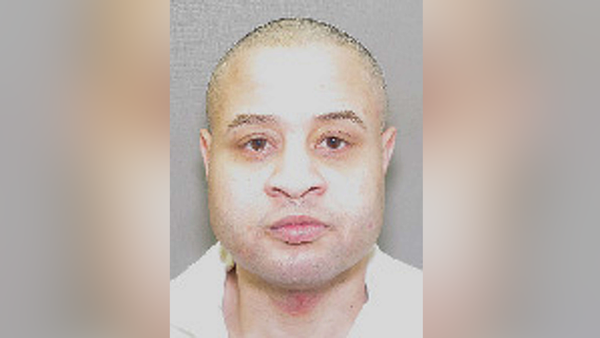
WASHINGTON _ Federal authorities on Tuesday filed charges against Ahmad Khan Rahami in a series of bombs planted over the weekend in New York and New Jersey, accusing the 28-year-old immigrant from Afghanistan with the use of weapons of mass destruction and several other offenses.
The complaint filed in federal court in Manhattan said the bomb that exploded Saturday in New York's Chelsea neighborhood was powerful enough to shatter windows three stories above ground and cause millions of dollars in damages.
Fragmentation from the explosive, fashioned from a pressure cooker and left in a dumpster, was blasted up to 650 feet away, according to an affidavit from Special Agent Peter Frederick Licata of the FBI's Joint Terrorism Task Force.
Rahami faces charges for both that bombing and a separate explosion earlier the same day _ a pipe bomb triggered by a cellphone _ along the route of a Marine Corps charity 5K race at Seaside Park, N.J.
Meanwhile, a congressman on the House Intelligence Committee said the investigation into the bombs planted in New York and New Jersey has revealed elements that are "eerily similar" to the Boston Marathon bombing in 2013.
Like those responsible for the Boston attack, brothers Tamerlan and Dzhokhar Tsarnaev, suspect Ahmad Khan Rahami had traveled overseas and come to the attention of law enforcement before the attack, raising "all the same questions" about when the suspect was radicalized and how much his time outside the U.S. had influenced him, said U.S. Rep. Adam Schiff, D-Calif., the top Democrat on the House Intelligence Committee.
Rahami referred to the 2013 bombing at the finish line of the Boston Marathon in a notebook he was carrying when he was arrested, Schiff added. And Rahami wrote in the notebook about the dead al-Qaida plotter Anwar al-Awlaki, an American-born radical cleric whose online videos the Boston Marathon bombers had watched.
The recent bombings highlight the challenges the FBI and other agencies face when trying to prevent such attacks. "I'm concerned that these kinds of attacks show no signs of letting up," Schiff said. "There are thousands of people coming to the attention of law enforcement. We don't have the resources to surveil all of them, nor would it be appropriate to surveil all of them."
Investigators are still searching for accomplices in the case, but if Rahami acted alone and built the bombs and got the supplies on his own, there would have be very few early indicators of a threat for law enforcement officers to find, Schiff said.
"There isn't enough information for law enforcement to stop all of these attacks," he said. "We stop a great many of them, but if someone takes all the right precautions, it is very difficult to detect."
Rahami, 28, was born in Afghanistan and came to the United States with his parents in the mid-1990s. He later became a naturalized U.S. citizen.
He is believed to have traveled to Afghanistan through Pakistan at least three times for monthslong visits from 2005 to 2014, a U.S. official said. He had married a Pakistani woman and brought her to the United States as his wife, said the official, who was not authorized to discuss the investigation publicly.
The woman, identified by authorities as Asia Bibi Rahami, left the United States for Pakistan a number of weeks before the bombings and was stopped by officials Monday or late Sunday in the United Arab Emirates on her way back from Pakistan, a second official said. She since has been questioned by U.S. investigators, and a U.S. official described her as being "cooperative."
A third official said the wife had been scheduled to return in the coming days and did not believe she was delaying her return in response to the bombings.
Congressman Albio Sires, D-N.J., who represents the district, said Ahmad Rahami had been in contact with his office in 2014, asking for help securing a visa for his wife. He said the request was complicated by the fact that her passport had expired and that by the time she replaced it, she was 35 weeks' pregnant.
"He showed up at my office. The staff thought he was a little abrupt," Sires said. "But there was nothing unusual about it. This district has a lot of immigrants. We do this all the time."
When Ahmad Rahami returned to the U.S. from Pakistan, the pattern of his travel history sent up a flag for border officials. Rahami was told by the officer checking his passport he would be asked additional questions about his time outside the U.S.
Information about Rahami from that "secondary" interview was input into the TECS database, a depository of information about travelers maintained by U.S. Customs and Border Protection, according to a U.S. official briefed on Rahami's travel.
The official, who spoke on condition of anonymity to discuss the case, would not say what kind of details about Rahami were included in the database, but the official did say the description of that interview was available to FBI agents looking into Rahami's background later on.
Rahami is a U.S. citizen, so customs officials who interviewed him in 2014 would not have had the power to deny him entry. If a U.S. citizen is wanted by law enforcement, the system is designed to notify authorities when someone with a warrant enters the country and for the person to be held at entry point until arrested.
Speaking to reporters in front of his home Tuesday, the suspect's father, Mohammad R. Rahami, said he had contacted the FBI in 2014 to express concerns that his son might become a terrorist.
"Two years, I called the FBI _ my son, he's doing very bad, OK?" he said. "But they check it almost two months. ... They say, 'He's not a terrorist.' I said, 'OK.' Now they say he is a terrorist. I say, 'OK.'" He added that Ahmad stabbed his brother two years ago "for no reason."
"In August 2014, the FBI initiated an assessment of Ahmad Rahami based upon comments made by his father after a domestic dispute that were subsequently reported to authorities," the bureau said in a statement. "The FBI conducted internal database reviews, interagency checks and multiple interviews, none of which revealed ties to terrorism."
A U.S. official who had been briefed on the investigation was not certain whether the father told police that he was concerned about his son's jihadi leanings or whether the officers overheard the father making such allegations.
FBI agents questioned the father, who said he believed his son met with unsavory characters in his trips home to Afghanistan and to Pakistan, the official said, but the father did not reiterate his earlier comments about suspecting his son of having ties to terrorism. With no other leads to pursue, FBI agents closed the matter.
Before his marriage, Ahmad Rahami had a child with a woman from New Jersey named Maria J. Mena, according to court records.
In 2008, a court granted the former couple joint legal custody of the child, while granting residential custody of the child to Mena and ordering Rahami to pay $83 a week in child support. One of his sources of income was listed as Planned Security Services, a security company with offices in Parsippany, N.J. The pair worked out visitation rights with each other.
But in October 2011, Mena filed to block Rahami's overnight custody rights, apparently in fear that the child "is in danger of being removed from the country," according to a judge's order. (In 2009, Mena had filed for permission to take the child out of the United States, which a judge granted.)
In 2014, Rahami had approached the court about adjusting his visitation rights. The court ordered that Rahami would have "parenting time" every other weekend, and when he didn't have weekend times, he would have the child on Mondays and Thursdays after school. The records also seem to indicate that the two parents had different religions, granting custody to Mena on Thanksgiving and Christmas and custody to Rahami on Eid al-Fitr and Eid al-Adha.
In January 2015, Rahami filed to reduce his child-support payments; he was more than $3,500 behind and apparently out of work. (Rahami seemed to be falling deeper in the hole: Six months earlier, he had owed $623 in child payments.) The records indicate that the court suspended his required payments for 60 days to allow Rahami "to find employment."
On Tuesday, Mena filed for sole custody of the child due to Rahami being implicated in the recent bombings in New York and New Jersey and in a shootout with police. She says she last had telephone contact with Rahami in January 2016.
Rahami's arrest came as a result of an extraordinarily intense manhunt that began Saturday morning after a small pipe bomb exploded in Seaside Heights, N.J., near the route of a Marine charity run. No one was injured. Then about 8:30 p.m. Saturday, a bomb exploded in a dumpster in Manhattan's Chelsea neighborhood, spewing shrapnel and broken glass over the street and causing 29 minor injuries.
Surveillance video from the area of that bombing provided the first real clue, showing a chubby, bearded man carrying a duffel bag. A few hours later, a sharp-eyed photographer who lives nearby discovered an unexploded bomb fashioned from a pressure cooker near her front door. A fingerprint lifted from the pressure cooker helped lead police to Rahami.
Perhaps the most remarkable development came Sunday night. Two homeless men who were hanging out near the train station in Elizabeth, N.J., noticed a backpack left on top of a garbage can. When they opened it, hoping to find valuables, they saw it contained pipes and wires. They alerted the police, who came and discovered five more homemade bombs inside, one of which was detonated by a robot.
By 4 a.m. Monday, police cars and helicopters had descended on the Rahami family's restaurant. The suspect, however, was nowhere to be found. So they took an unprecedented step: They sent out an emergency bulletin to millions of cellphones in New York and New Jersey, asking the public to keep a lookout.
Within hours, an apparently exhausted Rahami was discovered sleeping in the vestibule of a tavern in Linden, a few miles from his home.
"I saw him on the corner with a handgun," Peter Bilinskas, who owns a business nearby, said in a phone interview. "He did not appear to be running. He was actually standing at the corner, holding the gun. At first, I thought he was a policeman. Then he started shooting at a police car."
Video from the scene showed Rahami, conscious but stunned with wounds to his shoulder and leg, strapped to a gurney and loaded into an ambulance.