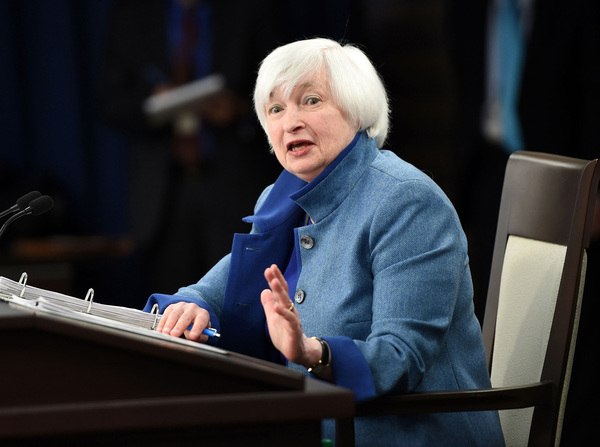
CLEVELAND _ In a speech Tuesday marked by large doses of both statistics and humility, Federal Reserve Chair Janet Yellen said that the economic outlook is highly uncertain, suggesting that the central bank may move slowly in raising interest rates and scaling back easy-money policies.
The Fed has been moving to reduce monetary support for the economy based on an assessment that the labor market is strengthening and that inflation, which has been unusually low, will soon stabilize.
Last week, the Fed began unwinding the massive bond-buying effort it began after the financial crisis of 2007-2008 and signaled that another interest rate hike would come by the end of the year.
But Yellen suggested that the future policy course was uncertain.
"My colleagues and I may have misjudged the strength of the labor market," she said at a conference of the National Association for Business Economics in Cleveland. She said the same about "the degree to which longer-run inflation expectations are consistent with our inflation objective, or even the fundamental forces driving inflation."
Inflation has been running persistently below the Fed's 2 percent target, puzzling economists and causing policymakers to be hesitant in raising rates. Yellen said that she still expected inflation to move up to the Fed's desired goal in coming months, but she noted that the labor market, which historically has been a key factor in moving inflation, may not be as tight as the low unemployment rate suggests.
For much of this year, the jobless figure has been below 4.5 percent, which most Fed officials see as essentially full employment. While more employers have been reporting trouble finding workers, there's been little indication of a pick-up in wage increases, which on average have remained relatively modest. The low rate of wage increases could indicate that the labor market has more slack than economists had believed.
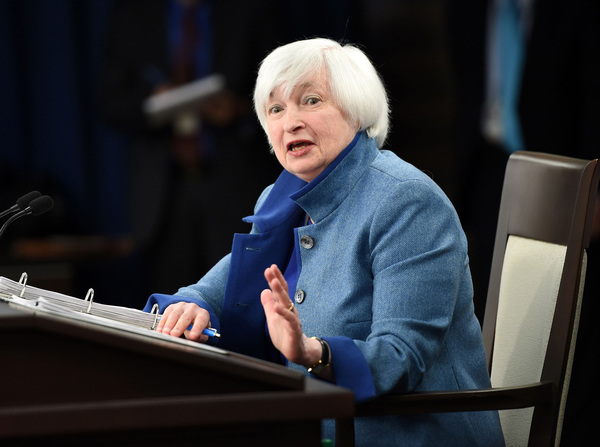
Because of demographic and other structural changes, "the unemployment rate that is sustainable today may be lower than the rate that was sustainable in the past," Yellen said.
Similarly, she said that inflation expectations, which are important in actual inflation outcomes as people make decisions on hiring and spending based on them, may also be uncertain. "There is a risk that inflation expectations may not be as well anchored as they appear and perhaps are not consistent with our 2 percent goal," she said.
Several factors could be restraining inflation, Yellen said, including healthcare prices, which have not grown as fast as in the past, and the growing use of online shopping, which may be making it tough for businesses to raise prices.
"How should policy be formulated in the face of such significant uncertainties?" Yellen asked. "In my view, it strengthens the case for a gradual pace of adjustments."
"It would be imprudent to keep monetary policy on hold until inflation is back to 2 percent," she said, but, she added, "we should be wary of raising rates too gradually."
In a question and answer session, Yellen said policymakers should be prepared for surprises and shocks.
"Nothing is set in stone," she said.