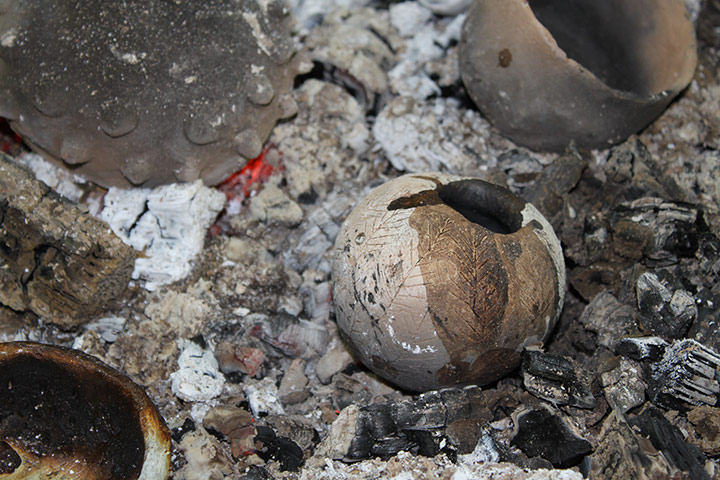
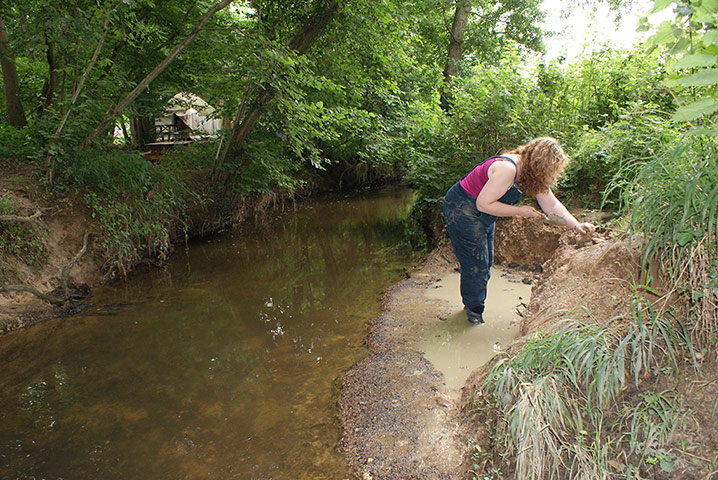
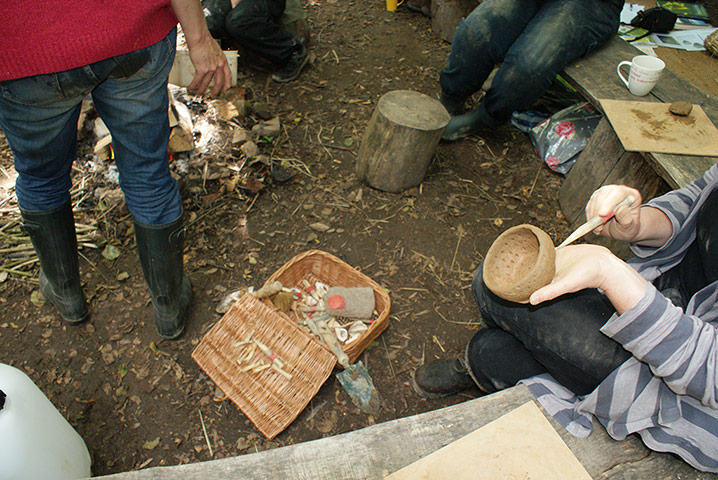
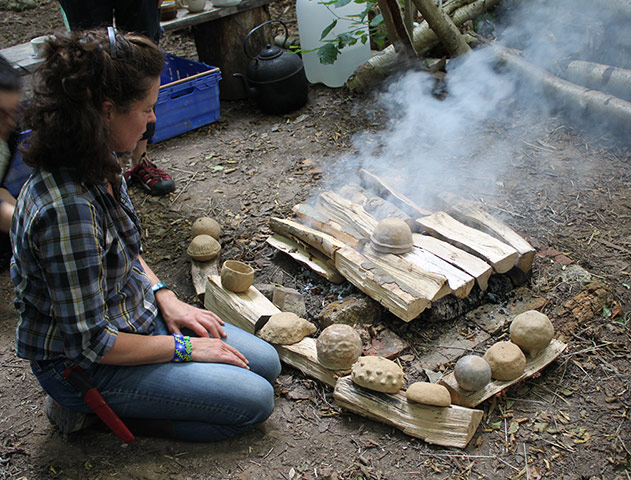
Pottery being fired in a woodland fire in SussexPhotograph: Frederika Whitehead/GuardianHarvesting clay from the stream at WoWo campsite in Sussex – check out the glampers yurt in the backgroundPhotograph: Frederika Whitehead/GuardianMaking the pots. Course leader Ruby provides Roman-style tools: chicken bones and sharpened sticks for shaping the pots and creating patterns on their surfacesPhotograph: Frederika Whitehead/Guardian
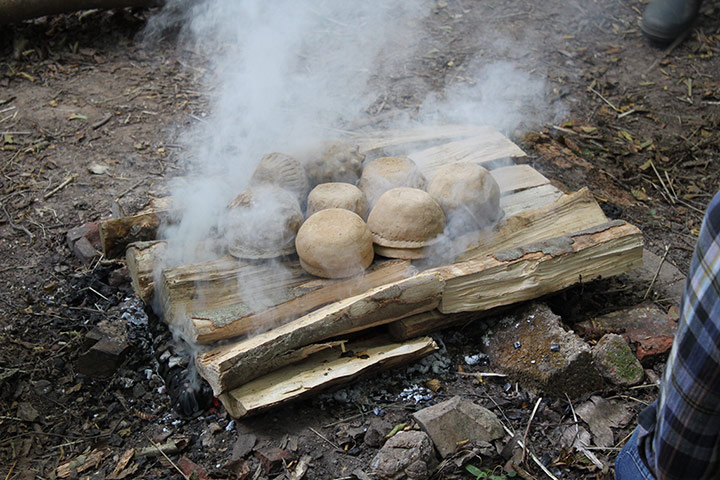
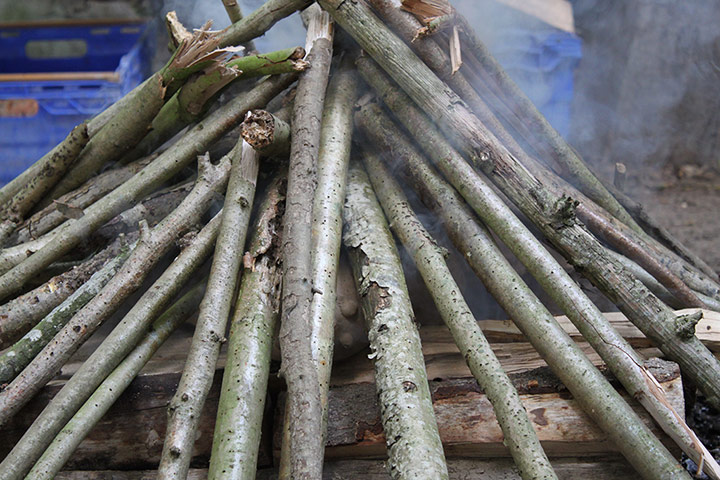
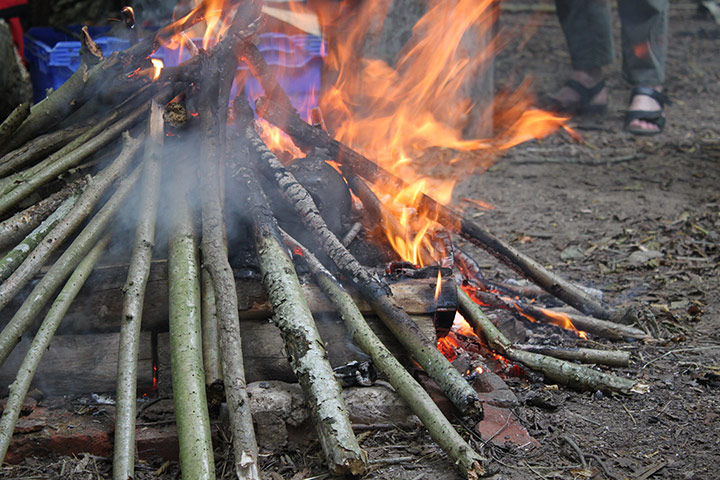
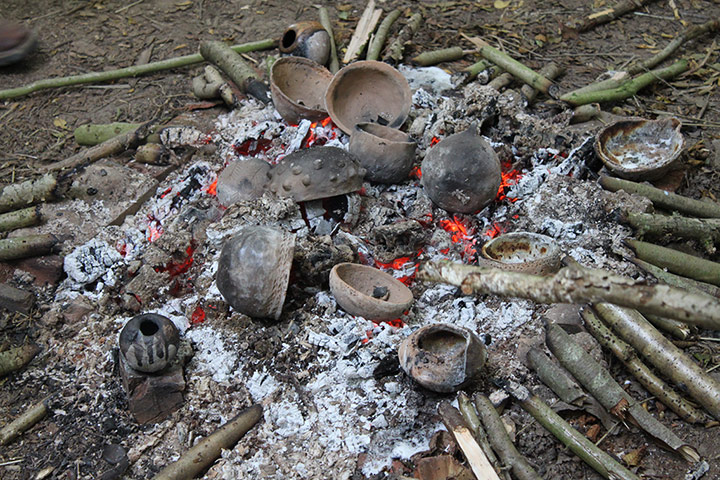
Once the pots have been made, they're left to dry for a week before firingPhotograph: Frederika Whitehead/GuardianBefore the firing, the pots are placed around the edge of the fire warm up so the extreme heat change doesn't damage themPhotograph: Frederika Whitehead/GuardianA platform is built over the embers of the fire to stack the pots on for the firingPhotograph: GuardianThe pots are stacked tightly at the centre of the firePhotograph: Frederika Whitehead/GuardianSticks are piled up around the pots to keep the heat inPhotograph: Frederika Whitehead/GuardianAs the fire burns up through the platform the sticks catch fire. The pots are temporarily blackened by the flamesPhotograph: Frederika Whitehead/GuardianIt's hard to believe that a campfire is hot enough to make pottery – or that the clay we just pulled out of the nearby riverbed can withstand the flamesPhotograph: Frederika Whitehead/GuardianThe pots cool in the dying firePhotograph: Frederika Whitehead/GuardianMilk can be used to glaze the inside of the hot, newly fired pots, making them less porousPhotograph: Frederika Whitehead/GuardianPottery teacher Ruby from Native Hands inspects one of the potsPhotograph: Frederika Whitehead/Guardian
Sign up to read this article
Read news from 100’s of titles, curated specifically for you.