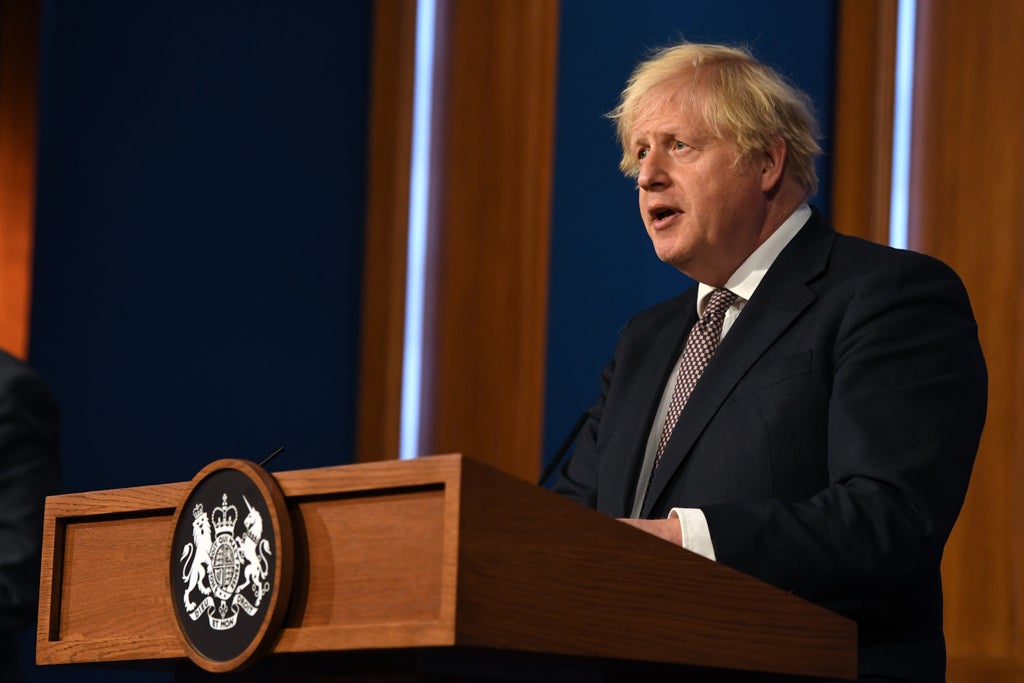
Spiralling numbers of coronavirus cases could mean restrictive measures need to be reintroduced in a matter of weeks and will be “required for much longer”, government scientists have warned.
The warning comes after Boris Johnson announced on Monday that most Covid-19 restrictions are likely to be lifted from 19 July, including social distancing guidance and the legal requirement to wear face coverings.
In a newly released document from 22 April, the Scientific Advisory Group for Emergencies (Sage) said there is a “significant risk in allowing prevalence to rise, even if hospitalisations and deaths are kept low by vaccination”.
“If it were necessary to reduce prevalence to low levels again...then restrictive measures would be required for much longer,” the document added.
"Stronger measures may be desirable for autumn and winter."
Recommended
The group advised that some baseline coronavirus measures should continue beyond the summer, as this would “significantly decrease ongoing transmission”. Sage pointed out that mask wearing was still mandatory on public transport in countries with low numbers of Covid-19 cases like New Zealand.
With transmission expected to rise over the autumn and winter, the document noted how physical distancing helped to reduce case numbers.
The scientists also warned that the easing of all restrictions could give rise to super-spreader events, especially in tightly-packed venues.
The government has said it is up to individuals to decide whether it is necessary to wear a mask in a given situation. This approach has been criticised, with some saying that the move puts vulnerable people at risk.
Earlier this week, Stephen Reicher, a government scientific adviser, said the country could see almost a million cases each week by the end of the month, which he said could cause “huge damage”, primarily to young people.
Speaking to Channel 4 News, he added that the government’s decision was “a very big risk indeed”.
Neil Ferguson, an epidemiologist at Imperial College London, agreed that infections could potentially get “very large”, increasing to 200,000 a day.
“This is a slight gamble, it’s a slight experiment at the moment. I think it’s justifiable and I’m reasonably optimistic, but policy will have to remain flexible,” he told BBC Radio 4’s Today programme on Tuesday.
Additional reporting by PA