
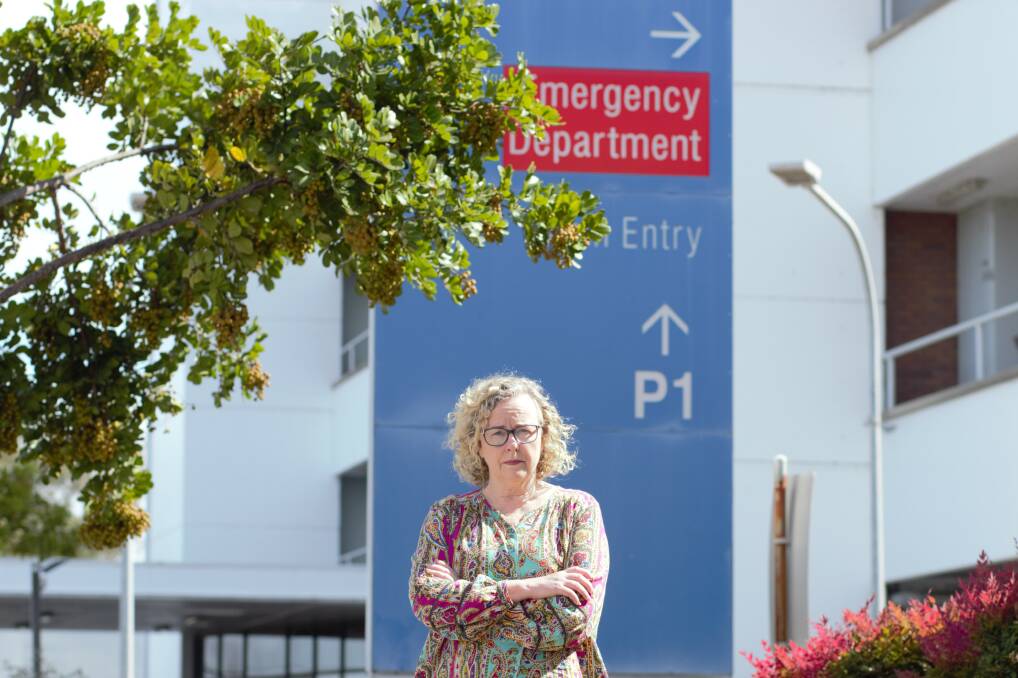
MORE funding cuts could be on the way for the Hunter's GP Access if the federal government acts on a recommendation to bring it in line with other after hours services nationally.
An evaluation into the Commonwealth's Primary Health Network (PHN) After Hours Program has recommended the department apply the same funding formula to the Hunter New England and Central Coast region as similar - but different - services across the country.
The report recommends the government "transition allocations" of funding gradually over a five year period to allow "sufficient time" for the PHNs to plan for change and secure "alternative sources of support".
Newcastle MP Sharon Claydon, who has begun a petition to prevent GP Access closing its Calvary Mater clinic and slashing its hours, said she was concerned the government was "sitting on" this report when the Hunter was already fighting to save the service.
"They have not acted on this report yet, but if they do, I think they will further reduce the funding to our GP Access After Hours," she said. "Our service, and another in Tasmania, is not funded according to that national formula because we pre-date it. We are innovators. We started this 20 years ago and the funding formula we reached with the Commonwealth at the time was more generous than it is now."
The evaluation found two PHNs received funding "over and above" the formula - Hunter New England and Central Coast PHN for GP Access, and Primary Health Tasmania for GP Assist.
"These services were established many years before the program commenced," it said. "We would propose that allocations to these PHNs be gradually brought towards the funding formula recommendation over a transitional period of five years."
But the report, published in January, also acknowledged GP Access was a "well-integrated system of services" and the only one of its kind allowing callers to be triaged and booked into one of the five after-hours clinics without having to make another call. And as opposed to Tasmania's GP Assist, which uses privately owned after-hours clinics that are not 100 per cent bulk billed, GP Access is run by Hunter Primary Care and bulk bills. Potential existed to expand GP Access services across the entire PHN, as it currently only serviced the "most populous" Lower Hunter sub-region.
"The government's words back to our local guys was that they were still considering the findings of that evaluation and the future funding of the program," Ms Claydon said. "But it is on the table, and if implemented, the recommendation was that unless they tweak it, it would result in less funding again into GP Access. If they are struggling now, there is actually not good news ahead unless the government is going to resolve the lack of adequate Medicare rebates."
The federal Minister for health and aged care, Greg Hunt, would not acknowledge whether the department was considering implementing the recommendations of the report, but a spokesperson said the Morrison Government was committed to ensuring Australians have access to health care services when they need it.
"We committed $71.9 million in the 2021-22 budget, to continue current funding levels for the PHN-commissioned after hours services for a further 12 months... increasing the government's total investment to more than $452.4 million since 2015," he said. "This includes $4.3 million per year to Hunter New England and Central Coast PHN since 2017, plus a one off top up amount of $450,000 in the last financial year to make up for the withdrawal of funding by the state, taking the 2020-21 investment to $5.9 million."
Newcastle MP Tim Crakanthorp and state member for Wallsend, Sonia Hornery, have called on the NSW Government to reconsider its withdrawal of funding from GP Access on the premise the delivery of primary care services were a Commonwealth responsibility.
Mr Crakanthorp said the emergency department (ED) was the "most expensive way" to treat patients. It was "imperative" GP Access secured appropriate funding to ensure our hospitals were not subjected to additional strain during such a critical point in the state's COVID recovery.
Ms Hornery said the service was estimated to save NSW Health more than $20 million annually by keeping 61 per cent of all GP Access patients out of EDs.
"The benefit to the NSW Health budget from the existence of the GP Access clinics is the avoidance of ED presentations for minor medical issues," Ms Hornery said. "For the tiny investment of $600,000 per year, the savings to the NSW Health system is more than $20 million.
"The maths is simple."