MIAMI _ A few months back, Lorena Jofre was planning to buy a condominium in Miami-Dade County to finally move into her own place with her 7-year-old daughter.
Jofre, who has lived much of her life in uncertainty, also planned to exchange her old car for a new one, thanks to a better-paying job. She even hoped to return to college to become a teacher or a social worker.
But her plans have since drastically changed.
Like many immigrants in South Florida and other parts of the country, Jofre is now taking steps to become untraceable after President Donald Trump ordered stepped up enforcement of immigration laws and arrests of undocumented immigrants.
"What if in a few months I can't work? What if one day they knock on my door?" said Jofre, who lives in southwestern Miami-Dade. "You get paralyzed, you don't want to do anything drastic with your life. It is a scary thought."
Jofre, a Chilean immigrant, is technically not undocumented. At least until January of 2019. She is protected by the Deferred Action for Childhood Arrivals ( DACA), which shields from deportation individuals who came to the United States as children and remained in the country illegally.
In September, Trump ended the program and gave Congress until March 5 to approve a legislative solution that would give legal status to the nearly 700,000 people protected by DACA. But the deadline passed without any legislation or new remedies to the dilemma.
The lack of an immigration solution by Congress has generated uncertainty among those with DACA, also known as "Dreamers," as well as those with Temporary Protected Status (TPS) and those without legal status. As a result, many undocumented immigrants or those who could lose their legal protection, have started to move to other neighborhoods or cities, close bank accounts and register their vehicles, houses and even businesses in the names of others.
Jofre, who is a single mother, is considering leaving Florida, where she has lived for almost 25 years. She plans to move to a sanctuary state, where local authorities are not obligated to cooperate with federal immigration agencies to arrest undocumented immigrants.
Before DACA, Jofre worked as a waitress, getting paid under the table. DACA allowed her to obtain better jobs and plot a better future.
Jofre and other immigrants interviewed by the Miami Herald said they will have few options if they lose their protected status.
"I would go back to living in the shadows, which is how I have lived most of my life in this country," she said, adding that she has not even considered returning to Chile, a country she barely remembers.
"I would only go if they throw me out, and I would go kicking and screaming and fighting to stay," Jofre said.
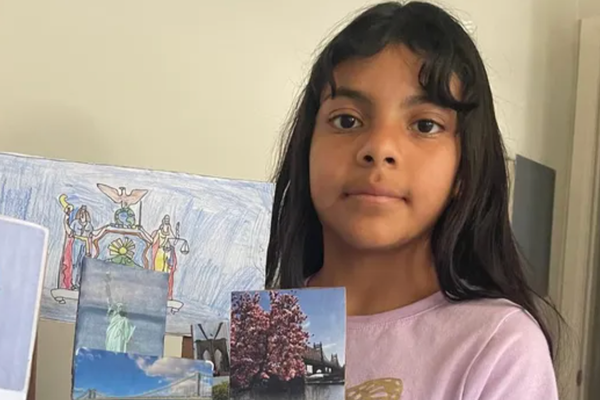
Listening to her mother, Anabell teared up. The first-grader likes her school and said she does not want to live in Chile because she is afraid.
"What are you afraid of?" a reporter asked her.
"Earthquakes," Anabell answered without hesitation.
Several immigrants, activists and lawyers said the majority of people without papers or who will lose legal protection are not considering leaving the United States as an option. At least not voluntarily.
"For most of these people, this is home. How do you tell someone that they have to leave their home? They have been living here for 20, 30 years. They bought homes, raised families," Santra Denis of Catalyst Miami said at a recently organized community forum.
"Do you know anyone who is getting ready to leave? Because I don't," said Denis, whose organization works with immigrant families.
Now many living in limbo cling to the hope of comprehensive immigration reform, which would not only protect DACA beneficiaries, but possibly include other immigrant groups, such as those with TPS and those without papers. Meanwhile, around the country, desperate families are taking steps to hide and protect their children in case they are deported.