Bourbon hoarders are amassing hundreds of bottles in their basements. There’s not enough charred oak to go around for Tennessee’s barrels. Chinese and South Korean businessmen guzzling America’s fashionable liquors are driving prices up. It all points in one direction, if you believe the reports: to a catastrophic shortage of the world’s best whiskey and bourbon.
Devotees can take heart, however, in the knowledge that distillers have taken heed – and are in the middle of a years-long expansion designed to ensure that no lover of brown liquors goes thirsty.
With a spike in popularity of American whiskey and bourbon since the 1990s, distillers have acted to protect themselves from cycles of boom and bust. The industry’s worst-case scenario is not a shortage but a repeat of the 1980s: demand will suddenly drop and distilleries’ investments will mean huge stockpiles of unsold bottles and waiting barrels.
Fears of a bourbon or whiskey shortage persist, however, because of the years of aging the products require – four to seven for many bourbons, 12 years for single-malt scotch, 23 years for the rarest Pappy Van Winkle. So like the oil industry, distillers try to estimate demand not for next year but for 10 and 20 years in the future, and to invest in and age their products accordingly.
In the ’80s and ’90s, distillers struggled to sell bourbon and whiskey alongside vodka and rum in a culture split between cocktails, beer and wine. With old stock just waiting on the shelves – bourbon and whiskey don’t age once they’ve been bottled – prices plummeted, and not coincidentally bourbon and whiskey sales surged in the 2000s. Those who forecast a shortage believe distillers will start to run out as their pre-popularity investments fail to keep pace with post-popularity demand.
Prices have already gone up and a few distilleries hinted that there could be a few bumpy years ahead. Maker’s Mark considered watering down its bourbon in 2013 to meet rising demand, and in June of this year Tennessee’s industry experts warned that sales were outpacing production by two to one. Even Vendome Copper, the builder of most American whiskey stills, is struggling to keep up with demand.
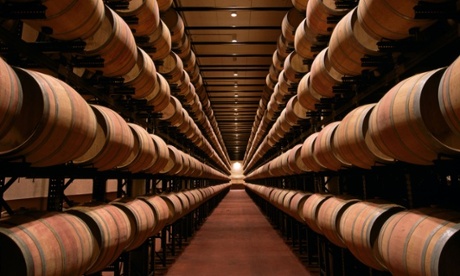
But even should demand flag here in the US, the international market shows no signs that it’s tiring of bourbon and whiskey, and distilleries have made huge investments. In the past year, Brown-Forman announced it would invest $135m to expand production of Jack Daniels and Woodford Reserve; Diageo, the maker of Johnnie Walker, said it will invest about $115m over three years for its Kentucky operations.
And while the oldest whiskey will disappear off shelves at exorbitant prices, stores will still have the majority of mid-range bottles to stock, and any shortage won’t last long. In 2013, the home of 95% of the world’s bourbon production, Kentucky, filled 1.2m barrels of bourbon and inventory exceeded five million barrels. Some of that bourbon will be ready for consumption as soon as 2015, and distilleries can plan how many barrels they’ll age according to how demand fluctuates over the years.
Importantly – and despite what big distilleries may say – age does not equal quality, and as in the wine industry, a subculture has spent centuries debating the merits of taste. Small distilleries selling “craft” or “artisanal” liquors have enjoyed the rising tide of whiskey’s popularity, but as with any booming industry they will suffer most when the market busts even slightly. Established companies like Jack Daniels can afford to be careful with their prices and how they age barrels. Maker’s Mark is distributed “on allocation” around the states to ensure sales, and bourbons like Buffalo Trace’s Weller remain in steady circulation even as demand increases.
The worst threat to whiskey drinkers probably comes from their favorite libation’s increasing popularity. Cheaper and more unsavory competitors can dilute the market with poor quality drinks, and some brands choose not to put an exact age on their labels, hiding from consumers just exactly what they’re buying. Distillers like Buffalo Trace, maker of the legendarily rare Pappy Van Winkle, gladly play off shortages for marketing purposes – their premium brands are selling at a 20% increase and they themselves put out a statement about “a shortage with no end in sight” in May.
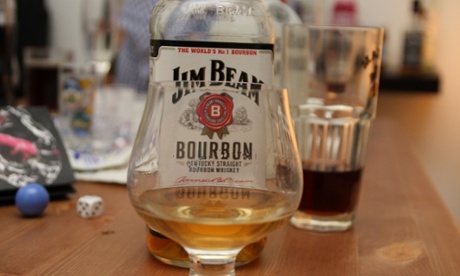
For most people who enjoy a glass of bourbon or whiskey, there’s little need to worry. Distilleries have invested so much in the past few years that too much whiskey is more likely than too little, and if demand drops so will prices. As for a shortage or glut of product, major distilleries would survive, just as they did in the busts of the 1790s, the 1840s and 1980s. Variety would survive too, since companies like Beam Suntory now make not just Jim Beam but higher-end scotches and bourbons, like Knob Creek.
The only likely shortage at hand is for the oldest whiskeys that take more than 20 years to age and can evaporate from barrels – but aficionados willing to pay thousands for rare old bottles have always played a game of “shortages”. As for the hoarders, they’re playing a game so long they themselves might not see an end to it.