
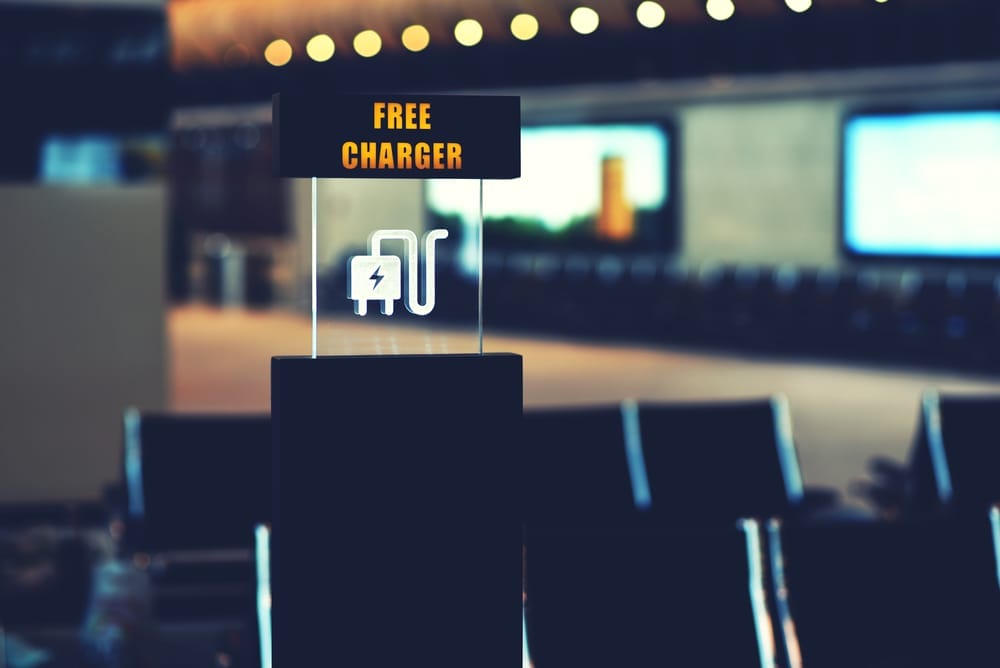
We have all been there. You are at the airport, waiting for a delayed flight, and your phone hits 15% battery. Panic sets in. You spot a free USB charging station near the gate, and it feels like a lifesaver. You plug in, breathe a sigh of relief, and scroll through social media while your battery bar climbs back to green. It seems harmless, right?
However, the FBI and cybersecurity experts warn that this simple act of convenience could cost you everything. That public port acts as a direct line into your personal data. Consequently, hackers found a way to turn these free stations into traps. Understanding the risk of “juice jacking” is essential for anyone who carries a smartphone in 2026.
The Mechanics of Juice Jacking
To understand the threat, you have to understand how your phone works. Your charging cable does two things simultaneously: it transmits power, and it transmits data. When you plug into your own wall block at home, only the power flows. In contrast, when you plug into a public USB port, the data pins in the cable can engage with the terminal behind the wall.
Cybercriminals modify these public stations to install malware or copy sensitive data the moment you plug in. Surprisingly, this “handshake” between devices happens in seconds. You won’t see a pop-up warning, and your phone won’t glitch. The theft happens silently in the background while you check your email.
The FBI’s Explicit Warning
This isn’t just paranoia from tech geeks; it is a federal advisory. The FBI specifically tweeted a warning advising travelers to avoid free battery charging stations in airports, hotels, and shopping centers. They explicitly stated that bad actors have figured out how to load malware onto public USB ports.
Once infected, this malware can lock your device or export your personal information and passwords directly to the criminal. Therefore, trusting a kiosk with your unlocked phone is statistically as dangerous as handing your wallet to a stranger. The convenience simply isn’t worth the exposure.
Your Bank Account is the Target
What are they looking for? Primarily, they want access to your financial life. Modern smartphones store credit card numbers, banking app login tokens, and saved passwords. If a hacker successfully “juice jacks” your device, they can potentially drain your accounts before your flight even lands.
Furthermore, they can access your photos, contacts, and text messages. Imagine the headache of identity theft combined with the violation of having your private photo gallery downloaded by a criminal. The stakes are incredibly high for a quick battery boost.
The “Video Jacking” Evolution
Technology evolves, and so do scams. A newer variation involves recording your screen. Some compromised ports can mirror your display to a hidden device. Thus, if you plug in and then type your passcode or log into your bank, the hackers record every keystroke and tap.
This method bypasses encryption because they are literally watching you type the keys. It is a sophisticated attack that leaves zero digital trace on your phone, making it nearly impossible to detect until fraudulent charges appear.
The “USB Condom” Solution
If you absolutely must use public power, you need protection. A device colloquially known as a “USB condom” or data blocker is a small dongle that fits between your cable and the USB port. Physically, it removes the data pins, allowing only power to pass through.
These adapters are cheap, portable, and effective. Carrying one in your travel bag ensures that you can use any USB port without fear of data theft. It turns a compromised smart port into a dumb outlet.
Bring Your Own Brick
The simplest solution remains the most effective: bring your own AC adapter. Plugging your standard wall plug into a regular 110v electrical outlet is entirely safe. Data cannot travel through the electrical grid into your phone.
Standard electrical outlets are dumb power sources. Hackers cannot compromise them in the same way they compromise USB processors. Therefore, hunting for a standard wall plug is always safer than using the convenient USB slot next to it.
Invest in Portable Power
Ultimately, self-reliance is your best defense. A high-quality portable power bank can charge your phone multiple times. This completely removes the need to tether yourself to a wall or a public kiosk. You stay mobile, and your data stays air-gapped from public networks.
Prioritize Digital Hygiene
We protect our physical wallets with vigilance, yet we often leave our digital lives exposed for the sake of convenience. Changing your habits requires effort, but the security is worth it. Stop trusting public ports. Buy a portable battery, use a data blocker, or find a wall outlet. Your digital safety is in your hands.
Do you still use public charging stations, or have you already switched to portable batteries? Tell us in the comments below!
What to Read Next…
- 12 “One-Time” Fees That Keep Charging Your Card
- 9 Hidden Spots in Hotel Rooms Where Spying Cameras Are Often Found
- 6 Smartphone Settings Seniors Should Turn Off Immediately for Privacy
- 6 Safety Apps That Women Overlook on Their Phones
- The 12 Harmless Online Habits That Actually Expose Your Identity
The post FBI Warning: Why You Must Stop Using Public USB Chargers Immediately appeared first on Budget and the Bees.