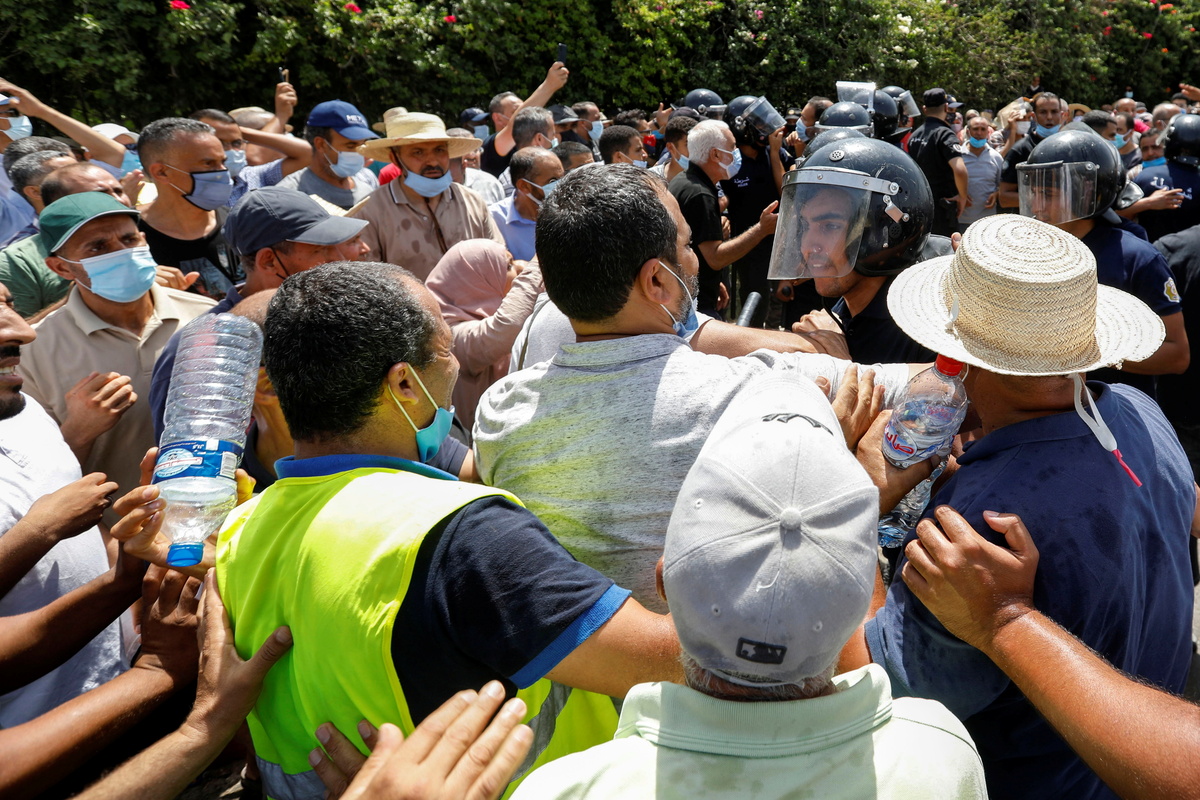
Separated by metal barriers set up by police, hundreds of people gathered outside Tunisia's parliament building under a burning sun on Monday to pelt their political rivals with stones, bottles and eggs.
Hundreds of police stood to separate the supporters and opponents of Tunisia's president, Kais Saied, who late on Sunday dismissed the prime minister and froze the parliament in a move his foes called a coup.
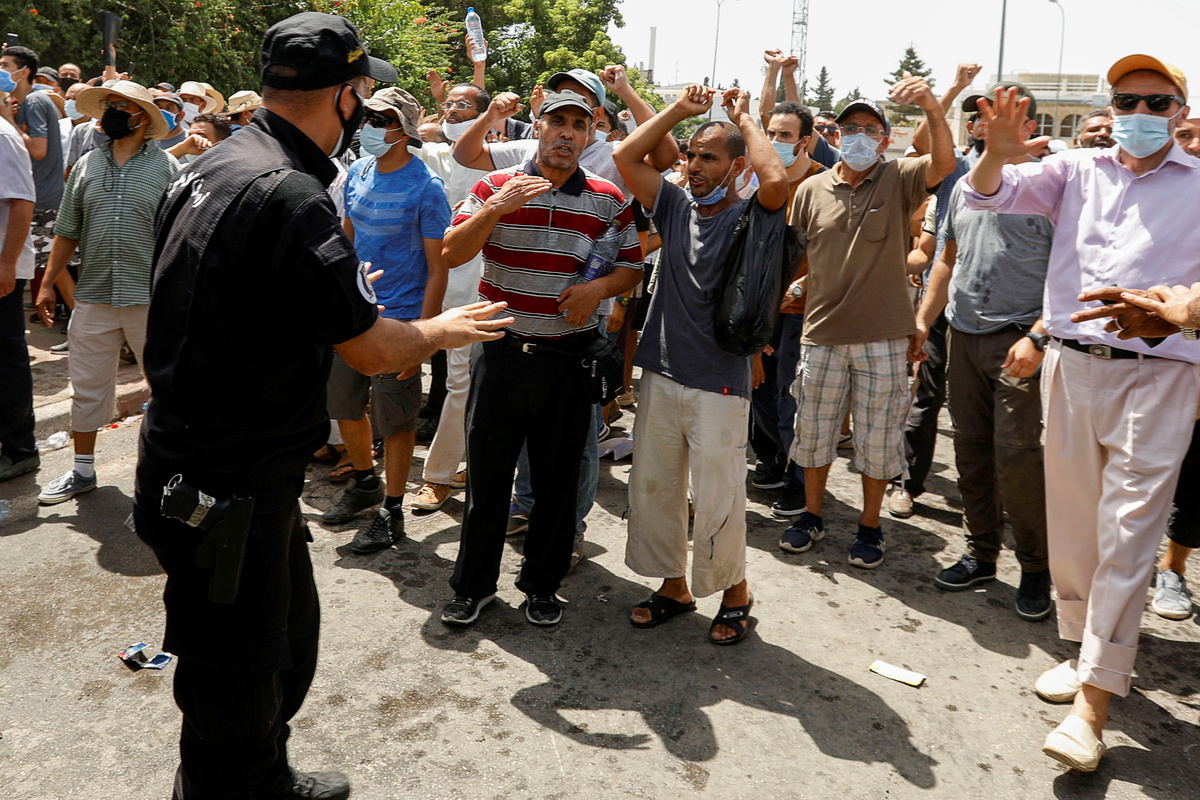
The divisions on show outside the parliament underscored the high stakes for Tunisia as it navigates the country's biggest political crisis since the 2011 revolution that introduced democracy.
"We are in one valley. They are in another valley. They only care for their party. We only care for the country... that is why they rose up," said Ahmed Hafian, a supporter of Saied.
Across the barrier, a 30-year-old woman who gave only her first name Ghofrane, chanted "No to the coup" and accuse Saied's supporters of violence.
"We want legitimacy, consensus and unity. They throw stones and seek only chaos. That's the difference between us and them," she said.
The collision between rival supporters raises the spectre of a new phase of violent escalation on Tunisia's streets - reminiscent of the early days after its revolution when Islamists faced off against secularists.
Political leaders then, aided by civil society elements like the powerful labour union, managed to forge a consensus to avert major strife in an agreement that ultimately led to the 2014 constitution.
However, economic stagnation and anger at police abuses have fuelled periodic outbreaks of street protests in Tunisia since then - including in January and again on Sunday.
Public anger at these protests has focused on the government and the old parties in parliament, including Ennahda, whose constant manouevring for advantage and petty bickering in the chamber has soured some on democracy.
As Ennahda parliament members sat outside the building in the sprawling Bardo palace complex that also houses the national museum, demanding to be let inside, their opponents dismissed them as part of a corrupt and discredited political elite.
(Reporting by Tarek Amara, writing by Angus McDowall, Editing by Raissa Kasolowsky)