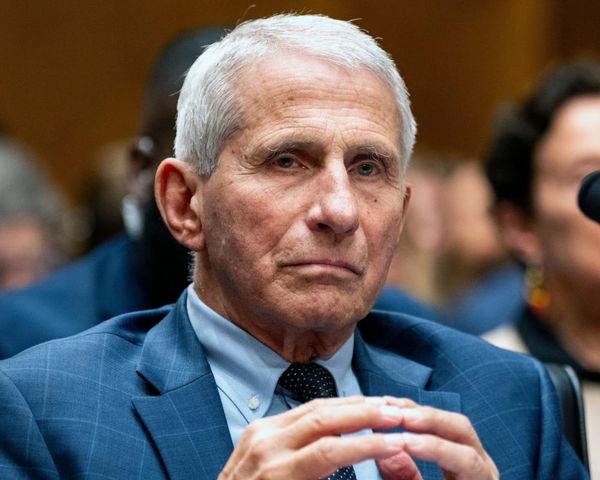
Newly released entries from Anthony Fauci's private COVID diary state that Donald Trump suffered a 103-degree fever and a steep drop in blood-oxygen levels during his 2020 coronavirus illness, according to documents unveiled in Washington on Wednesday during a heated Senate committee hearing.
According to the diary material, the former president's oxygen saturation reportedly fell into the 80s in early October 2020. That decline was recorded as the specific trigger for beginning treatment with the antiviral drug Remdesivir.
Exploring Fauci's Private COVID Diary and the White House Response
The release of these private records is the latest step in a long-running dispute between the retired infectious disease specialist and Republican lawmakers on Capitol Hill.
Senator Rand Paul produced more than 1,000 pages from the journal during the hearing, saying he aimed to show discrepancies between public statements and private assessments about the origins of the virus. During the session, the former US medical chief invoked the Fifth Amendment and declined to answer further questions from the panel.
One entry gives a detailed account of internal conversations about the president's condition. On 4 October 2020, then White House chief of staff Mark Meadows telephoned Fauci to seek advice on when Mr Trump could resume public appearances.
The diary notes that Mr Trump first showed symptoms on 1 October. Meadows is recorded as saying that by Friday the president had developed a 103-degree Fahrenheit fever and his oxygen saturation had fallen into the 80s.
This description contrasts with the more upbeat health updates the administration was offering the public at the time. The same entry states that by Sunday the president was out of bed, had no fever and was feeling significantly better.
Origins, Testing, and What Fauci's Private COVID Diary Exposed
Beyond the account of the president's illness, the documents describe a difficult working relationship around the Oval Office as the pandemic unfolded.
A diary entry dated 11 March 2020 depicts a measured president, recorded as asking detailed questions and placing public health ahead of economic concerns. By August, the tone had changed.
The records describe a meeting in which Mr Trump is said to have argued that rising case numbers were occurring 'only because we are doing more testing'.
Fauci's notes say he pushed back, telling the president that expanded testing mainly uncovered asymptomatic cases, while rising hospital admissions pointed to a genuine nationwide increase in infections.
Health Secretary Robert F. Kennedy Jr. told Fox News that his agency retrieved the diary files from government computers before providing them to the Republican-led committee this week.
The documents also describe early efforts to understand the new virus, echoing some material already included in Fauci's 2024 memoir.
In January 2020, one entry records Fauci's view that a market in China was an amplifier of transmission rather than the original source of the virus.
That private assessment closely matched his later public comments, running counter to claims that he had maintained a separate, hidden narrative about the origins of COVID-19.
The diary also notes some of the personal and public pressures that came with his role. In a May 2020 entry, Fauci writes of feeling embarrassed after actress Julia Roberts called him her 'personal hero' during a virtual appearance.
According to the notes, their discussion focused on the importance of including the developing world in forthcoming vaccine trials.