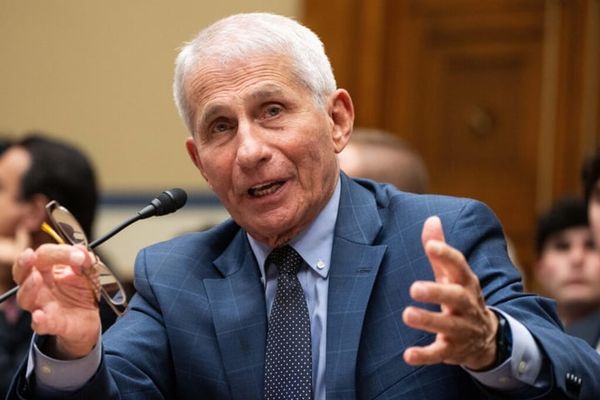
Sen. Rand Paul has released a 1,141-page cache of Anthony Fauci's private pandemic diaries, days before the former top US infectious-disease official testifies under oath, exposing entries in which scientists privately doubted the coronavirus emerged naturally in January 2020.
The timing is deliberate. Paul, a Kentucky Republican who chairs the Senate Homeland Security and Governmental Affairs Committee, posted the notes over the weekend and set the terms of Wednesday's hearing before Fauci had said a word.
The Entry That Changes the Frame
The sharpest passage sits in late January and early February 2020. According to the diaries, Fauci recorded that virologists had flagged the coronavirus's furin cleavage site, a feature that helps the virus enter human cells, as a reason to question a natural origin. In a 1 February entry, he listed a dozen researchers on an early conference call and wrote that only two backed a natural explanation. The rest, he noted, thought 'deliberate insertion was possible'.
Paul seized on that line. 'This was never a 50/50 room', he wrote, arguing the private record clashes with years of public assurances that the science was settled. Days earlier he put it bluntly, saying what Fauci 'wrote privately and what he told the country are two different stories'.
The diaries range wider than origins. In a 26 January 2020 note, Fauci wrote that the Wuhan market was 'not the source, it was the amplifier'. Other entries record his private clashes with the White House over messaging, testing, and the drive to promote hydroxychloroquine as a treatment.
A Subpoena, Then Silence
Fauci has not responded publicly since the file surfaced, and the document was pulled from Paul's website within days. He is due before the committee at 8:30 a.m. Eastern time on 29 July, an appearance Paul forced through a unilateral subpoena after the panel said Fauci had declined to attend voluntarily.
The former National Institute of Allergy and Infectious Diseases (NIAID) director has brushed off origin questions before. In an August 2021 entry, he called the flood of congressional letters tying him to the pandemic's start a waste of time. Paul rejects that reading. He calls it oversight.
Scientists Push Back
Virologists who spoke to NPR warned against reading a cover-up into early doubt. Felicia Goodrum of Dartmouth College said researchers knew far less in those first weeks and revised their conclusions as more genetic data, sampling, and analysis accumulated, most of it pointing to the Wuhan wet market rather than a laboratory. A February 2024 survey by the Global Catastrophic Risk Institute found most virologists still favour natural spillover.
The Fight That Outlasts the Hearing
For US taxpayers, the stakes run past one witness. Paul has tied the diaries to a wider battle over gain-of-function research, work that can make a pathogen more dangerous, and over NIH money routed through the EcoHealth Alliance to the Wuhan Institute of Virology. A 2024 House subcommittee report judged a lab leak the likeliest origin, though it found no direct proof.
What officials believed in private, and what they told a frightened public, will now shape how Washington polices the research that could seed the next pandemic.