Summary
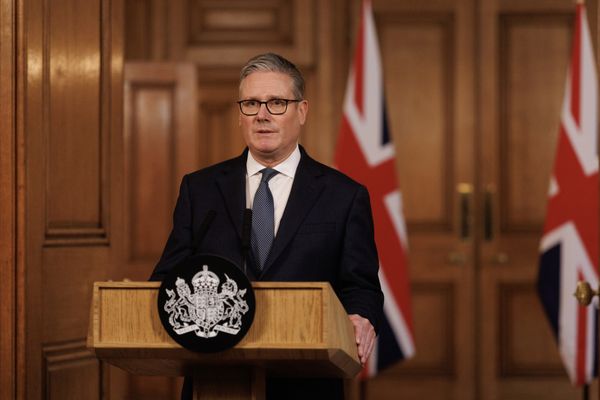
- Joe Biden delivered remarks on Russia. The comments come hours after the Biden administration unveiled new sanctions against Russia, in response to the Kremlin’s hacking and election interference efforts. The sanctions include the expulsion of 10 Russian diplomats and penalties against six companies that support the Kremlin’s hacking operations.
- Dr Anthony Fauci sparred with a Republican congressman during this morning’s hearing before the House coronavirus crisis subcommittee. Congressman Jim Jordan repeatedly pressed Joe Biden’s chief medical adviser on when Americans’ “liberties” can be restored by ending coronavirus-related restrictions. Fauci replied that the level of coronavirus infections is still too high to drastically roll back restrictions. “I don’t look at this as a liberty thing,” Fauci told Jordan. “I look at this as a public health thing.”
- Pfizer’s CEO said people will “likely” need a third coronavirus vaccine dose within a year. In comments made for an event with CVS Health, CEO Albert Bourla also said that annual revaccinations may be likely. Dr David Kessler, the chief scientific officer for the coronavirus pandemic response, similarly said booster shots may be needed while testifying before the House subcommittee earlier today.
- Derek Chauvin said he will not testify in his own defense, as the former police officer faces murder charges over the killing of George Floyd. After Chauvin invoked his Fifth Amendment right against self-incrimination this morning, his defense team rested its case.
Sarah Huckabee Sanders, the former press secretary in the Trump administration, has raised $4.8m for her campaign to run for Arkansas governor.
Sanders has already received the endorsement of Trump. She is running to replace Asa Hutchinson, also a Republican, in a state that heavily supported Trump during the 2020 elections.
‘It’s a scandal, quite frankly’: US Equal Rights Amendment still faces uphill battle
ith renewed attention on anti-discrimination policies following the #MeToo movement and a record number of women serving in Congress, a nearly century-long effort to explicitly enshrine gender equality in the United States constitution may finally be coming to a head.
If the Equal Rights Amendment (ERA) were incorporated into America’s founding document, it would represent a huge victory for women and people across the gender spectrum, whose fundamental rights are too often tied to partisan disagreements.
But amid legal controversies, disingenuous talking points and a chronic lack of urgency, the landmark amendment still faces an uphill battle.
“It’s outrageous – a scandal, quite frankly – that women still have to be in the begging position for their rights,” said Carol Jenkins, president and chief executive of the ERA Coalition and the Fund for Women’s Equality.
First drafted in 1923 and revised over the years, the proposed article is a constitutional guarantee that the “equality of rights under the law shall not be denied or abridged by the United States or by any State on account of sex”. It would also give Congress the power to enforce gender equality through legislation, and would take effect two years after ratification.
Proponents argue the ERA would send a powerful signal and be used as a tool to effectively challenge restrictions and loopholes currently undermining people’s hard-won protections.
Read more:
The White House announced Biden’s nominees for several US ambassador posts.
He chose:
- Larry Edward André, Jr – ambassador to the Federal Republic of Somalia
- Elizabeth Moore Aubin – ambassador to the People’s Democratic Republic of Algeria
- Steven C Bondy – ambassador to the Kingdom of Bahrain
- Maria E Brewer – ambassador to the Kingdom of Lesotho
- Marc Evans Knapper – ambassador to the Socialist Republic of Vietnam
- Christopher John Lamora – ambassador to the Republic of Cameroon
- Tulinabo S Mushingi – ambassador to the Republic of Angola and the Democratic Republic of Sao Tome & Principe
- Michael Raynor – ambassador to the Republic of Senegal and to serve concurrently and without additional compensation as ambassador to the Republic of Guinea-Bissau
- Eugene S Young – ambassador to the Republic of the Congo
The White House emphasized that the nominees were all career foreign service members. It’s not uncommon for presidents to award ambassadorships to smaller countries as rewards for big donors, or local political supporters.
Updated
Hillbilly Elegy author JD Vance quits AppHarvest board after voting law tweets
The author of Appalachian memoir Hillbilly Elegy, author JD Vance, has resigned from the board of a company that uses green technology to mass-produce food in the region, days after sending some controversial tweets.
Vance was an early investor in AppHarvest, a mega-greenhouse company that produced its first tomatoes this year at a 300-employee facility in Morehead, Kentucky, the Herald-Leader reported.
An AppHarvest spokesman, Travis Parman, said “it would not be appropriate for me to discuss his motivation” for leaving the board.
But Vance is also being floated in Ohio as a Republican candidate for the US Senate, and he has drawn criticism in recent days for his opposition to corporate leaders who have stood up against anti-voting rights legislation brought by GOP legislators in several states.
Last weekend, more than 100 CEOs joined a call to discuss how to respond to recent proposals in state legislatures to restrict voting rights, most notably in Georgia. Vance said in a recent tweet states should “raise their taxes and do whatever else is necessary to fight these goons”.
One recent proposal from the CEOs was to pull back donations for politicians who support such legislation. Republicans have been the overwhelming backers of anti-voting rights legislation and would disproportionately benefit from them. GOP legislators have often cited falsehoods about election fraud pushed by former president Donald Trump as justification for the new restrictions.
Read more:
One of the significant elements of today’s measures against Russia is the degree of detail the administration provided.
Of particular note, the Treasury confirmed that Konstantin Kilimnik, a Russian agent in Ukraine and a business associate of Donald Trump’s former campaign manager, Paul Manafort, had passed internal Trump campaign polling and strategic data he received from Manafort to Russian intelligence.
On the other hand, the US caveated reports that emerged last year, that Russian intelligence was offering bounties to Taliban militants to kill US soldiers in Afghanistan. Officials said today that the US intelligence agencies only had “low to moderate confidence” in that report, as it depended on detainee accounts and the constraints of working in Afghanistan had made the reports harder to verify.
The sanctions imposed on the Russian bond market have largely been met by shrugs from Russian observers, but the Biden administration is hopeful that they will have a negative multiplier effect, which can be ratcheted up further if Russia misbehaves further.
“Judging from history, removing US investors as buyers in this market can create a broader chilling effect that raises Russia’s borrowing costs, along with capital flight and a weaker currency, and all of all of these forces have a material impact on Russia’s growth and inflation outcomes,” a senior US official told reporters.
But the speed and magnitude of that negative feedback loop is a function of Russia’s choices.”
In the background to this is a desire to establish clear signalling of consequences if Russia launches new military incursions into the Donbas region of western Ukraine. Intelligence chiefs briefed Congress today on the Russian military buildup, but said it was not possible to tell if it was a question of posturing or preparations for invasion.
Joe Biden’s remarks on Russia this evening sought to project the predictability of US responses in cases where it believed its sovereignty was under attack, while offering Vladimir Putin an off-ramp from escalation with a summit this summer, and a strategic dialogue to follow.
The speech was aimed at addressing two of Putin’s perceptions of the West, that he could get away with disruptive tactics and that Russia was not being given proper respect on the world stage. Biden’s preamble dwelt on the issue of respect.
“President Putin I have had a significant responsibility to steward that relationship. I take that responsibility very seriously as I’m sure he does Russia and Americans are both proud and patriotic people. And I believe the Russian people, like the American people, are invested in a peaceful and secure future of our world.”
Biden stressed the calibrated nature of the US measures against Russia, and his hopes that he and Vladimir Putin, who he warned about the coming sanctions earlier in the week, would be able to stabilise the US-Russian relationship. But at the same time he warned against any Russian military moves in Ukraine.
He said he had made clear US support for Ukrainian territorial integrity. “Now is the time to deescalate,” Biden said. “The way forward is through thoughtful dialogue and diplomatic process.”
In his speech, the president made no mention of the Kremlin’s persecution of Alexei Navalny, the Russian opposition leader, in his speech.
Navalny, jailed at a penal colony, has carried out a hunger strike and showed signs of a serious respiratory illness. After his personal doctor told journalists that the treatment Navalny was receiving in prison was inadequate and could be fatal, the doctor and reporters were arrested.
The Biden administration had issued sanctions last month over the imprisonment of Navalny - but Biden did not give indication today if he discussed the case with Putin.
“If Russia continues to interfere with our democracy, I’m prepared to take further actions to respond. It is my responsibility as president of the United States to do so,” Biden said.
But in aiming for de-escalation, he said that he is open to a summit with Putin in Europe this summer.
Biden on his conversation with Putin: 'The conversation was candid and respectful'
Biden said that while he has taken a number of new sanctions against Russia in response to the Kremlin’s interference in the US elections, he told Russian president Vladimir Putin he “could’ve gone further”.
“I was clear with President Putin that we could’ve gone further. But I chose not to do so. I chose to be proportionate,” he said. But he wasn’t seeking to escalate tensions, Biden said. “We want a stable, predictable relationship.”
“The conversation was candid and respectful,” he said.
Read more:
Updated
Today so far
That’s it from me today. My west coast colleague, Maanvi Singh, will take over the blog for the next few hours.
Here’s where the day stands so far:
- Joe Biden is now delivering remarks on Russia. The comments come hours after the Biden administration unveiled new sanctions against Russia, in response to the Kremlin’s hacking and election interference efforts. The sanctions include the expulsion of 10 Russian diplomats and penalties against six companies that support the Kremlin’s hacking operations.
- Dr Anthony Fauci sparred with a Republican congressman during this morning’s hearing before the House coronavirus crisis subcommittee. Congressman Jim Jordan repeatedly pressed Joe Biden’s chief medical adviser on when Americans’ “liberties” can be restored by ending coronavirus-related restrictions. Fauci replied that the level of coronavirus infections is still too high to drastically roll back restrictions. “I don’t look at this as a liberty thing,” Fauci told Jordan. “I look at this as a public health thing.”
- Pfizer’s CEO said people will “likely” need a third coronavirus vaccine dose within a year. In comments made for an event with CVS Health, CEO Albert Bourla also said that annual revaccinations may be likely. Dr David Kessler, the chief scientific officer for the coronavirus pandemic response, similarly said booster shots may be needed while testifying before the House subcommittee earlier today.
- Derek Chauvin said he will not testify in his own defense, as the former police officer faces murder charges over the killing of George Floyd. After Chauvin invoked his Fifth Amendment right against self-incrimination this morning, his defense team rested its case.
Maanvi will have more coming up, so stay tuned.
House minority leader Kevin McCarthy wished Mike Pence a speedy recovery, after the former vice-president’s office said he had a pacemaker implanted yesterday.
“Wishing my friend @Mike_Pence a swift recovery. Judy and I are thinking of you as you overcome this challenge—you are in our prayers,” McCarthy said on Twitter.
Wishing my friend @Mike_Pence a swift recovery. Judy and I are thinking of you as you overcome this challenge—you are in our prayers. https://t.co/UPt1Lwa8k0
— Kevin McCarthy (@GOPLeader) April 15, 2021
Pence’s office put out a statement this afternoon saying he had exhibited symptoms associated with a slow heart rate over the past two weeks and underwent the medical procedure at Inova Fairfax Medical Campus in Falls Church, Virginia.
The procedure went well, and Pence is expected to return to his normal activities in the coming days.
Third coronavirus vaccine dose likely needed within a year, Pfizer CEO says
The CEO of Pfizer, Albert Bourla, has said people will “likely” need a third coronavirus vaccine dose within a year, with annual revaccinations also a possibility.
“We need to see what would be the sequence, and for how often we need to do that, that remains to be seen,” Bourla told a CNBC reporter during an event with CVS Health. The CEO’s comments were released today, but they were filmed two weeks ago.
Bourla added, “A likely scenario is that there will be likely a need for a third dose, somewhere between six and 12 months and then from there, there will be an annual revaccination, but all of that needs to be confirmed. And again, the variants will play a key role.”

Dr David Kessler, the chief scientific officer for the coronavirus pandemic response, made similar comments while testifying before the House coronavirus crisis subcommittee earlier today.
“We are studying the durability of the antibody response,” Kessler said. “So I think for planning purposes, planning purposes only, I think we should expect that we may have to boost.”
As of today, nearly 200 million coronavirus vaccine doses have been distributed in the US, and about 38% of the American population has received at least one shot.
Nearly three-quarters of Americans approve of the way the Biden administration is handling the coronavirus vaccine rollout, according to a new poll from the Pew Research Center.
The poll found that 72% of Americans believe the new administration is doing a good or excellent job managing the manufacture and distribution of coronavirus vaccines.
In comparison, 43% of Americans said the same of the Trump administration, although the former president received higher marks for supporting the development of coronavirus vaccines.
Overall, 59% of Americans approve of the way Joe Biden is handling his job as president, while 39% disapprove. Biden’s coronavirus relief bill also continues to enjoy a high level of popularity, with 67% of Americans saying they approve of the law.
Senate majority leader Chuck Schumer said he plans to bring the anti-Asian American hate crimes bill to the floor for a final vote sometime next week.
In a Senate floor speech today, Schumer said he and minority leader Mitch McConnell are currently negotiating over how many amendments to add to the bill.
“I expect the Republican leader and I, in consultation with the relevant committees, will be able to figure out an appropriate number of reasonable, germane, non-gotcha amendments for the Senate to consider,” Schumer said.
The Senate voted 92-6 yesterday to take up the bill for debate, signaling Republicans’ willingness to compromise on the legislation.
Joe Biden and Kamala Harris are now meeting with members of the Congressional Asian Pacific American caucus executive committee in the Oval Office.
“We need to stand with the AAPI community,” the president told reporters at the start of the meeting.

Biden noted he and Harris are “heartened” by the 92-6 vote in the Senate to advance the anti-Asian American hate crimes bill, signaling Republicans’ willingness to compromise on the legislation.
The president joked that Senator Mazie Hirono, who introduced the bill, should lead the efforts to pass his infrastructure plan as well because of how successful she has been to advance her proposal.
US has ‘low to moderate confidence’ in reports of Russian bounty on US troops
US intelligence agencies have only “low to moderate confidence” in reports last year that Russian spies were offering Taliban militants in Afghanistan bounties for killing US soldiers.
The reports in the press citing intelligence sources sparked outrage and demands from Democrats for the Trump administration to confront the Kremlin over the issue.
Unveiling a raft of sanctions against Russia on Thursday, US officials said that the allegations of Russian bounties was not one of the grounds for imposing the measures, but a warning had been sent to Moscow that there would be a punitive response if such incentives were found to have been paid in the future.
US intelligence had “low to moderate confidence” in the reporting on bounties because “it’s based in part on detainee reporting and because of the difficult operating environment in Afghanistan”, a senior administration official told reporters.
“There is an assessment that Russian intelligence officers did seek to encourage Taliban attacks against US and coalition personnel, including through financial incentives and compensation,” the official added. “But because of the low to moderate confidence element of this, our focus is on sending a clear message to Russia about the steps the United States would take in response to such behavior if it were to continue.”
Mike Pence had a pacemaker implanted yesterday, the former vice-president’s team said in a new statement.
Pence’s office said he had exhibited symptoms associated with a slow heart rate over the past two weeks and underwent the procedure yesterday at Inova Fairfax Medical Campus in Falls Church, Virginia.
Statement from the Office of Former Vice President Mike Pence: pic.twitter.com/UqbOQjWBbA
— Devin O'Malley (@devin_omalley) April 15, 2021
The procedure was successful, and Pence plans to return to normal activities in the coming days.
“I am grateful for the swift professionalism and care of the outstanding doctors, nurses and staff at Inova Heart and Vascular Institute,” Pence said in the statement. “My family has been truly blessed by the work of these dedicated healthcare professionals.”
Pence has stayed in the Washington area since leaving office in January, and he is widely expected to launch a 2024 presidential bid.
The debate is heating up about raising the restrictive limits that Donald Trump put on refugees being able to come to the United States.
It came up again in the White House press conference today.
.@PressSec asked twice about the refugee cap, said Pres Biden "remains committed to raising the refugee cap." But, she isn't offering a timeline for when he will do so.
— Yamiche Alcindor (@Yamiche) April 15, 2021
Sources told CNN Biden has resisted signing off because of political optics. https://t.co/ZGRuQtj3qJ
Here’s a chunk from the CNN story on this:
President Joe Biden has resisted signing off on raising the Trump-era refugee cap because of political optics, sources have told CNN.
The President’s hesitation comes as the administration faces heat from Republicans and Democrats for its handling ofan influx of migrantsat the US-Mexico border. But the situation at the US southern border is separate from the refugee program, which dates back decades and has a thorough vetting process in place for refugees overseas to resettle in the US.One Democratic aide described what is unfolding as “vintage Biden” in terms of preserving his options so that he can maintain decision-making space for the one that best suits him politically.
Democratic lawmakers and advocates, frustrated with the delay, have tried to seek answers from the administration but have fallen short. When asked by reporters about next steps, administration officials haven’t provided clarity, instead maintaining that the President is committed to the issue. Last week, White House press secretary Jen Psaki said Biden was committed to raising the refugee ceiling to 62,500 this fiscal year but she didn’t provide a timeline.
Civil rights attorney Ben Crump and relatives of Daunte Wright, who was killed by a police officer during a traffic stop Sunday, have convened for a press conference in Minneapolis.
In Brooklyn Center, Minnesota, about 10 miles away, now-former police officer Kim Potter was arrested yesterday on a second degree manslaughter charge in Wright’s death.
Potter fatally shot Wright, a 20-year-old Black man, charging papers state. She was later released on $100,000 bond. Potter is poised to appear in court at 1:30 pm local time today.
Crump, who is now speaking, has said of the charge against Potter: “We are making progress” and praised activists for demanding justice.
“You’re making a difference and Minneapolis right here and now, is ground zero for that change,” he says.

We’re covering these events in a dedicated live blog. You can follow that here.
Updated
Today so far
Here’s where the day stands so far:
- Dr Anthony Fauci sparred with a Republican congressman during this morning’s hearing before the House coronavirus crisis subcommittee. Congressman Jim Jordan repeatedly pressed Joe Biden’s chief medical adviser on when Americans’ “liberties” can be restored by ending coronavirus-related restrictions. Fauci replied that the level of coronavirus infections is still too high to drastically roll back restrictions. “I don’t look at this as a liberty thing,” Fauci told Jordan. “I look at this as a public health thing.”
- The Biden administration unveiled new sanctions against Russia, in response to the Kremlin’s hacking and election interference efforts. The sanctions include the expulsion of 10 Russian diplomats and penalties against six companies that support the Kremlin’s hacking operations. Biden will deliver remarks on the US-Russian relationship later this afternoon.
-
Derek Chauvin said he will not testify in his own defense, as the former police officer faces murder charges over the killing of George Floyd. After Chauvin invoked his Fifth Amendment right against self-incrimination this morning, his defense team rested its case.
The blog will have more coming up, so stay tuned.
Asked about the newly announced sanctions on Russia, Jen Psaki said the measures were not meant to escalate tensions with the Kremlin but rather to ensure there are “consequences” for Russian hacking and election interference efforts.
The White House press secretary was also asked about reports that Russia offered bounties to Afghan militants to kill US troops.
.@PressSec on if Russia placed bounties on U.S. troops: "We wanted our intelligence community to look into those reports...they assessed with low to moderate confidence...that Russian intelligence officers sought to encourage Taliban attacks against U.S. and coalition personnel." pic.twitter.com/yASQAMBF2N
— CSPAN (@cspan) April 15, 2021
Psaki noted the US intelligence community assessed with “low to moderate confidence” that Russian officials sought to encourage attacks against American troops.
The press secretary said the reports were alarming enough for US intelligence experts to investigate them more closely.
Asked whether Joe Biden regrets attacking Donald Trump over his response to the reports, Psaki said, “I’m not going to speak to the previous administration.”
Updated
South Korean president to visit White House next month
The White House press secretary, Jen Psaki, is now holding her daily press briefing with reporters.
Psaki announced that Joe Biden will welcome South Korean President Moon Jae-in to the White House next month.
An exact date for the White House meeting has not yet been set, but Psaki said Moon will likely visit in the second half of May.
The visit will make Moon the second foreign leader to meet with Biden in person at the White House since the president was sworn in three months ago.
Japanese Prime Minister Yoshihide Suga is scheduled to visit the White House tomorrow.
Biden to deliver remarks on Russia this afternoon
Joe Biden will now deliver remarks on Russia this afternoon, the White House has just announced in an update to the president’s public schedule.
The president will give a speech on the US-Russian relationship today at 4:30 pm ET in the East Room of the White House.
The news comes hours after the Biden administration unveiled new sanctions against Russia over the Kremlin’s hacking and election interference efforts in the US.
The sanctions include the expulsion of 10 Russian diplomats and penalties against six companies that support the Kremlin’s hacking operations.
As the House coronavirus subcommittee hearing got underway this morning, Nancy Pelosi held her weekly press conference with reporters.
The Democratic speaker threw cold water on the progressive proposal to expand the supreme court, which now has a 6-3 conservative tilt after Donald Trump was able to get three justices confirmed during his single term as president.
.@SpeakerPelosi on if she supports @RepJerryNadler's bill to expand the Supreme Court by four seats: "No. I support the president's commission to study such a proposal...I have no plans to bring it to the floor. No."
— CSPAN (@cspan) April 15, 2021
Full video here: https://t.co/DqSGrMYlxk #SCOTUS pic.twitter.com/T7ISxtbc2y
A group of progressives, led by judiciary committee chairman Jerry Nadler in the House, are introducing a bill to expand the court from nine justices to 13.
Asked whether she supported Nadler’s bill, Pelosi said she did not.
“I support the president’s commission to study such a proposal,” the speaker told reporters. “I have no plans to bring it to the floor.”
But Pelosi did not entirely rule out the possibility of expanding the court, citing the growing US population as potentially justifying such a move at some point. For now, though, the speaker is leaving those questions to Joe Biden’s court commission.
So far, Republicans on the House coronavirus crisis subcommittee have focused their questioning on crowded conditions in facilities along the US-Mexican border.
House minority whip Steve Scalise shared photos of his trip to the southern border, which showed some of those crowded facilities.
Rep. Steve Scalise (R-LA) hijacks COVID-19 hearing, showing CDC Director Dr. Rochelle Walensky and Dr. Anthony Fauci pictures of the border to criticize immigration policies.
— The Recount (@therecount) April 15, 2021
Dr. Walensky repeatedly tells Scalise that COVID policies apply to air travelers from *all* countries. pic.twitter.com/qzG4S0pzdq
Scalise quoted the guidance from the Centers for Disease Control and Prevention warning against travel to Mexico due to concerns about coronavirus spread.
Scalise asked Dr Rochelle Walensky, the CDC director, whether her agency’s guidance applied to all people flying from Mexico, not just Americans, and she confirmed that it applied to all air travelers.
Fauci and Jordan spar over when to lift coronavirus restrictions
Congressman Jim Jordan pressed Dr Anthony Fauci, the president’s chief medical adviser, on when Americans’ “liberties” can be restored now that coronavirus vaccinations are ramping up.
The Ohio Republican argued that Americans’ rights had been trampled on over the past year, as state and local officials have imposed restrictions on public gatherings.
“I don’t look at this as a liberty thing,” Fauci told Jordan. “I look at this as a public health thing.”
Rep. Jordan (R-OH) demands Dr. Fauci give him a date for the end of COVID mitigation measures:
— The Recount (@therecount) April 15, 2021
“15 days to slow the spread turned into 1 year of lost liberty.”
Fauci says: “I don’t look at this as a liberty thing, Congressman Jordan. I look at this as a public health thing.” pic.twitter.com/Pgv2mEySeo
The infectious disease expert said the level of coronavirus infections is too high in the US right now to relax all restrictions.
“This will end for sure when we get the level of infection very low,” Fauci said, adding that the current strategy is to “get as many people vaccinated as quickly as we possibly can”.
After Jordan’s time had already expired, the congressman continued to shout at Fauci, asking when the country can abandon all coronavirus restrictions.
As subcommittee chairman Jim Clyburn tried to get the hearing back on track, congresswoman Maxine Waters jumped into the fray, telling Jordan, “You need to respect the chair and shut your mouth.”
Updated
Dr David Kessler, the chief scientific officer for the coronavirus pandemic response, encouraged all Americans to get vaccinated as soon as they are able to.
Kessler acknowledged some Americans are hesitant to receive a vaccine, particularly after the announcement of a pause in administering the Johnson & Johnson vaccine due to rare blood clots. But the health expert emphasized that vaccinations are the path out of this crisis.
“Let’s get Americans vaccinated. Let’s get this done, and then we can see the light at the end of the tunnel,” Kessler told the House subcommittee.
Fauci and Walensky sworn in for House subcommittee hearing
Dr Anthony Fauci, the president’s chief medical adviser, and Dr Rochelle Walensky, the director of the Centers for Disease Control and Prevention, have just been sworn in to testify at this morning’s hearing before the House coronavirus crisis subcommittee.
The two health experts will testify alongside Dr David Kessler, the chief scientific officer for the coronavirus pandemic response.

The subcommittee has said the hearing “will examine the federal government’s response to the coronavirus pandemic, including the Biden Administration’s progress in accelerating vaccine distribution, enhancing equal access to vaccines, and combating vaccine hesitancy”.
The hearing comes two days after the Food and Drug Administration called for a pause in administering the Johnson & Johnson vaccine due to six reports of blood clots among the more than 6 million people who have received the J&J treatment.
The blog will have more updates from the hearing coming up, so stay tuned.
A senior member of Japan’s ruling party has said that cancelling the Tokyo Olympics “remains an option” if the coronavirus pandemic continues to worsen.
“If it seems impossible to do it any more, then we have to stop, decisively,” Toshihiro Nikai, secretary general of the Liberal Democratic party, said in a TV interview that has yet to be aired.
While Nikai did not call for the Games to be called off, his comments are at odds with the united front presented by the Japanese government, Tokyo 2020 organisers and the International Olympic Committee [IOC] – all of which insist that the delayed event will open as planned on 23 July.
The pandemic shows no signs of slowing in several parts of the world, while experts in Japan have warned that the country has entered a fourth wave of Covid-19 infections driven by mutant strains of the virus.
Nikai, a powerful party faction leader who was instrumental in electing Yoshihide Suga as prime minister last year, said cancellation was “of course” an option, telling the TBS network: “If the Olympics were to spread infections, then what are the Olympics for?”
Chauvin will not testify in murder trial and defense rests
Derek Chauvin, the former Minneapolis police officer facing murder charges over the killing of George Floyd, has just told the court that he will not testify in his defense.
Chauvin has invoked his Fifth Amendment right against self-incrimination.
“I will invoke my fifth amendment privilege today.”
— The Recount (@therecount) April 15, 2021
— Derek Chauvin tells court he has decided not to testify in the trial over George Floyd killing. pic.twitter.com/FbhLOAY9mk
The judge overseeing the case, Peter Cahill, asked Chauvin to confirm that he made this choice himself, rather than relying on his defense attorney to reach a decision. Chauvin confirmed that he made the decision on his own.
With the possibility of Chauvin testifying eliminated, the defense has rested its case.
Follow Victoria Bekiempis on the Guardian’s trial live blog for the latest updates from Minneapolis:
A new poll shows a significant drop in confidence in the Johnson & Johnson vaccine, after the Food and Drug Administration called for a “pause” in administering the vaccine because of six reports of blood clots among the more than 6 million people who have received the J&J treatment.
The latest Economist/YouGov poll found 52% of Americans considered the J&J vaccine to be very or somewhat safe before the pause was announced. After the FDA announcement, that figure dropped to 37%.
The CDC recommendation to pause Johnson & Johnson vaccine use causes public confidence in the vaccine to sink 15pts
— YouGov America (@YouGovAmerica) April 15, 2021
Perceptions before CDC announcement
Safe - 52%
Unsafe - 26%
Perceptions after CDC announcement
Safe - 37% (-15)
Unsafe - 39% (+13)https://t.co/iHXCHRY6Xu pic.twitter.com/952PdGSFFf
Americans are also skeptical about the AstraZeneca vaccine, which has raised similar blood clot concerns. According to the poll, 38% of Americans consider the AstraZeneca vaccine to be safe, while 27% say they believe it is unsafe.
The Pfizer and Moderna vaccines both attract higher marks for safety in the poll. Nearly 6 in 10 Americans consider those two vaccines to be safe, while about 2 in 10 Americans believe they are unsafe.
The Biden administration has said state and local officials are working quickly to get people who expected to get the J&J vaccine rescheduled to receive the Pfizer or Moderna vaccine instead.
Two days before Andrew Yang announced he was running to be New York City’s next mayor, he made a remarkable admission.
As Covid-19 ravaged the city – more than 50,000 people have succumbed to the virus – the tech entrepreneur had left town, retreating to his second home north of New York.
“We live in a two-bedroom apartment in Manhattan,” Yang told an interviewer to explain his decision. “And so, like, can you imagine trying to have two kids on virtual school in a two-bedroom apartment, and then trying to do work yourself?”
Many New Yorkers couldn’t just imagine it, they had lived it – as Yang’s mayoral rivals were quick to point out. But if New York election watchers were expecting that moment to torpedo Yang’s campaign, they were wrong.
Despite a slew of other missteps – Yang’s ill-advised plan to crackdown on unlicensed street vendors, many of whom are impoverished immigrants, and his enthusiastic National Pet’s Day confession that he had given away his pet dog – Yang has led his Democratic competitors in polling since he announced his candidacy.
So can he win?
National security adviser Jake Sullivan described the new sanctions on Russia as “proportionate measures to defend American interests” in response to the Kremlin’s hacking and election interference efforts.
Speaking to CNN this morning, Sullivan said Joe Biden told Vladimir Putin in their Tuesday phone call that he wanted to “provide a significant and credible response but not to escalate the situation”.
“He believes the United States and Russia can have a stable and predictable relationship, that there are areas where we can work together, like arms control,” Sullivan said.
In a call with Putin, Biden “made no bones about the fact that we will be taking actions this week,” says National Security Adviser Jake Sullivan. “He wants to get to that stability in this relationship and ... find a course ahead that does not lead to a cycle of confrontation.” pic.twitter.com/KVioTNANbf
— New Day (@NewDay) April 15, 2021
Asked about Russia’s military buildup in the Crimea region of Ukraine and along Ukraine’s border, Sullivan said the US is prepared to provide defensive support to Kyiv.
Biden also spoke with Ukrainian President Volodymyr Zelenskiy earlier this month, and he “pledged America’s unwavering support for Ukraine’s sovereignty and territorial integrity,” Sullivan said.
“We are very concerned about the Russian military buildup on the border of Ukraine,” Sullivan said. “We’re consulting closely not just with our allies in Europe but directly with the Ukrainians to ensure that we stand behind them as they defend their own country.”
Biden announces new sanctions on Russia over election interference
Joe Biden has announced new sanctions on Russia in response to the country’s hacking and election interference efforts in the US.
The AP reports:
The sanctions, foreshadowed for weeks by the administration, represent the first retaliatory action announced against the Kremlin for last year’s hack, familiarly known as the SolarWinds breach.
In that intrusion, Russian hackers are believed to have infected widely used software with malicious code, enabling them to access the networks of at least nine agencies in what US officials believe was an intelligence-gathering operation aimed at mining government secrets.
Besides that hack, US officials last month alleged that Russia’s President Vladimir Putin authorized influence operations to help Donald Trump in his unsuccessful bid for re-election as president, though there is no evidence Russia or anyone else changed votes or manipulated the outcome.
As part of the new sanctions, the Biden administration will expel 10 Russian diplomats and penalize six companies that support the Kremlin’s hacking operations.
The news comes two days after Biden had a phone call with Putin, during which the US president expressed support for Ukraine’s sovereignty and suggested a potential summit meeting in the coming months.
It’s unclear whether Putin accepted the summit invitation or if he intends to.
Peddlers of industrial bleach who urge Americans to drink the fluid as a “miracle cure” for cancer, HIV/Aids and other diseases have begun touting the product illegally as a treatment for the latest variants of Covid-19.
Chlorine dioxide, a powerful bleaching agent used in textile and paper manufacturing, is being compounded and sold out of a makeshift laboratory in Miami, Florida. The company, Oclo Nanotechnology Science, is playing on fears of the new strain of the coronavirus discovered in the UK, which is now spreading rapidly and widely through the US.
The UK variant, B117, is thought to be more transmissible and deadly than the initial form of the virus.
The Miami company is invoking B117 to drive up sales of its bleach products, which the US Food and Drug Administration (FDA) warns are potentially dangerous and can be life-threatening. The front page of Oclo’s website is dominated by a photograph of vials of its chlorine dioxide product billed as an “antiviral” treatment.
The image is superimposed with the words: “B117 … new variant of coronavirus, the most contagious and dangerous in the United States. Rescuing chlorine dioxide and its great curative potential against pathogens.”
The appearance of a new marketing push out of Miami by peddlers of the bleach “cure”, often referred to as “miracle mineral solution”, or MMS, signals the FDA’s uphill struggle in trying to control the potentially lethal trade. Since the start of the pandemic, the federal agency has been clamping down on fraudulent products which claim to treat or cure Covid-19.
Fauci and Walensky to testify before House amid J&J pause
Greetings from Washington, live blog readers.
Dr Anthony Fauci, the president’s chief medical adviser, and Dr Rochelle Walensky, the director of the Centers for Disease Control and Prevention, will testify before a House subcommittee this morning.
Their testimony comes two days after the Food and Drug Administration called for a “pause” in administering the Johnson & Johnson coronavirus vaccine because of six reports of blood clots among the more than 6 million people who have received the J&J vaccine.

Advisers to the CDC said yesterday that the pause will remain in effect as they gather more data on the blood clots and attempt to determine whether there is a causal relationship between them and the J&J vaccine.
One CDC adviser, Dr Grace Lee of Stanford University, said, “I continue to feel like we’re in a race against time and the variants, but we need to [move forward] in the safest possible way.”
The pause has raised concerns that vaccine hesitancy will intensify among certain groups who were already hesitant to get vaccinated. However, Fauci and Walensky have emphasized the pause should reassure Americans that the country’s safety systems are working as they should.
That House subcommittee hearing will get underway in the next couple of hours, so stay tuned.