“I couldn’t have emerged from childhood as the daughter of Richard Titmuss without being a socialist of some kind,” Ann Oakley says about halfway through this riveting book: from very early on she understood “that the point of being on this earth is to work for the public welfare, not for private aggrandisement of any kind”.
Luckily for the reader, Father and Daughter is much less formal or traditionally political than this declaration suggests. Oakley has put together a collection of short essays and biographical fragments that explore not just her own unusual family life but key moments and personalities in the history of 20th-century social research.
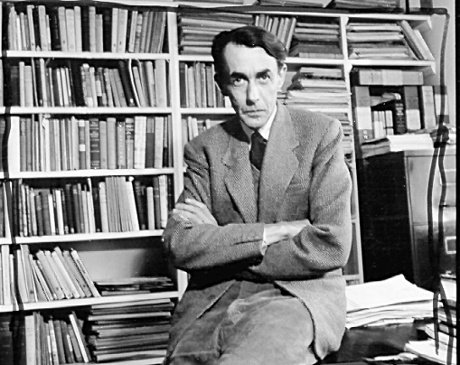
Oakley is well placed to tell this story as the only child of Titmuss, the legendary social policy expert and guiding spirit of the foundation of the welfare state. Titmuss gathered around him some of the most powerful intellects of the period, including Peter Townsend, Brian Abel-Smith and John Vaizey, known collectively as the “Titmice”. Growing up, Oakley had a ringside seat on this world. Perhaps not surprisingly, she went on to become a prominent feminist academic and writer, publishing 17 non-fiction books, including pioneering early works on housework and motherhood, and five novels. Now in her 70th year, she can lay claim to knowledge of overlapping political, professional and personal histories.
Here, then, is burrowing in the archives of renowned academics and administrators as well as a delve into Titmuss family history, in part to disprove the enduring family myth that her father came from “nowhere” to establishment greatness.
Oakley writes with evident admiration about generations of pioneering female social workers and sociologists, both here and in the US – women such as Barbara Wootton and Eileen Younghusband – and how their work was so often sidelined within official histories and public institutions. Titmuss had his own clash with what were known during Oakley’s childhood as the “difficult women” at the LSE where he was professor of social administration from 1950. Official histories praise his creation of an internationally renowned department; Oakley digs about to put together a quite different account of that department’s stormy early history. Some women from that era saw her father as a kind of Machiavelli. Titmuss clearly felt more comfortable with the “Titmice” who surrounded, and often worshipped, him.
At the heart of this book is the story of a 1950s nuclear family. Oakley found her childhood “stultifying”. Her politically radical parents were highly conventional, her father’s work and comforts always taking precedence. This clearly came at great emotional cost to her loyal mother, Kay Titmuss, who worked hard, even after her husband’s death, to protect his reputation while suffering increasing ill health and, almost certainly, depression. Oakley compares her mother’s low-level unhappiness with the active lives and happy relationships, both platonic and sexual, of so many of the “difficult” female social researchers. Titmuss obviously adored Ann when she was young, but the relationship became strained as she became a sexual being, more independent from her parents, and, later, a pioneering feminist in his field.
“Human beings die but heroes and symbols remain.” Oakley is acutely aware that she is in a position to pull down the hero, to sully the symbol, but that knowledge is balanced by her rigorous quest for (her and his) truth. There is the odd bombshell – such as her description of a shopping trip to Oxford Street (while her father was still alive) during which her mother “in a very distressed state, her face shining with tears … had told me about my father’s habit of dressing up in women’s clothes”. We learn nothing more on this, but I can imagine how agonising it was to include it. Oakley hints at this when she later quotes Nigel Nicolson, whose biography of his parents Harold and Vita laid bare their unconventional union to the world: “Let not the reader condemn in 10 minutes a decision that I have pondered for 10 years.”
Ultimately, she has produced not a tell-all biography but a multifaceted portrait of a brilliant, if insecure, human being who worked unceasingly for the “public welfare”, and his only child, who has done the same, if in a very different fashion. Oakley has a fascinating chapter on her own career, which has been highly successful in bald terms but is studded with the usual discriminations, and she ends with a long, hard, pessimistic look at the position of women in academia today.
At one point, Oakley calls this an “awkward” book; there is very little direct expression of emotion so that when it comes it is surprisingly affecting. One day, out in the countryside, remembering childhood rambles, she imagines her father “coming round the next bend in the road … There’s so much I want to talk to him about. I missed my chance when he was alive. He wasn’t a man to welcome such talk. What kind of disappointment is that?” By now, we know only too well.
• Melissa Benn’s What Should We Tell Our Daughters?: The Pleasures and Pressures of Growing Up Female is out in paperback from Hodder.