MIAMI _ Back and forth through the rubble Richie Humble paced, the cellphone jammed in his ear. He was screaming, not just to make himself heard over the cacophony of police sirens and car horns shrieking like the soundtrack of hell itself, but to make sense out of the sudden insanity that had swallowed his life whole. Moments ago, he'd been sitting in a friend's SUV, headed home from a doctor's appointment. And then suddenly the car was buried in concrete slabs and there was blood everywhere and a cop was pulling him away from the car and telling him there was nothing he could do.
"Mom!" he shouted, his voice heavy with fear, panic and the sheer incomprehensibility of what he was saying. "The bridge fell on us!"
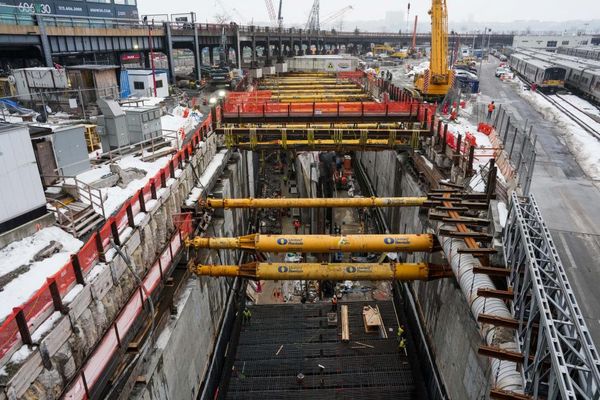
Those five little words seem so inadequate to describe 950 tons of concrete toppling on a busy Sweetwater street March 15, killing six people and sending another nine to the hospital. But the abrupt violence of the collapse and its utter repudiation of human perceptions of reality _ bridges don't just collapse, not in America _ seemed to strip language to its bare essential. "Imagine," said the sister of one of the dead, her voice crosshatched with grief and awe, "his car was flat as a cracker."
It will be months, possibly even years _ possibly even never _ before we know exactly why the bridge fell. But in interviews with those who survived and the friends and families of those who didn't, a picture begins to emerge of what happened, a tapestry of horror and heroism, of cruelty and kindness, of the agony of loss and the redemption of survival, and perhaps most of all, the way that fate, in a single disastrous instant, can unite hundreds of strangers in a chain of anguish.