As universities fight it out to win students and protect their bottom line in an uncertain new market, tension is mounting between boards and their vice-chancellors. Senior figures say that some vice-chancellors have been choosing to retire early – while others are being pushed. The new business ethos inside higher education means university leaders are expected to deliver results and be able to show it.
Their plight will not be met with sympathy from all quarters. Ministers, rank-and-file academics and students have all expressed anger about escalating “fatcat” salaries for university leaders, against the backdrop of a public sector pay freeze.
Prof Michael Shattock, visiting professor of higher education at the Institute of Education and author of a recent book on good university governance, says that university boards are now subjecting management teams to corporate-style appraisals. “Governing bodies are a good deal more forceful than they used to be, and VCs are a lot more vulnerable than in the past,” he says. “A lot of universities are quite unhappy places at the top.”
Dr David Palfreyman, bursar of New College Oxford, says: “Vice-chancellors are being unceremoniously dumped, albeit doubtless with golden parachutes, and this fits with them demanding ever more money over the past decade on the alleged basis that they are dynamic CEOs of mega-enterprises.”
And Matt Robb – managing director of Parthenon, a management consultancy that has given strategic advice to universities – agrees: “The market is gradually exposing the failings of universities’ business models, and putting them under a lot of pressure. Some vice-chancellors are responding sensibly, and others idiotically. One problem is that few boards really know enough about how universities work to understand the difference.”
Political battles within universities are typically fought quietly, but a recent acrimonious dispute between Wendy Purcell, vice-chancellor of Plymouth University, and her then chair of governors, Judge William Taylor, has rocked the university and the city.
Purcell was suspended from her £288,000-a-year post by Taylor in July, following complaints about her conduct. The university has declined to release details about the concerns, or the findings of the inquiry that followed her suspension. Meanwhile Taylor resigned at the end of September following allegations of sexual harassment – which he vigorously denies.
Purcell returned to the university on 10 November – and in name she remains vice-chancellor. But Plymouth has confirmed that her deputy, Prof David Coslett, will be in charge of running the university as interim chief executive, a role he took on in her absence. Purcell will have a much smaller portfolio, concentrating on external relations and business engagement.
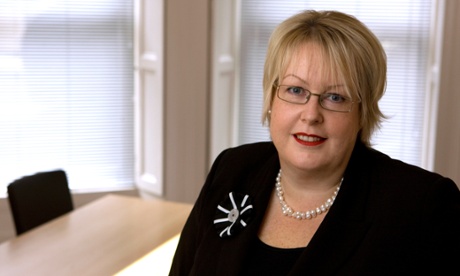
Strikingly, the senior management section of Plymouth’s website no longer includes any mention of Purcell. And senior figures close to the university say that her return is the first stage in a negotiated exit plan. Purcell declined to comment on her change of role.
Last week Plymouth’s new chair, James Brent, and Coslett told the Guardian that they were determined to put this conflict behind them. “But that doesn’t mean forgetting about the past,” Coslett says. “We want to learn from our experiences. We will look at our systems of governance and develop and improve them. Our recent experience has made us want to be even more ambitious and an exemplar of good governance for the sector.”
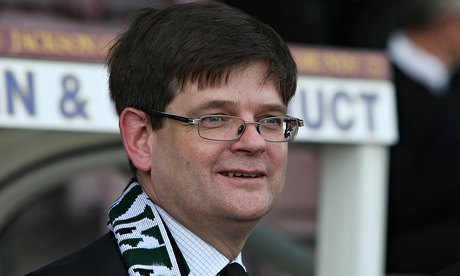
Brent, an entrepreneur and chair of Plymouth Argyle football club, says: “It is very important that the organisation has a clear focus on what success looks like. There should be no difference between the board and the executive on that shared view.” He says he is prepared to challenge the senior management team, “but only to improve the organisation”. Both he and Coslett say they are building a new culture of “confidence and trust” in the university. “If it is a relationship of policeman and policed that is not an effective board,” Brent adds.
The battle at Plymouth may have been unusually public, but senior academics say this is far from the only example of tensions at the top. The vice-chancellor of one research university says: “If you look at the recent vice-chancellor departures, a lot of them are linked to problems in the institution. In other words, they have been pushed.”
There have been some unexpected resignations in recent months, though it is difficult to say if they are due to tensions between boards and their university figureheads. Prof Chris Higgins sparked surprise when he announced in March that he would retire from his £244,000-a-year post as vice-chancellor of Durham University in September. The university, like any forward-looking organisation, he said “needs an injection of new ideas and energy from the top”.
In a formal statement at the time the chair of the university council, Robert Gillespie, said that Higgins had told him “some months ago” that he wanted to retire. He confirmed that Higgins would “relinquish all his executive responsibilities” at the end of September, but retain an emeritus role looking after external relations. His deputy has now stepped in as acting vice-chancellor.
Last week Southampton University began advertising for a new vice-chancellor. Prof Don Nutbeam announced in July that he intended to retire from the post within two years. Nutbeam is one of the biggest earners in the sector. Last year his salary went up by more than £19,000 to an overall package of £333,000. Other university heads say Southampton has fallen short of its student recruitment targets for the past two years, but a Southampton spokesman said there was no link between the VC’s departure and a shortfall in student numbers: “In a statement to staff and students at the time, the chair of council, Gill Rider, said that Professor Nutbeam’s decision to retire relates directly to his desire to pursue his academic interests in public health.”
Prof Steve Smith, vice-chancellor of Exeter University, who proudly states that 20% of his salary is performance related, maintains that hard-hitting commercial questions from governors do universities good: “Let’s be honest, although we aren’t just a business, we are a business, and I need help with some of the big commercial issues. The scrutiny of people with a business background is incredibly helpful,” he says.
He adds: “Some boards are over-zealous and micromanage. And equally some management teams try to bounce their board by not telling them things. But in my view any failure of a university is a failure of governance.”
Chris Sayers, chair of Northumbria University and a former regional director at BT, believes that in this uncertain climate, boards have a more important role than ever. “Money is now following the student and student-number controls are being relaxed. It means if you don’t get the number of students you need, you don’t get your top line revenue, and that is a massive change. This is competition as never before. People who think we can ignore the business side of this are very much mistaken.”
Sayers admits that he has had some “challenging conversations” with the vice-chancellor and his team at Northumbria. “But our relationship is based on trust,” he says. “Without it any institution is in big trouble.”
He adds: “The relationship between the university board and the executive is a partnership. And any partnership is like a teabag. You don’t know how strong it is until you put it in hot water.”
• This article was amended on 26 November 2014. An earlier version referred to David Palfreyman as warden, rather than bursar, of New College.