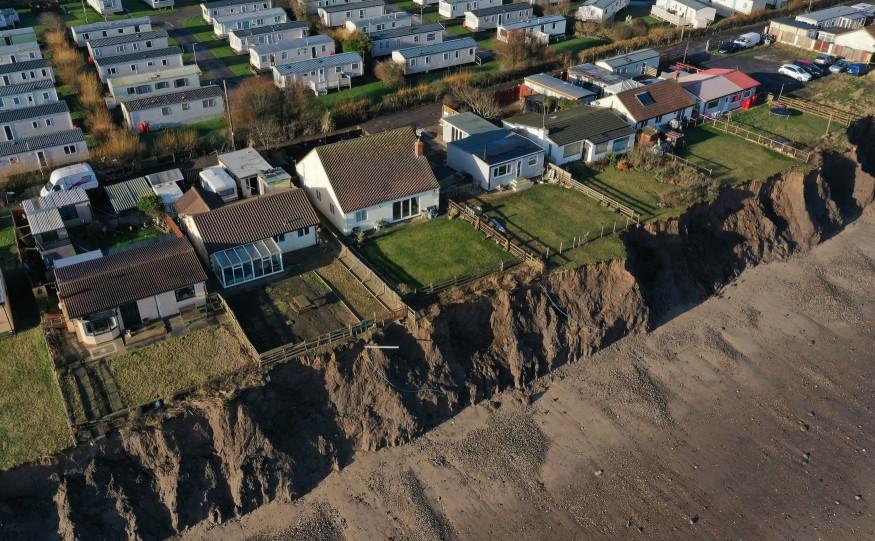
It is the fastest-eroding coastline in northern Europe, with 10 metres of land falling into the sea in the last year alone.
Now, dramatic new photos have captured just how close to the edge a Yorkshire coastal community has found itself.
More than 24 homes in the village of Skipsea are judged to be at immediate risk of falling from collapsing cliffs. Residents here regularly wake up to find that large chunks of their gardens have dropped away overnight. Entire roads have disappeared as the land recedes. Others have been made unpassable.
”In the morning, I look out of the back window to see if the cliffs have moved closer,” Natalie Day told the i newspaper. “Sometimes the doors are hard to shut and you can tell the walls have moved by looking at the decorating."
This is not, it should be said, a new phenomenon specifically caused by climate change.
The soft clay cliffs in Yorkshire’s East Riding have been being eroded for centuries. The harsh North Sea is simply too powerful for the crumbling land to resist it.
In around 1850, residents of nearby Kilnsea moved the entire village and rebuilt the church after erosion became so bad it exposed bodies in the graveyard. A large port called Ravenser Odd was an earlier victim. Residents abandoned the place around 1360.
Yet many here feel let down by the government amid mounting evidence the erosion is happening faster on the back of global warming causing rising seas.
Despite East Riding Council requesting financial help from Whitehall to deal with the growing problem, there is no hint that funding will be made available.
“It is not realistic to try to manage more increasingly intense flooding and sea level rise with limitlessly high walls and barriers,” the Environment Agency said in a general strategy document last year. Adaptation was key, it said.
Yet, as people here point out, it is difficult to adapt to land disappearing.
Which means the choice for residents appears to be stark: abandon homes and face financial ruin or stay and risk the land quite literally disappearing under feet. For now, many appear to be going with the latter.