Australian shoppers will get access to cheaper European food, wine, cars and clothes under a long-awaited trade deal, but furious meat farmers say they've been dudded in the negotiations.
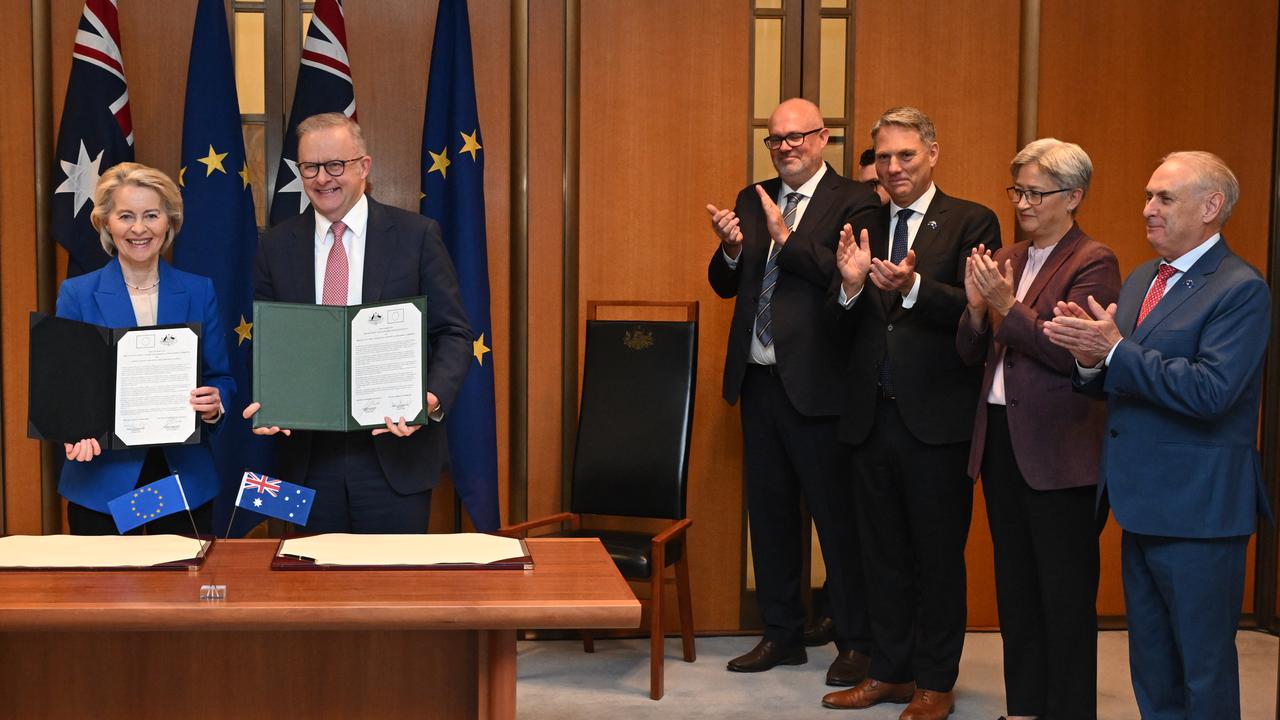
After almost a decade of talks, Australia and the European Union have inked a major deal to slash tariffs, boost exports and expand co-operation.
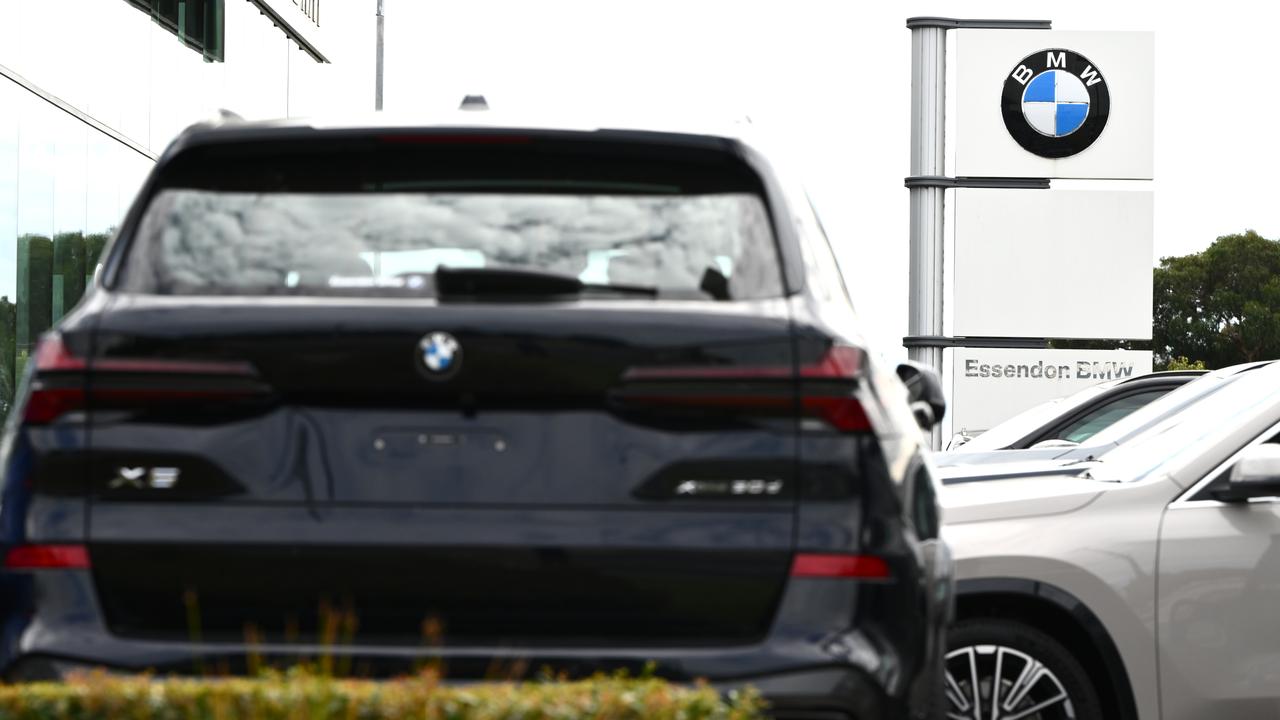
Australia will remove a five per cent import tax on imports of European products, which hits car makers like BMW and Mercedes along with producers of goods like fashion products, food and drinks.
The EU will remove tariffs on imports of a wide range of Australian goods, including critical minerals, manufactured items and many dairy products.
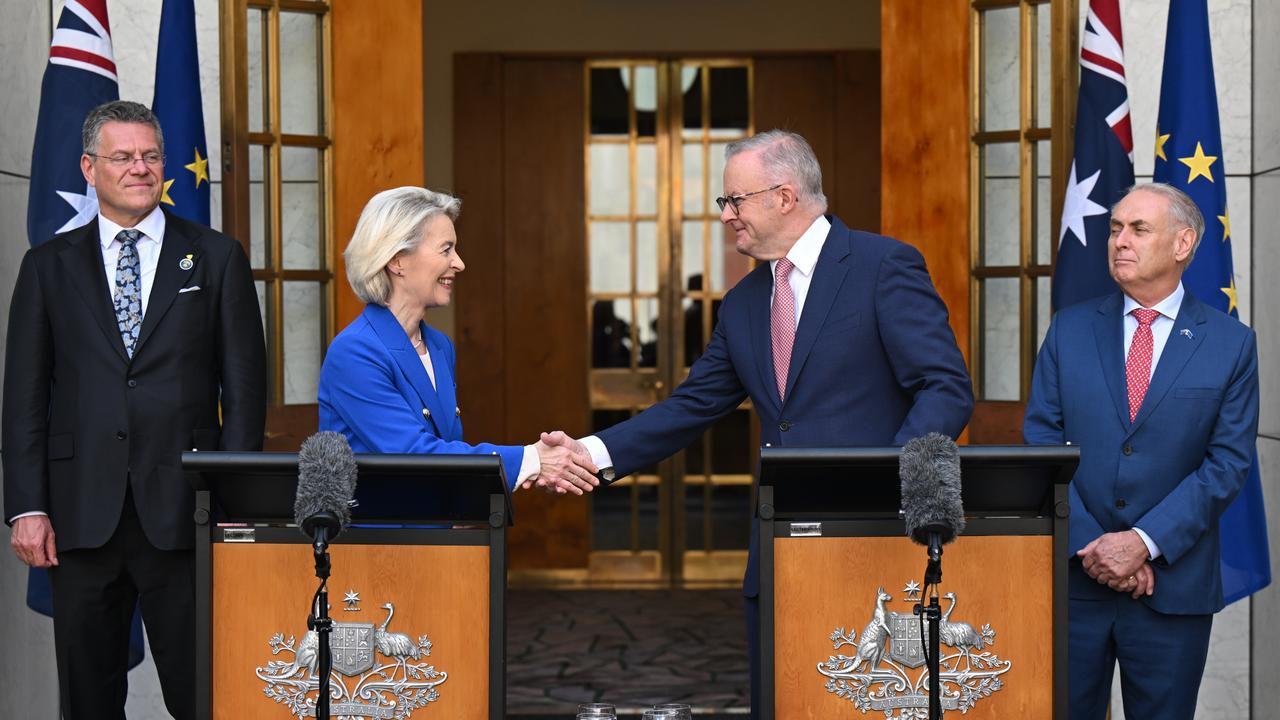
European Commission President Ursula von der Leyen, who travelled to Canberra to sign the agreement alongside Prime Minister Anthony Albanese, said negotiations had been tough but the final agreement was a win for both sides.
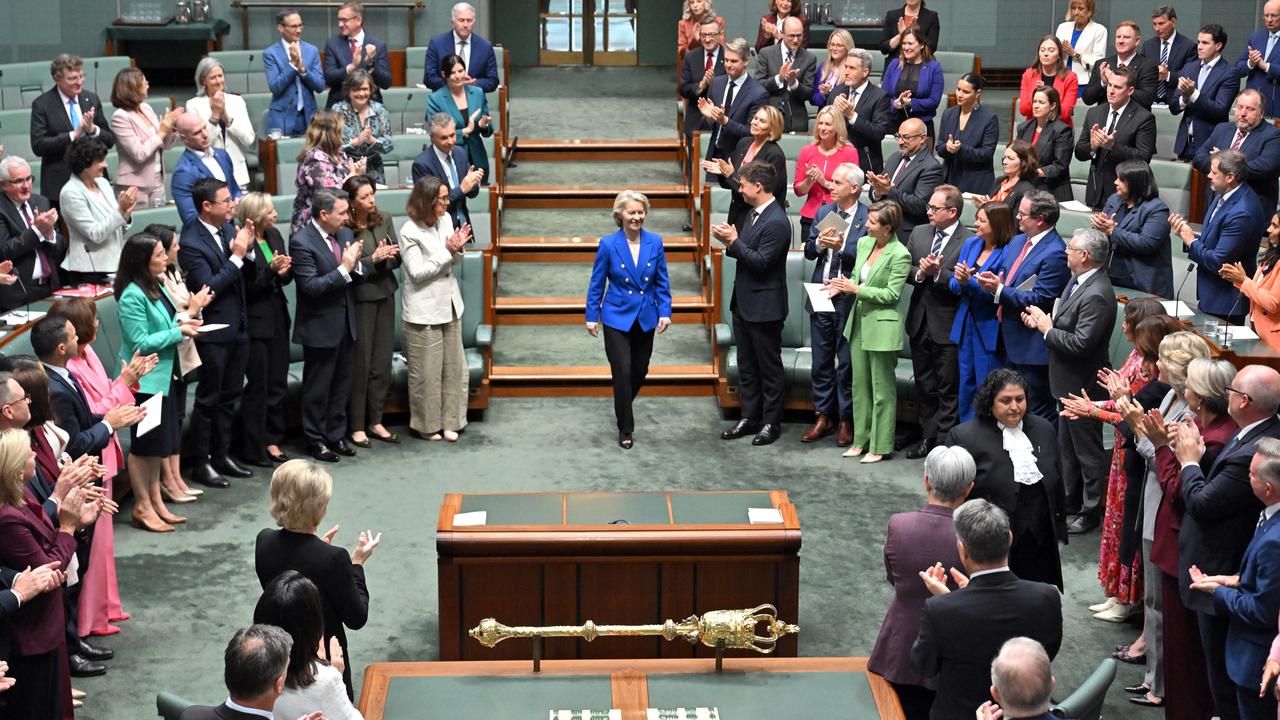
"It has been hard yakka but we finally got there," she said in a historic address to parliament.
"It is a fair deal, and one that delivers for your businesses and one that delivers for ours. I think you call that hitting it for six."
The EU boss is the first female world leader to address the parliament.
She framed the deal as a stable counterbalance against an increasingly chaotic world, in which global trade norms have been up-ended by US President Donald Trump's scattergun approach to tariffs.
"The world we live in is brutal, harsh and unforgiving ... what we knew as certainties are in question," Ms von der Leyen said.
Previous attempts at a free-trade deal stalled partly due to disputes over naming rights for locally produced versions of European products such as prosecco and cheeses.
Under the deal, Australian producers will be allowed to keep using the term prosecco for domestic sales, but they will have to phase the term out over the next decade for exports.
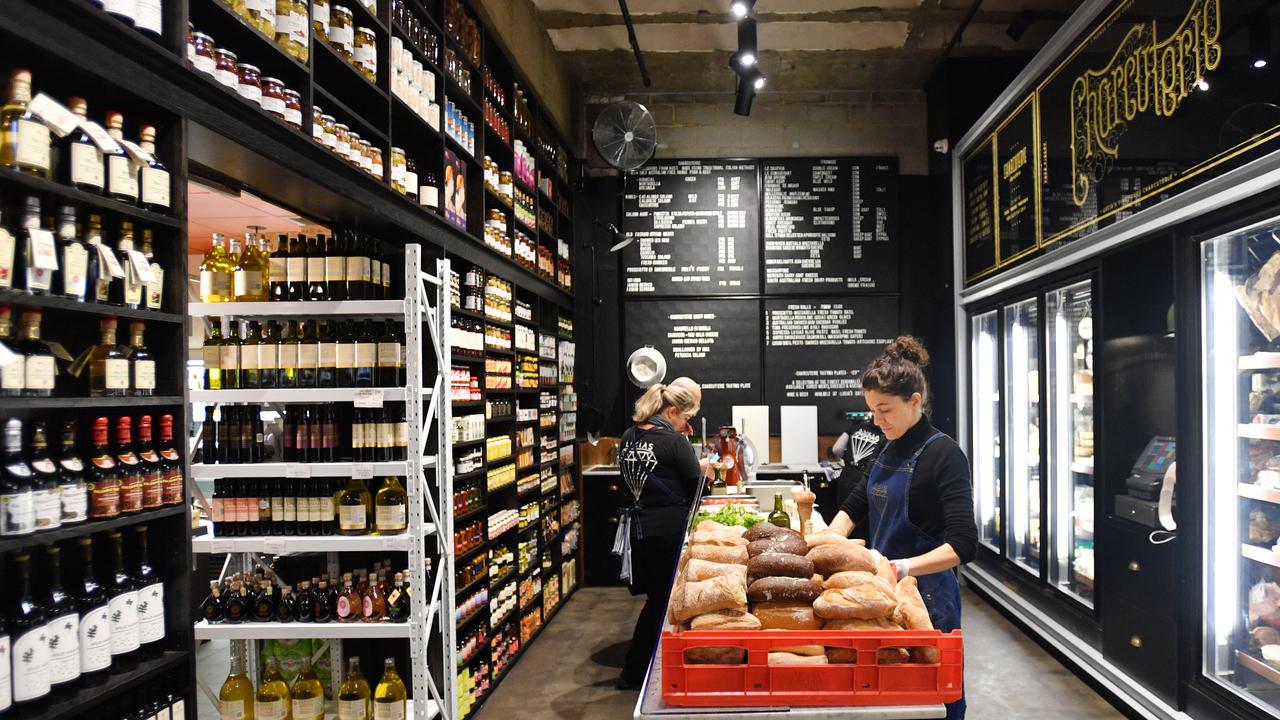
Domestic manufacturers will also retain the rights to describe their wares as parmesan and kransky, but other cheese names such as feta, romano and gruyere will eventually be phased out.
But after pushing for expanded export quotas, the nation's red meat industry slammed the deal, dubbing it the worst free-trade agreement the nation had signed.
Market access for an additional 30,600 tonnes of beef and 25,000 tonnes of sheep meat per year fell far below the minimum amounts offered to competitor nations such as New Zealand.
"The deal that has been struck is simply appalling for agriculture and regional Australia and delivers nothing to address the trade imbalance to the EU," Cattle Australia chairman Garry Edwards said.
Mr Edwards said the agreed quotas were "pathetic" and claimed Australian negotiators were "amateurs playing a game against professionals".
The sentiment was echoed by Nationals leader Matt Canavan, who said the government had sold out farmers in signing the deal and the compromise on naming rights was little consolation.
The prime minister said the deal was a "win-win" for Australia and Europe, marking a defining moment in the relationship between the two sides.
"This is a significant moment for our nation as we secure an agreement with the world's second-largest economy," he said.
Australia and the EU have also agreed to increase military co-operation, including on cyber security and counter-terrorism, while striking a deal to boost research ties.
The free-trade deal would give Australians more choice at the car yard, Motor Trades Association of Australia interim executive director Peter Jones said.
"This is a practical step forward for dealers, particularly those representing European brands, giving them greater ability to respond to consumer demand," he said.