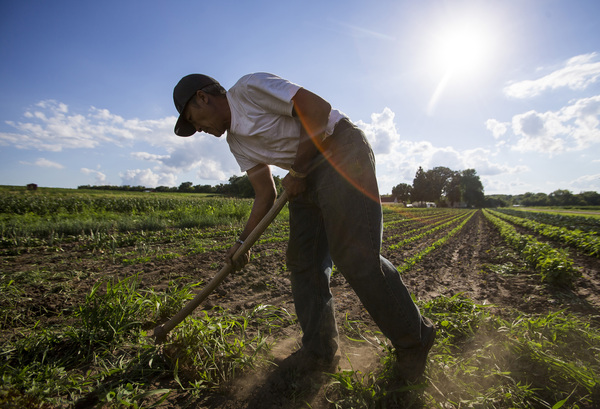
HASTINGS, Minn. _ Xai Tou Yang stands by an oversized gray bin, bundling his harvest of snakelike green ropes _ actually long beans _ inside a refrigerated pole barn near this city southeast of Minneapolis.
For the second year, he's helping his daughter work about 10 acres of land, subleased from the Hmong American Farmers Association, or HAFA, on a 155-acre farm in Vermillion Township. Without the association, the family might not have a plot to farm.
"Hmong people don't have land," Yang said through a translator. "Americans own all the land, so it's hard to get a piece of that."
Giving Hmong farmers affordable, long-term access to farmland is one goal of HAFA, a nonprofit started in 2011, along with helping the farmers band together to find larger, more lucrative markets for their products. With 19 families farming plots plus a full waiting list, the association has secured contracts to provide vegetables to a brewery, Minneapolis Public Schools and a grocery store chain. The farm, recently honored as Dakota County's Farm Family of the Year by the University of Minnesota, has found success by meeting the needs of Hmong-Americans _ a group with a tradition and passion for agriculture _ while serving the exploding market for locally grown food.
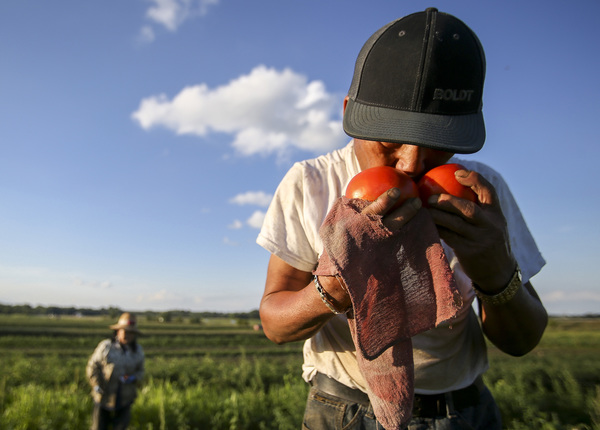
"Our work is a game-changer because it looks holistically at what farming families need to succeed," said Pakou Hang, HAFA's executive director.
A membership lets farmers lease land indefinitely, instead of moving around. Knowing where they're farming the next year provides stability, allowing families to plan ahead with crops, Hang said.
In addition, the association provides resources, such as an on-site agronomist to help with crop questions, access to water, and a refrigerated food truck to transport fruits, veggies and flowers. Instructors from Ridgewater College, a local community college, teach members about farm management, while other workshops provide primers on creating business plans or obtaining financing to buy equipment.
An anonymous West Coast benefactor purchased the farmland and leased it to HAFA in 2013, intending for the association to purchase it eventually.
Ultimately, HAFA's goal is helping families create self-sufficiency through farming.
"We are committed to wealth creation _ embedded in that word is that it's intergenerational wealth," Hang said. "This is about families and not individuals."
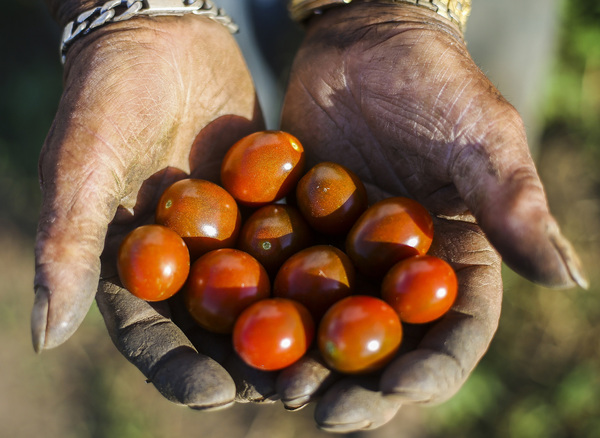
The farm grows more than 120 crops, including ubiquitous sweet corn and potatoes. Farmers also raise less common crops such as edamame, gooseberries, lemon cucumbers and banana peppers, along with showy flowers like sunflowers and dahlias.
"The demand for organic and locally grown produce, I think, is only going to increase," said Hilary Otey Wold, executive director of the Minnesota Food Association. "We are really lucky in the Twin Cities to have an educated and committed consumer base of people who ... put their money where their mouth is, supporting local farmers."
Wold's association runs Big River Farms, a 150-acre incubator farm, where a diverse group of future farmers _ from American Indians to immigrants from Ethiopia to Guatemala _ are trained. The group hosts joint classes with HAFA, Wold said. Big River Farms, which has 60 growers, offers up to six years of training for farmers, a youth program and participation in a community-supported agriculture program to its members. Its goal in serving culturally diverse farmers is similar to HAFA's.
"The growers that we work with face the same barriers" as HAFA farmers, Wold said, including limited access to land and capital.