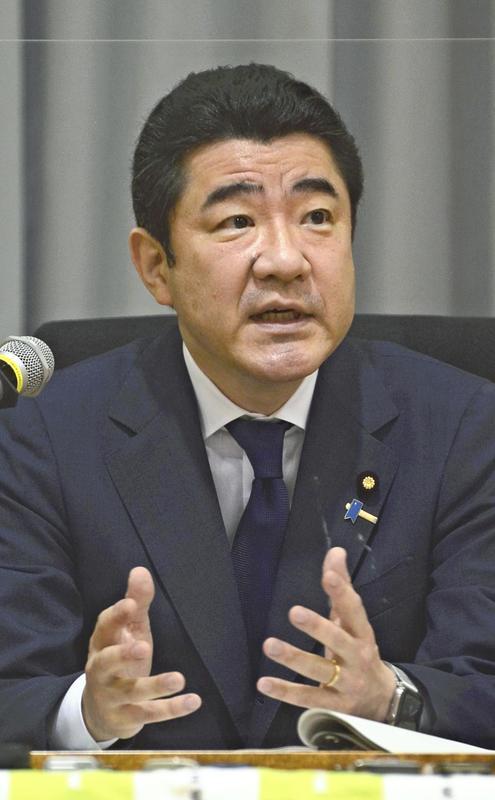
The following is excerpted from an interview with new Agriculture, Forestry and Fisheries Minister Kotaro Nogami.
The government will fundamentally strengthen its efforts to achieve its goal of raising the country's annual exports of agricultural products to 5 trillion yen by 2030 amid social structural changes caused by the novel coronavirus pandemic. This will include increasing the number of cattle that produce wagyu Japanese beef and expanding sales channels for the export of agricultural products such as rice, apples and grapes.
In the past six years, agricultural income has increased by more than 500 billion yen thanks to farmland consolidation and forestry policies, among others. In order to raise the income of those who are engaged in the agriculture, forestry and fisheries industries, whose markets continue to shrink, it is important to establish an exit strategy to sell agricultural products at reasonable prices. Exports will clearly be part of this strategy.
With the spread of virus infections, some countries including Russia and Ukraine imposed export restrictions on agricultural products. Moreover, global population growth has increased food demand, and risks that affect food supply, such as climate change, natural disasters and pests, have diversified.
The government has secured about 610 billion yen in the emergency economic package for the agriculture, forestry and fisheries industries. The budget will go toward such measures as business negotiations and sales promotion activities that will become necessary to immediately respond to an increase in overseas demand after the pandemic subsides.
In the meantime, it is necessary to protect the foundations of the agriculture, forestry and fisheries industries as well as the food industry, which is also affected by the pandemic. The government therefore supports the sales promotion of their products and engages in the recruitment of people who can work in lieu of foreign technical intern trainees, as there is currently a shortage of foreign labor. The government's Go To Eat campaign to support eateries hit hard by the coronavirus crisis is also expected to stimulate demand.
Furthermore, in order to respond to the aging population and labor shortage, and to make agriculture a growth industry, efforts to promote digital transformation are also essential. The government will introduce smart agriculture, which involves the utilization of technology and big data to increase agricultural production. For instance, online and efficient administrative procedures will be promoted for the allocation of subsidies. The government will also work to provide and collect information through smartphone apps. To that end, we would like to closely work with the planned digital agency once it has been established.
Read more from The Japan News at https://japannews.yomiuri.co.jp/