Summary
We are ending our live coverage of migrant family separations at the border and the fallout from Trump’s recent policy changes. Thanks for following along. Here are some key developments of the day and dispatches from Guardian reporters on both sides of the border.
- Residents of the desert hamlet of Tornillo, near the Mexican border, have expressed outrage at the child detention camp in their backyard.
- Minors detained at the border have been placed in foster care, unsure if they will be reunited with parents or siblings.
- Trump’s crackdown is not expected to stem the flow of Central Americans fleeing poverty and violence.
- In Tijuana, asylum seekers are still hoping US authorities will give them a chance at a new beginning.
- In Guatemala, people are fleeing in part due to reports that gangs have penetrated the military and are expanding into rural areas.
- There has been a glimmer of hope for reuniting some families in Texas, though immigration attorneys say it’s still unclear who might be left behind.
- At a federal court in McAllen, Texas, the US has since May been prosecuting roughly 150 migrants a day for misdemeanor illegal entry – but prosecutors did not bring any parents to court today.
- United Nations human rights experts said Trump’s policy of detaining children “may amount to torture”.
- Republican efforts to overhaul immigration through legislation stalled on Friday after Trump advised GOP lawmakers to “stop wasting their time”.
- Trump also held an event with families whose loved ones were killed by immigrants, reviving his anti-immigrant campaign message linking undocumented people and crime.
- Immigration and Customs Enforcement has issued a notice saying it may seek up to 15,000 beds to detain immigrant families, and the US Navy is also reportedly preparing plans to build detention centers on bases in California, Alabama and Arizona.
US lawmakers visited holding facilities for immigrant children across the country on Friday – but they have been unable to speak with detained youth.
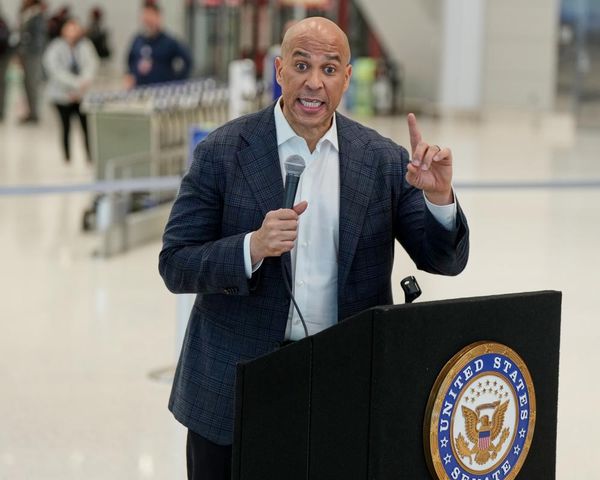
Three Democratic senators went to a holding facility on the Texas border near El Paso that appears to be occupied by roughly 250 teenage boys, mostly from Central America, according to the AP. A contractor that operates the shelter reportedly briefed senators Tom Udall and Martin Heinrich of New Mexico and Richard Blumenthal of Connecticut, but would not let them enter holding areas or speak with detained minors.
Republican senator Marco Rubio also visited a Miami-area facility housing more than 1,000 teenage migrants. He told the AP he didn’t speak to any of the children due to privacy regulations. Earlier in the day, he tweeted support of first lady Melania Trump, who has faced widespread scrutiny for her decision to wear a jacket that said, “I really don’t care. Do U?”
I know for a FACT that @FLOTUS has been a strong voice of compassion for migrant children. The vicious treatment of her over the last day is a reminder of how Trump Derangement Syndrome,where hatred for him justifies everything,has become an epidemic. Totally lunacy everywhere!!!
— Marco Rubio (@marcorubio) June 22, 2018
Meanwhile in California, some lawmakers are raising objections to the news that the US Navy is proposing to construct detention centers in the state, including a camp for as many as 47,000 people at a former naval weapons station near San Francisco.
Congressman Mark DeSaulnier said in a statement:
STOP! The Administration needs to take a time out ... If the Administration wants to have a rational dialogue about fixing our immigration system, I am happy to do that, but making up immigration policy on the fly is just wrong. We will fight this in every way we can.
"The thought that this immoral policy would actually come to Concord California … We’ll do everything in our power to stop it," says @RepDeSaulnier of a proposed facility for nearly 50,000 immigrants in Concord, Calif. #immigration #ImmigrantChildren
— ABC7 News (@abc7newsbayarea) June 22, 2018
Reporter Patrick Timmons has an update on the chaos and confusion at a courthouse in El Paso:
Confusion reigns at the federal courthouse in El Paso about pending and future prosecutions of parents apprehended at the border and separated from their children.
On Thursday, John Bash, the top US prosecutor for the western district of Texas, told the federal public defender in El Paso he would dismiss pending cases against parents who unlawfully crossed the border. The federal public defender’s office said it had received 28 dismissals of pending cases and expected hundreds more.
Maureen Franco, the chief federal public defender, said Thursday that prosecutors dismissed cases because of the lack of available housing units for parents with children. But later in the day, Franco said she heard “dismissals were on hold as prosecutors continue to evaluate the situation”.
Today, Bash appeared to backtrack on the policy of dismissing prosecutions. When court resumed, so did the prosecutions.
Over the past year, the federal court in El Paso has sentenced hundreds of parents for illegal entry. The prosecutions have placed a strain on the court and local detention centers. The government announced last week it would start to house unaccompanied children in tents at the border patrol facility in Tornillo, 40 miles from El Paso.
Franco said in an email she was “hoping for the best but expecting the worst”.
On Anderson Cooper 360 last night, the host delivered a speedy recap of the Trump administration’s changing positions on family separation and who had the power to bring it to an end.
He ended the four-minute segment by asking: “Is your head spinning yet?”
CNN’s @AndersonCooper: “Is your head spinning yet?”
— Anderson Cooper 360° (@AC360) June 22, 2018
Anderson unpacks the confusion surrounding President Trump's executive order that would end family separations at the US-Mexico border #KeepingThemHonest https://t.co/2dfzvnk5yA pic.twitter.com/WNFbReep1E
Ice may seek up to 15,000 beds for families
Immigration and Customs Enforcement (ICE) has issued a notice saying it may seek up to 15,000 beds to detain immigrant families, according to the AP:
The agency on Friday put out a request for information to help in planning for potential new family detention facilities ... The agency currently has about 3,300 beds for immigrant parents and their children in family detention facilities.
The notice comes amid a scramble by federal agencies to find space for immigrants.
Time also reported today that the US Navy is preparing plans to build detention centers for tens of thousands of immigrants on remote bases in California, Alabama and Arizona. Documents obtained by the magazine said two sites in California could house up to 47,000 immigrants each:
SCOOP: Navy planning doc obtained by TIME says two sites in California could house up to 47,000 immigrants each, two sites in Alabama could host 25,000 https://t.co/XdiH9WDlXx w @wjhenn
— Phil Elliott (@Philip_Elliott) June 22, 2018
Border Patrol officials said the crying Honduran girl featured on the cover of Time magazine was not separated from her parents, and that the mother and daughter have been detained together in Texas while the case is pending.
The father of the girl also told the Associated Press that the Honduran foreign ministry said his daughter was detained with her mother. More on the backstory of the viral image from the AP:
Denis Varela says he hasn’t heard from his wife or daughter in almost three weeks. The girl’s mother apparently took their daughter to the United States without telling him.
Varela, a dockworker who lives in Puerto Cortes, Honduras, said that the ministry had given him the girl’s detainee identification number. He was told his daughter was in McAllen with her mother, but nothing else.
The girl’s photo was apparently taken when she and her mother were first detained by Border Patrol officers and the mother was being searched.
TIME’s new cover: A reckoning after Trump's border separation policy: What kind of country are we? https://t.co/U4Uf8bffoR pic.twitter.com/sBCMdHuPGc
— TIME (@TIME) June 21, 2018
Some conservatives have cited the use of the photo as a symbol of the family separation crisis as evidence of media bias and “fake news”. The Washington Post also called it a “major mistake” for Time to put her on the cover.
Time’s editor, however, has defended the cover, saying in a statement:
The June 12 photograph of the 2-year-old Honduran girl became the most visible symbol of the ongoing immigration debate in America for a reason. Under the policy enforced by the administration, prior to its reversal this week, those who crossed the border illegally were criminally prosecuted, which in turn resulted in the separation of children and parents. Our cover and our reporting capture the stakes of this moment.
The Guardian spoke to the photographer behind the image earlier this week:
Another dispatch from reporter Nina Lakhani in Tijuana:
Despite the large numbers of people from Central America waiting at the US border in Tijuana, Mexico, the scene is remarkably ordered and cooperative.
The people are initially strangers to each other, brought together in an alien location.
It’s not risk-free at the shelters and while lining up at the border, but the atmosphere is largely one of stoicism and mutual assistance. As well as an informal numbered ticketing system for the queue, devised by migrants themselves, those waiting put themselves forward as volunteers to manage the list of names seeking asylum. On Friday morning, a Honduran man was looking after the list and he was ready to hand over to someone else when his turn came to get ready to cross the border.
So, far from a Lord of the Flies-type breakdown in social order, as you might expect if you only listened to Donald Trump’s name-calling and aspersion-casting, these would-be immigrants are more inclined to help one another as they wait and hope to escape from dire straits.
More from Tijuana:
More from Guardian reporter Rory Carroll, who is speaking to locals in Texas about Trump’s latest immigration announcements:
Donald Trump often expresses love for combat veterans but his plan to house migrant children on military bases is irking some of them.
“Oh Jesus no,” said Troy Gill, 51, a former marine who served in Iraq and Somalia. “They’ve not earned the right. They should not be there.”

Sick and disabled veterans in desperate need of housing were not able to live on bases so it would be an insult to host undocumented migrants there, he said.
His buddy Joshua Woods, a 46-year-old army vet, agreed. “Illegal aliens should not be on our bases, no way.” It would affront military dignity and pose a potential security threat, he said.
The two were in El Paso, Texas, on Friday for a Combat Veterans Motorcycle Association gathering but spoke in a personal capacity.
The Pentagon on Thursday said it was preparing to house up to 20,000 “unaccompanied alien children” at four bases in Texas and Arkansas. It was unclear if parents would join the children.
Leno Martinez, 70, who served in Vietnam as a marine medic, was not thrilled at the idea. “But we’re the military, we can’t say no, we just follow orders.”
Hector Cornier, 36, ex-army, said migrant families should be kept together – and shipped swiftly back to their home countries or Mexico. “If you don’t have space just send them back in a truck. At the end of the day you’re just going to send them back anyway.”
Trump has ended his speech talking about the work of his administration to assist victims of immigration and to track immigrants who have committed crimes:
We’re following these people. We’re following them, so that it can’t happen again ... Our first duty and our highest loyalty is to the citizens of the United States ... We don’t want people in our country who don’t go through a process.
Trump also lamented that countries are sending “bad ones” to the US, saying, “Then when they commit their crimes, we’re so surprised. We will not rest.”
The president’s rhetoric and media events have continued to focus on violent crime, but his administration has widely targeted immigrants with no criminal record and no history of violence:
Under Trump, the government no longer prioritizes deporting gang members and dangerous criminals, which means many of the parents recently separated from children under the president’s “zero tolerance” policy have been accused only of misdemeanor illegal entry.
Another dispatch from Guardian reporter Oliver Laughland who is now reporting from the Ursula detention centre, a few miles from McAllen, Texas:
Ursula is a large, warehouse-like facility about four miles from the border where migrants are detained for processing before they are sent to other detention facilities in the area. It is nicknamed the “dog kennel” due to the chain link cages used to detain migrants.
Many of the unaccompanied minors separated from their parents have been housed here before being sent off to other facilities in the area.
The Rio Grande valley has seen substantial flooding over the past few days and the roadway outside the detention facility is still heavily waterlogged meaning I can’t even cross the road to the doorway.

I’ve lodged multiple requests this week (including one this morning) to see inside the facility, but all of them have been denied.
So instead, I’ve been waiting outside to see what activity I can spot. About five white vans have left the facility, one of which appeared to be carrying a group of migrants in the back. It was unclear where they were heading and the two Border Patrol agents position outside refused to answer my questions.
It’s quite an eerie place. The facility is surrounded by truck depots carrying cargo to and from the US border with Mexico, and its confronting to know that what enters and leaves this facility is not cargo but human beings.
Outside the Ursula processing centre where I’ve counted 5 white vans exiting the facility. At least one carrying migrants in the back. The roadway outside is still flooded. Cc @SamTLevin pic.twitter.com/qMMUBaC7NA
— Oliver Laughland (@oliverlaughland) June 22, 2018
Trump and his supporters are now promoting the group Advocates for Victims of Illegal Alien Crime at a press conference now. They are attacking the media and sharing their stories of loved ones killed by immigrants. Said one woman:
The mainstream media does not let you know what’s happening. If anyone has been a victim of illegal alien crime, contact us. ... We are trying to get people the help they need.”
The president has made this issue a cornerstone of his immigration policies and his campaigns. In 2017, he announced that the US would be posting a weekly list of crimes committed by immigrants.
A Trump database aimed to track migrants who have committed crimes also stirred controversy last year when immigrant rights’ attorneys alleged that the government website exposed the personal information of crime victims, putting them at risk of further violence and violating federal laws designed to conceal the identities of abuse survivors.
The press conference speakers today have also attacked sanctuary cities and policies.
Trump talks 'human toll of illegal immigration'
Trump is now speaking live about the “human toll of illegal immigration”, repeating his campaign messages linking undocumented immigration to crime. He is with “angel families” – people whose loved ones were killed by undocumented immigrants:
You’re loss will not have been in vein ... We’re going to have a safe country, and you’re loved ones are going to be playing and continuing to play a big part in that.”
Trump said the immigration laws are the “weakest in the world, weakest in the history of the world”, adding, “Where is the media outrage over the catch and release policies that allow deadly drugs to pour into our county?”
Some of the families are also speaking about their “permanent separation” from their loved ones.
Studies have repeatedly contradicted the president’s claims about the correlation between immigration and crime. Undocumented immigrants are less likely to commit serious crimes than US-born people, according to some studies. Research has also found that cities with sanctuary policies have lower crime rates than comparable municipalities.
WH releases names of 14 people joining Trump at White House "Angel Families" event.
— Christina Wilkie (@christinawilkie) June 22, 2018
Appears that 6 people lost family members in violent circumstances. The other 8 people lost family members in car accidents.
Here's the full WH list >> pic.twitter.com/ekJrW4V14O
Trump is listing statistics on crimes committed by undocumented immigrants at an event with Angel Families. pic.twitter.com/F3VYr2MQjS
— POLITICO (@politico) June 22, 2018
Patrick Timmons writes for the Guardian from El Paso, Texas where people are being deported across the international bridge to Ciudad Juarez, Mexico, according to an immigrants’ rights activist.
Instead of flying Mexican deportees to central Mexico, Immigration and Customs Enforcement (Ice) now deports people by land across the international bridge in Ciudad Juárez, an immigrants’ rights activist told El Diario.
“The spike in deportations to Juárez is happening because a month ago Ice said it did not have the funds to keep flying deportees three times a week to central Mexico and would suspend those flights for 90 days,” Blanca Navarrete García of the group Human Rights in Action told El Diario. The Juárez newspaper attempted to contact Ice in El Paso but officials could not be reached for comment.
Organizations in Ciudad Juárez are struggling to cope with the deportations. In the first four months of this year Ice deported almost 3,000 Mexicans to Juárez from El Paso, reports El Diario.
A spokeswoman for the Casa del Migrante, a migrant shelter run by the Catholic Church in the border city said they have been receiving about 100 deported Mexicans a day but only have space to shelter 500 migrants, including northbound Mexicans and Central Americans trying to enter the United States.
Navarrete told El Diario the deportees arrive without documents and without money and find it difficult to even find low-paying work in Ciudad Juárez.
The Casa del Migrante is the only migrant shelter in Ciudad Juárez, a border city of 1.3 million people dominated by large-scale manufacturing for export known as maquiladoras.
Guardian reporter Rory Carroll writes from the border in Texas, where some people say they are frustrated by the influx of immigrants to the US.
Amid the widespread outrage and protests over the Trump administration’s immigration policy it’s easy to overlook the fact that many Americans, even working class Latinos, are fed up with the influx across the border.
“Who’s paying for it? Taxpayers like me, that’s who. It’s costing us a lot. They’re getting everything for free. I don’t get no help from the government but these people get free food, free medical care. We can’t foot the bill for everyone.”
The speaker was not a Trump diehard but a woman I’ll call Sonia, a fiftysomething Latina in Tornillo, the Texan hamlet where more than 300 children of undocumented migrants are housed in a tent city. I heard several others here echoing her views.
Sonia said she felt bad about the separation of parents and children but felt worse that the US, in her view, was being fleeced. “Are these people going to be productive? Are they going to work?”
Undocumented migrants and asylum seekers invariably say they do wish to work, hard, and often end up doing tough, menial jobs that Americans shun. Others endure months or years in detention before being deported.
Sonia was not heartless, just expressing her priorities. She works full-time in a discount store and earns barely $9 an hour. She has health problems, struggles to pay insurance, has no pension and expects to have to work well into old age.
While progressives see detained migrants as victims of inhumane policies she sees uninvited burdens. Ending the separation policy will encourage more to come, she predicted. “There are air-conditioned tents waiting for them.”
UN says Trump policy 'may amount to torture'
Sam Levin in the Guardian’s San Francisco bureau here, taking over our live coverage of family separations at the border. The Guardian has correspondents reporting on both sides of the border, in Guatemala and across the US who will continue sending dispatches.
Here’s a quick update from the United Nations human rights office, which has said that Trump’s decision to stop separating children from their parents doesn’t go far enough and may amount to torture. From the AP:
Human rights office spokeswoman Ravini Shamdasani said Friday that “children should never be detained for reasons related to their or their parents’ migration status”.
Shamdasani urged the US to overhaul its migration policy, such as by relying on “non-custodial and community-based alternatives” under the “logic of care” rather than that of law enforcement.
Also Friday, a group of nearly a dozen independent human rights experts commissioned by the UN said the new US policy “may lead to indefinite detention of entire families in violation of international human rights standards”.
The executive order signed by the @POTUS on 20 June 2018 fails to address the situation of thousands of migrant children forcibly separated from their parents & held in detention at the border – UN #HumanRights experts: https://t.co/R2I0TrttS9 pic.twitter.com/BbfFoHIX3l
— UN Human Rights (@UNHumanRights) June 22, 2018
The experts also said the practice of detaining children in some cases “may amount to torture”.
The UN human rights office said the U.S. policy of putting immigrant children in detention centers harms their development and "may amount to torture."
— AJ+ (@ajplus) June 22, 2018
11,786 children are in U.S. detention facilities. The Trump administration plans to place 20,000 more in shelters this year. pic.twitter.com/yzVxCQ9l9W
Updated
More from Lauren Gambino, Guardian political correspondent, who watched the end of this week’s legislative session in Washington DC.
In a dramatic end to a week roiled by public outrage over family separations at the southern border, congressman Ted Lieu stood quietly on the House floor as audio of immigrant children crying desperately for their parents reverberated through the chamber.
“If the Statue of Liberty could cry, she would be crying today,” the California Democrat said opening his remarks on the House floor on Friday.
He stood in front of a photograph of children wrapped in space blankets, lying on the floor of a detention center.
“As I stand here there are 2,300 babies and kids who were ripped away from their parents by our government in detention centers around the country,” he continued, likening the policy to the “functional equivalent in kidnapping”.
He asked the near-empty chamber to consider the “horror and fear” these children are facing. “What must it sound like?” he asked, before playing a recording published by ProPublica earlier this week from inside a US Customs and Border Protection detention center.
The audio, which ran for eight minutes, added a new dimension to the understanding of the toll the practice was taking on the young children at a point when journalists were kept from touring the centers.
For several minutes, the audio played in the chamber as the chair banged her gavel and demanded he turn off the recording. Playing the audio violated the House “rules of decorum” the chairwoman said.
“People need to hear the tape,” Lieu protested.
After four minutes, Lieu yielded the floor and the House adjourned for the weekend, leaving once again for another the week any hope of resolving of immigration reform.
Updated
Nic Wirtz, writing for the Guardian from Central America, sent dispatches from people who said their children were taken away from them.
Nazario Jacinto Carrillo was arrested on the Mexico-US border on May 16 and deported back to Guatemala, leaving his five-year-old daughter Filomena Jacinto Velásquez behind.
Prensa Libre captured the frantic father as he raced back to Huehuetenango to continue the search for Filomena. She is believed to be in New York, where her father claims children are being hit on their feet with pieces of aluminium. Nazario intended to return to the US to provide a better life for his family.
Lawyers for Texas Rio Grande Legal Aid have agreed to represent two Central American mothers who had their children, including a two-year-old, taken away from them at the border. Both women were attempting to seek asylum for domestic abuse.
Rómulo González from Champerico, Guatemala had his right eye torn out during a kidnapping which cost his family $13,500 to free him. Fearing another attack he decided to seek asylum in the US. González was detained and his three-year-old daughter Genesis was taken away from him.
Lourdes de León agreed to be deported back to Guatemala on the condition that her six-year-old son would be returned to her. To date, Lourdes does not know where Leo Jeancarlo de León is.
“They told me that if I accepted the deportation they would give me my son back soon, but if I stayed in the United States, the process to recover him would take more than six months. All I wanted was to give him a better tomorrow, but I think I failed him,” said Lourdes de León.
Buzzfeed has put together a robust piece on one of the main attacks being leveraged against reporting on Donald Trump’s family separation policy: that journalists did not cover Barack Obama’s harsh family detention policies the last time there was an influx of child migrants at the border.
The Buzzfeed piece, which explains how that claim is not true, is here: Anyone Who Says The Media Ignored Obama’s Border Crisis Is Wrong, and a tiny sampling of the Guardian’s best reporting on that issue, here:
Orphaned by deportation: the crisis of American children left behind
US government deporting Central American migrants to their deaths
Child immigrant detainees: ‘There’s an overwhelming sadness among them’
These stories are newly relevant because the Trump administration is moving to violate a law that limits child, and therefore family, detention to 20 days. A federal judge put that rule in place in response to criticism of the Obama administration’s family detention practices.
Simon Tisdall, a foreign affairs commentator for the Guardian, writes about how family separation and tensions around immigration in Europe intertwine.
The longstanding inability of governments to cope with challenges posed by the increased flows of refugees, asylum seekers and economic migrants is common to both sides of the Atlantic. The ensuing vacuum has been filled by opportunists such as Trump, maverick fringe parties, andrightwing zealots such as Italy’s new interior minister, Matteo Salvini, and the US attorney general, Jeff Sessions.
Chaos in Congress, where Republicans and Democrats have argued over conflicting plans to end incarceration of immigrant children on the Mexican border, enabled Trump to claim he was addressing Americans’ concerns. The US president has backed off for now, but his tough approach remains popular. Likewise, Salvini’s approval rating has soared after he banned a shipcarrying migrants from Libya.
In Germany, Angela Merkel’s domestic public standing has never wholly recovered from her decision to admit 1.1 million refugees in 2015. Although the total annual influx into Europe has plunged to under 40,000 people so far this year, polls suggest about two-thirds of German voters agree with Horst Seehofer, the interior minister and the chancellor’s rebellious ministerial rival, that tougher border controls are necessary.
Politico has a detailed story on White House senior policy advisor Stephen Miller, an immigration hardliner who has almost entirely disappeared from public view amid the family separation controversy.
It’s hard to overstate Miller’s influence on the administration’s positions on immigration, according to interviews with a dozen current and former administration officials and Republicans close to the White House. Immediately after signing his executive order Wednesday suspending family separation at the border, Trump took his former campaign speechwriter-turned-immigration czar along for the ride on Air Force One to a rally in Minnesota.
But the backlash over the policy has opened cracks in Miller’s support network on Capitol Hill and among Republicans both inside and outside the White House, who have viewed the separation of migrant families as a huge political and policy misstep for the White House — and, for some, as a moral lapse.
“He led the president down a path that again ended in disaster,” said one Republican congressional staffer. “The Muslim ban and the immigration executive order are things that have activated both sides of the aisle and caused widespread pushback and disgust. I just think the president should think twice before following in his lead in the future on these issues.”
Miller was spotted on Sunday at a Mexican restaurant in Washington DC, where he was harassed and called a fascist. Trump supporters responded by posting bad reviews online of the restaurant Miller was eating at.
Nic Wirtz, a journalist based in Central America, writes for the Guardian about the motivations for immigrants fleeing Guatemala.
US president Donald Trump’s plans to make the country more inhospitable for migrants has worked, to an extent. Although Guatemalans are more aware of the risks, they also want to escape poverty, violence or to reunite with their families.
Juan Aguilar, mayor of San Juan Ostuncalco estimates that 15,000 of the municipality’s 78,000 inhabitants have migrated to the US. In the past six weeks, three residents from the area have died making the perilous journey north. Marvin Garcia Cabrera and Darwin Ovidio Vásquez Romero both drowned in the Rio Bravo, while Claudia Patricia Gómez González was shot dead in a case involving a border patrol agent which is under investigation.
In the past month stories have emerged that show Guatemala’s gangs have penetrated its military, as they expand around the country into rural areas such as San Marcos. As gangs get more organised, Guatemalans see fewer options to escape them.
Returning migrants especially from western parts of the country such as San Juan Ostuncalco say they will be preparing their next attempt to cross immediately. “I was in the US for four years,” said Kevin López, a 17-year-old call centre worker. “I can make $100 a day there without overtime, better than here and I’m on a good salary. Every choice is difficult, we either leave our families or live poor.”
Family separation has dominated late-night television shows in the US all week, with hosts taking aim last night at first lady Melania Trump’s decision to wear a jacket that said “I don’t care. Do U?” on a trip to Texas to meet migrant children at a shelter.
On The Daily Show, Trevor Noah also made reference to Melania’s much-criticized choice of jacket. “It looks like when Melania was in the hospital, she had her last fuck removed,” he said.
He continued: “Although it is kind of sweet that she made a jacket out of her and Donald’s wedding vows.”
The Guardian’s Oliver Laughland is outside the federal courthouse in McAllen, Texas, where, since May, around 150 migrants a day have been prosecuted for the misdemeanor offense of illegal entry.
These prosecutions have been the cause of family separation as parents are ripped away from their children to go to court for the minor offense.
Lawyers for the Texas Civil Rights Project, an advocacy group that has been monitoring daily events at the court, just came out to address reporters. They confirmed that today is the first day US prosecutors have not brought a single parent to court. Yesterday, despite Trump’s order stopping family separation, 17 parents were brought here, although the government dropped charges against them at the last minute.
Although there were no parents here, lawyer Efrén Olivares said that three individuals, all from Central America, were brought to court today having been separated from their families. One, a 20 year-old was separted from his younger, teenage brother. Another, 18, was also separated from his brother. Another adult migrant had been separated from their teenage cousin.
Olivares urged US attorney general Jeff Sessions to rescind the zero tolerance policy in its entirety.
“All the the Attorney General needs to say is that the April memo is now rescinded,” he said with reference to document Sessions signed off to being the policy. “That would help ease this crisis.”
Rob Rogers, the Pittsburgh cartoonist who said he was fired after 25 years for making fun for Trump, has released his first image since going freelance.
Here is my first cartoon as a freelance syndicated cartoonist without a staff job. This story about the immigrant children makes me ashamed to be an American. https://t.co/EQJEUosTvi #TrumpConcentrationCamps #Trump #TrumpCamps #ImmigrantChildren #Immigration pic.twitter.com/fEE5vVuOiK
— Rob Rogers (@Rob_Rogers) June 19, 2018
Guardian political correspondent, Lauren Gambino, has more news from Washington DC on the Republican effort to overhaul the US immigration system.
Republican leaders are trying to unite their fractious party despite Trump’s half-hearted support for the effort.
“Game over,” the Republican congressman Mark Sanford, a Trump critic, told CNN, saying Trump’s tweet “takes the wind out of the sails in what might have been a fairly productive week of looking for a compromise”.
The “compromise” bill sought to address two urgent crises triggered by Trump’s hardline immigration agenda: his cancellation of a program that shielded from deportation hundreds of thousands of young undocumented immigrants brought to the US as children, known as Dreamers, and the zero-tolerance policy which led to the family separations.
The bill would include $25bn for Trump’s border wall, a campaign promise. It would also limit legal immigration, provide a pathway to citizenship for Dreamers and end family separations.
After a two-hour closed-door meeting on Thursday evening, negotiators told reporters they were exploring modifications to the bill to appease conservatives. One element would require employers to use E-verify, a federal database that determines the legal status of workers. The other provision deals with visas for agricultural workers.
On Thursday, the House defeated a more hardline immigration plan that would have dramatically restricted legal immigration without guaranteeing a pathway to citizenship for Dreamers. The vote was closer than many Republicans expected, leaving some conservatives to wonder if the focus had been on the wrong measure.
“There’s been a full court press the past 48 hours on the compromise bill,” Mark Meadows, chairman of the conservative House Freedom Caucus, told Fox. “Perhaps if we had done that on the first bill we would have gotten to that sweet spot of 218 votes. But you know, history is over with that bill.”
Now that Donald Trump’s family separation policy has overwhelmed US authorities with unaccompanied migrant children, the New York Times reports that the US is preparing to shelter as many as 20,000 migrant children on four American military bases
The 20,000 beds at bases in Texas and Arkansas would house “unaccompanied alien children,” said a Pentagon spokesman, Lt. Col. Michael Andrews, although other federal agencies provided conflicting explanations about how the shelters would be used and who would be housed there. There were reports of widespread confusion on the border.
It was unclear whether the military housing would also house the parents of children in migrant families that have been detained, and officials at the White House, the Defense Department and the Department of Health and Human Services said on Thursday that they could not provide details.
If the Trump administration thought public condemnation of family separation would end when it announced on Wednesday that it would stop the practice, they were wrong.
Protestors this morning gathered outside the home of homeland security secretary Kirstjen Nielsen, who oversaw the implementation of family separation. She also defended the practice on Monday in a heated White House press briefing.
Protestors are outside of DHS Secretary Kirstjen Nielsen’s Alexandria townhouse, playing audio of the detained children. She appears to be still be home. pic.twitter.com/akIcxOcM3q
— Philip Lewis (@Phil_Lewis_) June 22, 2018
The demonstrators also distributed leaflets that said “beware of child snatcher” throughout her neighborhood.
Nielsen was also taunted at a Mexican restaurant this week before the policy was ended.
And shortly after first lady Melania Trump wore a coat on Thursday reading: “I really don’t care” to a shelter for immigrant children, activists created the website “ireallydocare.com” for people to donate to 14 groups that assist immigrants.
Since Melania Trump's jacket said "I really don't care"...
— Parker Molloy (@ParkerMolloy) June 21, 2018
I set up https://t.co/GL1FF0KpBs
Click the link and it'll take you to a site where you can donate to 14 awesome groups helping immigrants all at once. Feel free to RT if that's your jam. pic.twitter.com/TPc4y4ZUfh
And a nationwide protest on June 30 against family separation that was planned before the Trump administration ended the policy is still on track to take place.
Two major US magazines have revealed their covers for issues about family separation.
@NewYorker cover.
— Robin Wright (@wrightr) June 22, 2018
Must see.
Must feel. pic.twitter.com/SbAjOLax26
Congratulations, @realDonaldTrump, you made the cover of TIME! You can replace all the fake TIME covers in your properties with this one! pic.twitter.com/bpyZSybBMm
— Seth Abramson (@SethAbramson) June 21, 2018
The Guardian’s Peter Beaumont spoke with photographer John Moore, who captured the image of the crying young girl featured on Time’s cover:
“I am sure that most of these families had no idea of the new US policy to separate children from their parents during the immigration court proceedings,” Moore said.
“I knew, however, what would happen to many of them next – separation – after they were taken away, so it was difficult for me to witness.”
Of Moore’s images taken that day, it was the photo of the little girl who went viral, though she had not been separated from her parents, according to Reuters, and was instead in family detention with her mother in Texas.
Immigrants rights groups have been overwhelmed by the outpouring of support they’ve received in recent weeks. People donated more than $7.5m to one small nonprofit, Refugee and Immigrant Center for Education and Legal Services (Raices), after a couple created a fundraiser on Facebook for the Texas-based group.
But a few people have taken the opposite position, such as this Oregon National Guardsman who said of immigrant families “they’re lucky we’re not executing them.”
He has since been disciplined, according to the website Task and Purpose.
And this morning on Fox and Friends, co-host Brian Kilmeade defended harsh immigration policies by drawing a distinction between children born in the US and children born in other countries. Kilmeade said:
And these are not – like it or not, these aren’t our kids. Show them compassion, but it’s not like he is doing this to the people of Idaho or Texas. These are people from another country and now people are saying that they’re more important than people in our country who are paying taxes and who have needs as well.
Kilmeade went on to send five tweets featuring videos and photographs of his dogs on the set of Fox and Friends for #TakeYourDogToWorkDay. One of the posts became a repository for criticism about his comments about immigrant children.
Guardian political correspondent, Lauren Gambino, reports from Washington DC on the Republican effort to overhaul the US immigration system.
A Republican effort to overhaul the US immigration system once again teetered on the brink of failure as the Trump administration faced extraordinary backlash for its crackdown on migrants at the southern border that resulted in more than 2,300 children being separated from their parents.
Donald Trump waded into the roiling debate on Friday to instruct Republicans to “stop wasting their time on immigration”, an issue that has riven their party for more than a decade.
Republican leaders were twice forced to postpone an immigration measure, billed as a compromise between moderate and conservative members of the party, as negotiators made an 11th-hour push to find a consensus. The vote was first delayed to Friday and then to next week.
Republicans should stop working on immigration reform, the president wrote on Friday morning, “until after we elect more Senators and Congressmen/women in November. Dem[ocrat]s are just playing games, have no intention of doing anything to solves this decades old problem. We can pass great legislation after the Red Wave!”
The delicate negotiations are playing out against the backdrop of extraordinary international outrage over the president’s “zero-tolerance” enforcement policy captured by dramatic scenes of children in clustered in cages and young migrants crying for their parents.
More from The Guardian’s Nina Lakhani, reporting from shelters in Tijuana, Mexico:
By 8am 200 or so people are already queuing up at the border bridge in down town Tijuana, including dozens of children and infants who are sleeping soundly despite the smoky traffic and noisy street vendors hawking cheap breakfasts. The majority here are Mexican, but I also spoke to families from Honduras, El Salvador, Peru, Haiti, DRC and Cameroon. Six months ago I was here a reporting on deportations and no-one was talking about asylum. But there’s been a surge since the migrant caravan and today there are more a thousand people waiting to seek asylum at the Tijuana-San Diego crossing. The border stands still for nobody.
The ‘list’ was started by the asylum seekers to try and bring order to the chaos. Every newcomer’s name and country of origin is noted in the exercise book and confusingly, 10 people are given the same number. On Thursday almost 40 something people were let through by US authorities taking the list from 248 to 252. The newcomers today were given 370 and higher; there are more people arriving than going through.

At the front of the queue is a group from English speaking Cameroon fleeing repression by the French speaking government. They flew from Nairobi to Quito four months ago, from where they’ve travelled on bus, boat, and foot to the US border. A ma, 27, a teacher, was hospitalized after being beaten by soldiers. “Will the American government send me back to be killed because I speak English?”
Eloisa, 32, from Choluteca, southern Honduras, says she left with her 10-year-old son to escape Trump’s public enemy number one - the local MS13 gang- when she could no longer pay the extortion tax and feared they would hurt them. She doesn’t believe that children are being separated at the border, and thinks the media are exaggerating to instil fear into them, so they give-up. “I believe God will make sure we are fine.”

Updated
In ending mass family separation, the Trump administration failed to put in place procedures that would reunite families who have been separated in recent months.
The results of that chaos have been captured by reporters across the globe.
Washington Post journalist Bob Moore spoke to a Mexican woman, Jocelyn, who had been separated from her child. Jocelyn said federal agents “told her they would put her son up for adoption if she didn’t behave.”
I’ve heard Jocelyn tell the story before of her separation from her son James. Tonight she told me and @jribas that federal agents told her they would put her son up for adoption if she didn’t behave. pic.twitter.com/9UBlhTMURQ
— Bob Moore (@BobMooreNews) June 22, 2018
And the Post’s Latin America correspondent, Kevin Sieff, said attorneys told him border patrol agents hadn’t always noted that a child had initially crossed the border with their parent. This would put children on the track of being processed like children who cross on their own, instead of categorizing them with people who had been separated from their parents.
Some of the bureaucratic failures are remarkable: Border Patrol agents who forgot to note that a child crossed the border with a parent. Mothers who were never given the toll-free phone number where they can ask about their kids.
— Kevin Sieff (@ksieff) June 22, 2018
Before one deportation flight left for Honduras from Texas on Thursday, U.S. officials asked who had children in detention in the United States and the four who put up their hands were not put on the flight, deportees arriving in Honduras told Reuters.
And in the New Yorker, a tale of a clinician saying a child wouldn’t be reunited with his parents “unless he behaves.”
I hate these people.https://t.co/uKf3WEWtBD pic.twitter.com/bQFZmiCYb2
— Sam Thielman (@samthielman) June 22, 2018
Trump attacks 'phony stories of sadness and grief'
The president has returned to Twitter to discuss immigration, describing tales from the border as “phony stories of sadness and grief.”
Below, some quick context on his claims:
80% of Mexico’s Exports come to the United States. They totally rely on us, which is fine with me. They do have, though, very strong Immigration Laws. The U.S. has pathetically weak and ineffective Immigration Laws that the Democrats refuse to help us fix. Will speak to Mexico!
— Donald J. Trump (@realDonaldTrump) June 22, 2018
Mexico’s government, and the presidential candidates in its 1 July election, have strongly condemned the family separation policy.
Luis Videgaray, Mexico’s foreign secretary, said this week family separation: “clearly represents a violation of human rights.”
And in light of the family separation policy, members of Mexico’s Congress are calling for a review of the assistance and security coordination the country provides to the US.
In Aug 2017, the public gained insight into Trump’s private brokering with Mexican president Enrique Peña Nieto, when a transcript of their phone call was released.
We must maintain a Strong Southern Border. We cannot allow our Country to be overrun by illegal immigrants as the Democrats tell their phony stories of sadness and grief, hoping it will help them in the elections. Obama and others had the same pictures, and did nothing about it!
— Donald J. Trump (@realDonaldTrump) June 22, 2018
While the adminstration has referred to families approaching the border with children as entering “illegally,” there are also reports of asylum-seekers being separated from their children. It is legal to seek asylum in the US.
The undocumented immigrant population has remained fairly steady in the US since it peaked at 12.2 million people in 2007.
Barack Obama’s adminstration was sharply criticized for its family detention policies after an influx of Central American children arrived at the border in 2014. Federal courts eventually stepped in and prohibited the government from detaining children, and therefore families, for more than 20 days. The Trump adminstration plans to violate the 20 day rule.
Updated
In the face of a perilous journey north and an unwelcoming government, it’s fair to wonder why people continue to flee Central America.
The Guardian’s Latin America correspondent Tom Phillips explains what is pushing people north:
Eight years on, as Donald Trump wages a hardline immigration crackdown, experts and activists say the last part of that statement has never been truer.
More than 130,000 Central Americans applied for asylum last year – the majority from a trio of countries known as the ‘northern triangle’, and most of them fleeing either grinding rural poverty or the rampant gang and drug-related violence that has transformed the region into the most murderous outside of an official war zone.
“This is not people going to the US to pursue the American Dream ... These are not economic migrants. These are families that have to leave everything behind because of life or death situations,” said Sofía Martínez, a Guatemala-based Central America expert for the International Crisis Group.
ABC News has shared an emotional video of a mother from Guatemala reuniting with her young son at an airport in Baltimore.
Emotional scenes as migrant mother and son from Guatemala, who were separated crossing the U.S. border, are finally reunited at BWI Airport in Maryland after a month apart. https://t.co/3lwrqXTByp pic.twitter.com/lEiJZB948X
— ABC News (@ABC) June 22, 2018
She cries “te amo, te amo, te amo” (I love you, I love you, I love you) as she holds him.
The Guardian’s Nina Lakhani writes from Tijuana, where five asylum-seekers are still hoping to enter the US legally. Two of those people, Maria López and Roberto Santos, explained why they felt the need to flee their home in the Mexican state of Guerrero where the current homicide rate of 77 per 100,000 people is one of the highest in the world:
In recent years, the fertile community has been taken over by warring drug gangs who replaced maize and vegetable crops with poppies. The vast majority of 900 or so habitants have fled, forced to abandon homes, livestock and once productive land. “It’s a ghost town now, just poppies and gun battles,” said López in front of the Tijuana-San Diego border bridge, where they’ve come to see how far they’ve advanced on the asylum seeker’s waiting list.
The young family moved to the state capital Chilpancingo and started to build a new life. Santos worked construction, López was a cook’s assistant, and their son, now almost four, attended kindergarten.
But earlier this month, they received message that the criminal group knew where they were living, and they felt they had to run. “We couldn’t stay and wait to find out, what if they kill my son,” López said.
Trump to Republicans: stop wasting time on immigration
Donald Trump sent a series of tweets about immigration starting just before 7am this morning, including an order to Republicans to “stop wasting their time on immigration.”
In the messages, Trump blamed Democrats for the Republicans failure to pass immigration reform bills this week and backed Republicans running for office in the upcoming midterm elections.
Elect more Republicans in November and we will pass the finest, fairest and most comprehensive Immigration Bills anywhere in the world. Right now we have the dumbest and the worst. Dems are doing nothing but Obstructing. Remember their motto, RESIST! Ours is PRODUCE!
— Donald J. Trump (@realDonaldTrump) June 22, 2018
Republicans should stop wasting their time on Immigration until after we elect more Senators and Congressmen/women in November. Dems are just playing games, have no intention of doing anything to solves this decades old problem. We can pass great legislation after the Red Wave!
— Donald J. Trump (@realDonaldTrump) June 22, 2018
Hello and welcome
Facing condemnation from across the political spectrum, Donald Trump on Wednesday announced the end of his family separation policy that saw at least 2300 children separated from their parents.
But there remains no system in place to reunite families, his administration plans to prolong family detention past the legal limit of 20 days and attorneys have identified loopholes that could allow family separations to continue at a smaller scale.
Today, Guardian correspondents on both sides of the border, in Guatemala and across the US will deliver special reports from the scene and provide updates and analysis on the lingering chaos.
The latest news:
And a fresh dispatch from Brownsville, Texas: