The Chitrabongs family on Monday asked the Administrative Court to hold Bangkok Metropolitan Administration (BMA) accountable for approving the environmental impact assessment (EIA) of the planned 36-storey condominium adjacent to Tamnak Ban Plainern, a cultural landmark built by Prince Naris, a family ancestor.
The BMA approved the EIA last November and the family alleges that the BMA's decision was overly hasty and might undermine the cultural heritage of Ban Plainern.
One of the complaints is that the family, as well as those who will be directly affected by the construction, haven't had a chance to look at the revised construction proposal that was resubmitted on Oct 11, less than a month before the EIA was approved by the BMA.
Representatives of the 19 family members filing the case are MR Chakrarot Chitrabongs, MR Kalaya Tingsbadh, ML Suthanit Chitrabongs and Apiradee Bijaisoradat. They are the descendants of Prince Naris, a son of King Rama IV, who was placed on Unesco's list of important people and is also widely regarded as "The Father of Siamese Craftsman".
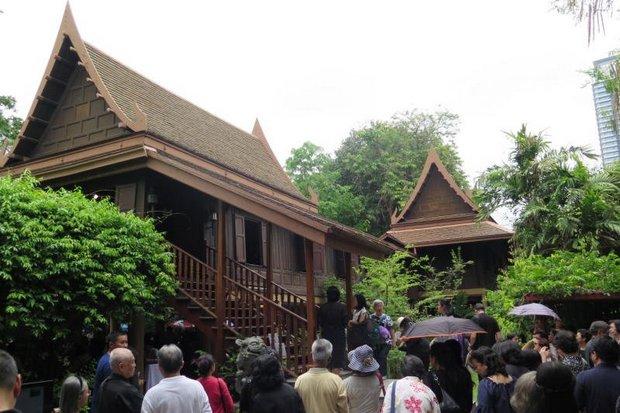
Located in the Bon Kai area on Rama IV Road, Ban Plainern was the royal residence of Prince Naris, who spent his final years there. His descendants currently live on the property.
The residence has also served as a Thai music school and the palace is opened to the public on Naris Day (April 28) each year. However, the house, although built in a traditional Thai architectural style, has not yet been listed by the Fine Arts Department as an official heritage site.
Ban Plainern's residents have already experienced the impact of a major construction project after the Metropolitan Electricity Authority (MEA) built an office nearby.
But there is some distance between the MEA building and the house compared to the proximity of the new proposed condo project. The high-rise will tower over the concrete structure of Tamnak Tuek, which is 20 metres away, as well as the wooden Tamnak Thai, about 70 metres away.
The family reportedly found that the condo has very few porous areas on its property, despite meeting regulations, which could pose a flood risk. There are also fears about the impact of the underground car park on the foundations of the historical site.