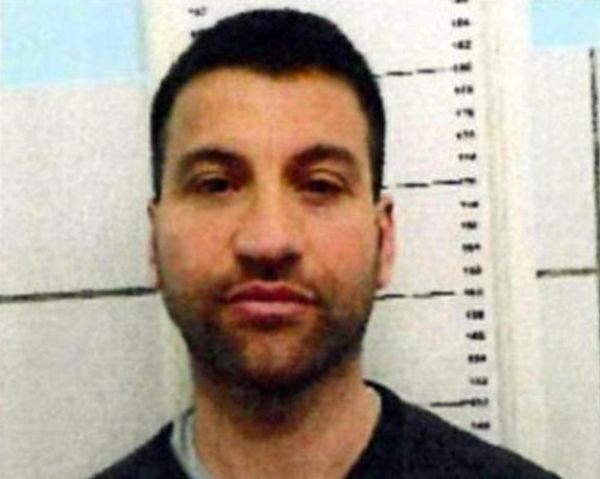
The family of an Australian man beaten by the Taliban on the road to Kabul airport – just a day before twin suicide bomb attacks at the airfield gates – has pleaded for help from the Australian government to evacuate him from Afghanistan, saying he is not safe from further Taliban violence.
Farid – the Guardian is not publishing his surname – posted video online of his injuries sustained at a Taliban checkpoint as he tried to travel to the airport on Wednesday.
With blood streaming from his head, the Hazara man films himself saying, “they hit me. I am an Australian citizen. They hit me. This happened to me when I was crossing [to the] airport.”
In Dari, he tells an armed Talib, carrying an AK47: “I am an Australian citizen. I am not Afghan. You cannot hit me.”
A rifle is heard being loaded, before shots are fired.
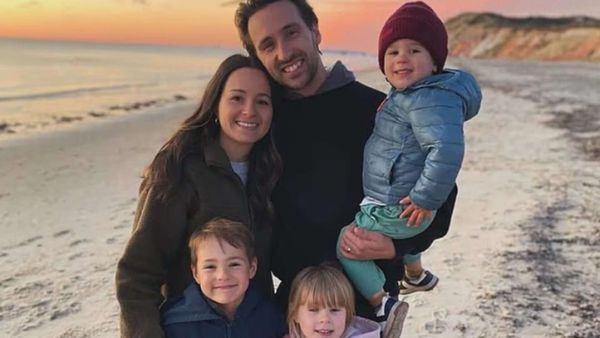
Farid’s wife and young children in Adelaide are fearful for his safety: he is currently in hiding in Afghanistan.
His brother Reza told the Guardian that with the route to the airport closed off, and no other way out of the country, Farid was terrified of further attacks.
“We are asking the Australian government, politicians and human rights organisations to please help him to return to his home.
An Australian man is in hiding in Afghanistan after being beaten at a Taliban checkpoint on the way to Kabul airport. He was kidnapped by Taliban militants for several hours before being released, but cannot reach the airport to escape the country. pic.twitter.com/Xam4zNnyMr
— Ben Doherty (@BenDohertyCorro) August 26, 2021
“Given the crisis situation in Afghanistan and the unexpected withdrawal of international forces, it is not safe for him to be there. We are kindly requesting the Australian prime minister to seek help from other countries’ militaries that are still in Afghanistan, such as the US and European nations, to evacuate my brother.”
Australia has ceased all evacuation flights and removed all government staff from the country.
The prime minister, Scott Morrison, conceded there was little chance Australian nationals could be evacuated on US- or UK-run flights: “To be honest, the opportunities for that will be very restricted.”
Two suicide bomb attacks near the main Abbey Gate to Kabul international airport on Thursday claimed 85 lives, including 13 US soldiers. More than 140 people were injured. The anti-Taliban Islamic State Khorasan had claimed credit. The attacks, while predicted, had also hastened western drawdown of troops ahead of the 31 August deadline, set by the US and the Taliban.
Sources in Kabul say the window for those who are potential targets for Taliban violence to escape is rapidly narrowing.
Taliban militants are moving into the capital from across Afghanistan, and from outside its borders, seeking to help secure the capital when foreign forces ultimately withdraw on 31 August.
There are reports of Taliban going door to door in Kabul neighbourhoods seeking those who have worked with or supported foreign forces or NGOs.
Hazara, an ethnic and religious minority, have faced violence, discrimination and persecution by the Taliban for generations. Nine Hazara men were tortured and “massacred” by Taliban militants in July in Malistan district in the eastern Ghazni province. Amnesty has reported, “proof,” it says “that ethnic and religious minorities remain at particular risk under Taliban rule in Afghanistan”.
The Taliban control Afghanistan’s border crossings, including the major crossings into Pakistan and Iran, and, with Kabul’s international airport surrounded by Taliban checkpoints, there are few practicable routes out of the country for those who need to escape.
The Australian government has issued advice to Australian citizens and visa-holders stranded inside Afghanistan.
“Australian evacuation flights from Kabul have ceased, and all Australian Government personnel have left Kabul. There’s an ongoing and very high threat of terrorist attack.
“Our advice is do not travel to the airport. If you are in the area of the airport, you should move to a safe location.”
The Australian government advises people in Afghanistan to “limit your movements”, “keep a low profile” and “vary your routines so your movements don’t become obvious to others”.
The Afghan Australian Advocacy Network has urged the Australian government to offer an additional 20,000 humanitarian resettlement places in Australia, prioritising vulnerable and persecuted groups in Afghanistan.
The chief executive of the Australian Muslim Women’s Centre for Human Rights, Diana Sayed, said Afghans were “once again paying highest price for the chaos that has ensued over the last week at the Kabul airport”.
“We, as a collective of Afghans here in Australia are feeling overwhelmed and heartbroken on multiple fronts as we witness what is unfolding.
“The time for hand-wringing is over. We need to listen to the very genuine calls and feelings of those Afghans left behind and do everything that we can to bring them to safety. Now is the time for Australia to step up and do what is right. We have precedence in this country for doing what is right when history requires it, now is no exception.”
The home affairs minister, Karen Andrews, said the government – which had pledged to resettle at least 3,000 Afghan nationals within its existing humanitarian program – would “start working with groups here in Australia to make sure we are focusing on family members potentially coming to Australia, to minority groups, and to women and children”.
But there appeared to be few ways to escape the country – and only dangerous ones – now Australian evacuation flights had ended.
The defence minister, Peter Dutton, said “some people will be trying to make their way to other borders to exit through Pakistan or other decisions that they will make based on their own circumstances”.
Dutton said he hoped China could persuade the Taliban to see the return of commercial flights. “But at the moment it’s a war-like situation, let’s be very frank about it ... we need to be realistic about the circumstances on the ground.”

.png?w=600)