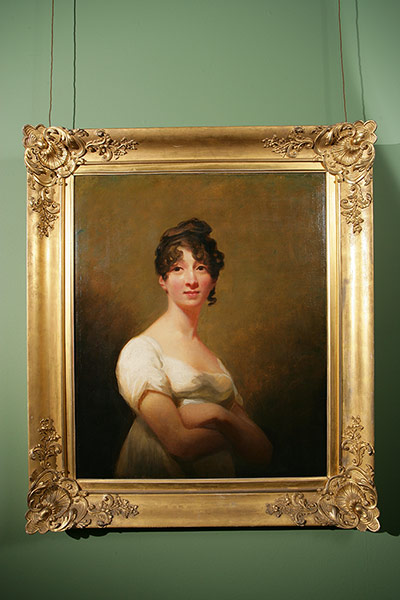
Among the secrets that haunted imperial families were the mixed-race children that British men sired abroad. In 1786, the army captain Robert Bruce returned home from India with a five-year-old child he claimed was the daughter of a friend of his. The girl did not know that Robert Bruce was her father. Bruce kept the secret from his family for two years – and then he told them, right before he prepared to return to India, leaving the child in their care. And so, in a genteel Edinburgh house, Robert Bruce’s unmarried brother and sister, both very proud and very fearful, were left to tend their brother’s secret. Margaret Bruce arrived in Britain without a name. She would become one of 19th-century Scotland’s richest women Photograph: National Trust for Scotland
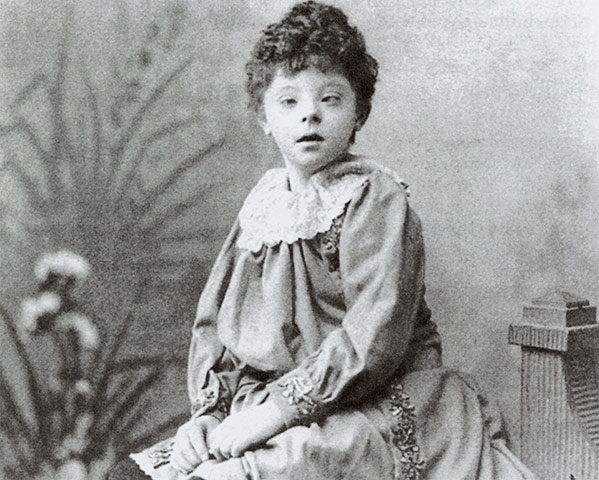
We tend to think about the Victorians as highly secretive, with all sorts of inconvenient relatives stuffed into their attics. But the history of learning disabilities tells a story that is almost precisely the opposite. During the 19th century, the children who arrived at the Normansfield institution, founded in 1868 by Dr John Langdon Down for the education of so-called ‘imbeciles’ and ‘feeble-minded’, came accompanied by trunks full of fashionable clothes. When they returned home for visits, their parents took them to garden parties and teas. For the Victorians, an imbecile child was certainly an affliction, but not one that would be hidden away from friends and neighbours. Such disabilities reflected no wicked choice in life and no moral failing – the categories of transgressions that for the Victorians incurred the largest burdens of shame Photograph: London Metropolitan Archives
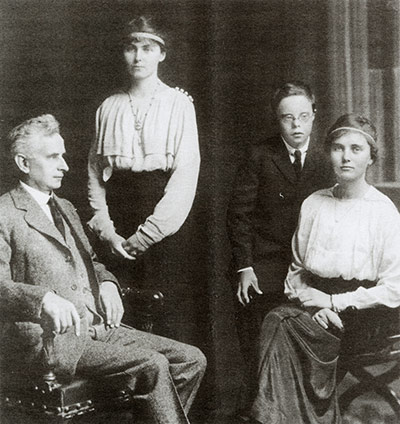
By the early 20th century, when Reginald Langdon-Down took control of the institution that his parents had founded, the optimism that had characterized Victorian attitudes to mental disability had virtually disappeared. Not only were the mentally disabled now believed ineducable, but they were suspected of furnishing the ranks of degenerates of all types. The idea that feeble-mindedness was transmitted down the generations struck fear in the heart of families, especially those of the middle and upper classes. So several generations of otherwise privileged children – including Reginald’s own son, John, born with Down’s syndrome – disappeared into Normansfield and its sister institutions. Founded to promote the integration of the mentally disabled, institutions such as Normansfield instead became the means by which they could be isolated from society for a lifetime Photograph: Langdon Down Museum of Learning Disability
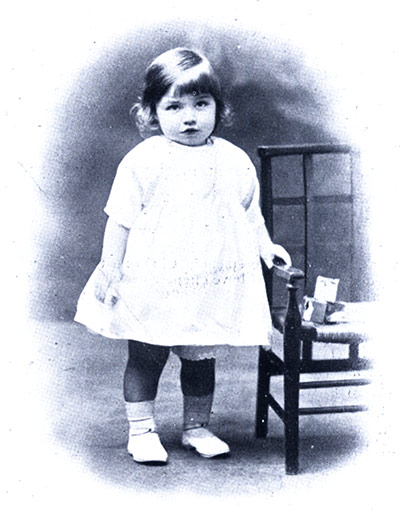
Even as some parents hid mentally disabled children away in institutions for fear of the ‘familial taint’ they advertised, thousands of others adopted children about whom they knew nothing – other than the fact that they were bastards. The interwar years marked the start of mass adoption, the first time that significant numbers of Britons took as their own the children of strangers. At a time when illegitimacy was widely construed as evidence of ‘bad blood’ and a symbol of degeneracy, adoptive parents regarded it as a defect that did not matter so long as it could be hidden. Other people, they supposed, would surely hold out-of-wedlock birth against the child if they knew. So the solution was to keep the adoption a secret Photograph: Croydon Local Studies Library and Archives Service
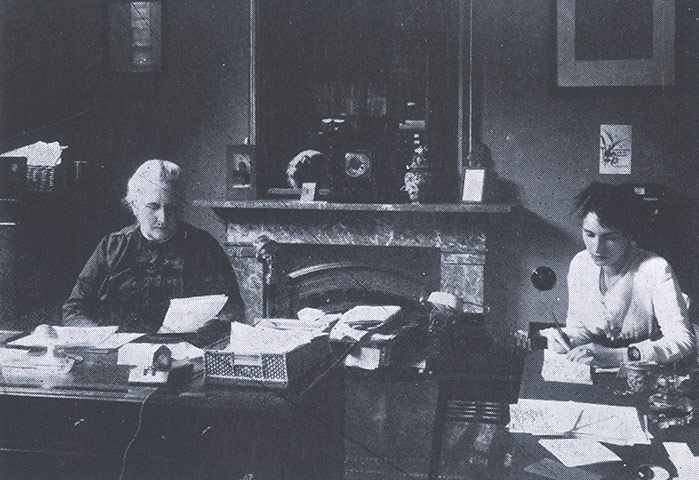
Adoption was veiled in secrecy even after its legalisation in England in Wales in 1926. Families concocted elaborate schemes to claim an adopted child as their own biological kin. They forged birth certificates, told lies to friends and neighbours, even moved to different towns to elude the pursuit of birth mothers. According to Miss Edith Hart, the Mission of Hope’s adoption secretary in the 1920s, it was so much nicer for children never to know they were adopted. In the bound volumes where she kept track of the Mission’s adoptions, Miss Hart noted with approval the ruses adoptive parents had engineered to carry out their deception. To conceal an adoption was to show love: James Fox’s parents were ‘terrified in case James should know he is not their own son! James has all a boy could want and is obviously adored!’ Photograph: Croydon Local Studies Library and Archives Service

In 1927, Richard Blake Brown discussed homosexual sex with his father Harold. Richard was a newly-ordained 26-year old parson, unhappily ensconced in the vicarage at Portsea. Harold was an expatriate American who had invented the power signalling system for the London Tube. Richard recorded the conversations – held over dinners and during motoring excursions – in a diary he kept his whole life. Harold’s missives to his son about pulling himself together provoked Richard to send his father ‘a full, painful and awful confession … Telling him EVERYTHING about myself: it was a terrible task, a humiliating ordeal’ Photograph: Private Collection

What Richard Blake Brown viewed as a matter of fundamental identity (‘The Well of Loneliness is driving me mad, driving the homosexual truth of the Tragedy of myself in upon me so violently’) his father conceived of as a question of self-control. For the next few years, Harold Brown would dispatch remonstrations alongside badly-needed cheques to his son in a Cotswold cottage. Richard Blake Brown kept his enormous diary volumes in a locked chest, within a locked chest; the volume for 1925-8 he sewed up in a yard of unbleached calico before tying it up in parchment, sealing it and sending it to his bank vault. Photograph: Private Collection