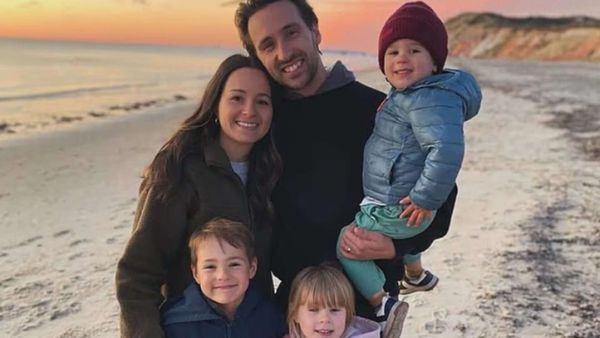
George, my eight-year-old son, is 30 seconds into his first experience of fishing when his float suddenly dips beneath the water.
“Strike!” shouts Dennis Hunt, the coach helping us get to grips with the basics of angling. To our utter beginners’ astonishment, he deftly unhooks a roach, around 8cm long, from George’s whip (a short pole with rig attached). “That,” he announces coolly, “is your first fish.”
George – now grinning ear to ear – and I are spending the afternoon on a quiet stretch of the historic Grand Union canal, the country’s longest, running between London and Birmingham.
With the Chiltern Hills behind us, a cloudless sky above us and a family of swans looking on, we are here to try our hands at fishing, a relaxing and surprisingly easy way to enjoy time on the UK’s vast canal network.
“Canal fishing is an ideal introduction for children because it is relatively easy and quick. They are very likely to actually catch something and that’s how they learn and enjoy it – and want to come back,” says Dennis.
Further advantages include the relatively shallow water in the event of any mishaps, the cheerful sight of the brightly coloured boats which occasionally chug past, and the flat bank – on which Dennis has positioned two comfortable swivelling chairs.
At the free family fishing taster sessions, run throughout the summer holidays by the Canal & River Trust, the response is enthusiastic. “There is a real sense of achievement at catching a fish, children enjoy being by the water, meeting people, learning about the wildlife, the canals and conservation,” says Dennis, who teaches would-be anglers from five-year-olds to pensioners with the Canal & River Trust and the Luton Angling Club. “Half of the UK’s adult anglers started under the age of 10.”
The pathways into fishing are changing, he adds. “It very much used to be a father and son thing, but our sessions are now particularly popular with mothers and their children. It really is accessible to everyone.”

With family life often busy, trying new things together can help carve out some of that cliched but terribly important quality time. Before we arrived, George had announced he was looking forward to our spending the day together as well as “catching a massive fish”.
Getting started is gratifyingly quick, once you’ve familiarised yourself with the local club’s rules and bought a rod fishing licence (any angler aged 12 or over needs one, they can be obtained online from the Environment Agency or at a post office). Our first challenge – I’m a Celebrity Get Me Out of Here style – is to meet the bait. Initially apprehensive about the maggots – three types no less, as different fish species have their preferences – George is soon happy to have a go at hooking them himself. (A stage, I confess, I failed to reach.)
The next step is a quick introduction to the kit – telescopic carbon-fibre whips to which Dennis fixes a rig with line, float, weight and hook – before we test the water depth and adjust the position of the weight accordingly.
Now we are ready to cast off. “Lift, swing and let go,” says Dennis. After a couple of goes – this bit looks easier than it is – George has the hang of it. A sprinkling of ground bait – “not too much or they won’t be hungry anymore” – on the surface to attract the fish and we prepare to wait. Not, as previously mentioned, for long.
“Strike! This is so cool!” shouts George as his second catch tugs the float down. This time he manages to land the fish himself, watching intently as Dennis carefully unhooks it and shows him the two barbels – whiskers – which identify fish number two as a gudgeon, one of the most common canal fish.
“Do the fish get hurt?” George asks, concerned. He is reassured to hear that they will be fine once returned to the water – a requirement of all UK canal fishing.
Dennis explains the importance of only touching the fish with wet hands, and never with a cloth, in order not to strip their protective coating of slime. A wet landing mat on the ground protects the fish if they manage to leap out of our hands.
Soon George’s count is in double figures. As well as roach and gudgeon, he catches perch – a fierce predator, Dennis tells us, demonstrating its spiky dorsal fin – and bream.
With each catch, George is quicker to get his line back in the water, concentrating carefully on the float, ready to swing it in at the first tug. A lapse in focus can mean missing a bite. This is clearly a chance to forget day-to-day stresses. “You have to concentrate all the time,” agrees Dennis, who has been fishing for 50 years, “it is very good for the mind.”
With our total catch at 23 – all safely returned to the water – it is time to pack up the kit. For now. “It was awesome,” pronounces George. “When can we go fishing again?”
For details of how to get started and the Canal & River Trust’s free taster sessions, visit canalrivertrust.org.uk





.png?w=600)