A sense of despondency has gripped the families of two British nationals who have, between them, spent more than a decade imprisoned without trial or conviction in some of India’s most crowded jails as their cases churn through the country’s notoriously slow legal system.
Jagtar Singh Johal and Christian Michel were not detained under similar circumstances, but their lawyers and families say their incarceration is long past any defensible legal justification, as they accuse the UK government of failing to bring the two men home despite strengthening diplomatic ties with India.
Michel is accused of acting as a middleman in a scandal-hit Indian helicopter deal with Anglo-Italian firm AgustaWestland, while Johal is accused of terror offences related to the movement for a separate Sikh state. Both deny any wrongdoing.
Michel has spent seven years incarcerated in the capital Delhi’s Tihar jail despite orders from the Supreme Court to grant him bail because he failed to meet the strict conditions determined for his release.
The 64-year-old businessman was extradited from Dubai to India in 2018 over allegations he acted as a middleman in a 2010 defence deal involving AgustaWestland. Investigators allege that Michel paid bribes to senior Indian government officials to secure a £455m chopper deal for Agusta in 2010. India ultimately cancelled the deal in 2014. Michel has denied the accusations.
“On 4 December, we marked seven years since my father was illegally detained in the country,” Michel’s son Alois tells The Independent.
“My sister and I desperately want our father back, but we want our father back to be declared finally innocent, for him to be fully unconditionally released.”
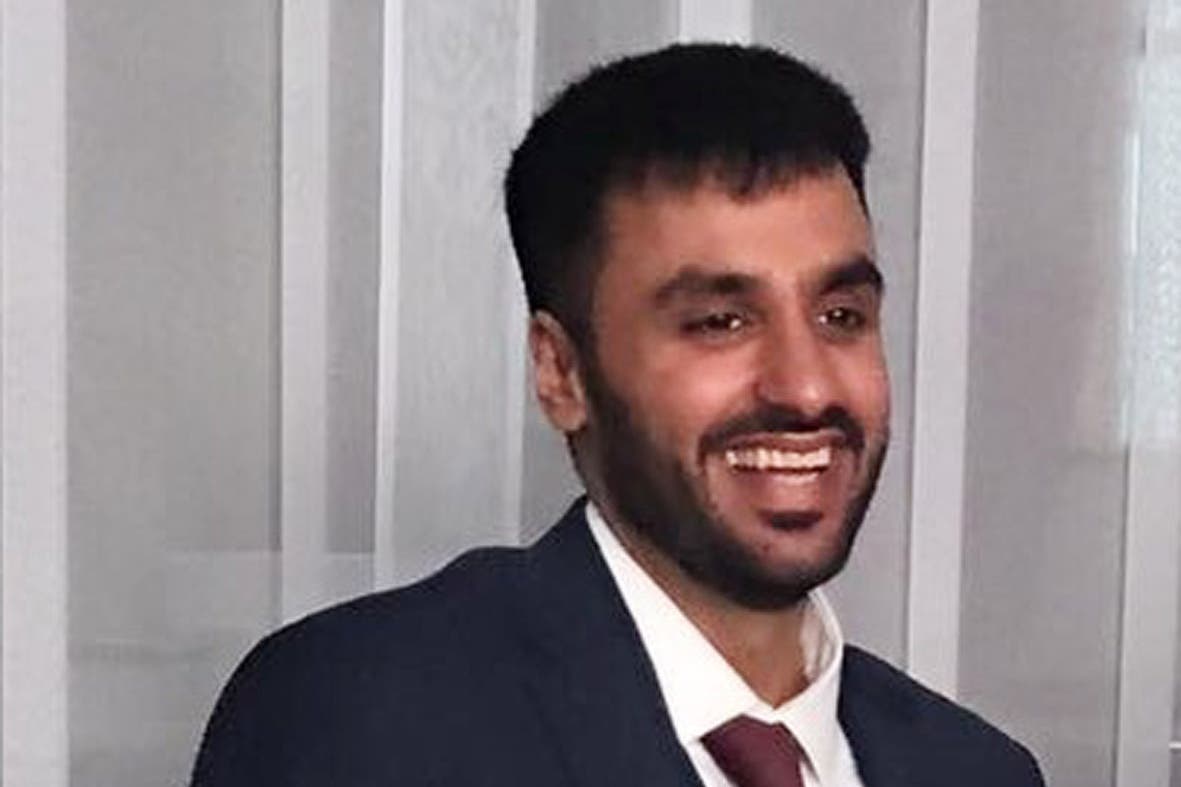
Johal, known as Jaggi, has spent eight years behind bars after being seized by the police in India’s Punjab state in 2017 while on his honeymoon. The 38-year-old from Dumbarton near Glasgow was accused of involvement with the banned Sikh separatist outfit the Khalistani Liberation Force (KLF) and in the assassinations of religious and political figures. The Khalistan movement wants an independent Sikh state carved out of India.
Johal’s family says he was held at gunpoint, tortured in custody, and forced to sign a false confession relating to a series of murders tied to the KLF. The Indian government denies torture and insists due process is being followed in his case.
Like Michel, Johal has not been convicted of any crime. One of the nine cases against him collapsed in March, but the others remain stuck in slow-moving proceedings, his lawyer, Jaspal Singh Manjhpur, says.
He says the prosecution is presenting evidence at a lower court in the remaining cases, while Johal’s bail application is pending before the Supreme Court. “The investigators know that he is going to be acquitted. Therefore, they are trying to prolong the pre-trial period,” Mr Manjhpur says.
Johal’s imprisonment was recognised as arbitrary by a UN panel in 2022. His supporters say the charges against him are politically motivated because he raised concerns about how India’s Sikh community has been treated in blog posts.
Experts say India’s legal system is slow and overburdened, which is why it has a law stipulating that a suspect must be released from prison on personal bond once they have served half of what would have been the maximum sentence if they were convicted. In Michel’s case it meant he should have been released in 2021.
Michel’s lawyers argue he should be freed unconditionally, but instead, the courts have granted him bail while investigators continue to probe his case. Yet he has no address in India, no family members in the country, and no one willing to act as a guarantor – factors that have rendered the bail order effectively meaningless.
At a hearing in April, Michel revealed to the court that the only person willing to vouch for him was Jo Johnson, former MP and brother to former prime minister Boris Johnson.

Further hearings in his case took place earlier this week, where a court in Delhi agreed that he “is entitled to be released and he cannot be detained” beyond the maximum sentence for the alleged offences for which he was extradited. Michel reached that landmark – exactly seven years in prison without conviction – on Sunday 21 December.
Yet he remains behind bars, because India’s Central Bureau of Investigation says it is still working on bringing another case to trial against him that would bring a maximum sentence of life imprisonment. He has yet to be charged in that case.
Johal’s brother, Gurpreet Singh Johal, has spent nearly a decade pressing ministers in London to intervene in his case. His meeting with new foreign secretary Yvette Cooper on 1 December left him dispirited.
“Honestly, I don’t know why I bothered taking the train down from Glasgow for this,” he said in a statement. “I’ve now met six foreign secretaries and this is one of the most disappointing meetings yet – it felt like a significant step back.”
“The prime minister made a big deal of this meeting, so to show up and hear the same empty talk is devastating,” he said.
A Foreign Office spokesperson told The Independent the UK government has consistently raised both Michel and Johal’s cases with the Indian government, while providing consular support to their families.
“The UK government is committed to seeing Christian Michel’s case resolved as soon as possible,” the spokesperson said.
Sir Keir Starmer last raised the cases during a bilateral meeting with Indian prime minister Narendra Modi on 9 October, while the foreign secretary took it up with Indian external affairs minister S Jaishankar on 11 November on the sidelines of the G7 foreign ministers’ meeting in Canada.
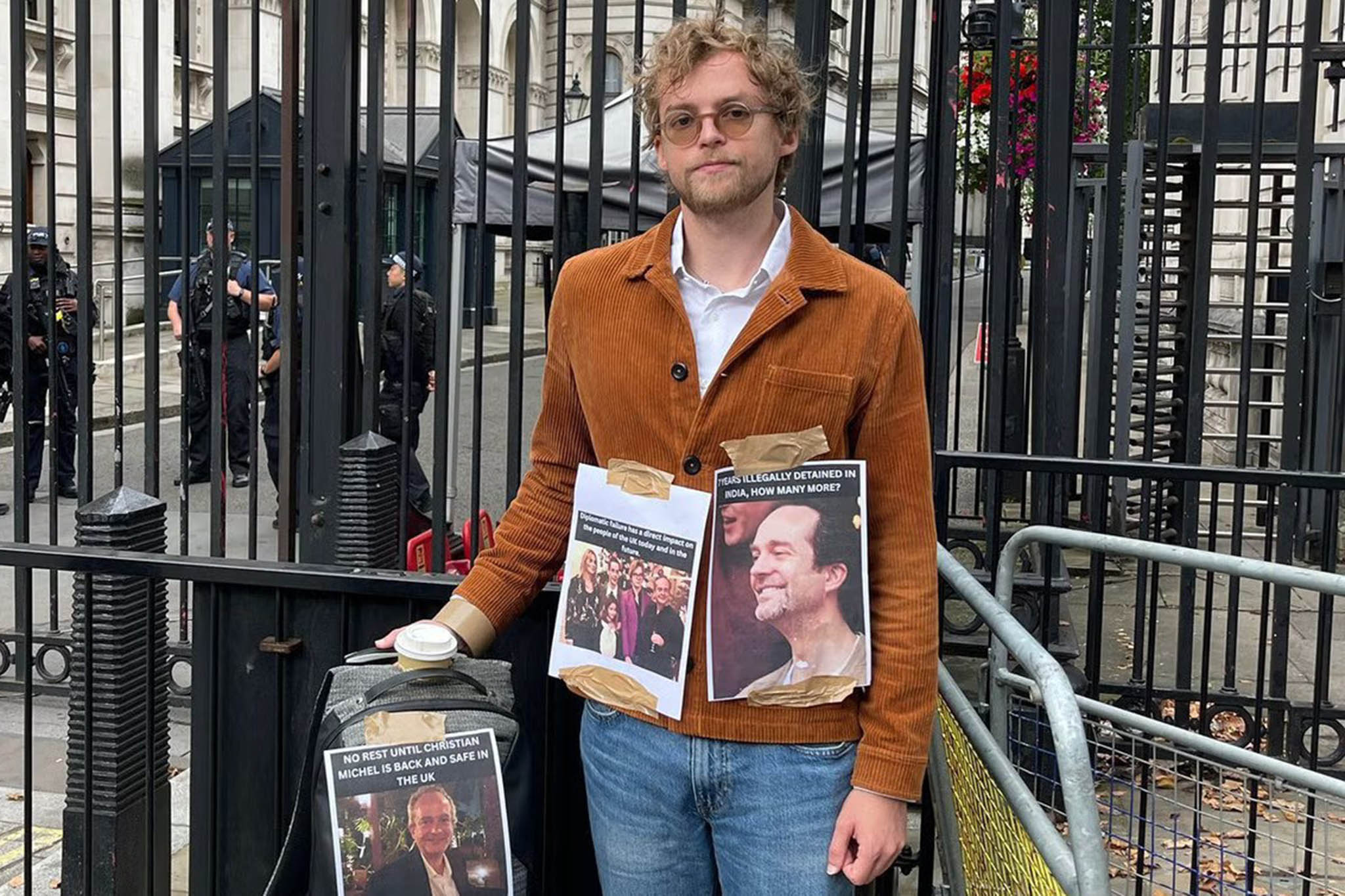
But Michel’s children accuse the UK government of failing to take concrete action to secure his release.
“The UK hasn’t reacted to it for the past seven [years],” says Alois. “Maybe they raised it but it hasn’t made any actual change. And in the meantime, it didn’t prevent them from having trade agreements, even one of the largest, that took place between India and the UK back in July.
“But nothing has really moved since. So it may seem a bit naive for me, but what we want to see is justice. And for the UK to request for India to proceed with justice, which they haven’t done yet at this point in time.”
Alois said the way the UK government continues to push for closer ties with India while his father languishes in prison is “a form of insult”. “It’s disgraceful to just forget someone like this,” he adds.
Scottish Labour parliamentarian Douglas McAllister says he urged the foreign secretary to abandon what he called the government’s habit of “simply raising [Johal’s] case”.
“There’s a window of opportunity between now and next month, and what I now want to see is a greater sense of urgency. That means immediate action from the foreign secretary… to bring my constituent home to Dumbarton.”
Charities working to secure Johal’s release have grown similarly despondent with both judicial and diplomatic processes.
Reprieve, the international human rights charity supporting the Johal family, says the case has reached breaking point.
“It is very clear by now that unless the UK government takes stronger action, Jagtar will at best spend decades in prison, in a never-ending trial with no evidence, and at worst be sentenced to death and executed,” Dan Dolan, its deputy chief executive, warns.
“Failing to resolve this (Johal) case would project terrible weakness – signalling to allies and enemies alike that they can arbitrarily detain British citizens as a point of leverage,” Mr Dolan warns.

What Mr Dolan refers to as “leverage” is the idea that the two Britons may be caught in a wider struggle over alleged economic fugitives from India living in Britain, something a source close to Michel also raised concerns about.
The source says on the condition of anonymity that they fear Michel and Johal will not be released as long as India is still actively pursuing the extradition of several prominent businessmen accused of committing fraud in India before fleeing to the UK.
The Independent reached out to the Indian authorities for comment on this claim, but had not received a response at the time of publication.
Among India’s most wanted are the former airline tycoon Vijay Mallya and diamond merchant Nirav Modi – both accused of multi-billion-rupee bank frauds and both still contesting legal battles in Britain.
India’s finance ministry earlier in December told parliament that 15 individuals have been formally declared Fugitive Economic Offenders – a legal designation introduced in 2018 for those accused of large-scale financial frauds who flee the country. Nine of them are connected to major public-sector bank scams.
Mallya, the former owner of Kingfisher Airlines, is accused of defaulting on loans converted into non-performing assets by several Indian banks. The government says the total owed – including interest – stands at over £1bn.
Mallya disputes the figures and has accused the Indian government and banks of giving contradictory accounts. He has called for a retired judge to investigate what he termed a “pathetic state of affairs vis-à-vis myself”. He declined to be interviewed by The Independent for this story.
Diamond magnate Nirav Modi, on the other hand, is linked to the Punjab National Bank (PNB) fraud – one of the largest banking scandals in the country. He has been in custody in the UK since 2019 while fighting extradition, which the High Court ordered in 2022. He earlier defended himself and said his dealings with PNB were “civil transactions blown out of proportion”.
One of the issues holding up the extradition process is concern raised repeatedly by British courts over the sorry state of Indian prisons.
In November last year, the High Court in London upheld arms dealer Sanjay Bhandari’s appeal, ruling he would face a “real risk” of extortion and possible “actual violence” if returned to Tihar jail. UK officials have since sought written guarantees that no prisoner would be mistreated. Authorities in Delhi say such assurances have now been provided. However, Delhi’s prison system – spanning 16 facilities – currently holds more than 19,000 inmates, nearly twice its sanctioned capacity.
In July, a four-member delegation from Britain’s Crown Prosecution Service visited Tihar jail to review the conditions, inspecting a high-security wing, meeting inmates and reviewing security arrangements across the complex. The Indian authorities assured the team that any extradited individual would be kept safe and that dedicated accommodation could be created for them if required.
Michel has repeatedly raised concerns about his own safety while held at Tihar. He told The Independent during a court appearance earlier this year that there had been two separate attempts on his life, claiming that a hired killer confessed to being paid to assassinate him. He also claimed that despite his appeals before the authorities, no meaningful investigation was launched.

India has assured British authorities that should Nirav Modi be returned, he would be held in Mumbai city’s Arthur Road Jail in Barrack No 12 – considerably less crowded than Tihar. India has previously issued similar undertakings, including to Belgium in jeweller Mehul Choksi’s case. Yet it’s unclear if this would satisfy the UK courts – Mallya’s barrister earlier told Westminster Magistrates’ Court that conditions in Barrack 12 were “far from satisfactory”.
At least 10 dead as passenger bus erupts in flames after collision in India
Alarm as Hindu vigilante groups target Christmas celebrations in India
Hundreds protest outside Bangladesh embassy in Delhi over Hindu man’s death
Hundreds of thousands attend funeral of slain Bangladeshi activist Sharif Osman Hadi
Protests in India after rapist politician is granted bail by high court
How India’s most populous state cancelled Christmas this year