When people ask me and my boyfriend Louis how we met, I take a deep breath and hope he takes the conversational wheel. While most couples might have a sweet meet-cute, our story isn’t quite so straight-forward. In fact, after a mutual friend introduced us in 2021 we fumbled the haphazard relationship that formed between us a thousand times over, breaking up and then circling straight back round again. In our early twenties we were both steadily reckless, somewhat selfish, and extraordinarily immature. But by age 29 it just worked. In March 2025, we finally became a proper couple.
So, it really was right person, wrong time – until it wasn’t.
This is the type of relationship people usually warn you off of. “It should be easy,” my (single) mother has told me hundreds of times out of love. “If you’re confused, he doesn’t like you,” women on TikTok chant as they preach against the ambiguity of label free dating, aka the dreaded situationship. Or just simply: “If he’s an ex, he’s an ex for a reason”.
Yet, studies have shown that more than a third of cohabiting couples and one-fifth of married ones have broken up before.
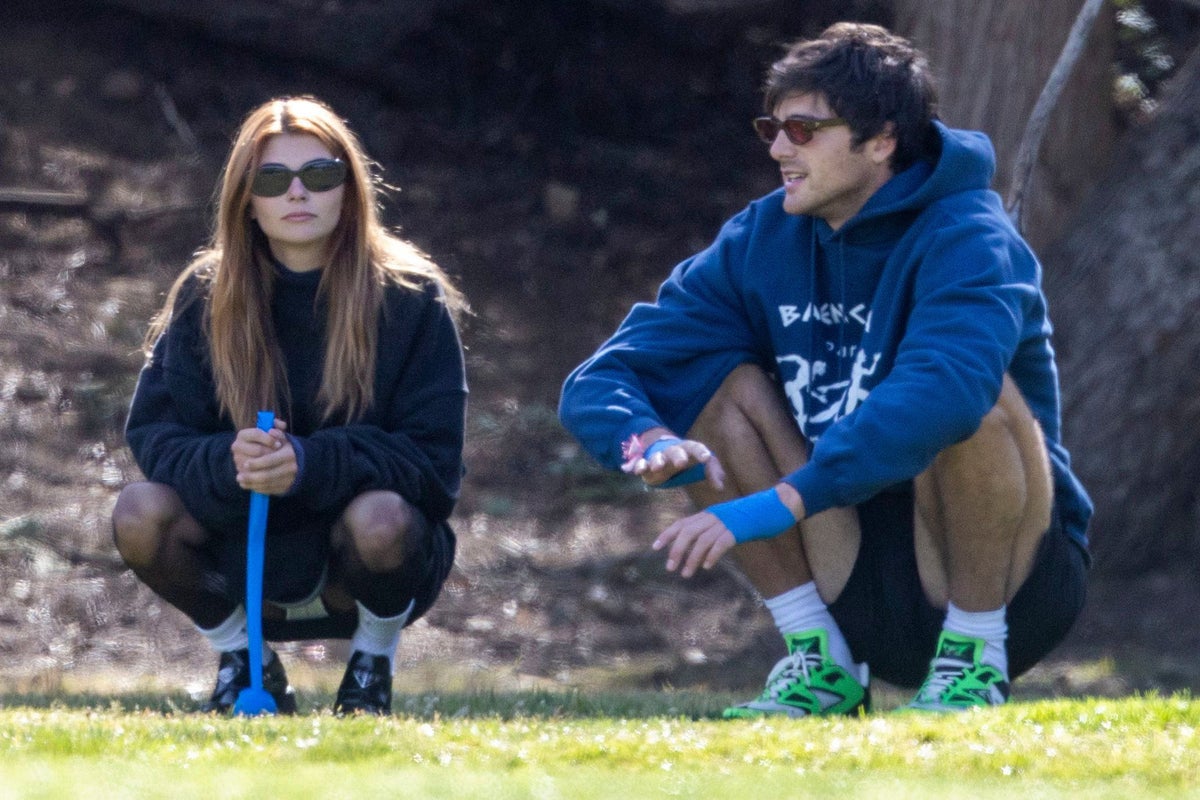
Even in most rom-coms, they have to win each other back. From Netflix’s David Nichols adaptation One Day, to the BBC’s Sally Rooney adaptation Normal People, young people are getting hooked on repeat romances more than ever – and, in the wreckage of modern dating, it’s increasingly common off-screen, too. Just look at Frankenstein star Jacob Elordi and his on-again, off-again girlfriend Olivia Jade. The pair were spotted in New York together this week after breaking up in August last year, rekindling by September, with sources claiming the relationship was “fully over” by October. Somehow, I highly doubt that to be the case.
“When both people have reflected on their part and their responsibility in the breakup, if they’ve learned from it and developed more emotional or communication skills, then things can be different,” says psychotherapist Dr Nicole Gehl. “The positive is that you’re not starting from zero – but you have to recognise that you’re coming together as different people,” she adds. “The question isn’t ‘can it work’ but ‘have we both grown and changed enough to do something different as opposed to repeating the same old patterns… Self awareness is everything.”
37-year-old Zoë first met her boyfriend Joe 10 years ago. They went on loads of fun nights out with their friends, and she felt she could completely be herself around him – but Joe wasn’t the type of “problematic musician” she was attracted to at the time.“I’d had a four year relationship that had broken up the year before,” she says. “It turned me into a massive commitment-phobe.” They dated for a year, but when Joe started making plans for them to go on holiday together, she pulled the plug. “I freaked out, it was too much,” she says.
Joe and Zoë loosely stayed in touch with sporadic text messages over the years that followed. Then in 2023 – eight years after they first dated – they rekindled their romance over cocktails. “I’d fallen out of love with dating. Nobody made an effort,” reflects Zoe. “But he really did. Two weeks later, he kept accidentally saying ‘I love you,’” she laughs. “I just sort of realised that I hadn’t properly been myself around anyone else I was with but I’m the same with him as I am around my best friend.” Then, quite simply, they fell in love. “That’s it,” Zoe says of the seemingly sudden but seismic shift. The pair are now expecting their first baby.
“The first time round, I was very career-focussed and he seemed slightly lost. He was nowhere near as confident as he is now,” Zoe says. “Joe is really, really kind and so patient with me and those weren’t attributes I prioritised when I was the age I was when we first dated. I was a cliché: swooning over someone playing the blues, or falling for those who looked good in public; gregarious, life and soul of the party types. I thought that relationships full of anxiety meant I cared more. Joe showed me I was wrong. But we needed time to grow up, both of us. Otherwise, it wouldn’t have worked.”
Dr Gehl warns that, although you need to address old issues in the relationship if rekindling, it’s important not to dwell. “There needs to be real accountability, but at the same time appreciating that you’re building something new,” she says. “It helps if people are coming back together because time apart brought them clarity – not because they’re afraid of being alone. A lot of people jump back into a relationship because it’s scary out there. You need to genuinely want to reconnect. Then it’s worth a try. So, don’t forget about what happened but you need to be able to forgive.”

But there are two sides to this coin – it can, of course, be disastrous. While some second chance couples thrive, others become locked in third, fourth, fifth chances; relationship cycles, which Kale Monk, a professor at the University of Missouri has found to have a lasting negative impact on the mental health of those involved.
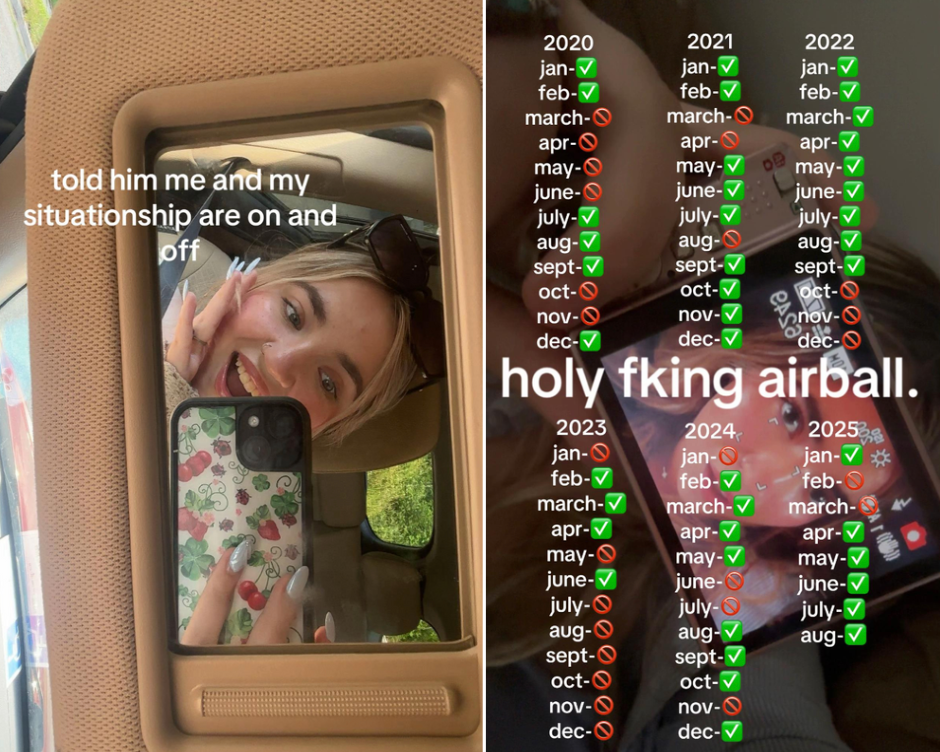
On TikTok now, there’s even a trend to track your on-and-off-again relationship stats and share them with the world. Some track over the course of up to five years. “I’m 39, and I’ve done this for 11 years,” one user warns a younger poster in the comments. “Please, stop while you can. I wasted so much of my life and now I’m old and alone.” Another person shares: “I’ve done 23 years,” she says. “It’s like a jail sentence.”
“It can be very toxic,” says relationship therapist Simone Bose, of the intense highs and flummoxing lows of an inconsistent relationship, which many of us actively seek out. “It’s more interesting, it keeps you on your toes,” she says, adding there’s also a chemical element to get hooked on, too. “You get that dopamine hit. That oxytocin. And if you’re stuck in a cycle like that, it becomes a pattern you’re familiar with that you come to wait for. If you’re not getting it, you might get a little bit bored. So, then maybe you’ll almost create drama without realising it. It can be totally subconscious.”
Bose says the best way to break this tumultuous cycle is for people to first acknowledge they have a problem with being drawn to drama – and then do the work to figure out where this inclination came from. If you had an inconsistent parent as a child, that can be part of the problem. But to encourage her patients to opt for someone stable over the passion and drama of a partner who’s inconsistent, the relationship therapist has a question similar to the one posed in the TikTok comments. “Imagine what this will be like 10 years from now,” she says. “Do you want that?”
For Bose, the big decision to stick or twist with an old flame boils down to a few key smaller ones: “Do you feel like your values are being met? Are you communicating well? Are your needs being met?” she asks. When Zoë and Joe reconnected in 2023, they were happy to find all the answers to those questions were “yes”. Her commitment-phobia was cured, and he’d affirmed his sense of self. “Sometimes you can [re]meet people after eight years and they haven’t done any work,” says Bose. “But others can grow up, become more adult as they get older through life – just through living.”
I met Louis at a grimy after party at 2am on a Friday night in 2021 when we’d both had enough drinks to tranquilise a large horse – and I had work in the morning. Four years on, we still share a propensity to stay at a party too long; But we have grown up, in other more important ways, together. Has the relationship merry-go-round stopped spinning? I hope so.
Boyfriends may have lost their shine but hype partners are the hottest dating trend
Jennifer Lawrence reveals key to making her marriage work
‘Unhappy do us part’: Readers reflect on marriages and relationships that didn’t last
This recreational drug could be giving young people bladder problems
The everyday foods and drinks that contain thousands of microplastics
Bright shades are trending – I got colour analysis done to see if I could wear them