A drop in greenhouse gas emissions in the year to June was due to faltering economic growth rather than the now-defunct carbon pricing system, according to federal finance minister Mathias Cormann.
The second, and final, 12 months of the carbon price saw Australia’s emissions fall by 1.4%, figures released by the Department of Environment last week show. This was the largest drop in a decade of government emissions measurements.
But Cormann said this reduction was due to wider economic factors, rather than the carbon price, which was scrapped by the Coalition in July.
“Emissions were falling before the carbon tax came into effect and we were meeting our Kyoto targets well before the carbon tax came into effect,” the finance minister said.
“Over the past two years the economy has grown below trend, and below-trend growth means that emissions will be lower than they otherwise would have been.”
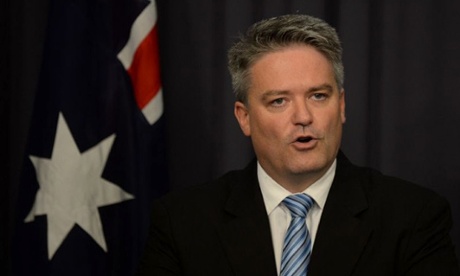
Cormann stressed that the government’s alternative climate policy, its Direct Action plan, would achieve Australia’s minimum goal of a 5% reduction in emissions by 2020, despite analysis by the Climate Change Authority, the UN and independent observers suggesting otherwise.
“The truth is that our Direct Action policy, which was legislated by the parliament, will ensure we achieve our emissions reductions targets for the future,” he said.
Carbon pricing was introduced by Julia Gillard’s Labor government in 2012. Emissions fell by 0.8% in the first year of the system, with the larger drop occurring in its last 12 months.
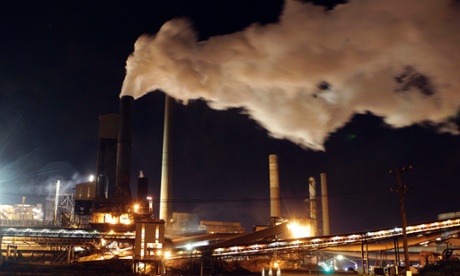
The latest greenhouse gas inventory showed emissions from the electricity sector, the industry most affected by carbon pricing, fell 4% in the year to June.
Electricity emissions account for a third of Australia’s emissions output, which stood at 542.6m tonnes in the year to June, down from 550.2m tonnes in the previous 12 months.
Emissions from transport dropped 0.4% in the year to June, with gases released by the agriculture industry decreasing by 2.6%. Industrial processes emitted 1.3% less greenhouse gas during the year, although fugitive emissions, such as those from mining, rose 5.1%.
Environmental groups and the Greens have said the figures show the carbon price was working and that Australia’s emissions will now rise due to doubts over the efficacy of Direct Action.
The Coalition has maintained, however, that the carbon price placed a huge cost upon the economy and household power bills and that a range of factors, such as falling electricity demand and energy efficiency programs, have helped push down emissions.
Separating the impact of the carbon price can be difficult due to the various factors influencing Australia’s emissions. An Australian National University study from earlier this year found that 17 million tonnes of carbon dioxide was removed from Australia’s energy sector as a result of the policy.