As UK consumers continue to fall in love with coffee, the tea trade could be thought to have trouble ahead. Analysts Mintel have just announced that sales of the standard teabag have fallen by 13% over the past three years.
But the experts also believe there is no crisis brewing. A large base of tea drinkers will not be switching away from the drink they love and will ensure tea remains the nation’s favourite.
This should signal good news for tea growers and workers. However, prices for the crop in Kenya fell significantly last year. There are signs that this is now changing - though this fluctuation presents a clear reason why buying Fairtrade, with its guaranteed minimum price, is so important to farmers and workers in the industry.
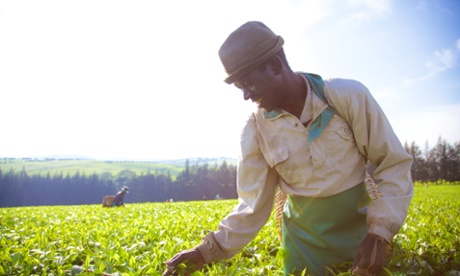
UK Fairtrade tea saw a 1% fall in sales in 2014, and the workers at the Chemase Estate, at Kericho in the Rift Valley region of Kenya, are clear why this trend needs to be reversed. Chemase grows tea on 650 hectares of land, employing 800 permanent workers, plus additional seasonal help.
At the estate, Nahashon Too explains why Fairtrade works for him. “The Fairtrade Premium makes the biggest difference to employees,” he says. “This extra money gives us food security. There is only one season in which we can grow our own maize, which is important for our diet. For the rest of the year maize is expensive, but the Premium Committee buys it when it is cheap and sells it back to us at a price that we can afford.”
Fairtrade sales fluctuate between 5-10% of production per year and the Premium raised has also helped deliver health, education and hygiene projects including a computer lab for the secondary school, scholarships, sanitary towels so girls can attend school more often, operations for children with cleft lips and science lab equipment.
It has funded equipment for government-supplied health clinics which are built in communities without vital apparatus. Farmer Jacqueline Chepkirui says, “This has really boosted health services. Before, if someone cut themselves they were told to wait for a week for a vaccination. Now the clinic is always open. The next thing we want is a maternity wing. The nearest labour ward is 6km away and mothers give birth as they travel there on foot.”
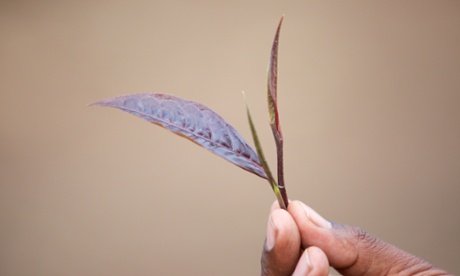
Conditions at the estate mean that workers stay for long stretches, many for 20 years. They work six days a week and are given a house, free schooling, churches and clean water supplies, together with a vegetable garden. Tea plucking takes place in uncomfortable and sometimes soaring heat which makes these benefits appreciated even more.
The estate is owned by Finlays, the company which supplies tea to the UK and US for supermarket own-brand products. Four of its Kenyan tea estates are run on Fairtrade lines, together with three of its processing factories – including Kitumbe where Chemase tea is processed - and one instant tea factory.
After being harvested, tea is then transported back to the factory via a distinctive “rope-way” set-up, of which the estate is rightly proud. The rope-way operates on a solar-powered 11km loop and is the only one of its kind in Kenya. Without it, three lorries would be being used to transport the tea, causing pollution and using up valuable natural resources. This system also aerates the product, improving its quality and ensuring a higher price is paid for it.
This environmental message is continued elsewhere. More than 100 hectares at the estate are certified organic, using no herbicides. All weeding is carried out manually and compost is made from waste materials. There is a belief that organic conversion is vital for the future, with a target of around 146 organic hectares expected to be reached this year.
Finlays uses hydro-electric power and sustainable timber as it is trying to reverse environmental degradation and emphasise the need for care of forests. It runs a forestry plantation consisting of gum, pine and cypress trees and has a 1,200 hectare border protecting indigenous trees. The group provide workers with medical services, dispensaries, secondary health services and HIV programme partnerships.
Tea plucker Peter Kinarra who is 42 and has been doing this work for 14 years says, “With Fairtrade we get more. It is all about employee welfare.
“Pluckers who can’t carry baskets on their backs because of the weight now have parachutes to fill instead. There are limits to how much a worker is allowed to carry and once their container is full, they empty it at the weighing station and come back to the field to pluck more.
“The premium you give us is helping. Life is now smooth. Tea is our source.”
Finlays is one of the biggest employers in the area. Kitumbe is the company’s largest black tea factory and produces 8m kgs of tea a year, sold worldwide. Assistant factory manager Ben Rotich admits, “Workers on non-Fairtrade sites are a little jealous.” Speaking to the children who have benefited from scholarships this is understandable. They explain they want to be neuro scientists, civil engineers, forensic scientists, lawyers, pilots and news anchors. 17-year-old Silas Jema says, “I enjoy learning. I want to be a better person in the future. I want to help my parents.”
On top of its own 18,000 Kenyan employees, Finlays also works with more than 16,000 smallholder tea farmers, registered in five farmer primary cooperatives under their union umbrella known as Fintea Growers Cooperative Union, all certified as Fairtrade. Leaf supplied by the farmers is processed at two Finlays factories.
The hope at Finlays is that Fairtrade sales from the smallholders will increase from 1% to 3-4%, through their cooperatives. “We would be able to do things we have not done before,” says the company’s Samwel Sang, manager of the outgrowers. “Fairtrade helps our tea get into premium markets and expand them. It has opened up our minds and our eyes to the direct benefits to the local communities.
“Fairtrade sales are bringing light to the lives of people here.”
Content on this page is paid for and provided by Fairtrade Foundation, sponsor of the spotlight on commodities series