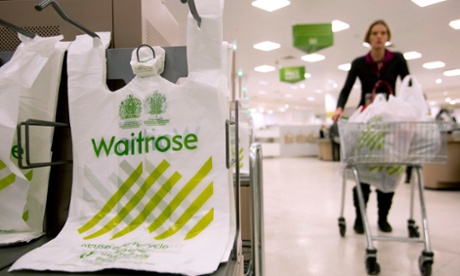
The Fairtrade Foundation has signed a deal with Waitrose under which it will endorse and advise on the supermarket’s own ethical food sourcing programme.
The partnership is a potentially risky new step for the foundation which until now has only allowed its label to be used on goods certified under its own rigorous processes governing ethical standards. Producers allowed to use the label guarantee to pay farmers a minimum price and a premium for local community projects such as building schools or installing wells.
The partnership with the supermarket will start with producers in Ghana, Kenya and South Africa. The Waitrose Foundation, a charitable arm of the supermarket, already puts a share of profits towards educational, social and healthcare projects called for by communities in those countries where it sources fruit and flowers. Unlike Fairtrade, however, it does not guarantee a minimum price.
Fairtrade will help design and evaluate projects under the Waitrose Foundation scheme and its involvement will be flagged beside relevant items in stores – but in a different way to fully certified Fairtrade goods.
Michael Gidney, chief executive of the Fairtrade Foundation, said: “The objective of the new partnership is to work together to increase the social and economic impact of our respective supply networks, recognising the vital role that business now plays within the international development agenda.”
The scheme is likely to be controversial, as it risks associating the Fairtrade mark, which is highly trusted by shoppers, with goods sourced under less rigorous ethical standards.
Fred Burt, at the Interbrand consultancy, said the move was a “smart and natural extension” for Fairtrade but it was important that it clearly differentiated products within the Waitrose Foundation scheme from fully certified Fairtrade goods.
“If Fairtrade can have the same impact on company behaviour as they have had on consumer ethics then that has to be a good thing. However this comes with risk. The Fairtrade Foundation relinquish some of the control that made them successful in the first place, because they will not have direct control on the individual product-related decisions that their endorsed partners will be making,” he said.
Cheryl McGechie, public engagement director of Fairtrade, said: “It will be a communications challenge for us to make sure that we don’t confuse consumers.”
But Fairtrade is hoping the tie-in with Waitrose will be a model for a new way of bringing its ethical principles to bear on a wider range of products that do not easily fit its current system.
McGechie said Fairtrade wanted to work with other retailers on similar partnerships but would only do so on projects that protected Fairtrade’s core values: giving farmers a say in how community projects were developed and increasing their cut of the price paid by consumers for their goods.
“We want to extend the influence of Fairtrade. It has been around for 20 years and made huge ground in influencing sales of chocolate, bananas and coffee but it is still a minority of trade,” she said. “There are so many other supply chains that have little trade with Fairtrade and it would be a lost opportunity not to find other business models that enable us to change that.”
The deal with Waitrose comes after Fairtrade launched another new type of partnership with Mars this week. From the autumn, all the cocoa for British and Irish Mars Bars will be sourced from Fairtrade farmers.
Until now, the Fairtrade mark could only be used on chocolate bars which source all possible ingredients, such as sugar, vanilla and cocoa, from farms certified under the ethical scheme. The Mars Bars will be part of Fairtrade’s new Cocoa Sourcing Programme which will have its own separate label.