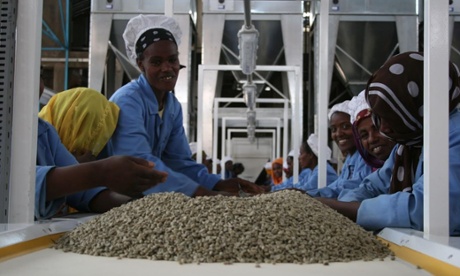
A growing number of brands would have you believe that Fairtrade is the polar opposite to “direct trade”, the practice of buying directly from specific farmers as part of a sustainable, mutually beneficial partnership. This myth is particularly prevalent within the coffee sector, where independent, artisanal cafés and roasters, keen to find their USP in a crowded marketplace, sometimes claim that the direct links with the farmers who grow their coffee beans would not be possible under the Fairtrade banner.
Try telling that to independent coffee roaster, Matthew Algie, which sources more than 90% of its coffee from Fairtrade certified co-operatives and the rest from private farms.
Alongside its steadfast commitment to certification - several of its coffees are triple-certified as Fairtrade, Rainforest Alliance and Organic, the company says 100% of its coffee is traceable back to a specific co-operative, small groups of farmers or, in the case of its micro-lot coffees, to individual farmers. “With the right approach we don’t see certification and quality as mutually exclusive at all: it’s all about the effort famers are willing to put in and the relationship we have as buyers, just like in any value chain,” says Ewan Reid, Matthew Algie’s technical director. “We work with producers to help them achieve certification, not just for the sake of being signed, sealed and certified but because certification enables producers to operate more sustainably whilst improving the quality of their beans.”
Matthew Algie’s in-house team of coffee buyers build strong relationships with their principal farmers by visiting them on a regular basis, which enables them to identify any direct support that the farmers need.
In the first few months of this year, Reid visited coffee farms in Ethiopia, Honduras and Uganda. “Our travels follow the coffee harvests and will take us to remote parts of Peru this summer before heading to Sumatra in Indonesia later in the year,” he explains. “The travel is a privilege, but also brings the real opportunity to build direct relationships with our farmers to better enable us to understand the real impact of how we buy and source delicious, sustainable coffee.”
Hazel Culley, sustainability manager for food at Marks & Spencer, accompanied Reid on his recent visit to the coffee communities of Killenso Mokonisa and Killenso Rasa. They make up two of the 274 co-operatives that make up the Oromia Coffee Farmers Co-operative Union in Ethiopia. Their visit marked the start of an 18-month project jointly funded by Matthew Algie, Marks & Spencer and the Fairtrade Foundation.
The project aims to develop the co-operatives’ natural processing capabilities and improve the quality of their coffee. This will increase the amount of export quality coffee that these farmers can produce without increasing their water footprint, helping them to adapt to the challenges of climate change.
In addition to being more sustainable, dry processed beans have a different taste profile, so the farmers should be able to diversify their income and attract a higher price for their beans because of their superior quality. They will be used by M&S in the triple-certified, espresso house blend that it serves in its cafés, as well as in blends produced for other brands. “This project should have impact on many levels,” says Marks & Spencer’s Culley. “It will help to mitigate some of the impacts of climate change, deliver a better economic return for the farmers and supply us with a premium coffee that will delight our customers.”
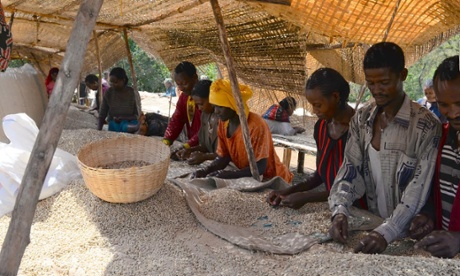
According to Amy Boardman, sustainability project officer at Matthew Algie, involvement in this project has potential benefits for all parties. “Success will mean we have access to a more dependable supply of high quality Ethiopian coffees produced in an environmentally sustainable way. For the farmers, it will mean more secure livelihoods now and into the future. For our customers at Marks & Spencer, it will help to meet their sustainability targets by ensuring that there is good water stewardship in their supply chains. For the Fairtrade Foundation, it is an opportunity to collaborate with others to enable their producer partners in the developing world to have a brighter future.”
Waitrose is currently working with the Fairtrade Foundation on a similar project, as part of a broader sustainability partnership that involves the two organisations sharing best practice, experiences and a joint ambition to build sustainable supply chains.
The retailer is offering direct support to APPCER, a Fairtrade certified association of small coffee producers from the Cerrado region of Brazil, which lacks the resources it needs to invest in infrastructure improvements and training for its farmers in good agricultural practices.
Climate change is also presenting a challenge for this co-operative. Increased rainfall during the harvest season is making the quality of the coffee inconsistent, because not all of the farmers have access to drying patios and this affects the taste profile of their beans.
Support from Waitrose and Fairtrade will enable the co-operative to address these issues and improve the quality of its coffee, enabling it to increase market opportunities and reduce export losses. The project will also build APPCER’s project management capabilities. “We understand the significant value of investing in our supply chain” says Amali Bunter, responsible sourcing coordinator at Waitrose. “As well as making a real and tangible difference for the farmers, their employees and the local communities, we are also investing in the sustainability of the coffee industry for future generations of producers and consumers.”
The list of businesses that go beyond “tick-box” compliance with Fairtrade Standards, to deliver a deeper impact for the farmers and workers in their supply chain, is long.
The Co-operative has given additional direct support to a wide range of farmers, from wine growers in South Africa to tea farmers in Malawi. Cafédirect, Divine and Liberation Nuts, not only source from Fairtrade certified farmers but are also part owned by them.
Others engage in preferential sourcing from disadvantaged regions or marginalised groups, such as Zaytoun, which sources olive oil from Palestine and Sainsburys, which worked with Twin, the ethical trading organisation, to bring a coffee grown by women in Rwanda to market.
Many more companies have responsible buying practices such as long-term contracts and are open and transparent about pricing. They are using their scale to influence consumers to buy sustainably.
Mechanisms such as the Fairtrade minimum price, which acts as a safety net when market prices fall and the Fairtrade premium, where producers have the choice to invest as they choose in their businesses and their communities, go a long way to ensuring that the small-scale farmers and workers in developing countries who grow our everyday foods such as tea, coffee and bananas, get a fair deal and can build a more sustainable future. But not every good practice can be codified into standards, which, after all, set a minimum benchmark, and not a maximum. That leaves plenty of scope for sustainably-minded businesses to source on Fairtrade terms and establish their own USP.
Content on this page is paid for and provided by Fairtrade Foundation