Failed asylum seekers wait in rural Danish departure center
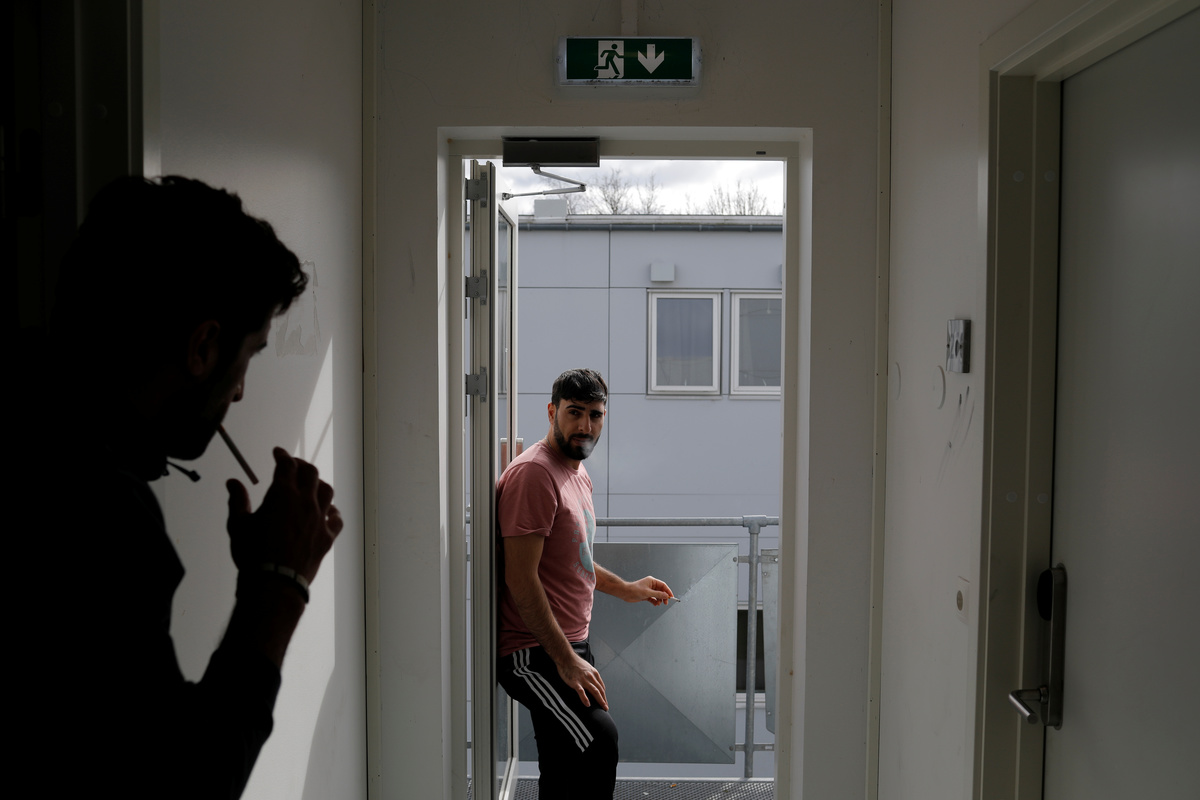
Hoshang Rostami (L), 24 and Jamshid Rostami, 26, (no relation) stand in a hall of a male residence block at Kaershovedgaard, a former prison and now a departure centre for rejected asylum seekers, in Jutland, Denmark, March 26, 2019. REUTERS/Andrew Kelly
COPENHAGEN (Reuters) - When Ali Adnan, 27, fled his home in the Iraqi capital of Baghdad in 2015 and arrived in Denmark, a local Danish family took him in and helped him gain his footing in a country he knew very little about.
Now, stuck behind iron gates in one of two departure centers for rejected asylum seekers in Denmark, he feels the reality of political changes sweeping through the Nordic country, and feels his chances of a successful appeal are slim.
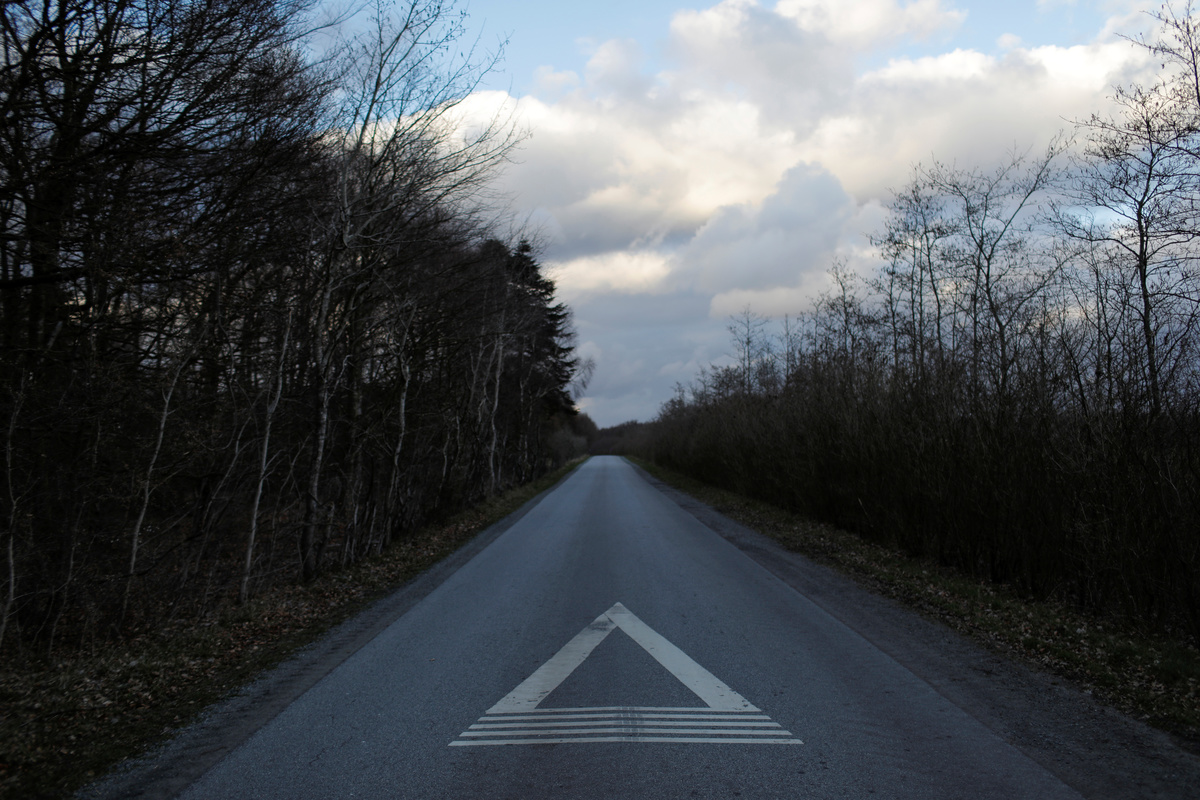
A marker on the road points toward Kaershovedgaard, a former prison and now a departure centre for rejected asylum seekers, which is located over 5 kilometres from the nearest town, in Jutland, Denmark, March 24, 2019. REUTERS/Andrew Kelly
Ahead of a general election on June 5, both major parties - the left wing Social Democrats and the center-right Liberal Party, currently in coalition with the Conservatives and the Liberal Alliance, have pledged to continue Denmark's tough stance on immigration.
"I didn't know how tough it would be to get asylum in Denmark. But when you're fleeing, you do not think about that, you just want to go to a safe country," says Adnan, who prefers to be called Daniel Christensen since converting to Christianity. He said he chose to come to Denmark as his brother lives in the country.
His asylum case was rejected due to a lack of proof of his being in danger in his native country.
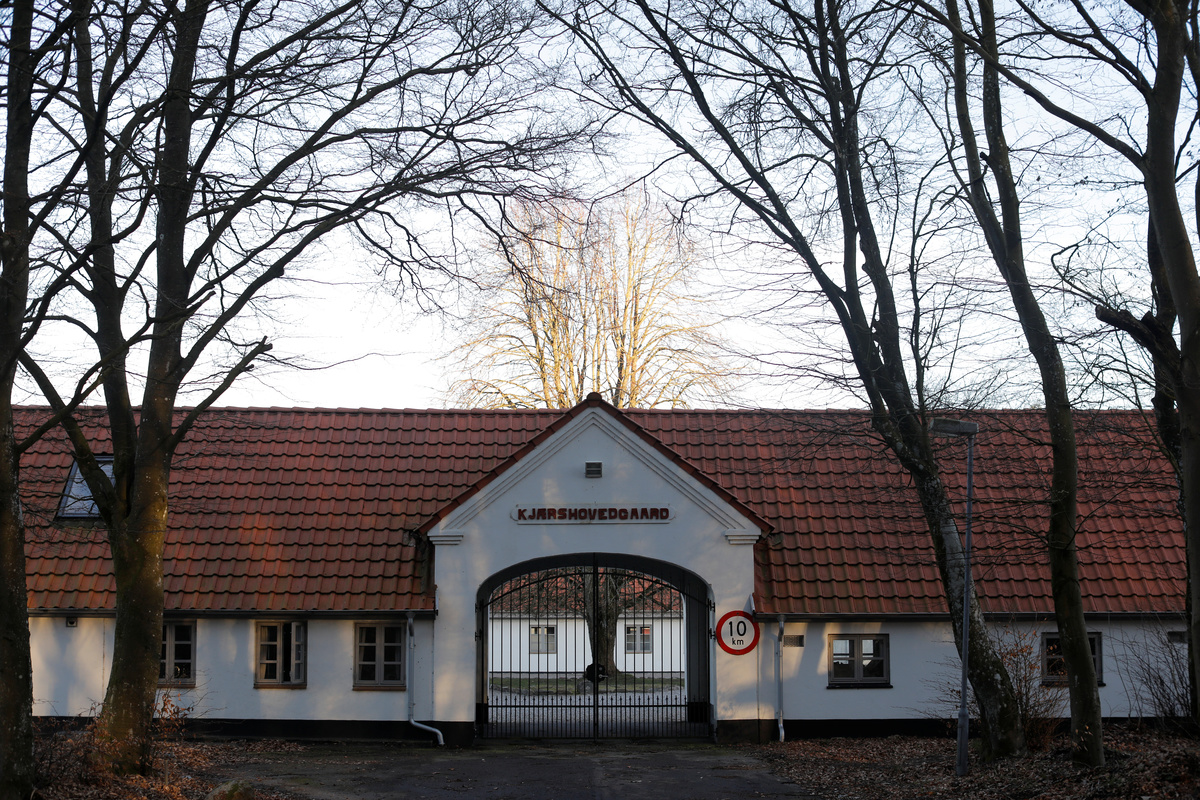
The front entrance is seen at Kaershovedgaard, a former prison and now a departure centre for rejected asylum seekers, in Jutland, Denmark, March 25, 2019. REUTERS/Andrew Kelly
The latest available data from the Danish Ministry of Immigration showed that in 2017 35% of asylum seekers were granted asylum, down from 72% and 85% in 2016 and 2015, respectively.
The number of asylum seekers peaked in 2015 at over 21,000 and dropped to 3,500 in 2017, as a result of Denmark's tougher laws.
Danes, famed for their 'hygge' - a word roughly meaning "cosiness" - and for being among the happiest people in the world, according to multiple surveys, were long known for their progressive laws.
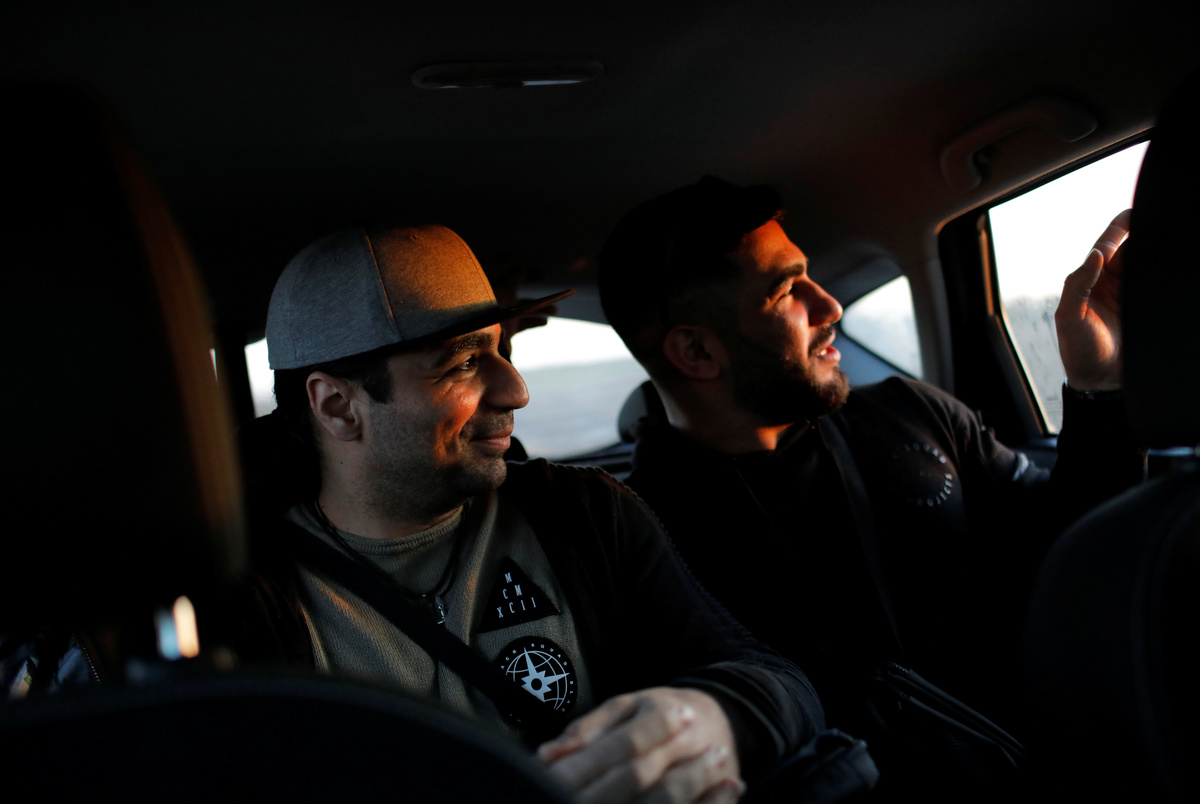
Daniel Christensen, 27, from Iraq and Fariborz Rostami, 23, from Iran look out the window as they are driven from their residence at Kaershovedgaard, a former prison and now a departure centre for rejected asylum seekers, to a weekly bible cafe organised by local parishioners and volunteers in the town of Bording in Jutland, Denmark, March 28, 2019. Christensen used to be called Ali Adnan but prefers to be called Daniel Christensen since converting to Christianity. REUTERS/Andrew Kelly
But now they are seen as taking the harshest line on immigration within the historically tolerant Nordic region. The views of the public and the state hardened from 2015 with the arrival of large groups of refugees from conflicts in the Middle East.
Similar changes in public attitude have led to tougher laws across the European Union, and moves to drastically reduce the number of refugees reaching the bloc in the first place.
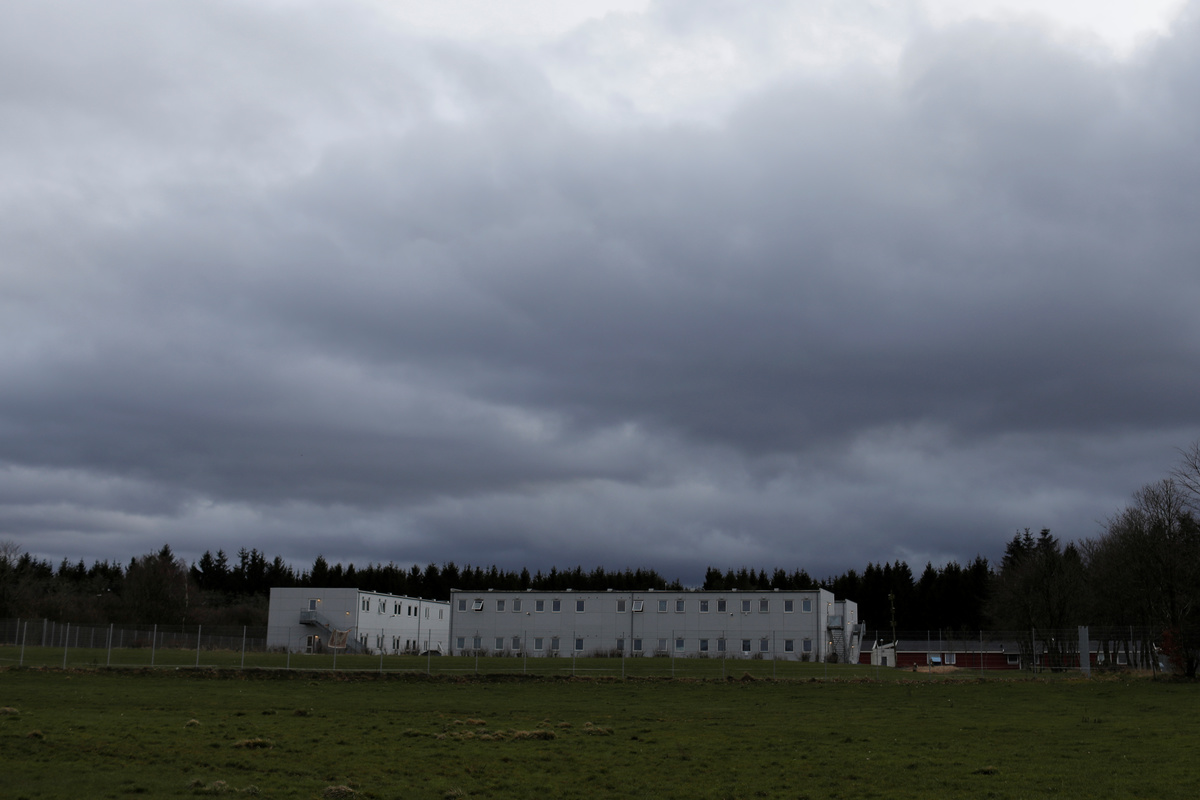
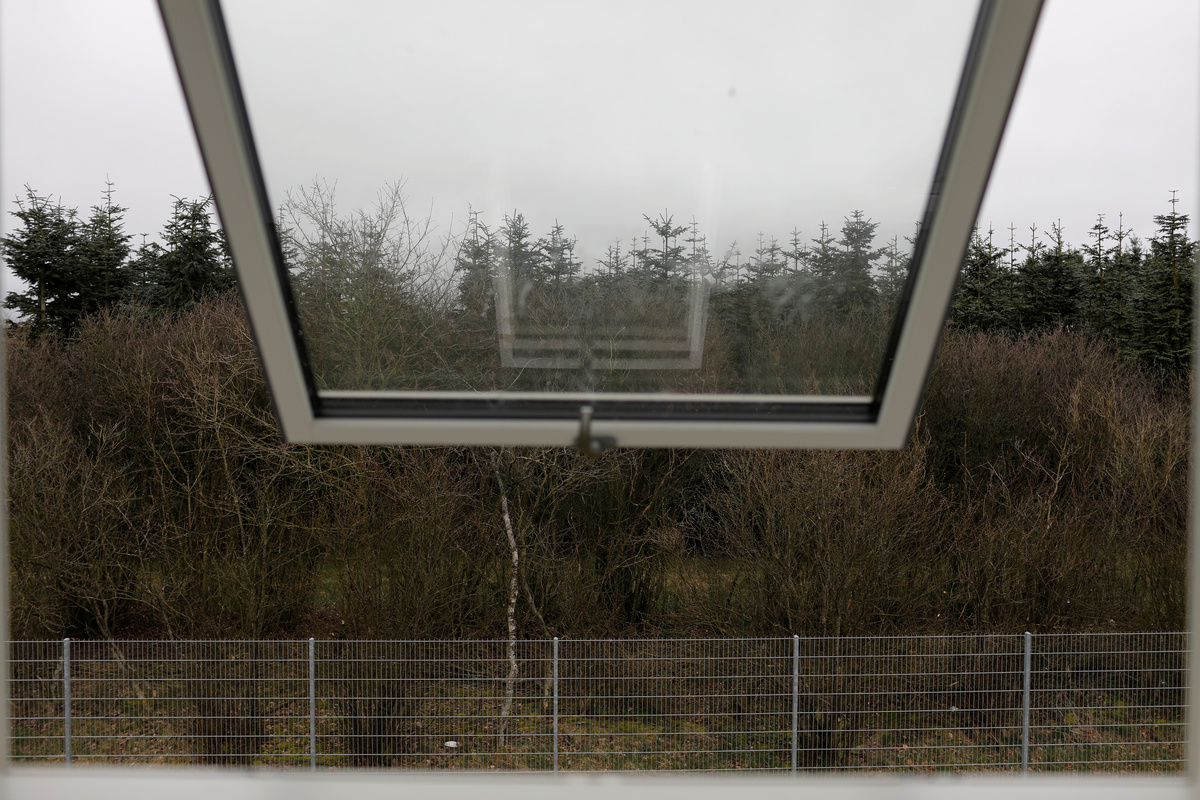
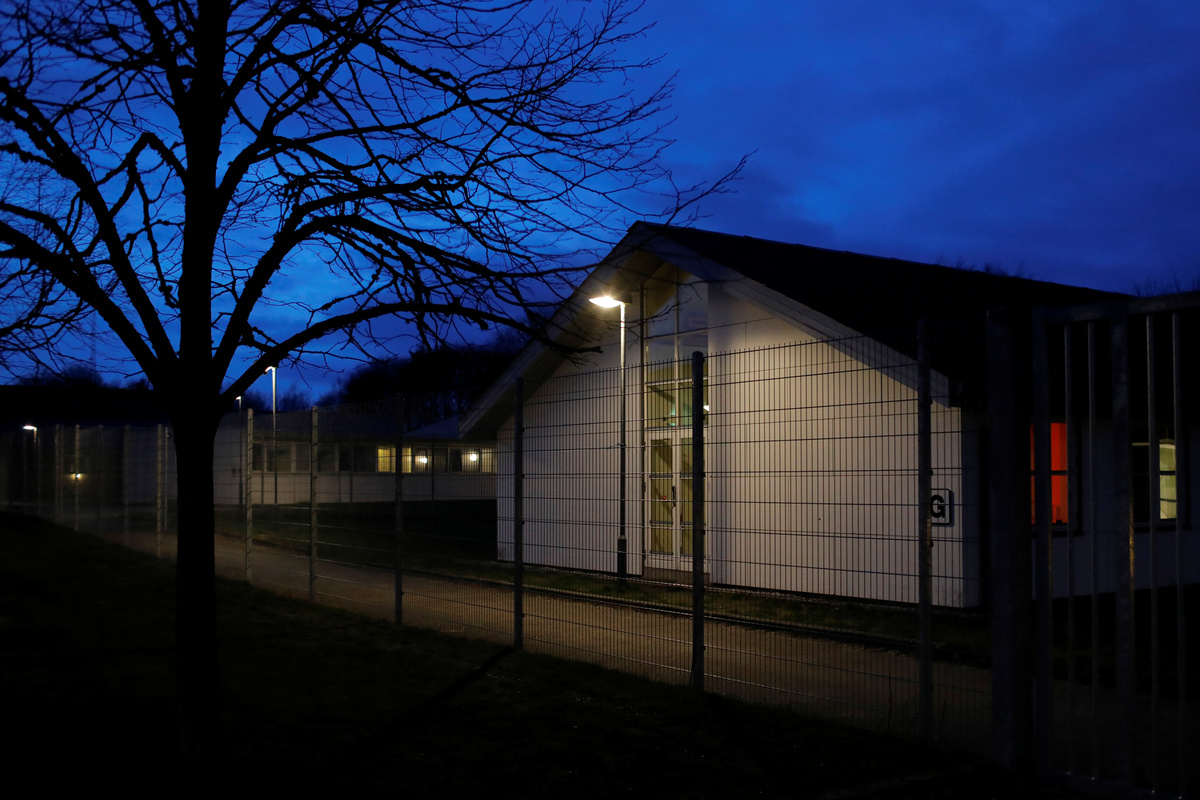
Kaershovedgaard, as the departure center is called, is nestled in fields, by a small river. It has iron gates and a high steel fence, and houses around 250 residents. The nearest town is more than five kilometers away with no public transport.
Blocks for male residents at Kaershovedgaard, a former prison and now a departure centre for rejected asylum seekers are seen from neighbouring farmland in Jutland, Denmark, March 26, 2019. REUTERS/Andrew Kelly
A few of the residents have been housed here since March 2016 when it was established. No one knows when they will leave.
Some hope for peace and political change at home, so they can pre-empt Danish authorities and return voluntarily. Others hope they can convince Denmark to reverse its decision and grant them asylum.
What makes the return process so lengthy and uncertain is that often home countries refuse to accept people back, refuse to issue them a passport or question their nationality.
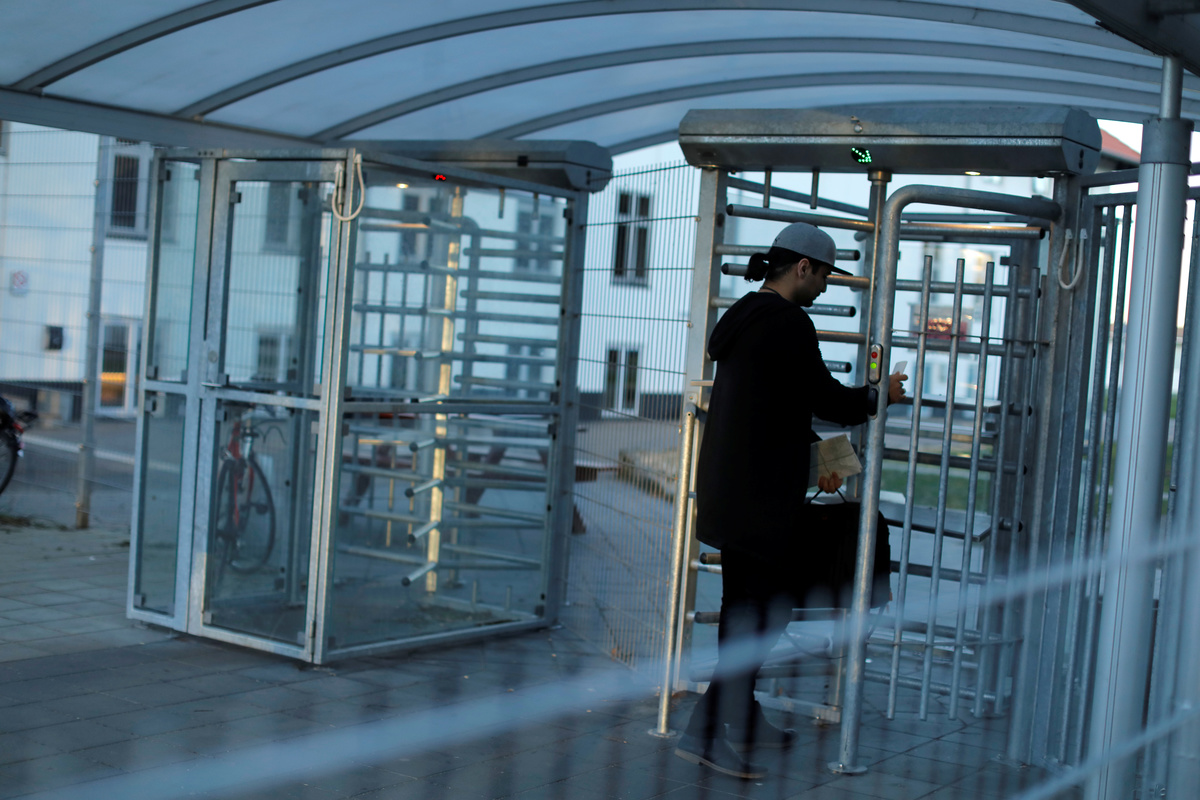
Daniel Christensen, 27, a Kurdish Iraqi, enters through the front gate at Kaershovedgaard, a former prison and now a departure centre for rejected asylum seekers in Jutland, Denmark, March 28, 2019. Christensen used to be called Ali Adnan but prefers to be called Daniel Christensen since converting to Christianity. REUTERS/Andrew Kelly
"The authorities do not believe our stories, but how should we prove them? I cannot ask those who want to kill me for a piece of paper with a confirmation," Christensen says.
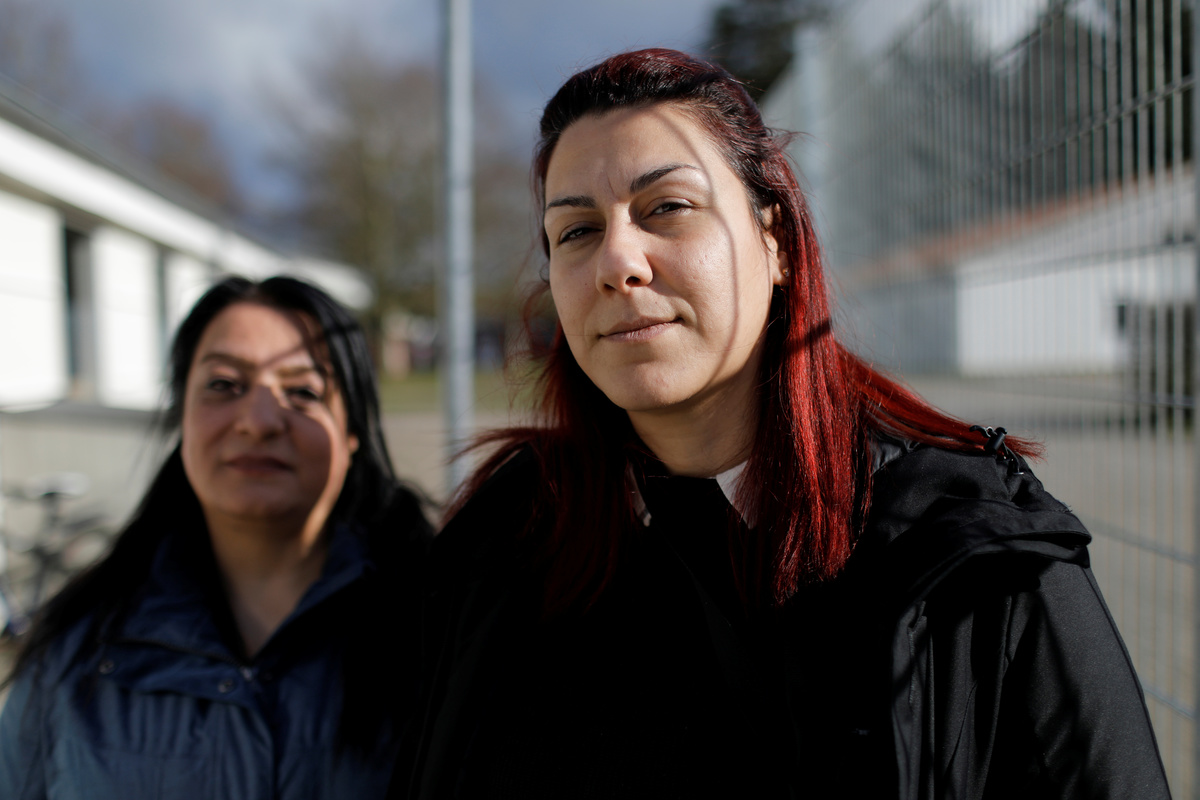
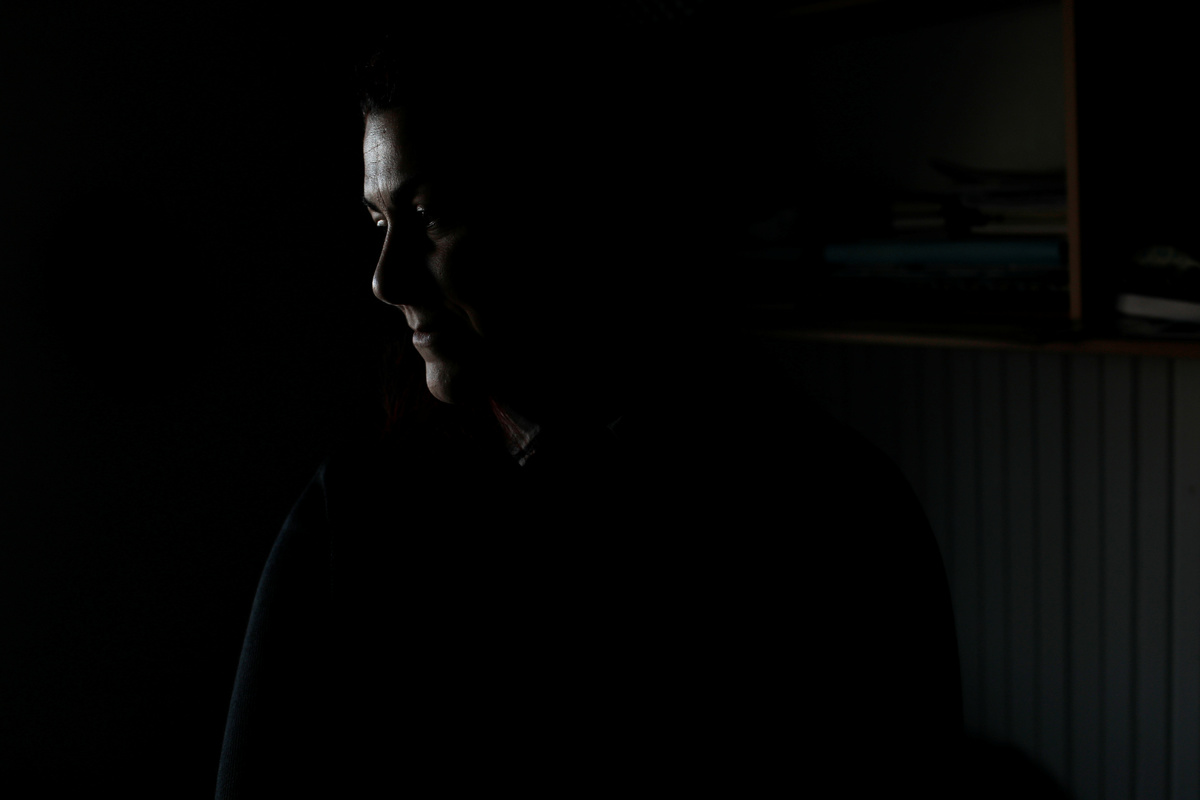
Yasaman Paknejad, 36, came to Denmark from Iran to study. She says she is a refugee based on the political situation in Iran, but her asylum case was rejected.
"I have no freedom in here, and it is breaking me down mentally. Regular prisoners know when they will be set free, so this is far worse than being in prison."
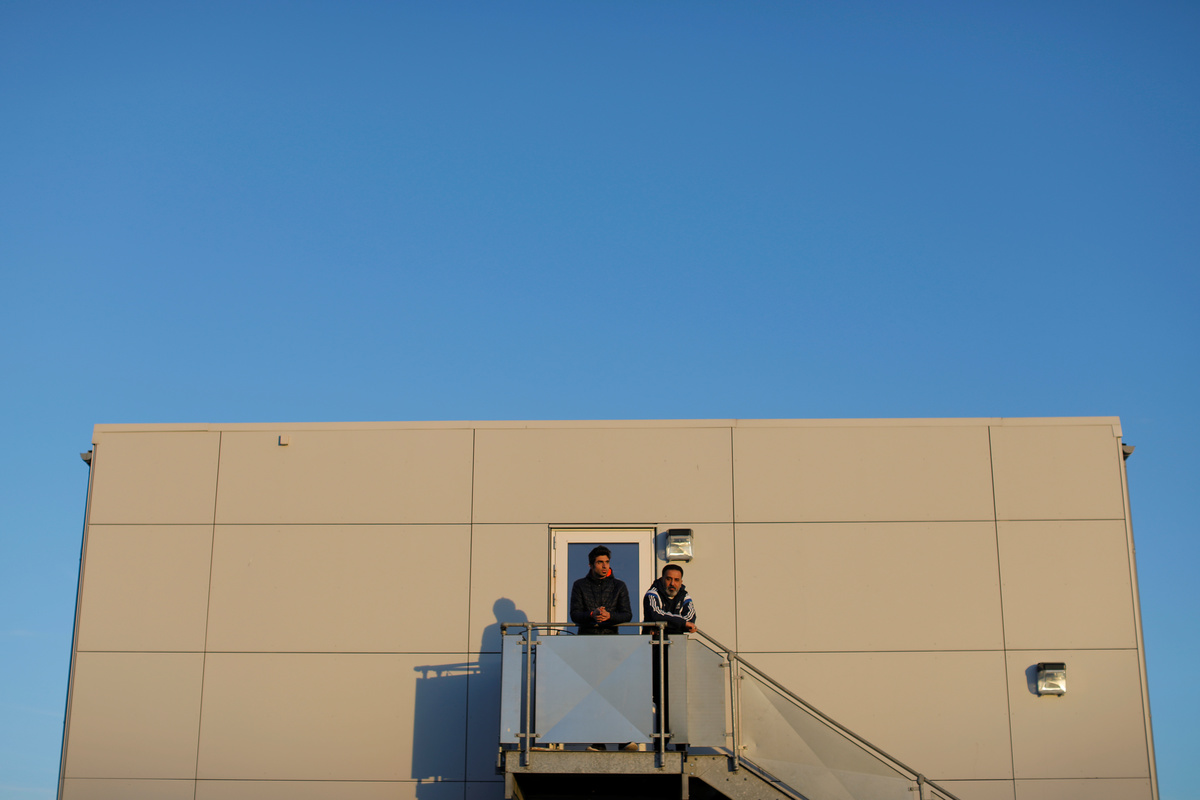
Saman Najafi, a Kurdish asylum seeker, and Ali Kadhem Al-Enzi, stateless from Kuwait, stand at the entrance to a block of residences for males at Kaershovedgaard, a former prison and now a departure centre for rejected asylum seekers in Jutland, Denmark, March 25, 2019. REUTERS/Andrew Kelly
Yasaman understands that Denmark doesn't have the capacity to grant asylum to all applicants. But the uncertainty of not knowing when she will be sent back to Iran is a torment.
"We are stuck, wasting our best years and our lives."
According to European Union rules, an asylum seeker can only have their case heard in one European country.
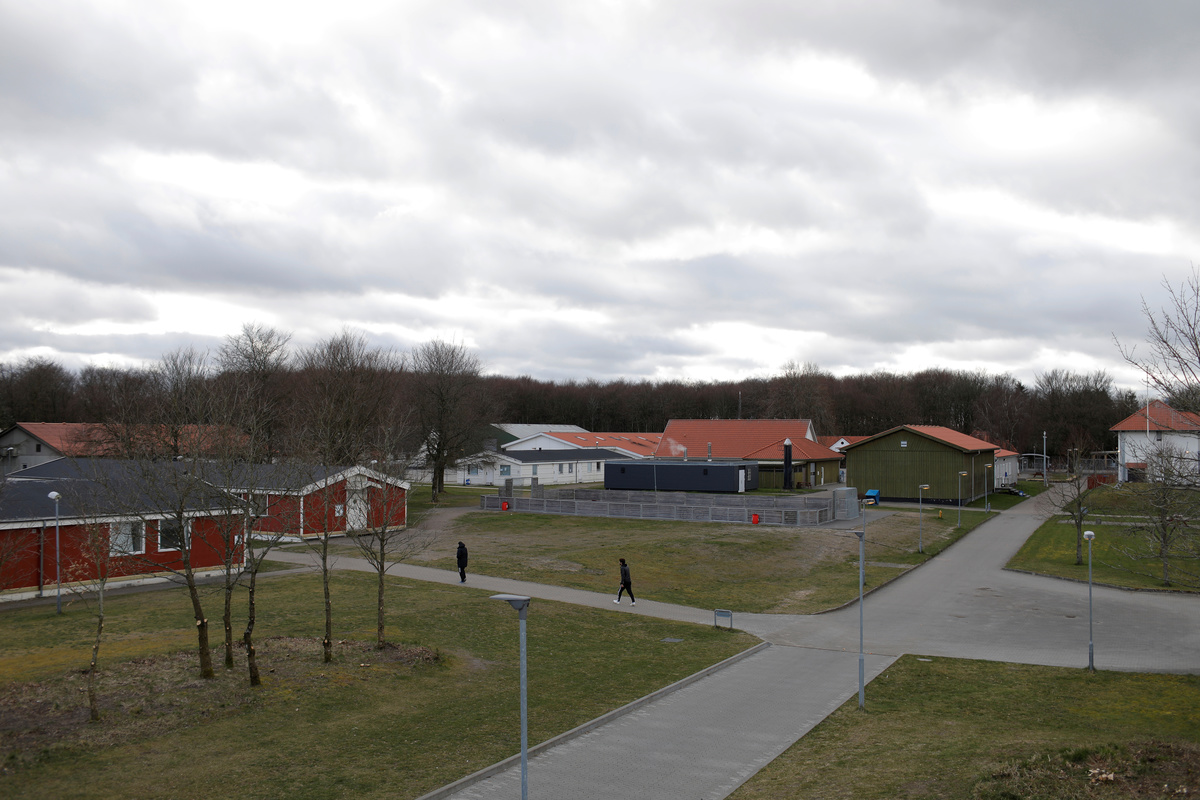
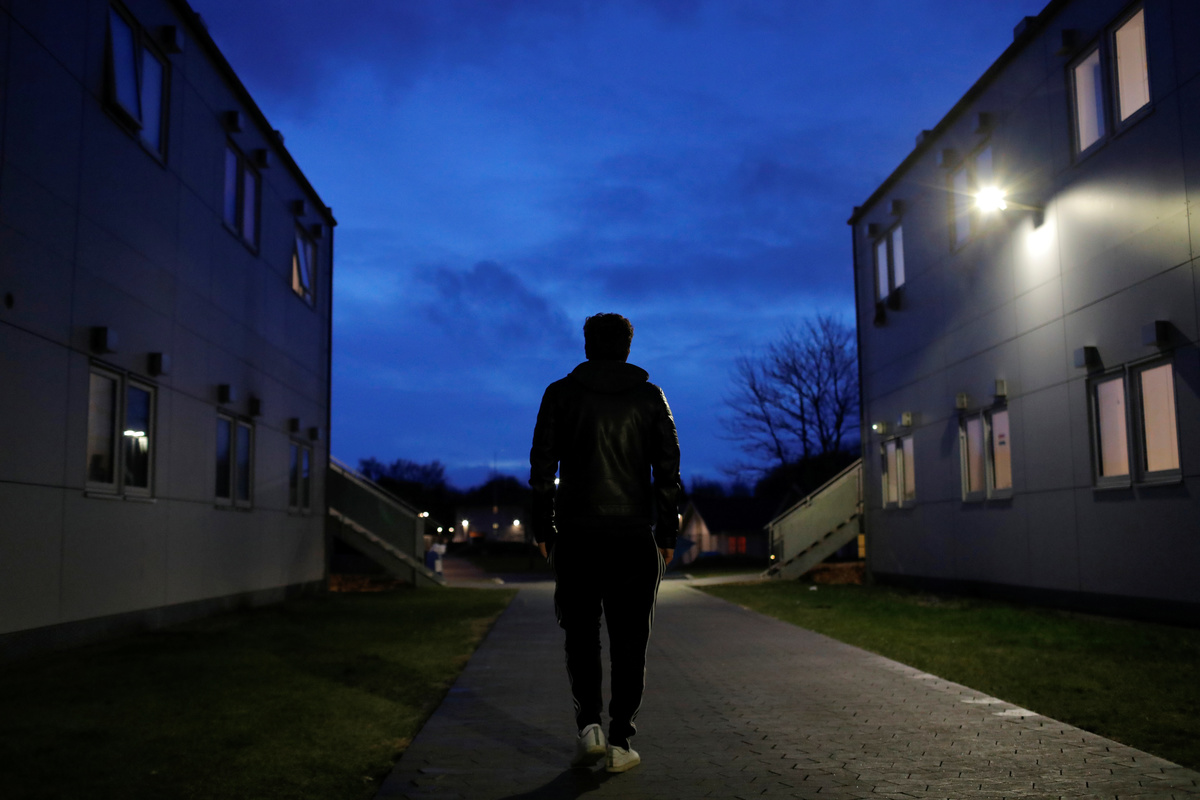
Residents walk through the common grounds area at Kaershovedgaard, a former prison and now a departure centre for rejected asylum seekers in Jutland, Denmark, March 26, 2019. REUTERS/Andrew Kelly
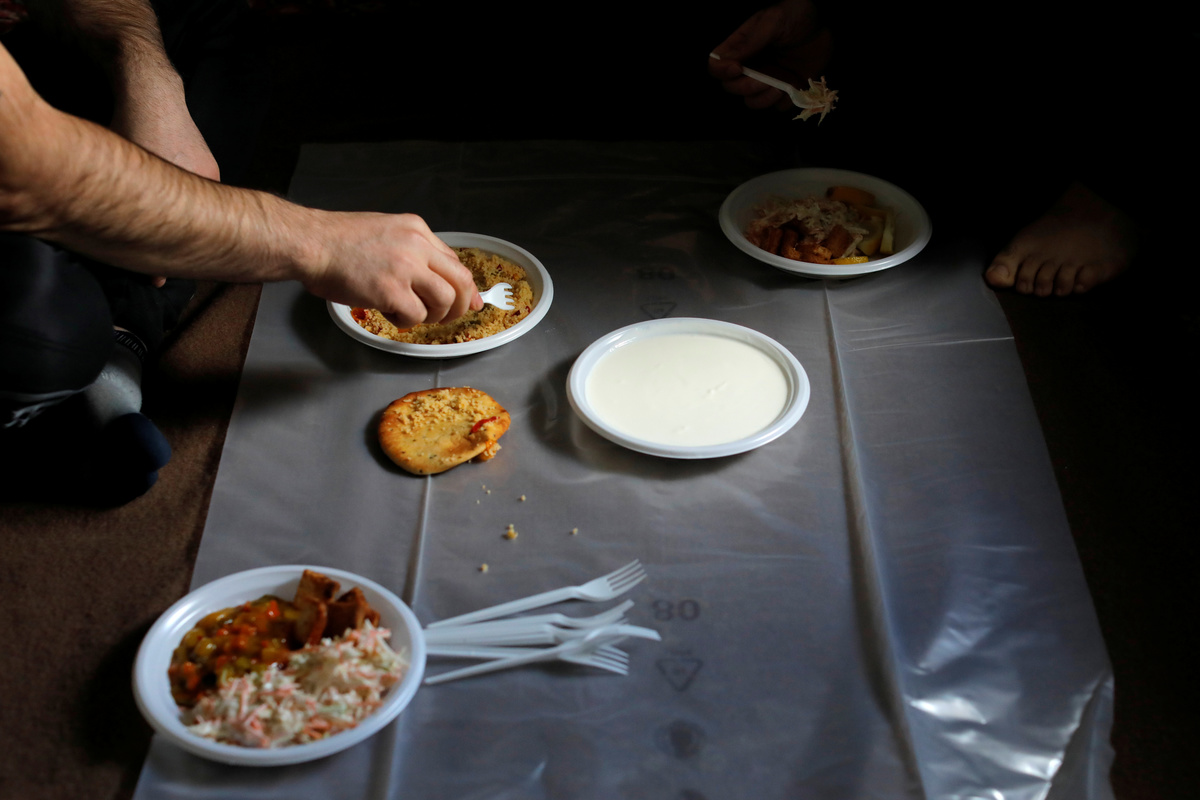
Residents are not allowed to work, receive no social benefits, share small rooms, eat at fixed times in a canteen and are not allowed to cook their own food. They may leave the center during the day but are required to spend every night there and must report by fingerprint every 72 hours.
"You can't just pick and choose in Denmark. That is why we need to put pressure on these people to take responsibility and return home. They are not entitled to be here," Danish minister of immigration and integration Inger Stojberg told Berlingske newspaper in January referring to the departure centers.
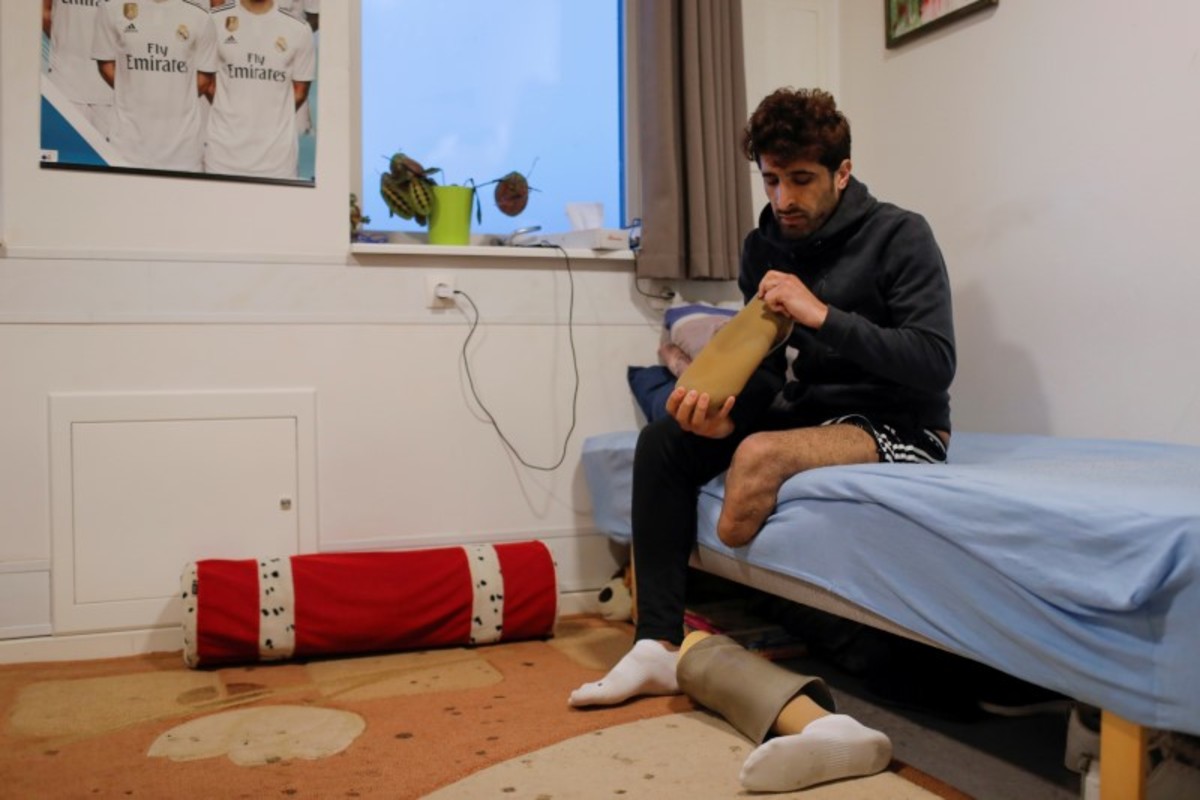
Hoshang Rostami, 25, is one of the many Iranian refugees in Kaershovedgaard. In his four years in Denmark, authorities have housed him in five different centers.
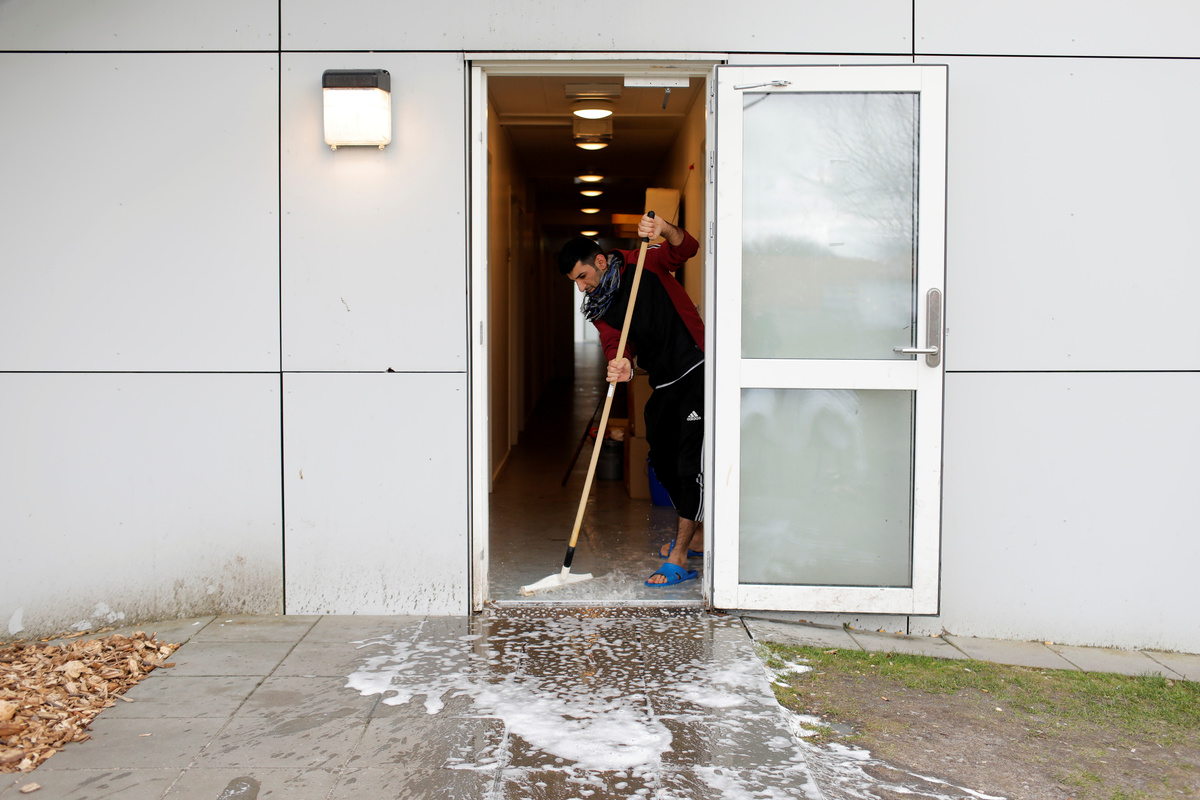
Deler Haidari, 29 from Iran, cleans the hall outside his room at Kaershovedgaard, a former prison and now a departure centre for rejected asylum seekers, in Jutland, Denmark, March 26, 2019. REUTERS/Andrew Kelly
He says he feels distrusted by Danish authorities, who have doubted he lost part of his leg due to a landmine accident.
"They told me my papers of imprisonment and political activities in Iran were fake."
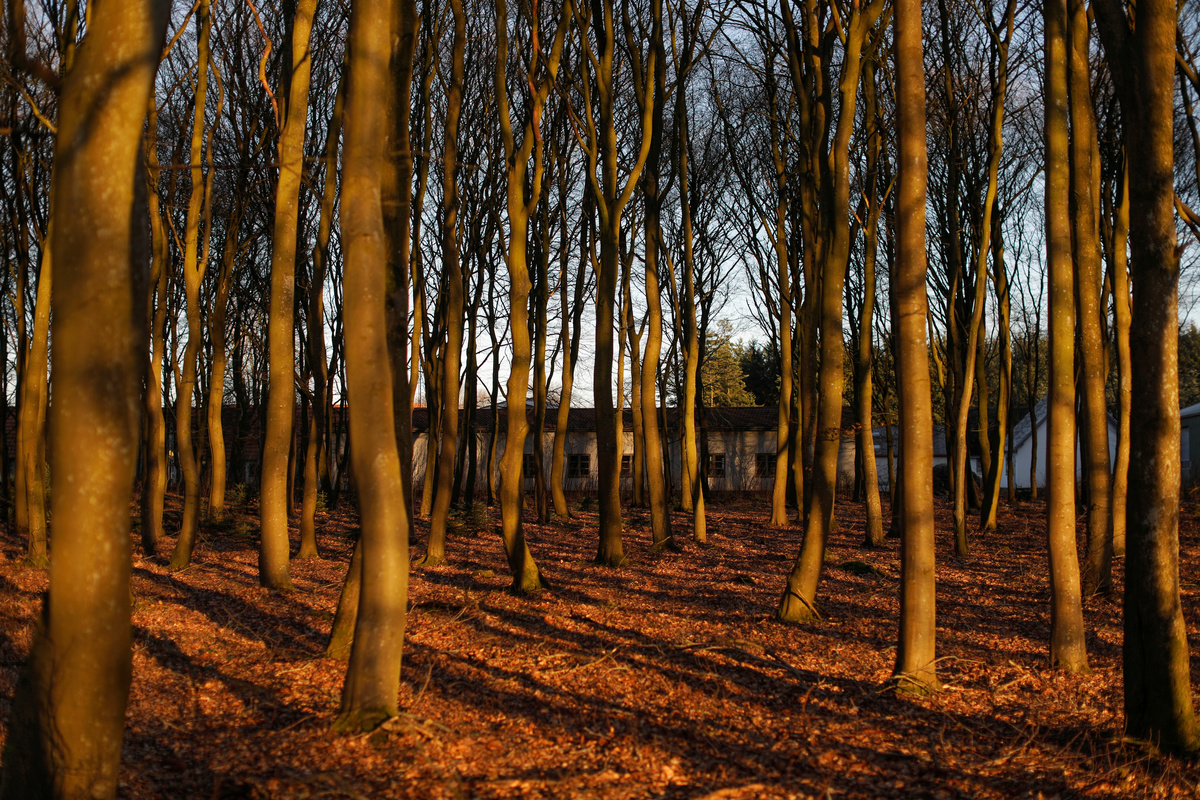
Kaershovedgaard, a former prison and now a departure centre for rejected asylum seekers is seen through woodland in Jutland, Denmark, March 28, 2019. REUTERS/Andrew Kelly
(Editing by Alexandra Hudson and Jacob Gronholt-Pedersen)
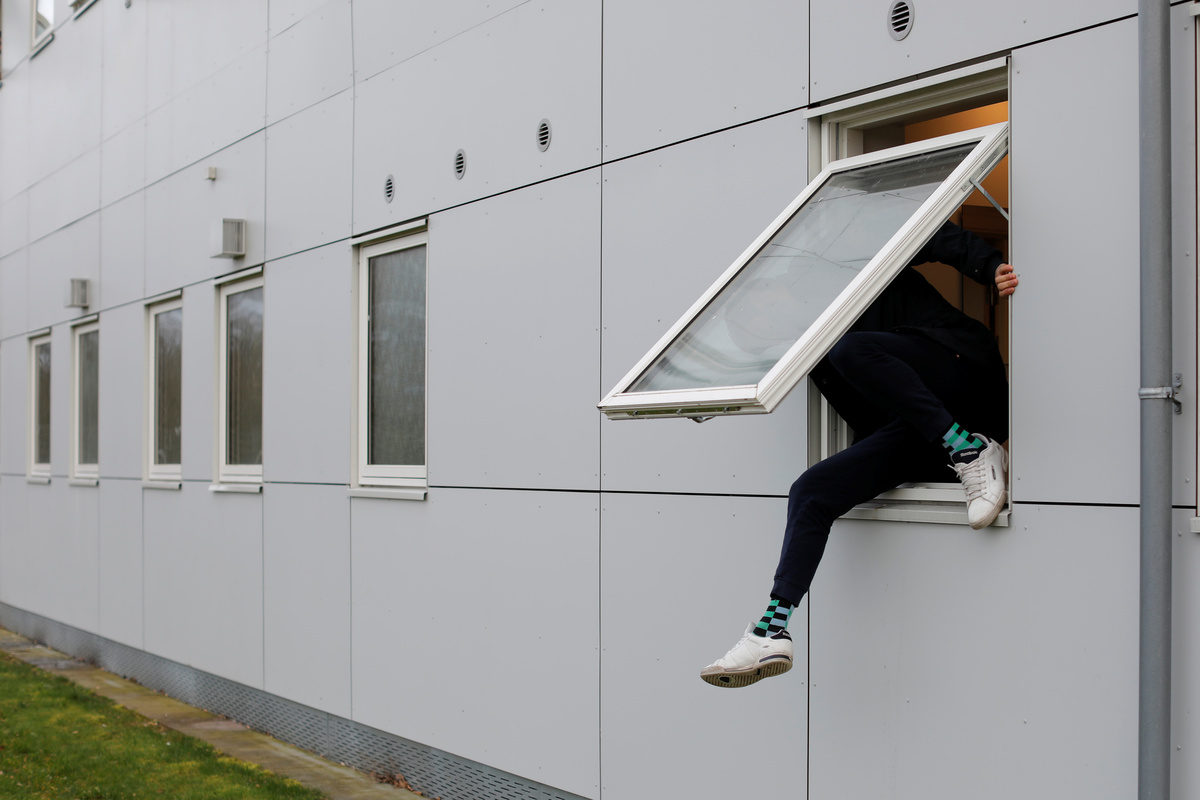
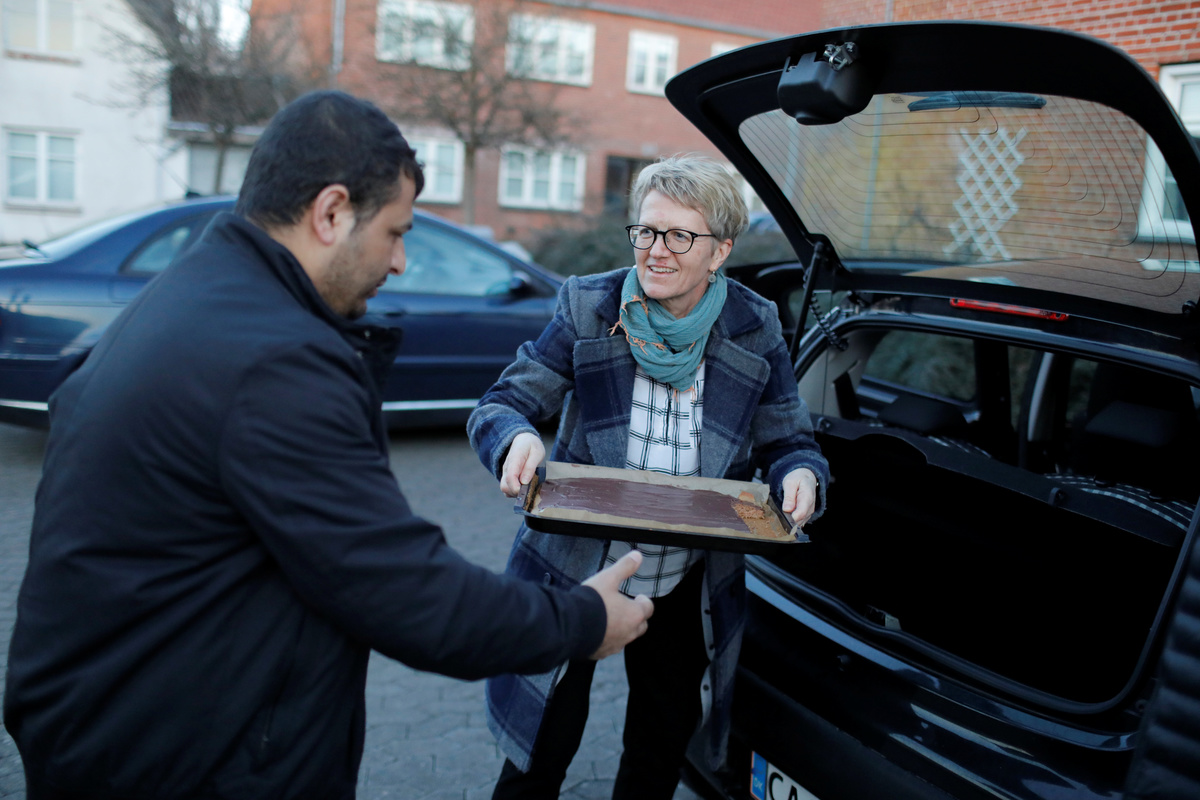
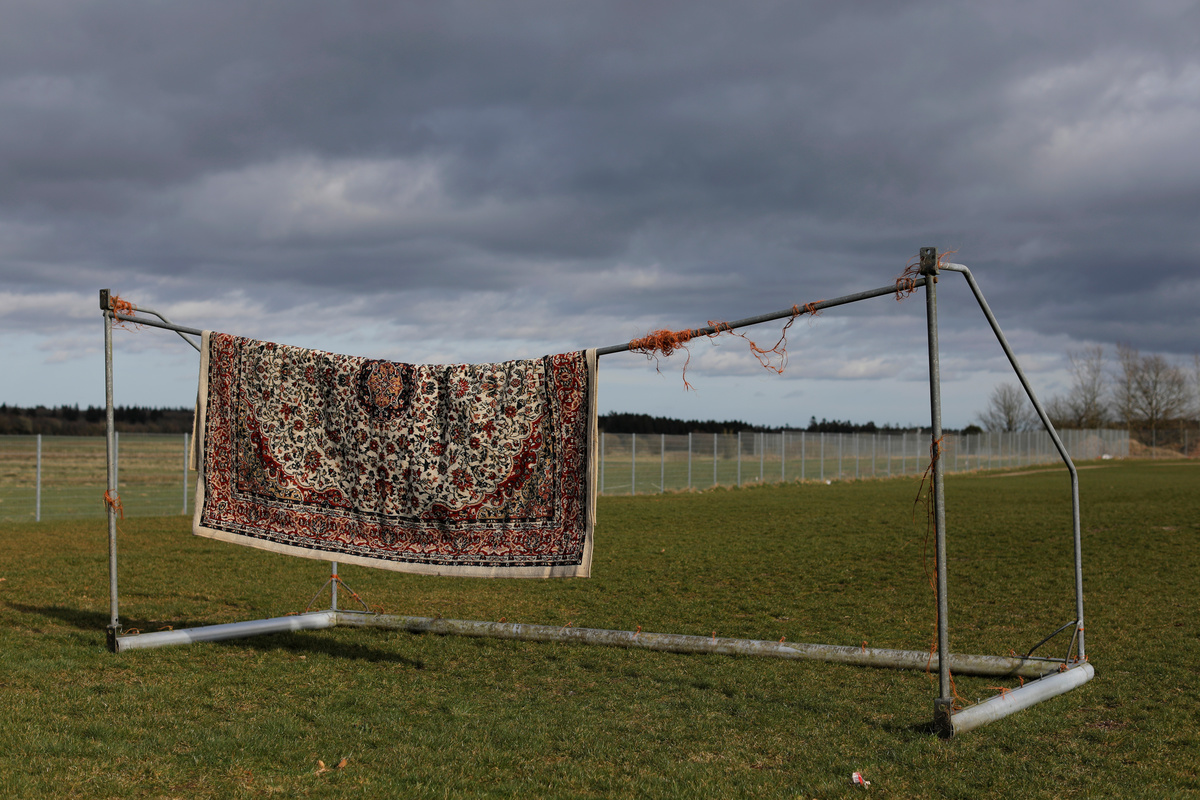
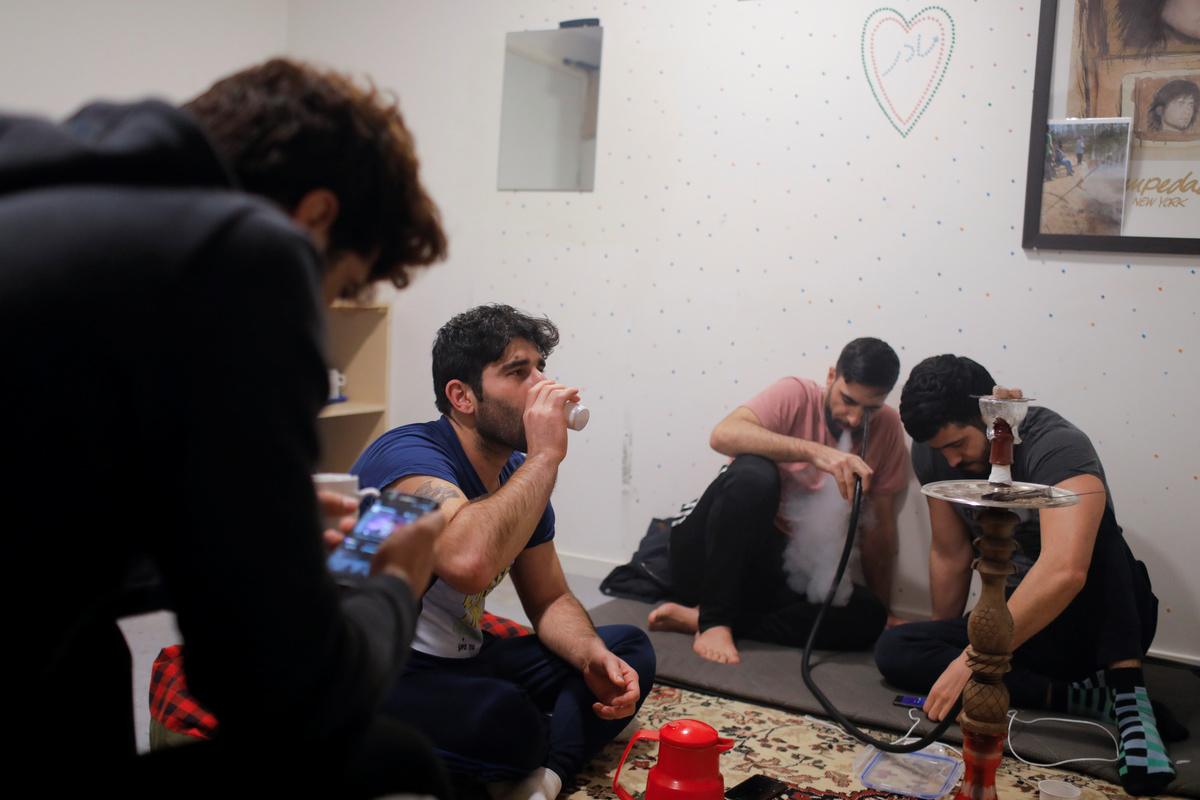
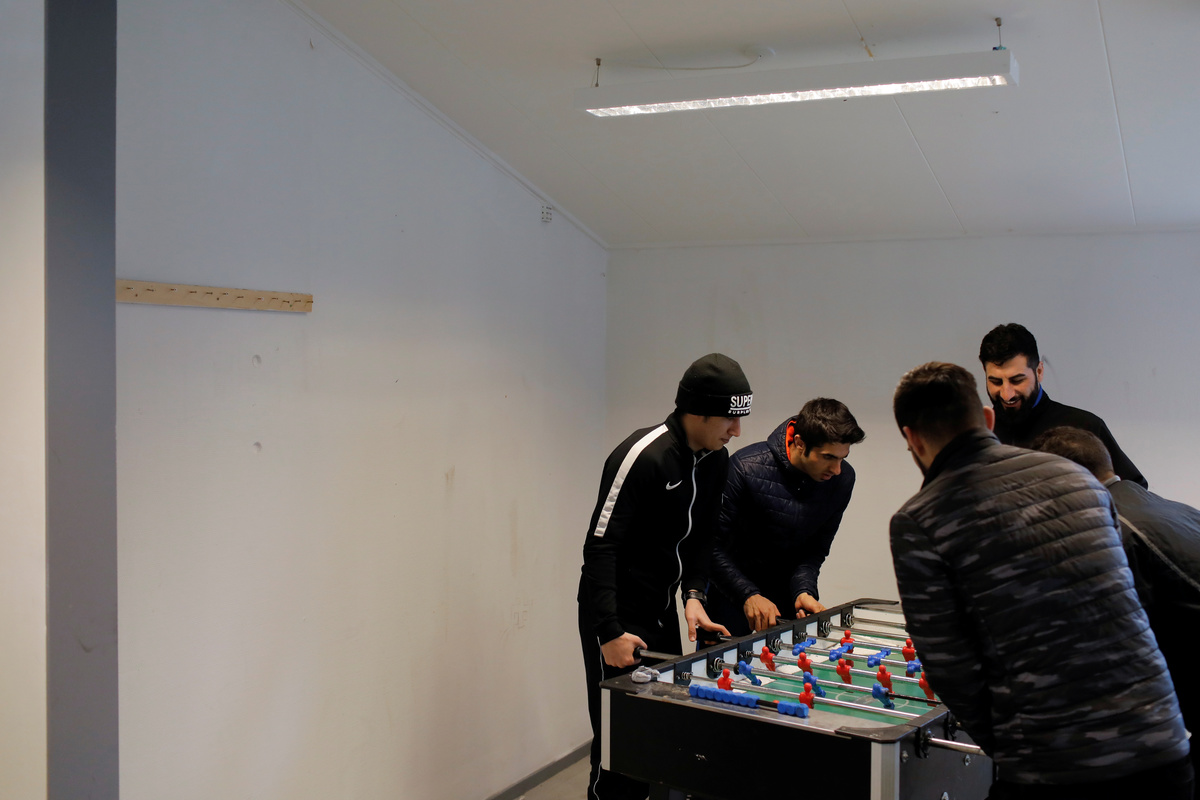
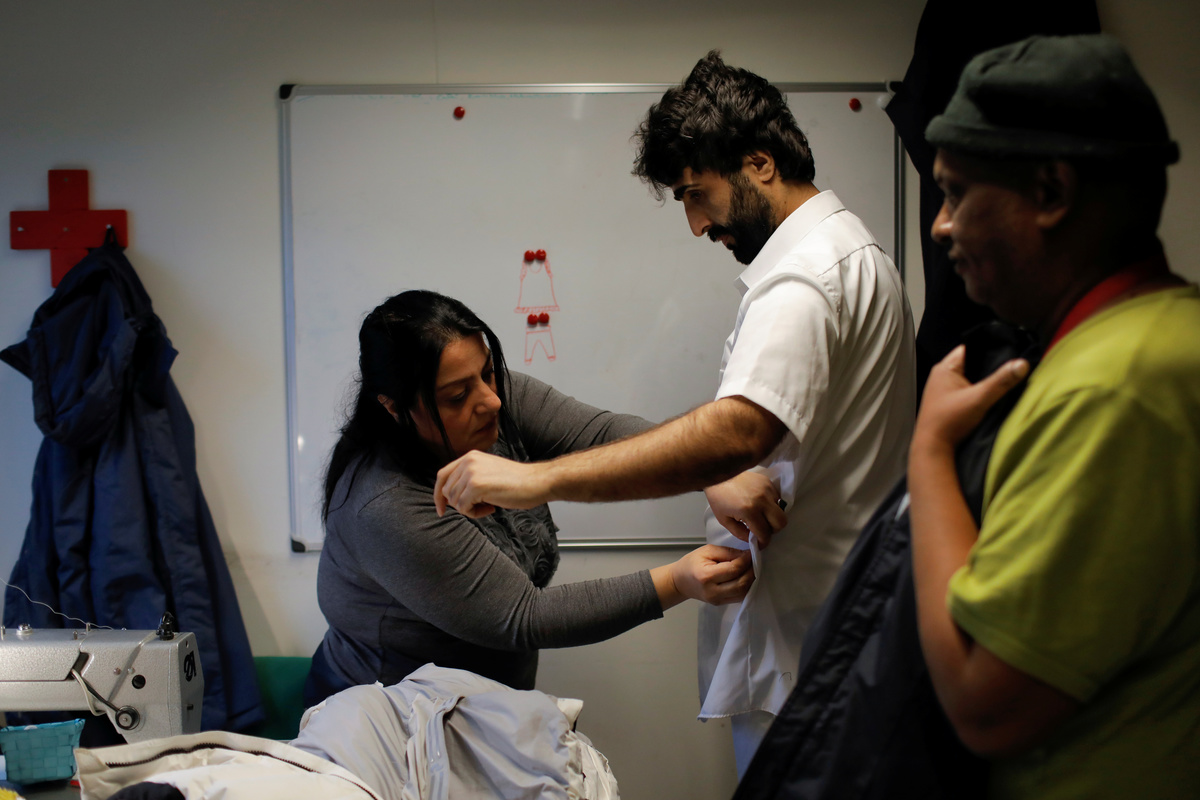
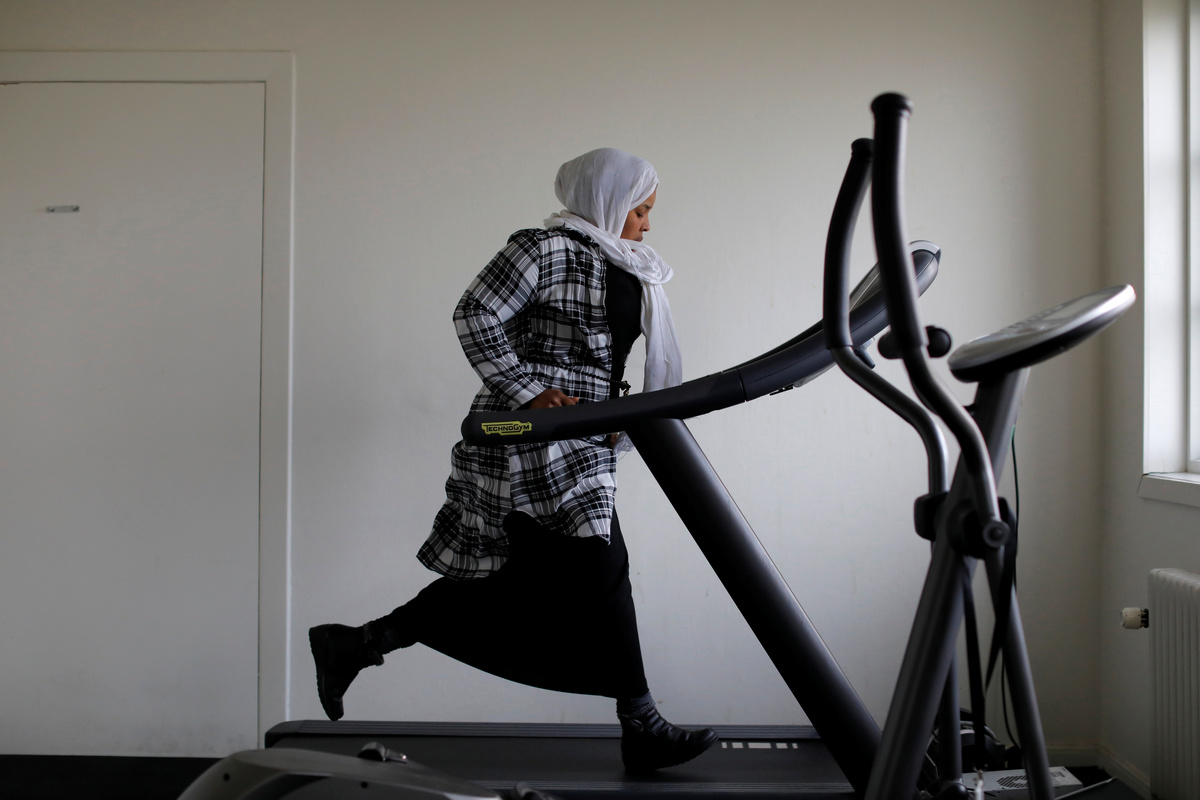
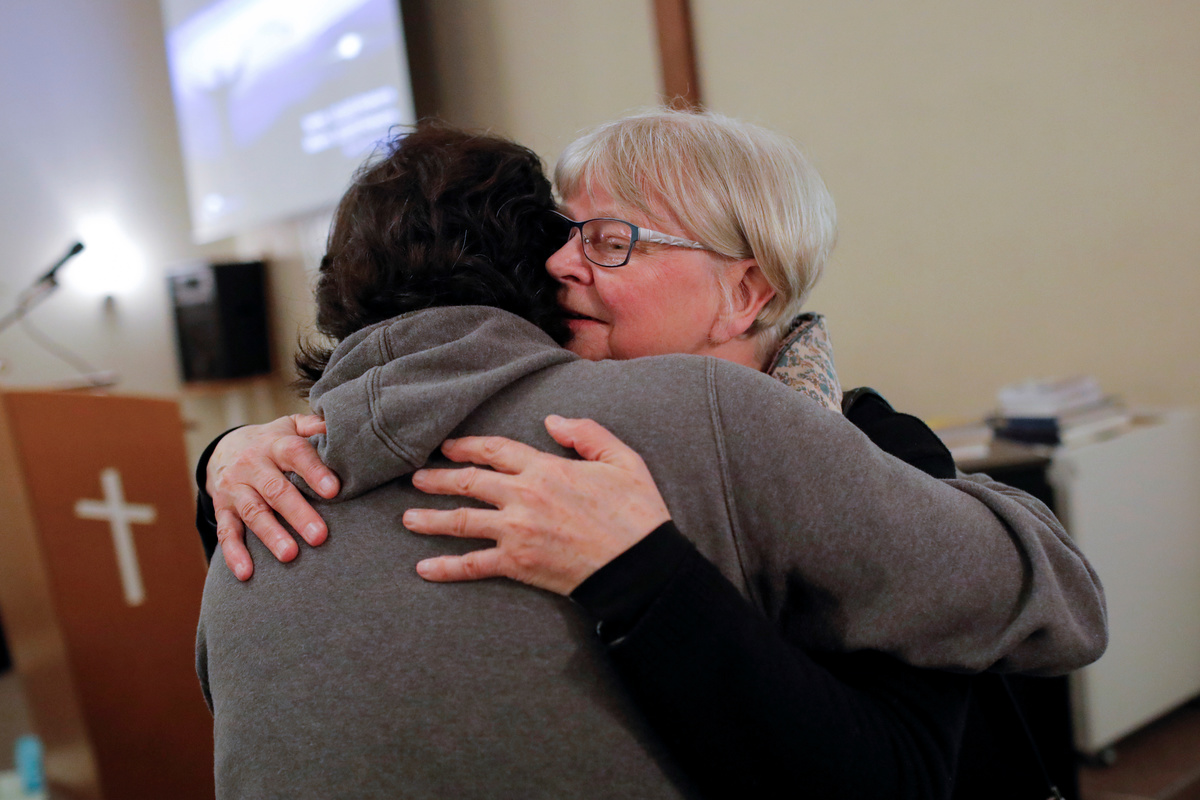
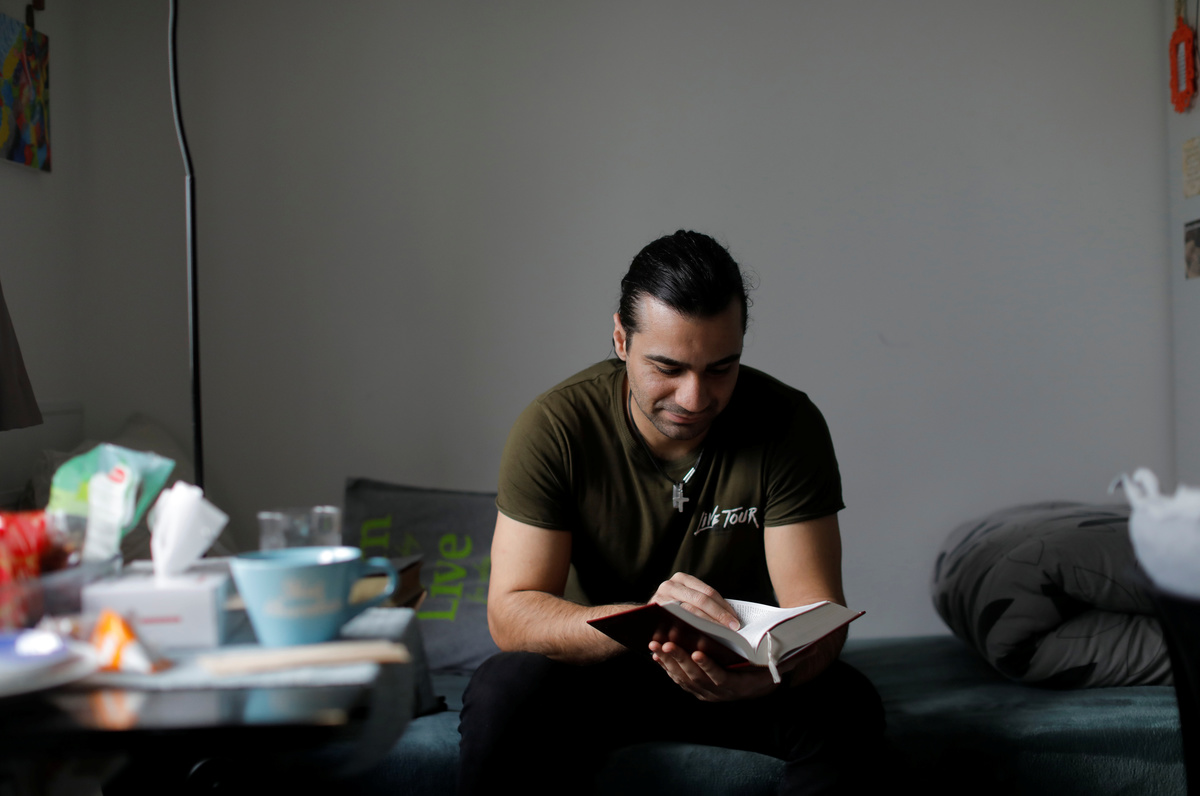
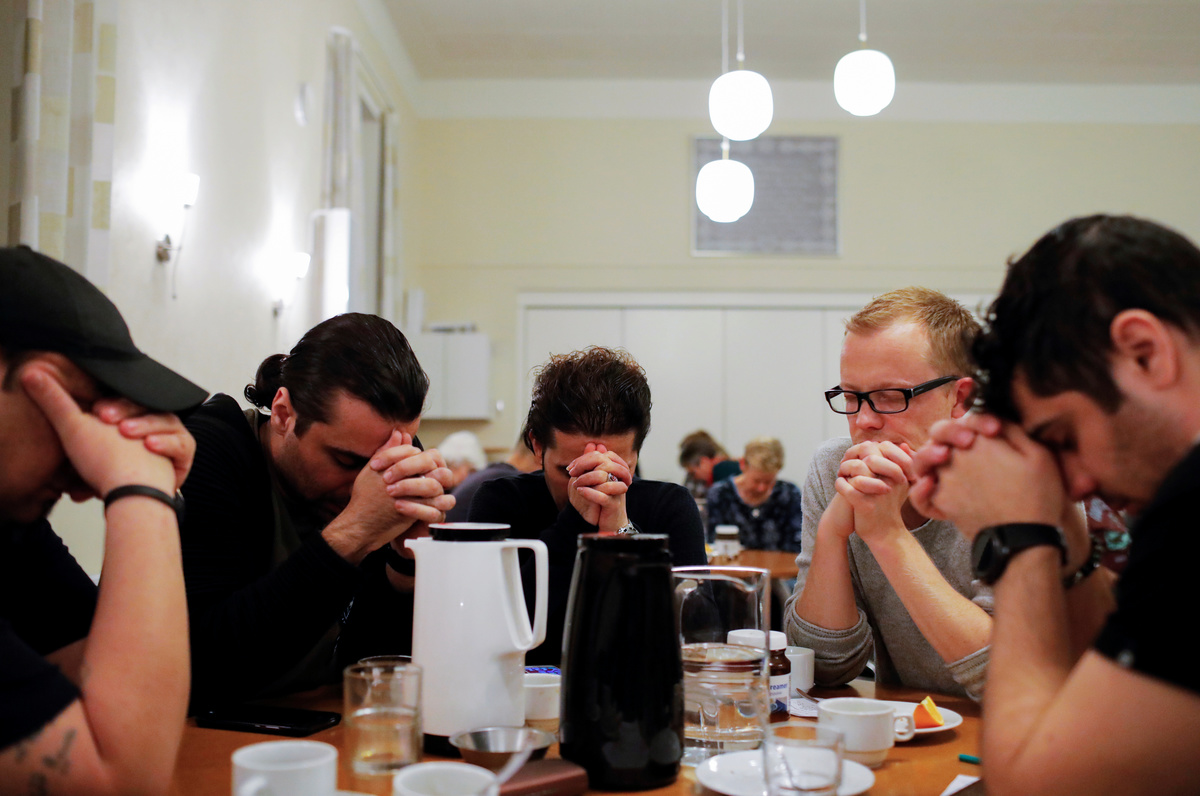
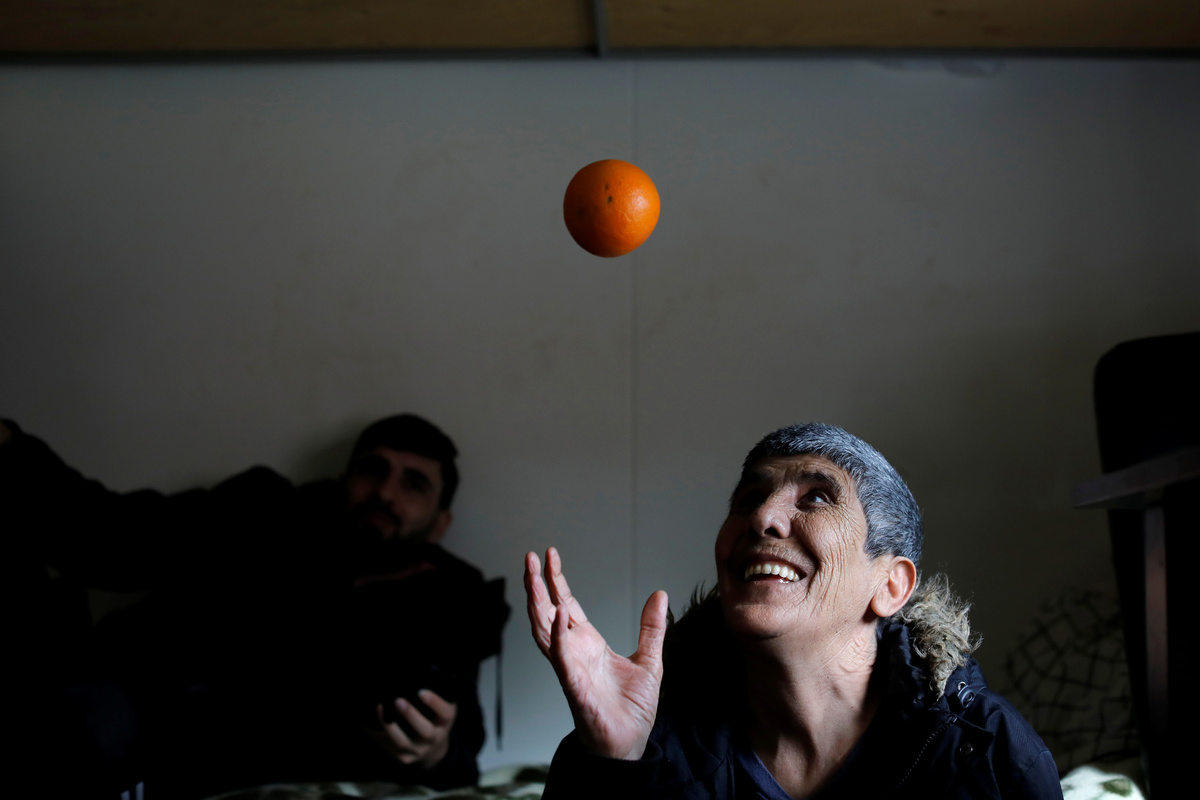
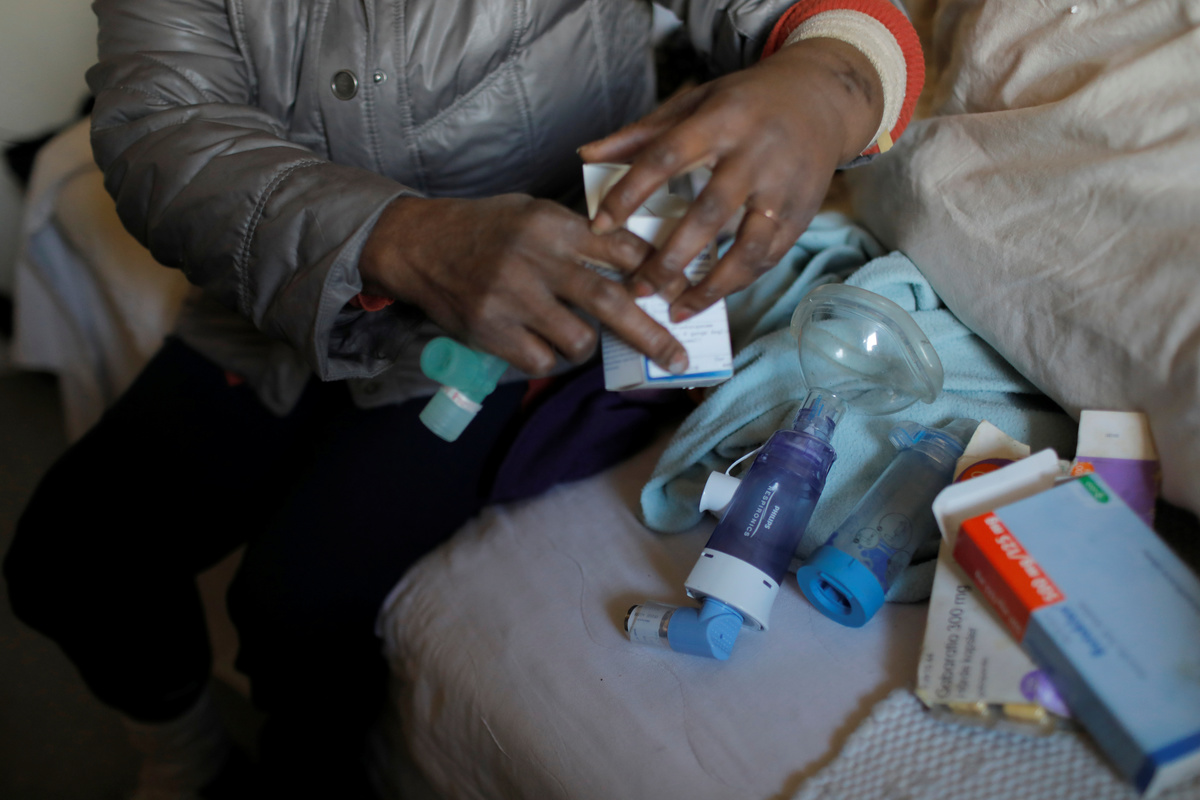
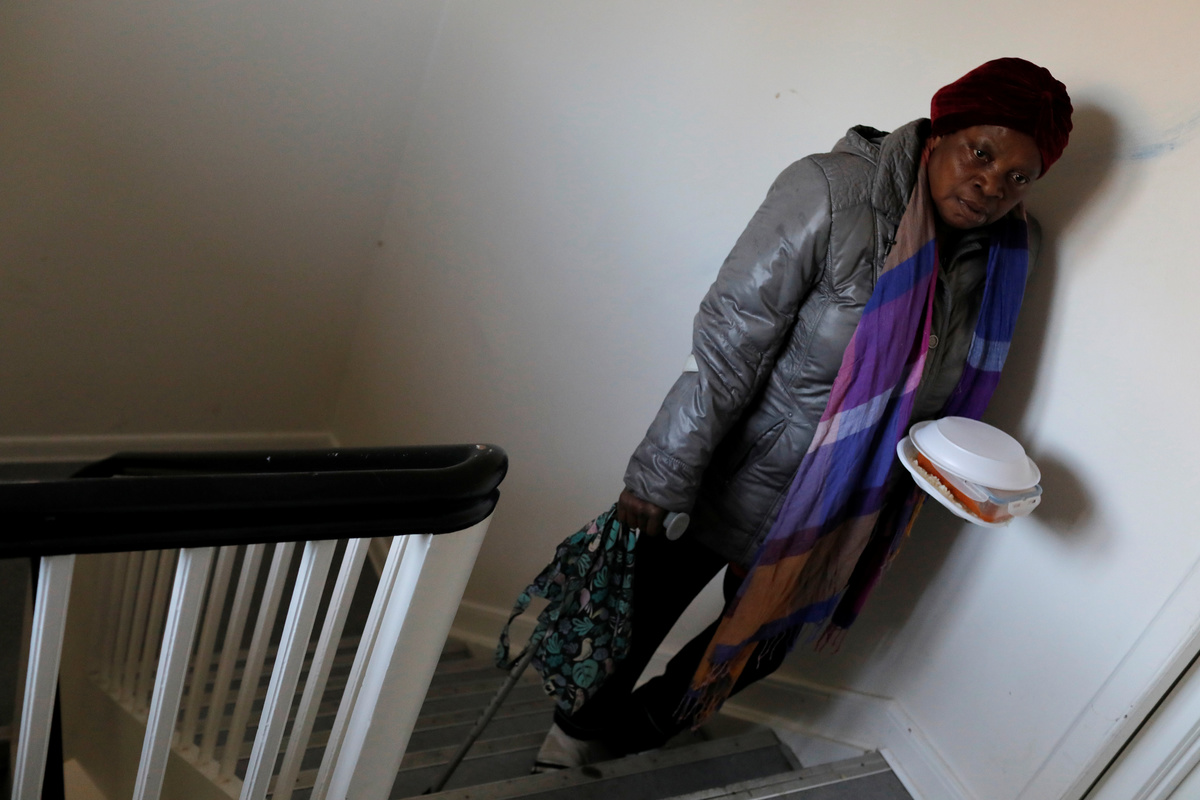
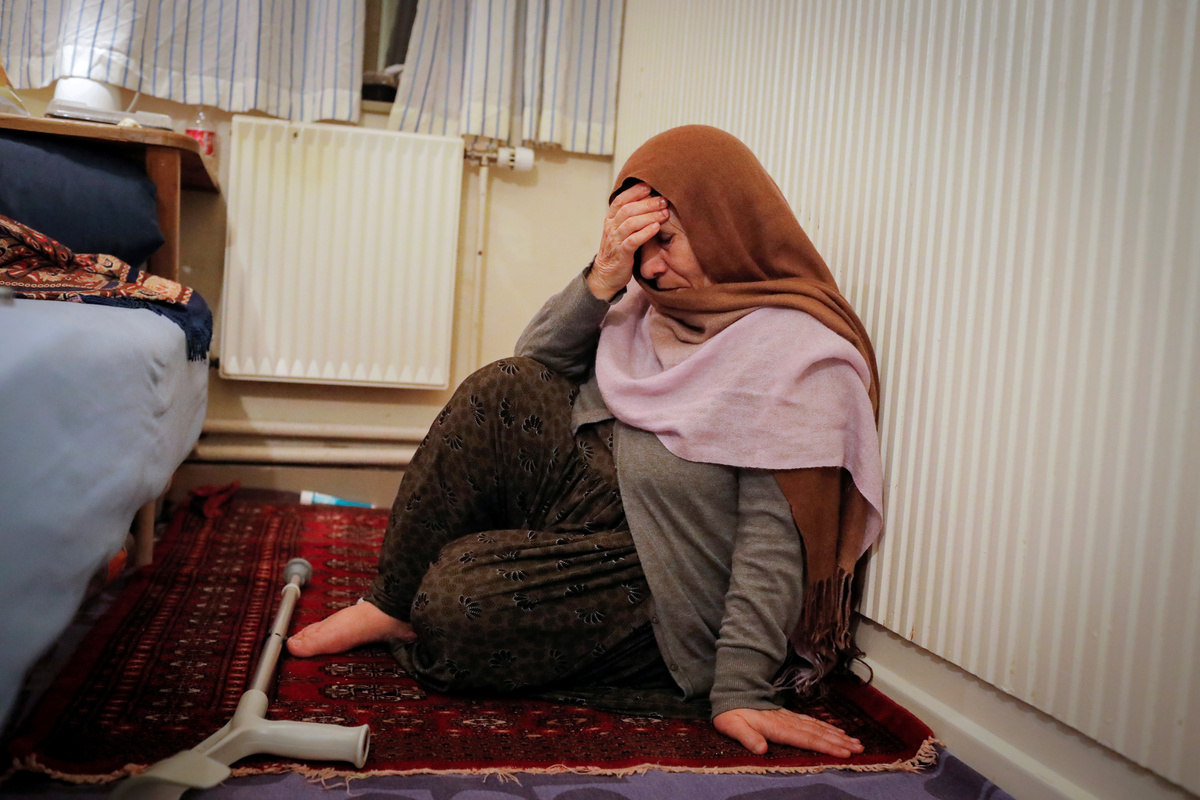
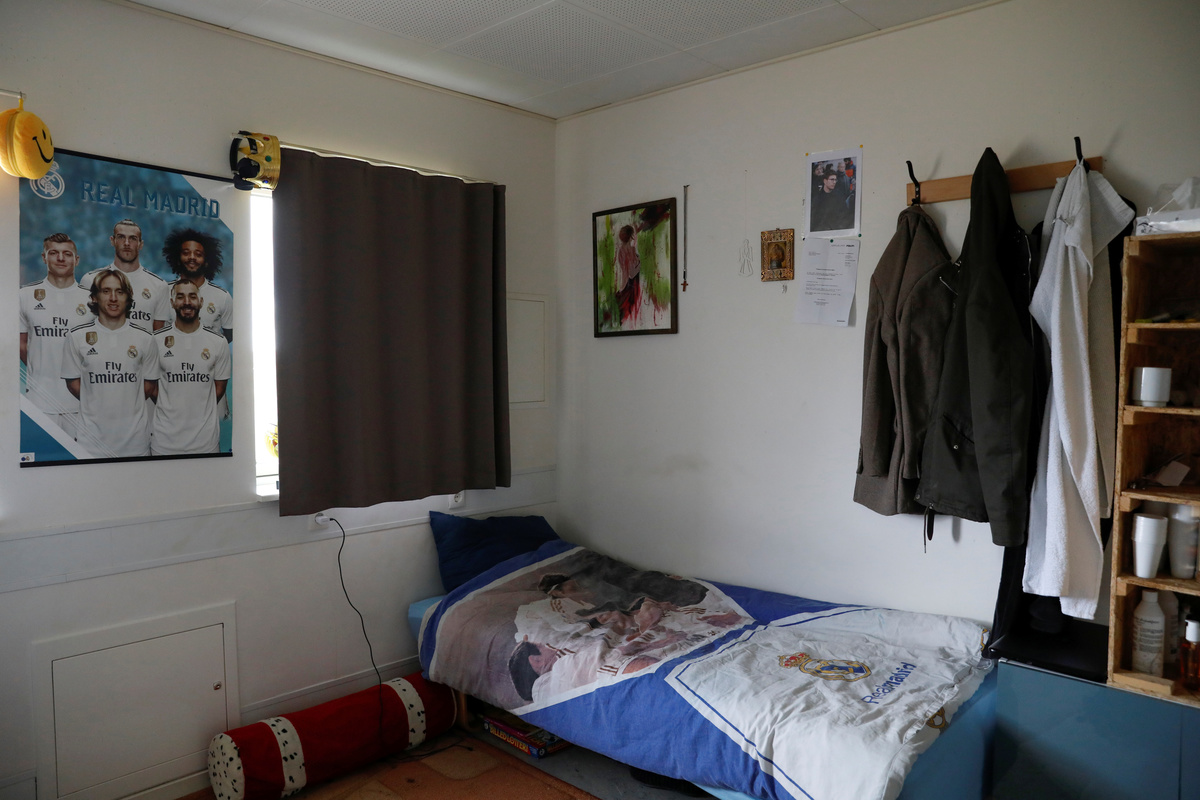
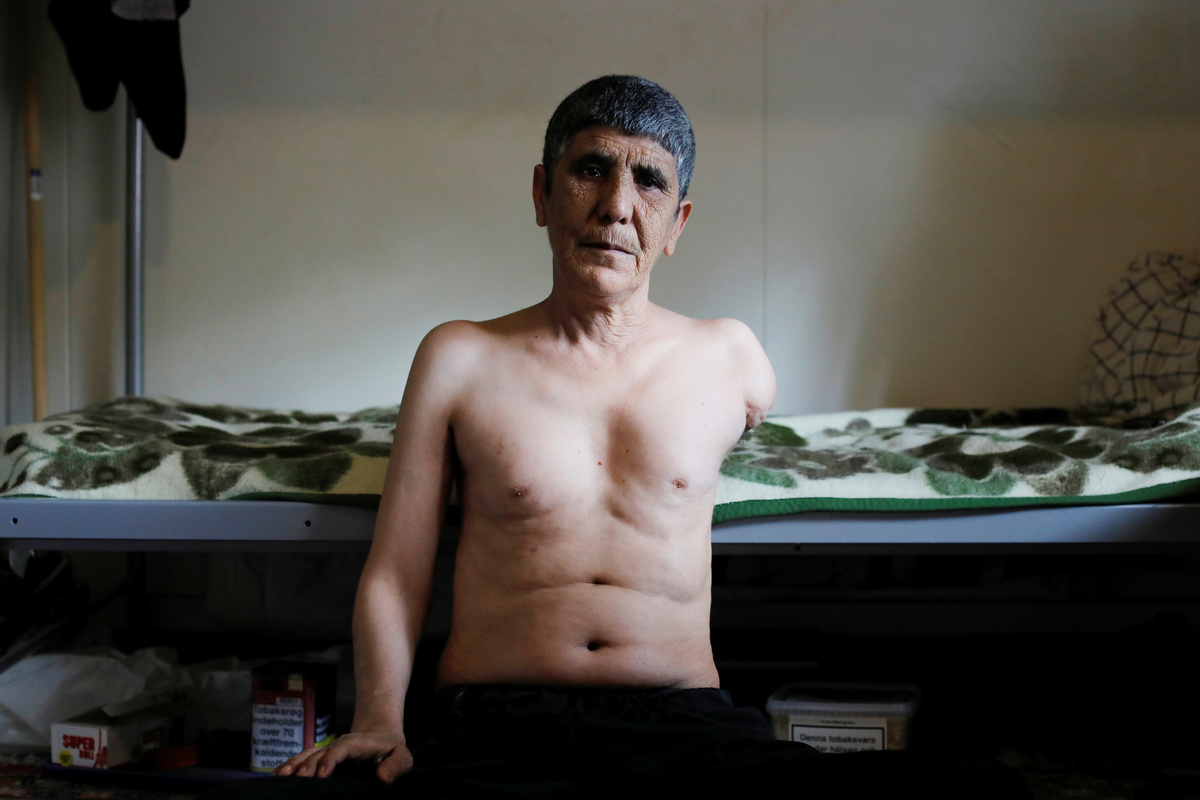
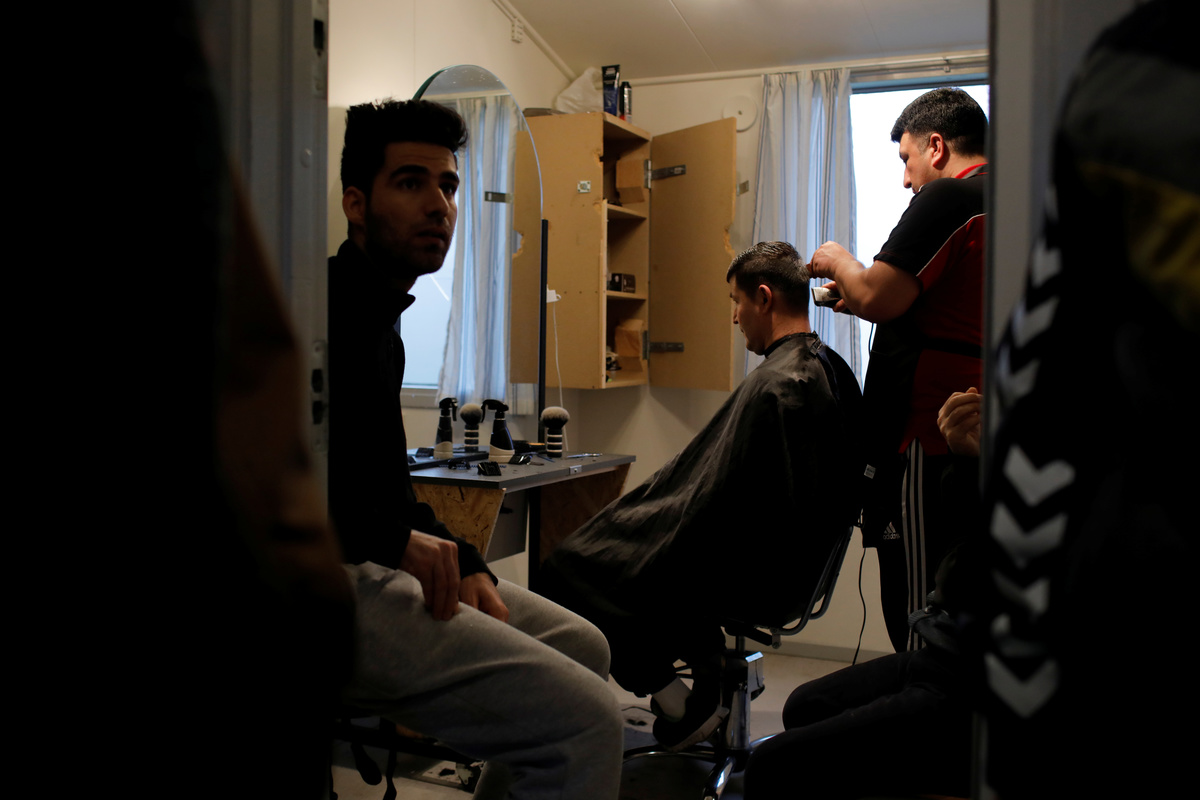
A resident climbs through a window at Kaershovedgaard, a former prison and now a departure centre for rejected asylum seekers in Jutland, Denmark, March 26, 2019. REUTERS/Andrew Kelly Inger Lis delivers a cake ahead of a weekly bible cafe meet-up that local parishioners and volunteers hold for residents of Kaershovedgaard, a former prison and now a departure centre for rejected asylum seekers in the town of Bording in Jutland, Denmark, March 28, 2019. REUTERS/Andrew Kelly A rug belonging to a resident from Iran hangs from a football goalpost to dry after it was washed at Kaershovedgaard, a former prison and now a departure centre for rejected asylum seekers in Jutland, Denmark, March 26, 2019. REUTERS/Andrew Kelly Residents share a meal provided by catering at Kaershovedgaard, a former prison and now a departure centre for rejected asylum seekers in Jutland, Denmark, March 26, 2019. The center provides 3 set meals a day and residents are forbidden from self catering. REUTERS/Andrew Kelly (2nd L-R) Peter Hansen, 30, Jamshid Rostami, 26 and Paman Farjolahi, 26, all Kurdish-Iranians and residents for over 2 years at Kaershovedgaard, a former prison and now a departure centre for rejected asylum seekers, sit in a bedroom at the center, in Jutland, Denmark, March 25, 2019. REUTERS/Andrew Kelly Residents play foosball at Kaershovedgaard, a former prison and now a departure centre for rejected asylum seekers in Jutland, Denmark, March 26, 2019. REUTERS/Andrew Kelly Narges Zahab, 40, who was a tailor in her native Iran for 15 years, pins a shirt at Kaershovedgaard, a former prison that is now a departure centre for rejected asylum seekers in Jutland, Denmark, March 27, 2019. Zahab, who is a resident at Kaershovedgaard, volunteers to repair clothes for fellow residents every Wednesday through a program run by the Red Cross. REUTERS/Andrew Kelly Sadiyo Hussein Omar, 30 from Somalia, runs on a treadmill at Kaershovedgaard, a former prison and now a departure centre for rejected asylum seekers in Jutland, Denmark, March 26, 2019. Sadiyo said running relieves her stress. REUTERS/Andrew Kelly Retired pastor Betty From Jensen embraces Houman Zahedi, 31 from Iran, who is a 3-year resident of Kaershovedgaard, at the end of a bible cafe meet-up that Jensen helps organise for residents of Kaershovedgaard in the town of Bording in Jutland, Denmark, March 28, 2019. Kaershovedgaard is a former prison and now a departure centre for rejected asylum seekers. REUTERS/Andrew Kelly Daniel Christensen, 27 from Iraq, reads his bible in his room at Kaershovedgaard, a former prison and now a departure centre for rejected asylum seekers where he has been a resident since March 2018, in Jutland, Denmark, March 25, 2019. Christensen used to be called Ali Adnan but prefers to be called Daniel Christensen since converting to Christianity. REUTERS/Andrew Kelly The view from a window at Kaershovedgaard, a former prison and now a departure centre for rejected asylum seekers in Jutland, Denmark, March 27, 2019. REUTERS/Andrew Kelly Daniel Cristiansen, 27, prays with residents of Kaershovedgaard and volunteers at a bible cafe meet-up in the town of Bording in Jutland, Denmark, March 28, 2019. Kaershovedgaard is a former prison and now a departure centre for rejected asylum seekers. REUTERS/Andrew Kelly Karim Azizi, 55, from Iran throws an orange in his room at Kaershovedgaard, a former prison and now a departure centre for rejected asylum seekers in Jutland, Denmark, March 26, 2019. REUTERS/Andrew Kelly Narges Zahab (L), 40, and Yasaman Paknejad, 36, both from Iran, pose for a photo inside the perimeter fence at Kaershovedgaard, a former prison and now a departure centre for rejected asylum seekers in Jutland, Denmark, March 25, 2019. REUTERS/Andrew Kelly Hoshang Rostami, 24, a Kurdish Iranian who lost part of his leg when stepping on a land mine aged 16 in Iran, prepares to attach a prosthetic limb in his bedroom at Kaershovedgaard, which was a former prison and is now a departure centre for rejected asylum seekers, in Jutland, Denmark, March 25, 2019. REUTERS/Andrew Kelly Vero Seryi, 45, from Nigeria, sorts through her prescription medicine at Kaershovedgaard, a former prison and now a departure centre for rejected asylum seekers in Jutland, Denmark, March 25, 2019. REUTERS/Andrew Kelly Vero Seryi, 45 from Nigeria, returns to her room in the women's block with her meal, one of three a day provided by the centre at Kaershovedgaard, a former prison and now a departure center for rejected asylum seekers in Jutland, Denmark, March 25, 2019. REUTERS/Andrew Kelly Safi Firoza, 66 from Afghanistan, whose son, daughter in-law and grandchildren were granted asylum, sits in her room at Kaershovedgaard, a former prison and now a departure centre for rejected asylum seekers in Jutland, Denmark, March 27, 2019. REUTERS/Andrew Kelly The G Block, part of an area designated to residents with a criminal record or mental health issues is seen at Kaershovedgaard, a former prison and now a departure centre for rejected asylum seekers in Jutland, Denmark, March 26, 2019. REUTERS/Andrew Kelly Real Madrid memorabilia is displayed in the room of Hoshang Rostami, which he shares with Jamshid Rostami (no relation), at Kaershovedgaard, a former prison and now a departure centre for rejected asylum seekers in Jutland, Denmark, March 26, 2019. REUTERS/Andrew Kelly Yasaman Paknejad, 36, an architect from Iran, sits in her room at Kaershovedgaard, a former prison and now a departure centre for rejected asylum seekers in Jutland, Denmark, March 25, 2019. REUTERS/Andrew Kelly Hoshang Rostami, 24 from Iran, walks through Kaershovedgaard, a former prison and now a departure centre for rejected asylum seekers in Jutland, Denmark, March 26, 2019. REUTERS/Andrew Kelly Karim Azizi, 55, a Kurdish Iranian, poses for a photograph in his bedroom as he shows his injuries, at Kaershovedgaard, a former prison and now a departure centre for rejected asylum seekers in Jutland, Denmark, March 26, 2019. Azizi claims to have lost his arm when a bomb exploded near him. REUTERS/Andrew Kelly Residents at Kaershovedgaard, a former prison and now a departure centre for rejected asylum seekers, line up to have a free haircut by Behzad Moradi, who was a hairdresser in his native Iran for 13 years and is also a resident at the center in Jutland, Denmark, March 27, 2019. REUTERS/Andrew Kelly
Sign up to read this article
Read news from 100’s of titles, curated specifically for you.