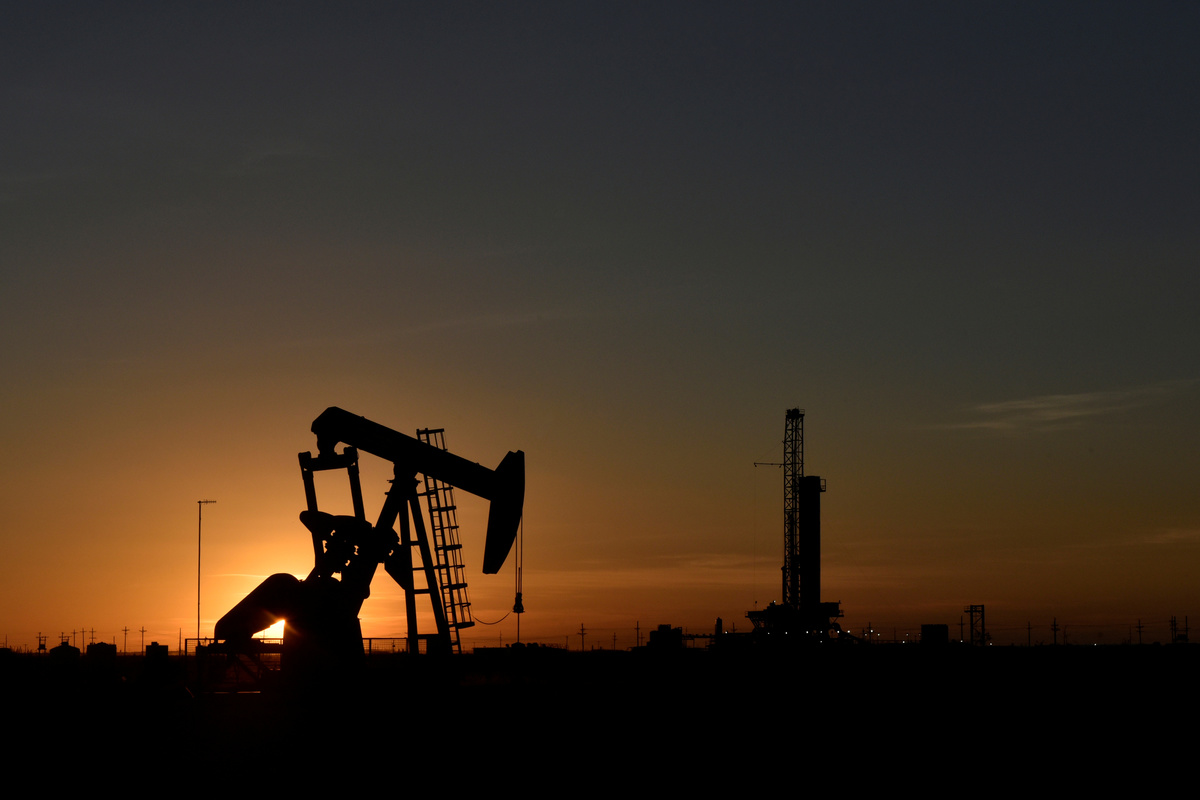
Oil and gas companies are cutting spending plans in response to the coronavirus pandemic and a push by Saudi Arabia and Russia to ramp up output.
International benchmark prices <LCOc1> have more than halved since the start of the year, falling to around $25 a barrel.
North American oil and gas producers have cut capital spending by about 30% on average, data compiled by Reuters showed.
Here are plans announced by top energy companies (in alphabetical order):
AKER BP
Norwegian Aker BP <AKERBP.OL> will postpone non-sanctioned projects to cut its planned 2020 capital and exploration spending by 20% due to the coronavirus but maintains its production guidance. Capital spending for this year would be reduced to $1.2 billion and exploration spending to $400 million, while in 2021-2022 it expects capital spending to be "well below" $1 billion. The company said its ambition to continue paying dividends "remained firm", but the board still had to assess the situation.
BPBP Plc <BP.L> said it planned to reduce capital and operational spending, which was about $15 billion last year.
CHEVRON
Chevron Corp <CVX.N> said it aimed to trim spending and lower oil output in the near term. The oil major's 2020 organic capital expenditure guidance had been $20 billion.
DNO
Norway's DNO <DNO.OL>, which operates in Iraq's Kurdistan region, said it would cut its 2020 budget by 30% or $300 million and lower its dividend for the first half of the year.
ENERGEAN
Mediterranean gas group Energean <ENOG.L> said it would cut its investments by $155 million in Greece and Israel and could reduce its budget for Egypt by another $140 million if needed without endangering delivery of its long-term offtake deals.
ENI
Eni <ENI.MI> followed rivals by cancelling a share buyback and sharply cutting investments. It said it would withdraw plans it had to buy back 400 million euros ($433.84 million) of shares this year, adding it would reconsider a buyback when Brent was at least $60 per barrel.
ENQUEST
North Sea producer EnQuest <ENQ.L> aims to break even this year at $38 a barrel and does not expect to restart its Heather and Thistle/Deveron fields, which produced 6,000 barrels of oil equivalent per day (boepd) last year.
It is cutting operating costs by 30% to $375 million and investment will be lowered by $80 million to $150 million, which is expected to reduce output next year.
EQUINOR
Norway's Equinor <EQNR.OL> has suspended its ongoing $5 billion share buyback programme and said it would cut total 2020 spending by around $3 bln, including capital spending reduction to $8.5 billion from previous plans of $10-11 billion, with drilling and completion activities being postponed in the U.S. onshore.
EXXONMOBIL
ExxonMobil Corp <XOM.N> said it would make significant cuts to spending. It had previously budgeted $30 billion to $33 billion for projects in 2020.
GENEL
Genel Energy Plc <GENL.L>, which operates in Iraq's Kurdistan region, said it could generate excess cash at a sustained oil price of $40 a barrel, would be resilient with an oil price of $30 a barrel and will continue to pay a dividend of $0.10 a share.
It said it could reduce investments to $60 million this year, but expected the number to be $100 million, below previous guidance of $160-$200 million. Its production costs are $3 a barrel.
It has yet to receive payments from local authorities for production in October and November.
GULF KEYSTONE
Kurdistan-focused producer Gulf Keystone suspended some of its drilling activities in the northern Iraqi region.
KOSMOS ENERGY
Kosmos Energy Ltd <KOS.N> has suspended its dividend and said it aimed to reduce 2020 capital spending by 30% with a view to becoming cash-flow neutral with an oil price of $35.
LUNDIN PETROLEUM
Lundin Petroleum <LUPE.ST> has decided to cut its proposed dividend for 2019 by 44%, and said it was cutting its total 2020 capital, exploration, decomissioning and G&A spending by an initial $170 million or around 13%.
OIL SEARCH
Papua New Guinea-focused Oil Search Ltd <OSH.AX> cut its 2020 investment by 38% and capital spending by 44%.
PREMIER OIL
Premier Oil Plc <PMO.L> said it had identified at least $100 million in potential savings on its 2020 capital spending plans.
Premier expects to be broadly cash-flow neutral in 2020, assuming a $100 million reduction in planned 2020 capital spending and a $35 oil price for the rest of the year.
SANTOS
Santos Ltd <STO.AX>, Australia's No. 2 independent gas producer, said it would cut 2020 capital spending by $550 million, or 38%, to $900 million.
SAUDI ARAMCO
Saudi Arabia's state-run oil company Saudi Aramco <2222.SE> said it planned to cut capital spending for 2020 to between $25 billion and $30 billion, compared with $32.8 billion in 2019.
ROYAL DUTCH SHELL
Shell <RDSa.L> lowered capital expenditure for 2020 by about $5 billion on Monday and suspended the next tranche of its share buyback plan, as the company tries to weather a hit from the recent oil price crash.
TOTAL
Total <TOTF.PA> said that with prices of $30 per barrel, it would now target organic capital expenditure cuts of more than $3 billion, mainly in exploration. The company will also target $800 million in 2020 operating cost savings compared to 2019, instead of the $300 million previously announced, and suspend its outstanding $1.5 billion share buyback programme.
TULLOW OIL
Tullow Oil Plc <TLW.L> said it would cut its investment budget by about a third to $350 million this year and reduce exploration spending, historically the group's focus, by almost half to $75 million.
It said the oil price fall might jeopardise a plan to sell $1 billion in assets to refill its coffers, raising the risk the group's lenders could become reluctant to approve loans essential to shoring up its future.
WINTERSHALL
Wintershall Dea [WINT.UL] said it would cut 2020 investment by a fifth to 1.2 billion to 1.5 billion euros ($1.3 billion to $1.7 billion) and suspend its dividend until further notice.
WOODSIDE
Woodside Petroleum <WPL.AX>, Australia's top independent gas producer, said it would halve its total spending for 2020 to $2.4 billion, including cutting investment spending by 60% to around $1.8 billion.
(Reporting by Ron Bousso, Sonali Paul, Shadia Nasralla, Nerijus Adomaitis; Editing by Kirsten Donovan, Ken Ferris & Aditya Soni)